News

The Blue That Stops Everything: On Cornflower Sapphires and the Color We Keep Coming Back To
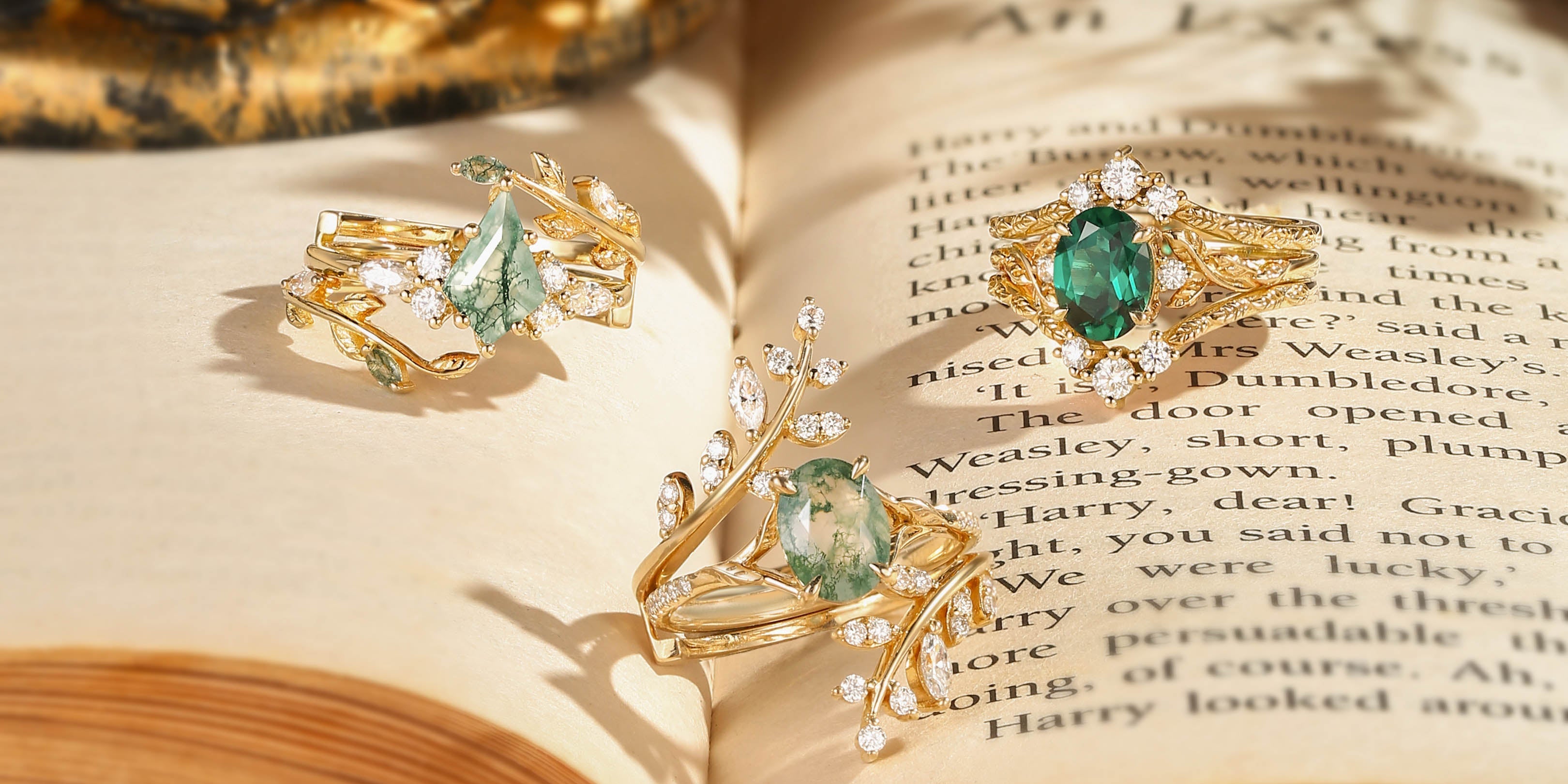
There is a moment — and every person who has seen a cornflower blue sapphire in person knows this moment — when the stone catches the light and you simply stop talking. Not because you're searching for words. But because the right response to certain kinds of beauty isn't language. It's stillness. Cornflower blue is not a dramatic color. It doesn't shout. It doesn't demand the room. But it is, in the precise and unhurried way that truly rare things communicate their value, entirely impossible to ignore. The Flower That Named the Stone Centaurea cyanus. The cornflower. A wildflower that grew — and grows still — on the edges of grain fields across Europe, its petals an almost improbable shade of blue that painters have spent centuries trying to capture accurately. Monet painted them. Rilke wrote about them. They wound their way into crowns and wedding garlands for centuries before anyone thought to call them common. The cornflower's particular blue isn't deep like cobalt. It isn't cool like steel. It isn't washed-out like forget-me-not. It occupies a precise and unrepeatable place on the spectrum: medium-toned, vivid, and faintly warm — a blue with something almost violet living underneath it, giving it a depth that lighter blues don't carry and a softness that darker blues can't achieve. When gemologists first tried to describe the most coveted shade of blue sapphire, the one that commanded the highest prices from collectors and the most reverence from connoisseurs, they reached for the same word the Impressionists did. Cornflower. It was the only comparison that fit. What Makes This Blue Different — A Closer Look To understand why cornflower blue sapphire occupies its own category, you have to understand what it's being distinguished from. Blue sapphires span an enormous range. At one end, you have pale, washed-out blues that look beautiful in photographs but lack presence in real life. At the other extreme, you have stones so deep and saturated they veer into inky navy — impressive in scale, but closed. The color sits inside the stone like something trapped. Cornflower blue lives in neither of these places. It is medium-toned but fully saturated — vivid without heaviness. And it has, in the finest examples, a quality that gemologists describe as velvety: a softness to the surface of the light that makes the stone appear to glow from within rather than merely reflect from without. This quality isn't an accident of aesthetics. It has a cause. The finest cornflower blue sapphires — particularly those from Kashmir, the historical source for the most legendary examples of this color — contain microscopic inclusions of fine, rutile silk. These inclusions, distributed evenly throughout the stone, scatter incident light in a way that eliminates the harsh specular reflection you see in a highly included or overly commercial stone. The result is a stone whose color doesn't flash or perform. It simply emanates. A Kashmir cornflower sapphire in natural light doesn't look like it's trying to show you something. It looks like the blue arrived of its own accord, settled in, and made itself at home. The Color Itself: What Cornflower Blue Does to a Room Color theory has a name for what cornflower blue does: simultaneous contrast. A blue of this particular saturation and temperature — cool enough to read as pure blue, warm enough not to veer into cold — creates a visual effect that makes surrounding colors appear more vivid. Paired with a warm gold setting, the gold reads warmer. Paired with white gold or platinum, the contrast sharpens and the blue saturates further. This is why cornflower sapphires are so effective across different metals when other colored stones can be finicky. It's also why they're so effective on different skin tones. The cornflower's particular middle-ground temperature — not icy, not warm — allows it to harmonize without competing. It doesn't drain warmth from olive or deep complexions the way cold blues can. It doesn't disappear against fair skin the way pale stones sometimes do. It simply works. Consistently, effortlessly, in a way that the best colors always do. Lab-Grown Cornflower: Where Consistency Meets Color Here's something the fine jewelry world doesn't say loudly enough: true cornflower blue is rare in nature. Genuinely rare. The famous Kashmir sapphires — the benchmark for this color — came from a single deposit discovered in the Himalayas in the 1880s, effectively mined out within a few decades. What Kashmir cornflower blue sapphires still exist on the market are mostly traded at auction between collectors. They are not things most people can simply purchase. This is where lab-grown changes everything. A lab-grown cornflower blue sapphire carries the same mineral composition as its mined counterpart — corundum, colored by trace iron and titanium, at precisely the ratio that produces this specific hue. The crystal structure is identical. The hardness is identical (a 9 on the Mohs scale, second only to diamond). The color, rather than being a matter of geological luck, can be dialed in with precision. What lab-grown delivers that nature rarely does, at accessible price points, is consistency. A saturated, evenly distributed cornflower blue throughout the stone. Eye-clean clarity that doesn't distract from the color. The full experience of this extraordinary hue, not a compromise version of it. At Blingflare, our lab-grown cornflower blue sapphires are selected specifically for their color depth and evenness — the kind of stones that would cost multiples more in natural form, if you could find them at all. Cornflower Blue and the Way It's Worn: Design Notes The sapphire is, in a certain sense, a generous stone for a jewelry designer. Its properties are well-suited to almost any cut and setting. But cornflower blue specifically rewards design choices that let the color speak. On metal: Yellow gold is the traditional pairing, and it remains extraordinary — the warmth of the gold amplifying the faint violet undertones in the blue, creating something that feels simultaneously ancient and alive. White gold turns the stone cooler and more contemporary; the contrast is sharper, the blue seems bluer. Rose gold offers something unexpected: a romantic warmth that plays against the blue's natural coolness, the combination reading more emotional, somehow — like a late afternoon sky reflected in a still lake. On cut: Cornflower blue is generous across shapes. The oval is the most classic choice, maximizing color surface while maintaining proportion. The round is the most saturated — the faceting pattern creates the most even color distribution. The pear brings movement, the stone's color shifting slightly as the angle changes. And in our Firework Cut — Blingflare's proprietary radial faceting pattern — the velvety quality of the stone becomes something active: the color doesn't sit still, it rotates and catches and releases light in patterns the eye wants to follow. On setting style: Cornflower blue is quietly sophisticated, and it meets its equal in settings with precision and detail. Filigree work and nature-inspired vine or leaf motifs bring something out of this stone specifically — the organic curves of a leafy setting seem to reach toward the blue the way a garden reaches toward a clear sky. What This Color Has Always Meant Before it was a gemological designation, before it was a collector's benchmark, cornflower blue was simply a color that people across centuries and cultures associated with the same things: constancy, clarity, and trust. Ancient Hindu texts placed blue sapphire under Saturn — a planet associated with discipline, the long game, and earned wisdom. Medieval European royalty wore it not for display but for belief — the blue of a sapphire was the blue of heaven, and to wear it was to carry that certainty close. The most famous blue sapphire in the world — the one on the finger of Princess Diana, now worn by Princess Catherine — is often described as cornflower blue. Whether the description is precisely accurate by gemological standards is a conversation for appraisers. What it reveals is which shade of blue the culture reaches for when it wants to describe something that has endured. Not the flashiest blue. Not the darkest. The one in the middle, steady and vivid and true. There's a reason people keep returning to it. A Note on Choosing If you're considering a cornflower blue sapphire for an engagement ring, a meaningful gift, or a piece you intend to wear for decades — here is the honest advice we give to every customer who asks. Don't choose it because it's the classic choice. Choose it because, in person, something happens when you hold it in the light. The stone will either stop you or it won't. With cornflower blue, in our experience, it almost always does. Our Abrielle Cornflower Blue Sapphire Ring — a vine-detailed design with hand-set leaf accents and our signature Firework Cut — is where we'd suggest beginning. Not because it's the only option, but because it shows you what this color can do when the setting and the stone are working together toward the same purpose: jewelry that looks like it grew, rather than was assembled. Browse our full cornflower blue sapphire collection at blingflare.com/collections/blue-sapphire — or reach out to our team to discuss custom cuts, carat weights, and metal choices that fit exactly what you have in mind. Some colors find you when you're ready for them. Cornflower blue tends to be one of those. Blingflare designs nature-inspired sapphire jewelry for people who want something specific: stones chosen with care, settings built to last, and pieces that feel as alive as the world they draw from. Lab-grown and natural options available in every collection.

The Green That Doesn't Exist in Nature — And Why That's the Point
A Complete Guide to Green Moissanite Engagement Rings There are gems the earth makes. And then there are gems the earth couldn't quite pull off — not at this color, not at this price, not with this fire — so humans finished what geology started. Green moissanite is one of those. It's not trying to be an emerald. It's not a substitute for a tsavorite or a green tourmaline. It exists in its own category: a stone with physical properties that surpass almost everything found in nature, wearing a color that's maximally saturated, consistently available, and — depending on your light source — genuinely extraordinary. At Blingflare, we've spent considerable time with green moissanite. Here's everything we know. What Is Moissanite, Actually? Silicon carbide (SiC). That's the chemistry. But the story is more interesting than the formula. In 1893, Henri Moissan found silicon carbide crystals in a meteor crater in Arizona. He initially thought he'd discovered a new diamond deposit. The mineral was later named moissanite in his honor. Natural moissanite is so rare that virtually none of it appears in jewelry — the moissanite you see in rings is lab-created, grown from silicon carbide under controlled heat and pressure conditions. The resulting stone has properties that are, on paper, almost unfair: Hardness: 9.25 on the Mohs scale. Harder than sapphire. Softer than diamond by less than half a point. Effectively scratch-proof under any normal wearing conditions. Refractive index: 2.65–2.69. Diamond's is 2.42. Moissanite bends light more dramatically, which means more fire — the colored spectral light that flashes from inside the stone. Dispersion: 0.104, versus diamond's 0.044. More than twice the rainbow flash of diamond. Thermal conductivity: High enough that early moissanite routinely confused diamond testers designed to detect heat transfer. Durability: Resistant to scratching, heat, chemicals, and everyday impact in ways that few gemstones can match. Now add color. Where the Green Comes From Natural moissanite is colorless to near-colorless in its purest form. The green you see in green moissanite comes from controlled color treatments applied during or after the growth process — most commonly a thin-film coating or an irradiation treatment that alters how the stone absorbs and reflects light. This is disclosed, standard practice in the colored moissanite market. The treatment is stable and the color does not fade under normal wear. The question isn't whether the green is "natural" — it isn't, and any honest seller tells you that — the question is whether it's beautiful and durable. The answer to both is yes. What the green actually looks like: Green moissanite doesn't land in one single hue. Depending on the stone's saturation level and the treatment used, you'll see: Forest / deep green — Rich, dimensional, reminiscent of old-growth canopy. Strong saturation. Reads dark in low light, brilliant in direct sun. Sage / gray-green — Desaturated and sophisticated. The color of eucalyptus or sea glass. Pairs beautifully with geometric settings. Teal / blue-green — Where green and blue cross. One of the most requested colors right now. Pairs with both warm and cool metals without clashing. Yellow-green / chartreuse — Energetic, unusual, strongly associated with nature. A genuine statement stone. Mint / light green — Soft, fresh, highly wearable. Looks clean in yellow gold, ethereal in rose gold. The Firework Cut in Green: Why It Matters More Than You'd Expect Fire — the dispersion of white light into spectral colors — is moissanite's signature. Its dispersion value is more than double diamond's, which means those rainbow flashes are larger, more frequent, and more visible. In a colorless stone, this is already remarkable. In a green stone, it becomes something else entirely. The Firework Cut was developed at Blingflare to maximize the radial movement of light through a gemstone. In a colored moissanite, this facet arrangement doesn't just add brilliance — it creates a kinetic color experience. As the ring moves, the green doesn't stay static. It shifts. Deepens. Lightens. Sparks with yellow-green and blue-green at the edges as the facets catch different angles of light. Under natural light, a green moissanite in the Firework Cut looks alive in a way that photographing it genuinely struggles to capture. The flat image always undersells it. It has to be seen in motion. Green Moissanite vs. Green Alternatives If a buyer is considering green center stones, they have several options. Here's the honest comparison: Emerald Color: Unmatched. The deep, slightly bluish green of a fine Colombian emerald has no peer. Durability: 7.5–8 hardness, but emerald is heavily included and brittle. It chips and cracks under impact in ways that make it genuinely risky in daily-wear settings. Price: Natural, high-quality emeralds at >1ct are expensive — often more expensive than comparable diamonds. Lab emeralds are improving but still less consistent. Verdict: Magnificent when protected. Less practical for everyday rings without a protective bezel. Tsavorite Garnet Color: Vivid, bright green. Often described as cleaner and more brilliant than emerald. Durability: 6.5–7.5 hardness. Softer than sapphire or moissanite. Price: Moderate at smaller sizes, expensive at larger sizes. Large fine tsavorites are genuinely rare. Verdict: Beautiful. Increasingly popular. Limited size availability. Green Tourmaline Color: Wide range — from light mint to deep chrome green. Durability: 7–7.5 hardness. Acceptable but not ideal for high-wear settings. Price: Moderate. More available than tsavorite. Verdict: Underrated stone with genuine versatility. Worth considering. Green Sapphire Color: Typically more muted, olive-to-teal range. Very few naturally vivid greens. Durability: 9 hardness. Excellent. Price: Varies significantly by origin and saturation. Verdict: Very durable, but the color range is narrower and less saturated than moissanite at comparable prices. Green Moissanite Color: Consistent, vivid, with wide saturation options across teal, forest, sage, and mint. Durability: 9.25 hardness. Second only to diamond. Fire: More than double diamond's dispersion. Spectacular in motion. Price: Significantly more accessible than natural alternatives at larger sizes. Verdict: The practical choice for someone who wants vivid green, exceptional durability, and serious size at a real-world budget. Metal Pairing for Green Moissanite Green is one of the most metal-flexible colors in gemstone jewelry because it exists on a warm-to-cool spectrum. Yellow gold — The warmest pairing. Creates a jewel-toned, maximalist effect reminiscent of vintage botanical illustrations. Forest green and yellow-green hues particularly benefit from yellow gold's warmth. Rose gold — The unexpected pairing. Pink and green are complementary colors, and the combination creates a visual tension that's genuinely arresting. Works best with sage, teal, and mint greens. White gold / platinum — The coolest and most modern. Maximizes contrast. Teal and mint greens look clean and architectural in white metal. Creates a contemporary, almost editorial effect. Vintage-style yellow or mixed metal — Our recommendation for buyers drawn to Blingflare's natural design language. The leaf and vine motifs in our nature-inspired settings pair with green moissanite in a way that feels genuinely cohesive — like the ring was grown rather than assembled. Who Chooses Green Moissanite? Honestly? People who've decided that their ring should reflect who they are rather than what a ring is "supposed" to look like. Green is not the conventional choice. That's precisely why it resonates. The buyers who come to Blingflare for green moissanite tend to be: Drawn to nature — forests, plants, the color of living things Interested in sustainability and making choices that align with their values Confident enough in their taste to go against the expected Practical enough to want a stone that handles daily life without anxiety They don't want to be asked "is that an emerald?" They want people to ask "what is that?" — and then explain, because the explanation is interesting. Green moissanite in the Firework Cut is an interesting ring. An intentional ring. A ring that took some thought to find and deserves to be found by the person it was meant for. We'll help you find it.

Pink Is Not Delicate. Pink Is a Decision
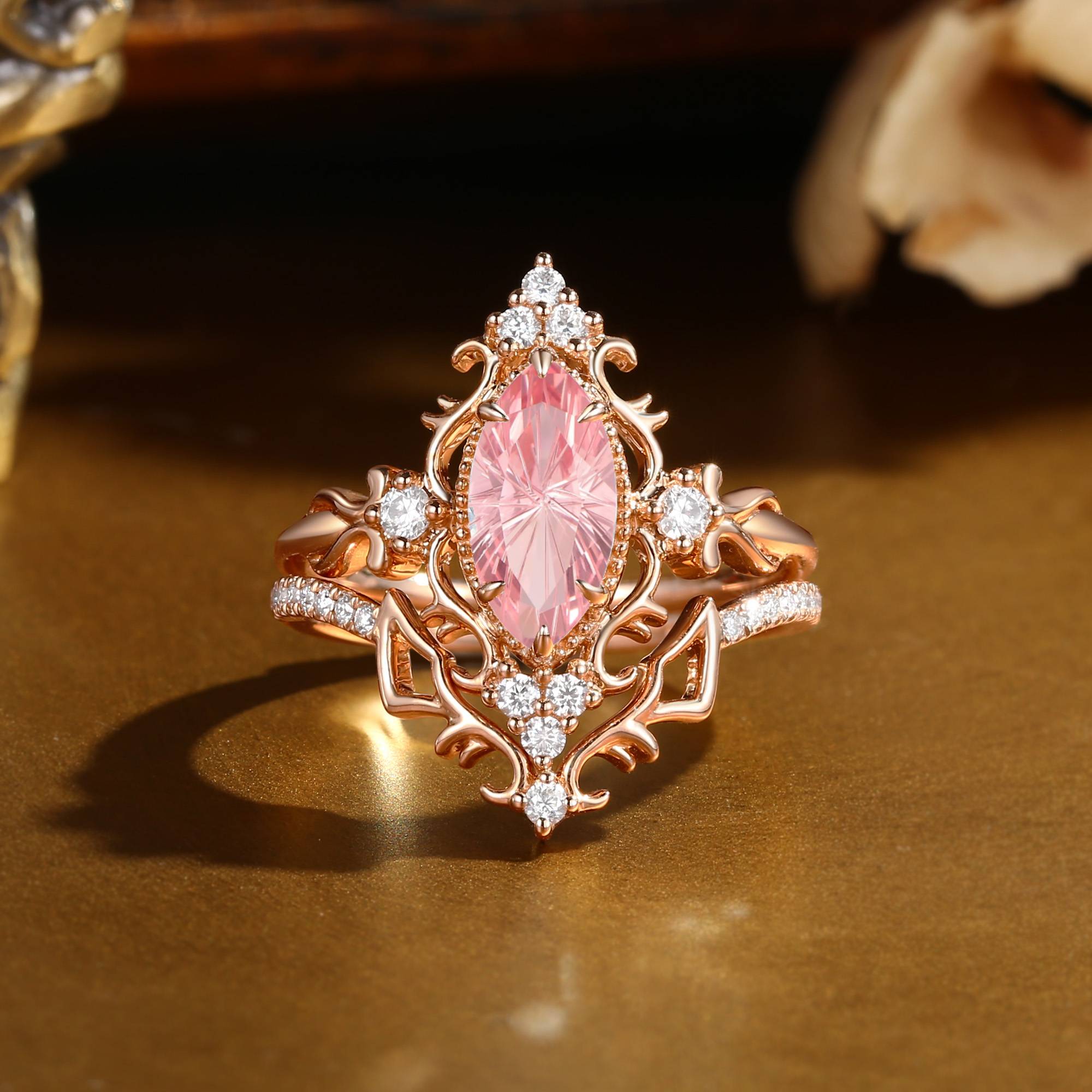
The Case for Choosing a Pink Sapphire Engagement Ring There's a moment that happens when someone first sees a pink sapphire in natural light. It's not the same as seeing a diamond. A diamond asks you to look at it — to study its brilliance, count its facets, acknowledge its performance. A pink sapphire does something different. It pulls you in. It glows like something warm and alive, like a sunset caught inside stone. That's not an accident. It's corundum — the same mineral family as the blue sapphire — but carrying iron and chromium in a ratio that tilts the color toward blush, rose, magenta, or deep raspberry, depending on where it was formed and how it was cut. Chemistry made visible. At Blingflare, we think of pink sapphires the way we think about all great gems: not as alternatives to something "better," but as stones with a language entirely their own. The Spectrum Within "Pink" Not all pink sapphires look alike. That's the first thing to understand — and the most freeing. The GIA grades pink sapphires across a wide saturation range, from very light pink (sometimes called "blush sapphire") through medium-vivid pink to deep pink that begins to border on ruby. The distinction between "pink sapphire" and "ruby" is technically a chromium threshold — once a stone crosses a certain saturation of red, it becomes a ruby. But in the middle of that range lives a world of colors most people have never fully explored. Light blush pink — Quiet. Romantic. Catches light without demanding it. Ideal for minimalist settings, east-west orientations, and buyers who want something that whispers rather than announces. Medium rose pink — The most commercially popular range. Rich enough to read clearly from across a room, soft enough to wear with everything. Pairs beautifully with rose gold and yellow gold alike. Vivid hot pink / magenta — Saturated. Confident. These stones have the kind of color that stops conversations. They belong in settings designed to celebrate them — solitaires, bezel mounts, architectural designs. Pinkish-purple / orchid — A rarer shift where the stone contains enough of both chromium and iron to create a color that's genuinely unusual. Less predictable to photograph, extraordinary in person. At Blingflare, we carry pink sapphires across this entire range, because we believe the right stone isn't always the most famous one — it's the one that matches how you see the world. Lab-Grown Pink Sapphires: The Honest Conversation The jewelry industry has spent decades treating "natural" as a synonym for "better." We don't. Lab-grown sapphires are physically, chemically, and optically identical to mined sapphires. Same hardness (9 on the Mohs scale — the second hardest gemstone after diamond). Same refractive index. Same mineral composition. The only difference is where the crystal formation happened: inside the earth over millions of years, or inside a controlled chamber over a matter of weeks. What lab-grown does differently: Color availability — Certain saturations that are extremely rare in nature can be produced consistently in lab conditions. The vivid, evenly-distributed hot pink that buyers dream about? More reliably available lab-grown. Clarity — Lab-grown sapphires tend to have fewer inclusions. Eye-clean stones are the norm rather than the exception. Price — Meaningfully lower than natural for comparable color and size, which means a larger stone or more elaborate setting within the same budget. Ethics — Full supply chain transparency. No small-scale artisanal mining with uncertain labor conditions. We'll never tell you that lab-grown is the only right choice. Some buyers want a natural stone with a geological story — and those exist in our collection too. But we will always tell you exactly what you're looking at and let you decide with complete information. The Firework Cut Difference Most pink sapphire jewelry you'll see online was designed around the stone — the setting accommodates whatever shape was available. At Blingflare, we developed the Firework Cut specifically to address what we think is the biggest lost opportunity in colored gemstone jewelry: wasted light. Traditional oval and round cuts direct brilliance upward. The Firework Cut uses a proprietary facet arrangement that disperses light in radial patterns — literally mimicking the way fireworks expand outward from a center point. In a colored stone, this has a specific consequence: the color doesn't sit in the center and fade. It moves. In a pink sapphire, this means the blush doesn't concentrate at the table and die at the girdle. The color rotates, shifts, catches, and releases as the ring moves. It's the difference between a photograph of a sunset and watching it happen. If you've seen other pink sapphire rings and thought "beautiful in pictures, a little flat in person" — this is what they were missing. How Pink Sapphires Wear: The Practical Reality This matters more than people say. An engagement ring is worn every day. It goes in water (sometimes), against countertops (often), into gym bags, through seasons, across decades. A stone needs to be able to handle that reality. Pink sapphire is one of the most durable gemstones available: Hardness: 9/10 on the Mohs scale. Only diamond is harder. It will not scratch under normal wear. Toughness: No cleavage planes that make it vulnerable to impact (unlike emerald, which can chip with a hard knock). Heat resistance: Stable across the temperature ranges a ring encounters in daily life. Fading: High-quality sapphires — particularly lab-grown — do not fade in light. What you buy is what you wear in twenty years. For context: moissanite and diamond are the only other stones that outperform sapphire on durability for everyday wear. Everything else — morganite, emerald, opal, tanzanite — is softer and requires more careful handling. Pink Sapphire and Metal: Finding the Pair Metal choice dramatically affects how a pink sapphire reads. Rose gold — The natural pairing. Rose gold enhances the warmth in light-to-medium pinks and creates a monochromatic harmony that reads as very intentional. Softer and more romantic. Yellow gold — Unexpected and brilliant. Yellow gold beneath a pink sapphire creates warmth and vibrancy. The contrast between the richness of the gold and the freshness of the pink is visually striking in a way rose gold isn't. White gold / platinum — Maximizes the color contrast. The stone reads cooler and more saturated. Excellent choice for vivid pinks and magenta-range stones where you want the color to be the entire statement. Two-tone — For buyers who don't want to choose: rose gold prongs holding the stone with a white gold or platinum band gives you the color warmth at the point of greatest visual attention while keeping the band clean and versatile. Wearing Pink Sapphire in 2026: What the Moment Feels Like Colored center stones have been building for years, but something shifted recently. Pink specifically moved from "romantic choice" to "considered choice." The buyers who come to Blingflare for pink sapphires aren't following a trend — they're making a deliberate statement about what they value. They're choosing a stone with more character than a colorless diamond. More rarity than a blue sapphire at that color depth. More durability than the morganites or rose quartz that offer a similar hue. They're choosing pink because pink — saturated, confident, absolutely unapologetic — is exactly what they want on their hand for the next fifty years. We can help you find that stone. → Explore Blingflare's Pink Sapphire Collection

Beyond Classics: Pearl – 2026's Modern Gem for Contemporary Jewelry
There are gemstones that demand attention. And then there is the pearl — which simply glows, quietly and completely, as if lit from within. No flash. No fire. Just light. The pearl doesn't ask to be noticed. It simply is. The Reinvention of an Ancient Stone For most of the 20th century, pearl jewelry carried a specific set of associations. Grandmother's single strand. The graduating gift. Formal occasions and conservative elegance. Beautiful, yes. But somehow bounded. That story is over. In 2026, pearl has undergone a quiet revolution. You'll find it on the necks and fingers of the most style-forward dressers — not as an heirloom concession to formality, but as a deliberate, sophisticated choice. Pearl has become the stone of the person who knows exactly what they're doing. The anti-flashy statement. The intelligent counterpoint to an era saturated in maximalist sparkle. At Blingflare, we've always understood pearl differently. For us, it's never been about tradition. It's been about what pearl is — something the ocean spent years perfecting, layer by patient layer, in the dark. What Makes a Pearl: The Miracle of Nacre Unlike every other gemstone, a pearl is not mined from the earth. It grows. When an irritant — a grain of sand, a parasite, a small fragment — enters the shell of an oyster or mussel, the creature responds by secreting a substance called nacre: thin layers of calcium carbonate crystals bound by an organic protein called conchiolin. Over months or years, these layers accumulate around the irritant, creating a sphere of extraordinary smoothness and that characteristic soft luminosity — what jewelers call orient, the way a pearl's surface seems to glow from within rather than merely reflecting light. It's the same phenomenon, in miniature, as the formation of a seashell. The ocean building architecture. Patient, layered, beautiful. Freshwater pearls grow in mussels in rivers and lakes, primarily in China. They're generally more accessible in price and available in a wider range of shapes and colors — white, cream, lavender, peach, and subtle pinks. Modern culturing techniques have produced freshwater pearls of exceptional quality, making the best examples genuinely difficult to distinguish from their saltwater counterparts. Akoya pearls, grown in saltwater oysters along the coasts of Japan and China, are the classic round white pearl — precisely round, high-luster, the archetype of what most people picture when they think "pearl." Their roundness and mirror-like luster come from a particularly uniform nacre deposition process. South Sea pearls, grown in the largest pearl oyster species in the warm waters of Australia, Indonesia, and the Philippines, are the grandest: exceptionally large (often 10–16mm), with a satiny luster and colors ranging from bright white to golden yellow. Tahitian pearls, grown in the black-lipped oyster in French Polynesia, occupy their own category entirely — dark, complex, ranging from charcoal and silver to deep green, peacock (a green-black with overtones of rose), and aubergine. These are the pearls of the deep ocean, carrying all its mystery. Each variety offers something different. Each has its moment. Pearl and the Nature Equation Here is what we find endlessly compelling about pearl, from a design perspective: it is already nature. You don't have to evoke the natural world through a leaf motif or a vine-wrapped band — the stone itself is nature's own work, grown according to nature's own patient logic. This creates a fascinating design tension: how do you honor that organic quality without overwhelming it? Our answer, at Blingflare, has been to let the pearl speak — and support it with settings that echo its language. Our Celestine ring pairs a delicate light green sapphire with pearl as its accent element — a combination that feels almost botanical, like finding two complementary things growing together in the same garden. The seafoam luminosity of the pearl against the soft green of the sapphire creates a pairing that feels less like a jewelry design and more like a discovered arrangement. Nature, refined. Pearl in 2026: The Styling Story What's happening in the broader world of fine jewelry explains pearl's re-emergence. We are living through a reaction against the purely maximalist era of jewelry — the period of stacked rings, heavy chains, and ostentatious diamond-adjacent everything. The pendulum is swinging toward the intentional, the personal, the quiet. People are reaching for pieces that say something specific rather than just a lot. Pearl, in this context, lands perfectly. It's the stone of the person who doesn't need external validation — who wears what they love because they understand it, not because it'll trend on TikTok for six weeks. Key styling directions in 2026: The modern bridal pearl: Pearl is increasingly showing up in engagement and bridal contexts — not as the center stone (though that's happening too) but as an accent, a complement to colored stones, or in the wedding band. It offers softness and luminosity without competing with the center gem. The pearl-and-metal tension: Pairing a pearl's organic softness with the crisp geometry of a contemporary gold setting creates a compelling contrast. The pearl becomes more precious against the precision of the metal work; the metal becomes warmer against the natural imperfection of the pearl. The mix: Pearl alongside colored stones — sapphire, emerald, moss agate — has emerged as one of the most sophisticated styling moves of 2026. The organic, neutral quality of pearl allows it to harmonize with almost any color without competing. The solo statement: A single pearl, well-set, in a ring or pendant that gives it room to breathe. The confidence of restraint. What Pearl Means: The Symbolism of Patience Every culture that encountered pearls responded with reverence — not just for their beauty, but for what the process of their creation seemed to represent. Patience and transformation. A pearl takes years to form. It begins as an intrusion — something that doesn't belong — and becomes something precious through patient, layered response. There is a profound metaphor here for growth, for the way difficulty can become beauty with enough time and care. Purity and intention. In many traditions, pearl was associated with clarity of thought and purity of intention. Not innocence in a naive sense, but the clear-eyed commitment to one's own values. Hindu texts describe pearl as shukti, formed when drops of heavenly dew fall into the ocean at a specific celestial moment — the universe aligning to produce something rare. Feminine wisdom. Across traditions, pearl has been linked to the moon, to water, to feminine cycles of knowing. Not because pearls are "only for women" — they are emphatically not — but because the moon's influence over tides and seasons resonated with pearl's oceanic origin. Caring for Your Pearl: Gentle as the Ocean Pearl is a softer material than most gemstones (2.5–4.5 on the Mohs scale) and benefits from attentive care: Last on, first off: Apply perfume, hairspray, lotions, and makeup before putting on your pearl jewelry. These products contain chemicals and acids that can damage nacre over time. Wipe after wearing: A soft, slightly damp cloth after each wear removes skin oils and residue that could dull the luster. Allow to air dry before storing. Store separately: Pearls are easily scratched by harder stones. Store them in a soft pouch or lined compartment, away from other jewelry. Avoid submersion: Don't swim or shower with pearl jewelry. Prolonged exposure to water — especially chlorinated or salt water — can weaken the silk cord (in strands) and affect the nacre's surface. Never use ultrasonic cleaners or steam on pearls. The vibration and heat are damaging. Wear them: Counterintuitively, pearls benefit from being worn. The natural moisture of your skin helps maintain their luster. A pearl left in a box for years can dry out and crack. Pearl at Blingflare: Where the Ocean Meets the Forest Our approach to pearl in jewelry design starts from the same place as everything we make: nature as teacher, not just reference. We don't use pearl as a nostalgic gesture toward the past. We use it as what it is — an organic, living material that carries the patience of the ocean in every layer of its nacre. In our hands, that becomes something new: pearl alongside sapphire in a leaf-framed setting, pearl as the luminous counterpoint to vivid green or deep blue, pearl as the thing that makes a nature-inspired design feel truly, fully alive. If you've been sleeping on pearl — if you've dismissed it as too traditional, too simple, too expected — we'd like to change your mind. The ocean spent years making something for you. Come see what we've done with it.

Forest-Inspired Lab Emerald: The Top Green Gem for Eco Jewelry
There is a color that exists nowhere else quite like it — the deep, rich, living green of an emerald. Not the pale freshness of mint, not the cool distance of teal. Something older. Something wilder. The green of a forest that has never been touched. At Blingflare, emerald isn't just a gemstone. It's a homecoming. A Stone With the Memory of the Earth Emeralds belong to the beryl mineral family, colored by trace amounts of chromium and vanadium — nature's own alchemists. What makes their green so uniquely compelling isn't just the hue itself, but its depth. There's a sense of looking into an emerald rather than merely at it. Ancient civilizations recognized this quality instinctively. The Egyptians mined emeralds near the Red Sea as early as 1500 BCE — Cleopatra famously claimed the mines as her own and used the stones as diplomatic gifts to foreign dignitaries. The Incas of South America considered emeralds sacred objects of spiritual connection, not to be bought or sold but inherited, passed from generation to generation as living links to the natural world. Roman scholars believed gazing into an emerald could restore eyesight and calm the mind. In nearly every culture that encountered them, emeralds inspired the same instinct: this stone is alive. We believe that instinct is right. Lab-Grown Emerald: The Same Magic, Reimagined The finest natural emeralds are extraordinarily rare — Colombian and Zambian emeralds command prices that rival diamonds, often exceeding them at high clarity grades. And the vast majority of natural emeralds contain visible inclusions, what gemologists poetically call the stone's jardin (French for "garden") — a web of internal fractures, gas bubbles, and mineral traces that are considered natural and expected, not flaws. Lab-grown emeralds change the conversation entirely. Created in controlled environments that replicate the exact hydrothermal conditions under which natural emeralds form — the same heat, the same chemical ingredients, the same crystalline structure — lab emeralds are chemically, physically, and visually identical to their mined counterparts. A gemologist cannot distinguish one from the other without specialized equipment. But what lab-grown delivers that nature rarely can: clarity. The rich, saturated green of a high-quality lab emerald without the veil of heavy inclusions. The full drama of the stone, unobstructed. At Blingflare, our lab-grown emeralds are selected for their vivid color saturation and eye-clean clarity — so you experience the true, unburdened beauty of this extraordinary stone. Emerald and the Language of Our Designs You might wonder why emerald feels so natural in a Blingflare setting. It's because our entire design philosophy begins in the same place the emerald does: the living, breathing natural world. When our artisans reach for a leaf motif, a vine-wrapped band, a petal halo — they're not applying decoration. They're speaking in the language of the forest. And emerald, of all the world's gemstones, speaks that language most fluently. Consider what happens when you set a deep lab emerald in a leafy gold setting. The metal curves of the prongs become extensions of the stone — branches holding something precious. The green of the gem bleeds into the imagination of the viewer, who sees not just jewelry but an artifact from some more verdant, more alive version of the world. This is not accidental. It's what we design for. Our Adelaide Pear Cut Lab Emerald Infinity Engagement Ring Set captures exactly this alchemy. The pear shape — teardrop-like, organic, nothing like the rigid geometry of a princess or radiant cut — sits in an infinity-inspired setting that references continuity, the endless loop of nature's cycles. In yellow gold, it glows like sunlight in a forest clearing. In white gold, it cuts like a green flame in clear air. For those drawn to bold, sculptural pieces, our 5MM Unique Emerald Cluster Leaf Men Ring tells a different version of the same story — multiple emeralds nestled among leaf forms, like a handful of forest fragments gathered into a single wearable moment. The Symbolism of Emerald: What You're Really Wearing Every gemstone carries meaning. Emerald's is particularly rich. Growth. This is the most fundamental. The green of the emerald is the color of every living thing that pushes upward toward light — every seedling, every unfurling leaf, every vine that finds its way over an old stone wall. To wear an emerald is to carry that energy. Renewal. Ancient Romans associated emerald with Venus, goddess of love and spring. The stone was thought to rejuvenate not just sight but spirit — to remind the wearer that every season turns, that what was dormant becomes alive again. Loyalty and truth. Medieval lore held that emeralds would shatter if a faithless lover wore them — the stone, sensitive to dishonesty, unable to bear the contradiction. While we can't promise your emerald will perform gemstone lie detection, the symbolism holds: this is a stone associated with deep fidelity and clear-eyed love. Abundance. In multiple traditions — Vedic astrology, Western mystical practice, Andean indigenous culture — emerald has been associated with prosperity and the generative forces of nature. Not the cold accumulation of wealth, but the living abundance of a garden in full season. When you choose an emerald engagement ring or gift, you're not just choosing a color. You're choosing a symbol. Emerald in Metal: How to Set the Scene One of emerald's understated gifts is its flexibility across metal tones. Each pairing tells a different story: Yellow gold + emerald: The classic. Warm, lush, almost ancient in its richness. Think Renaissance portraiture, Art Deco grandeur, the jewelry of Egyptian queens. This combination has endured for thousands of years because it simply works — the gold amplifies the warmth in the green, creating a sense of living, radiating color. White gold + emerald: Crisp and modern. The cool metal sharpens the emerald's color, making the green appear more vivid and saturated — almost electric. For those who love contemporary, minimalist-adjacent design with a bold center statement. Rose gold + emerald: Unexpected and romantic. The blush warmth of rose gold plays against the cool green of the emerald with a tension that feels like nature itself — the way a pink flower looks stunning against dark green foliage. Feminine without being delicate. Strong and soft at once. Care for Your Emerald: Keeping the Forest Alive Emerald rates 7.5–8 on the Mohs hardness scale — durable enough for daily wear, but benefiting from mindful care. Clean gently: Warm water, a drop of mild dish soap, and a soft brush. Rinse thoroughly and pat dry. Avoid ultrasonic cleaners, which can affect clarity-enhanced stones. Avoid harsh chemicals: Chlorine, bleach, and acetone can damage the stone and its setting. Remove your ring before cleaning, swimming, or applying products. Store carefully: Keep emerald jewelry in a soft pouch or lined box, away from harder stones that could scratch the surface. Annual check-up: A jeweler can inspect your setting annually to ensure stones are secure and prongs are intact — essential for peace of mind with any precious piece. If you're drawn to emerald, trust that instinct. It's the forest calling. Whether you want the romantic drama of a pear-cut lab emerald bridal set, the bold statement of an emerald cluster in a nature-inspired men's band, or an accent of emerald green in a design centered on moissanite or sapphire — we have a piece for your story. Explore our full emerald collection at blingflare.com. Our team is always here to help you find the stone that feels like yours. Because at Blingflare, we believe the best jewelry doesn't just look like nature — it carries the memory of the world it came from.

In Every Stone, a Chapter: Celebrating the Women Who Wrote Our Story
This Mother's Day, give her more than a gift — give her a gemstone that speaks her story. Shop BlingFlare's Mother's Day event: 12% off sitewide + free $899 earrings when you spend $1,999. Some women are remembered by the recipes they kept. Some by the songs they hummed at 6 a.m. Some by the way they always knew — without asking — exactly what you needed. Every mother has a story. And every story deserves to shine. This Mother's Day, BlingFlare invites you to honor the chapters of her life — not with something generic, but with something as rare, luminous, and layered as she is. The Story of Her Life We all know her in different ways at different times. The bold woman who blazed her own path before any of us came along. The glowing woman in the middle of her great love story. The force of nature who became someone's whole world the moment she became Mom. The woman who has given everything — and who, if we're paying attention, deserves the world in return. Her life isn't one chapter. It's four. And we've chosen four extraordinary gemstones to tell them. 🌿 Chapter One: Wild & Fresh Cornflower Blue Sapphire | Mom's Wild Youth Before she was Mom, she was bold. She made her own rules, chose her own path, and moved through the world like someone who had something to prove — because she did. Cornflower blue sapphire carries that same energy: vivid, cool, unapologetically alive. It's the stone for the woman who didn't wait for permission. "For the woman who needs no one — and chooses beautifully anyway." 🌸 Chapter Two: Strong & Blooming Green Sapphire | Mom's Blooming Prime There's a particular kind of glow that comes with being deeply loved and deeply loving in return. She's in the middle of her great love story — and she's radiant with it. Green sapphire pulses with life, growth, and quiet strength. Like her, it blooms under pressure. "She's glowing. Give her something that glows back." 💚 Chapter Three: Deep & Wise Emerald | Mom's Timeless Wisdom She didn't just become a mother. She became extraordinary. She learned to carry everyone else's worries so they didn't have to. She became the family's compass, its conscience, its constant. Emerald — rich, ancient, steady — is the stone for a woman who has depth you're still discovering. "She didn't just become a mother. She became extraordinary." 🤍 Chapter Four: Soft & Timeless Pearl | Mom's Warm, Timeless Grace She's not just older. She's radiant. She has watched you grow, held space through every season, and somehow never stopped giving. Pearl — luminous, warm, classic beyond trend — honors the kind of woman whose grace only deepens with time. "She's not just older. She's radiant." Why BlingFlare — and Why Now Mother's Day falls on Sunday, May 11 this year, which means you have the window — but not forever. Our Mother's Day event runs April 10 through May 15, and here's what's waiting for you: ✨ 12% off sitewide — every piece, no exceptions 🎁 Spend $1,999, receive a complimentary pair of earrings valued at $899 — our way of saying thank you for honoring someone extraordinary 💎 Curated gemstone collections by mood, style, and her chapter of life Whether she's the cornflower blue woman who still surprises you, the emerald woman you've always looked up to, or the pearl woman you want to hold a little longer — there's a piece here that tells her exactly what she means to you. Give Her Something That Says It Back The best gifts don't just say I love you. They say I see you. They say I know who you are, and I think you're extraordinary. This Mother's Day, don't settle for something she'll politely smile at. Give her something that stops her mid-breath. [Shop Mother's Day Gifts →] Use code at checkout · Free gift auto-applied at $1,999 · Offer ends May 15

Why Sapphire Is 2026's Most Coveted Engagement Ring Gem
Meta Description: Move over, blue sapphire. Green sapphire engagement rings are dominating 2026's jewelry scene. Discover why fancy color sapphires — lab-grown or natural — are the new symbol of individuality and love. Explore Blingflare's nature-inspired collection. Something is shifting in the world of fine jewelry. Walk through any bridal boutique, scroll through Pinterest boards, or browse the feeds of today's most style-forward couples — and you'll notice the same quiet revolution happening everywhere. The classic diamond solitaire is making room. Colored stones are claiming the spotlight. And leading this shift, perhaps more than any other gem, is the green sapphire. At Blingflare, we've watched this transformation unfold in real time. It's not a trend — it's a redefinition of what engagement jewelry can mean. And we believe the sapphire, in all its extraordinary colors, is the stone at the center of it all. The Rise of Fancy Color Sapphires: More Than a Passing Trend For decades, the conversation about sapphires began and ended with blue — the deep royal cerulean that graced Princess Diana's finger, and later Kate Middleton's. That ring sparked a global love affair with sapphires as an engagement stone, and rightfully so. But today's jewelry lovers are asking a different question. Not "What does tradition say?" but "What do I want to say?" Enter fancy color sapphires: the soft moss of green, the watery depth of teal, the peachy blush of padparadscha, the twilight richness of purple. These are stones that don't just complement your personal style — they express it. According to search trend data, "green sapphire engagement ring" queries have surged by over 200% in the past two years. Padparadscha sapphire is now one of the most searched gemstone terms among millennials and Gen Z shoppers. Teal sapphires — with their blue-green duality — have become a darling of Instagram and TikTok jewelry communities worldwide. This isn't a moment. This is a movement. Why Green Sapphire, Specifically? Of all the fancy sapphire colors making waves in 2026, green holds a special place — and it's no accident that it's the crown jewel of Blingflare's collection. 1. It Speaks the Language of Nature There's a reason so many green sapphire lovers describe their stone as feeling alive. The color echoes ancient forests, sunlit ferns, the deep canopy of a garden in full bloom. For those who feel a spiritual and aesthetic pull toward the natural world, a green sapphire ring isn't just beautiful — it feels like a piece of the earth worn on your hand. At Blingflare, nature is our creative compass. Every ring we design draws inspiration from the organic world — from the arc of a leaf to the delicate curl of a vine. Green sapphire, in this context, isn't just a center stone: it's a collaborator. It completes the story our designs are trying to tell. 2. The Color Range Is Breathtaking "Green sapphire" isn't a single shade — it's a whole ecosystem of color. From pale pistachio and soft sage to deep forest green and vivid emerald-like hues, the spectrum is vast and endlessly variable. This means two green sapphire rings can look entirely different, each one as unique as the person who wears it. Our collection includes everything from light seafoam greens in the Celestine — a stunning pairing of light green sapphire with pearl — to the rich, saturated greens found in our best-selling Clarissa Bridal Set. 3. It Pairs Perfectly with Every Metal Tone This is where green sapphire truly shines as a design material. It has a remarkable ability to harmonize with different metal settings: Yellow gold brings out its warmth, creating a lush, earthy, almost antique feel White gold amplifies its cool, clear brightness, making the green pop with modern crispness Rose gold creates a romantic contrast, the warm pink playing beautifully against the cool green Our Hesper ring — a filigree leafy pear design with our signature Firework Cut — is a perfect example of how green sapphire transforms across metal choices, each version telling a slightly different story. Introducing the Firework Cut: Blingflare's Most Distinctive Innovation If you've browsed our sapphire collection, you've likely noticed something different about the way our stones catch light. That's the Firework Cut — our proprietary faceting pattern, designed exclusively for Blingflare. Where traditional cuts optimize for clarity and brilliance in a predictable way, the Firework Cut is designed for spectacle. The pattern creates an explosion of light that radiates outward from the center of the stone like — you guessed it — a firework burst. The effect is dramatic, dynamic, and completely unlike anything you'll find elsewhere. We offer Firework Cut sapphires in five signature colors: Green, Blue, Purple, Orange, and Pink. Whether you're drawn to the Eden Orange Sapphire set or a classic green Firework in a leafy setting, this cut transforms a beautiful stone into something truly unforgettable. The Full Spectrum: Every Fancy Sapphire Color & What It Means Color Symbolism Best For Green Growth, renewal, harmony Nature lovers, the unconventional romantic Cornflower Blue Loyalty, serenity, depth Those who love classic sapphire in a softer hue Teal Balance, intuition, earth meets sky Those drawn to the interplay of blue and green Padparadscha Sunset, warmth, rare beauty The most romantic souls; those who want something truly rare Pink Tenderness, romance, femininity Classic romantics who want softness with color Purple Mystery, creativity, depth Those who want something genuinely extraordinary Orange Joy, vitality, bold expression The bold, the joyful, those who never do anything halfway White Clarity, purity, understated elegance Minimalists who want diamond-like looks with sapphire soul Black Strength, sophistication, luxury The daring and fashion-forward Star Sapphire Magic, destiny, guidance Dreamers who believe every love story is written in the stars Lab-Grown or Natural? We Offer Both — Here's How to Choose At Blingflare, we believe the best gemstone is the one that's right for you — which is why our sapphire collection includes both lab-grown sapphires and natural sapphires (the majority of which are professionally optimized to enhance their inherent beauty). Neither is better than the other; they simply tell different stories. Lab-Grown Sapphires: Maximum Beauty, Maximum Value A lab-grown sapphire is chemically, physically, and optically identical to a natural sapphire. Created in a controlled environment that replicates the same extreme heat and pressure found deep within the earth, these gems share the exact same hardness (9 on the Mohs scale), the same fire, and the same breathtaking color as their mined counterparts — just without the environmental cost of extraction. The advantages of choosing lab-grown: Exceptional value — Lab-grown sapphires are significantly more affordable than natural stones of the same size and quality, meaning you can go bigger, bolder, and more vivid without stretching your budget Consistent color — Because they're grown under controlled conditions, lab sapphires tend to offer more uniformly saturated, eye-clean color — ideal if you want that perfect, deep green or vivid cornflower blue Ethical peace of mind — No mining, no habitat disruption, no supply chain uncertainty. For the environmentally conscious couple, lab-grown is beauty with a clear conscience Wider availability — Rare fancy colors like padparadscha, teal, and star sapphire are far more accessible in lab-grown form, opening up the full spectrum to every budget Our Abrielle Cornflower Blue Sapphire ring — a vine-detailed fairytale design starting from $1,129 — is a perfect showcase of what lab-grown makes possible: striking color, impeccable craftsmanship, and genuine value. Natural Sapphires: The Story Only the Earth Can Tell There is something profoundly moving about wearing a stone that the earth spent millions of years creating. Every natural sapphire is a one-of-a-kind artifact — shaped by geological forces, colored by trace minerals, and marked by the subtle inclusions and character that no two stones share. That irreproducible uniqueness is something no laboratory can replicate. Most of our natural sapphires are professionally optimized — a standard, widely accepted industry practice that involves gentle heat treatment to enhance the stone's existing color and clarity. This process brings out the beauty that was always there, without altering the gem's natural origin or fundamental character. The advantages of choosing natural: Irreplaceable provenance — A natural sapphire carries the story of the earth itself, making it a deeply meaningful choice for those who value origin and authenticity\ Unique character — No two natural sapphires are identical. The subtle variations in color depth, inclusions, and undertone are what make each stone genuinely one-of-a-kind Long-term investment value — Fine natural sapphires, especially in rare colors and large sizes, tend to hold and appreciate in value over time Emotional significance — For many couples, the knowledge that their stone is a true gift from the natural world adds a layer of meaning that feels irreplaceable Our Coralie Natural Blue-Green Sapphire Bridal Set is a stunning example of natural beauty at its finest — a stone shaped by the earth, set in a hand-crafted leafy design that honors the world it came from. Not Sure Which to Choose? Here's our honest advice: let your priorities guide you. If you want the most vivid color, the most accessible price point, or the most ethical footprint — go lab-grown. If you want a stone with irreplaceable origin, one-of-a-kind character, and the romance of something the earth made just for you — go natural. Both are real. Both are beautiful. Both will last a lifetime. Our team is always happy to help you explore both options and find the stone that feels like yours. Styled for the Natural World: Blingflare's Nature-Inspired Settings A sapphire, no matter how magnificent, is only half the story. The setting is where personality lives. At Blingflare, every design is rooted in the natural world. Our artisans look to forests, gardens, and the wild earth for inspiration — and you can see it in every curve and detail: Leafy prong settings that make the center stone feel cradled in a garden Vine-wrapped bands that wind around the finger like a living thing Filigree metalwork that mimics the intricate patterns of frost on glass, lace on fabric, or roots beneath the soil Petal-shaped halos that frame the center stone like a flower in full bloom These details aren't decorative flourishes — they're expressions of a design philosophy that believes every ring should feel as alive and individual as the person who wears it. When you pair a Firework Cut green sapphire with a filigree leafy band in yellow gold, you're not just wearing a ring. You're wearing a small, wearable celebration of the natural world. How to Choose Your Perfect Sapphire at Blingflare Not sure where to start? Here's the simple framework we share with every customer: Step 1 — Choose your color What colors speak to you in nature, in your wardrobe, in your home? Start there. Your instincts are right. Step 2 — Choose your cut Do you want something classic and clean (oval, round, emerald cut) or something with maximum drama (Firework Cut, pear, marquise)? Step 3 — Choose your metal Yellow gold for warmth and vintage charm. White gold for crisp modern elegance. Rose gold for romantic warmth. All available across our sapphire collection. Step 4 — Lab-grown or natural? Value, consistency, and ethics → lab-grown. Uniqueness, provenance, and natural romance → natural. Both are exceptional. We'll help you decide. Step 5 — Go custom if nothing fits perfectly We offer custom design services. Tell us your vision, and our team will bring it to life — down to the exact shade of sapphire, the specific setting style, and every personal detail that makes it uniquely yours. A Stone for Every Kind of Love Story Blue sapphire will always be iconic. Its royal history, its deep symbolism, its classic beauty — none of that fades. But in 2026, we believe sapphire's greatest gift is its range. It's a gemstone that can be moss-green and forest-quiet, or padparadscha-warm and sunset-vivid. It can come from a lab perfected by science or from a mountain shaped by time. It can whisper softly from a minimalist setting or explode with light from a Firework Cut center stone in a filigree frame. At Blingflare, our mission is simple: to find the sapphire that tells your story. Not the story of tradition. Not the story of what's expected. Your story — as individual, as alive, and as beautiful as you are.

The Timeless Allure of Sapphires: A Gemstone of Royalty and Radiance | Blingflare
We believe every gemstone tells a story—and few tales are as rich, enduring, or dazzling as that of the sapphire. For centuries, this deep blue treasure has adorned royalty, inspired legends, and captivated jewelry lovers across the globe, and it remains one of the most sought-after gemstones for engagement rings, statement bands, and heirloom pieces in 2026. We’re diving into the magic of sapphires: their history, their modern appeal, and why a sapphire ring is more than just jewelry—it’s a piece of timeless elegance you’ll cherish forever. A Gemstone Fit for Kings and Queens (Literally) Sapphires have long been synonymous with royalty, and for good reason. The most famous sapphire of all? The 12-carat blue sapphire engagement ring that Prince Charles gifted to Princess Diana, later passed down to the Duchess of Cambridge, Kate Middleton. This iconic piece catapulted sapphires into the mainstream, cementing their status as a symbol of love, loyalty, and enduring partnership—traits that make them a stunning alternative to traditional diamond engagement rings. But royal affinity for sapphires dates back far further: ancient Persian kings believed sapphires protected them from harm and represented the heavens, while medieval European nobility wore sapphires to signify wisdom and power. Even today, royal families across the world continue to feature sapphires in their crown jewels and personal collections, a testament to the gemstone’s timeless prestige. We honor this regal legacy in every sapphire ring we craft, blending classic design with modern sensibilities to create pieces that feel both timeless and contemporary. Beyond the Blue: The Surprising Diversity of Sapphires When you hear “sapphire,” your mind immediately jumps to that deep, vivid royal blue—and it’s easy to see why: blue sapphires are the most iconic and sought-after variety, prized for their rich hue and exceptional clarity. But sapphires are far more diverse than their signature shade suggests: they come in a stunning spectrum of colors, from soft pink and delicate yellow to vibrant green, orange, and even rare color-changing alexandrite-like sapphires (which shift from blue in daylight to purple under artificial light). These “fancy color” sapphires have exploded in popularity in the 欧美 (European and American) jewelry scene in 2026, with trendsetters and influencers embracing their uniqueness and individuality. A pale pink sapphire ring offers a soft, romantic twist on the classic engagement band, while a yellow sapphire brings a bright, joyful energy to everyday wear—perfect for those who want a gemstone that stands out from the crowd. Our sapphire ring collection celebrates this diversity: whether you’re drawn to the classic royal blue, a soft pastel pink, or a bold yellow, we curate only the highest-quality sapphires, hand-selected for their color, clarity, and cut, set in durable, elegant metals (white gold, yellow gold, rose gold, and sterling silver) to suit every style. Why a Sapphire Ring Is the Perfect Addition to Your Jewelry Box In a world of fleeting trends, sapphires stand the test of time—and their modern appeal only continues to grow. Here’s why sapphire rings are a staple in every discerning jewelry lover’s collection, and a top choice for shoppers: 1. Unmatched Durability Sapphires rank a 9 on the Mohs scale of hardness (second only to diamonds), making them an incredibly practical choice for everyday wear—especially for engagement and wedding rings. They’re resistant to scratches, chips, and wear, meaning your sapphire ring will stay as brilliant as the day you bought it, even with years of daily use. 2. Symbolism That Resonates Beyond their beauty, sapphires are steeped in meaning: blue sapphires represent loyalty, trust, and wisdom, while pink sapphires symbolize love and romance, and yellow sapphires stand for joy and prosperity. Whatever color you choose, your sapphire ring will carry a heartfelt message, making it a meaningful gift for yourself or a loved one. 3. Versatility for Every Occasion A sapphire ring is endlessly versatile. A delicate solitaire blue sapphire band is perfect for an engagement ring or everyday elegance, while a bold statement ring with a large fancy color sapphire and accent gemstones (think diamonds, rubies, or emeralds) is ideal for special events, date nights, or adding a touch of luxury to your evening wear. At Blingflare, our collection features sapphire rings for every moment, from minimalist everyday pieces to showstopping heirlooms. 4. A Timeless Alternative to Diamonds For those seeking a unique engagement ring or a statement piece that stands out, sapphires are the perfect diamond alternative. They offer the same level of luxury and durability with a distinct, captivating beauty— and they’re often more affordable than a diamond of the same size, making them a smart choice for shoppers who want quality and style without compromise. Sapphire Ring Collection: Crafted for You At Blingflare, our passion is creating gemstone rings that blend exceptional quality with timeless design—and our sapphire collection is no exception. Every sapphire in our rings is handpicked by our team of gemstone experts, ensuring only the finest color, clarity, and cut. We work with skilled artisans to set each sapphire in premium metals, with attention to every detail: from the smooth finish of the band to the secure setting that keeps your gemstone safe for years to come. Whether you’re searching for a classic royal blue sapphire engagement ring, a delicate pink sapphire stackable band, or a bold yellow sapphire statement ring, our collection has something for every style and budget. We also offer custom design options, so you can create a one-of-a-kind sapphire ring that’s as unique as you are—perfect for marking an engagement, anniversary, birthday, or any special moment. Caring for Your Sapphire Ring: Keep the Radiance Alive Sapphires are incredibly durable, but a little care will keep your ring looking its best for generations. Here are our top tips for sapphire ring care, loved by customers: Clean your sapphire ring regularly with warm, soapy water and a soft brush (avoid harsh chemicals or ultrasonic cleaners for fancy color sapphires). Remove your ring before doing household chores, exercising, or applying lotions, perfumes, or makeup—these can build up on the gemstone and dull its shine. Store your sapphire ring in a soft jewelry box or pouch, separate from other jewelry, to avoid scratches. Bring your ring to a professional jeweler for a check-up once a year to ensure the setting is secure and the gemstone is in perfect condition. Discover Your Perfect Sapphire Ring at Blingflare Sapphires are more than just gemstones—they’re a symbol of timeless beauty, royal legacy, and heartfelt meaning. Whether you’re celebrating love, marking a milestone, or simply treating yourself to a piece of luxury, a sapphire ring from Blingflare is an investment in elegance that will last a lifetime. Explore our full collection of sapphire rings at https://blingflare.com//collections/sapphire and find the perfect piece to add a touch of royal radiance to your jewelry box. Our team is here to help you every step of the way, from choosing the right sapphire to finding the perfect setting for your style. At Blingflare, we believe every ring should tell your story—and a sapphire is the perfect pen to write it with.

More Than a Gift: Finding the Mother‘s Day Ring That Tells Her Story
Mother’s Day is more than just a date on the calendar; it is a moment to pause and celebrate the woman who has been our constant source of strength, comfort, and love. While bouquets fade and chocolates disappear, jewelry endures—becoming a tangible symbol of gratitude that she can wear close to her heart every day . This year, forget the generic presents. In 2026, the most cherished gifts are those with emotional utility—pieces that tell a story, represent a bond, or carry a secret message of appreciation . And what better way to symbolize an unbreakable bond than with a ring? At blingflare, we believe a ring is not just an accessory; it is a circle of love with no beginning and no end—just like a mother‘s love. Here is how to choose a meaningful Mother’s Day ring that she will treasure forever. Why a Ring is the Perfect Symbol This Mother‘s Day Rings have always been symbols of eternal commitment. While we often associate them with marriage, they are equally powerful for celebrating family. A ring represents infinity, unity, and the unbreakable connection between a mother and her child . When she looks down at her hand during a busy day, a beautiful ring serves as a quiet, elegant reminder that she is seen, appreciated, and loved. Whether her style is minimalist, bold, or vintage-inspired, there is a ring design that fits the unique story of your family. 2026 Trends: Choosing a Ring with Meaning This year, buyers are moving away from "perfect" minimalist gifts and choosing items that feel deeply personal . Here are the top trends in meaningful jewelry for Mother‘s Day 2026—and how our collection fits in. 1. The "Stackable Story" (Layered & Stackable Rings) Stackable rings are incredibly popular right now because they allow for creativity and personalization . They are a beautiful way to represent the different facets of her life or the members of her family. The Gift Idea: Consider a stackable ring set. You could gift her one ring now, with the promise to add to her stack for birthdays to come. The Meaning: Each band can represent a child, a milestone, or a quality (strength, love, resilience). Every time she adds to the stack, she adds to her story. 2. The Modern Heirloom (Birthstone & Symbolic Stones) Color is making a statement in 2026, but it‘s all about intentionality. Birthstone jewelry remains one of the most popular ways to customize a gift because it feels unique to her and her family . The Gift Idea: A birthstone ring featuring her birthstone, or a "family" ring that incorporates the birthstones of her children or grandchildren. The Meaning: Stones like turquoise (for peace and protection), moonstone (for new beginnings), or moissanite (for strength and resilience) are gaining traction for their symbolic grounding properties . 3. The Statement of Self (Bold & Sculptural) While delicate pieces are always classic, 2026 is also seeing a shift toward bolder, sculptural gold pieces . If your mom is confident and modern, she might love something with an architectural edge that stands out. The Gift Idea: A bold signet ring or a ring with an abstract, sculptural shape. The Meaning: This is for the mom who has built a life and isn‘t afraid to shine. It’s a celebration of her individuality and strength. How to Choose the Perfect Ring for Mom Choosing jewelry online can feel daunting, especially when you want it to be a surprise. If you‘re unsure where to start, ask yourself these three questions : What is her daily style? Does she wear mostly yellow gold or silver? Does she prefer simple, elegant bands or eye-catching details? Do you know her ring size? (Pro Tip: If you're unsure, borrow a ring she wears on her ring or middle finger, trace the inside of it on a piece of paper, and we can help you match it! Alternatively, adjustable or open-wrap rings are a beautiful and stress-free alternative.) What feeling do you want to express? Gratitude? Admiration? A reminder of family? Let that emotion guide the design. Make It a Moment A jewelry box is beautiful, but a memory is eternal. When you give her a ring this year, pair it with a handwritten note. Tell her the specific reason you chose that design—maybe the band reminds you of her endless support, or the stone is the color of her eyes. As the trends of 2026 show, the best gifts are not just seen; they are felt . Celebrate the woman who gave you everything. Find the ring that tells her story at blingflare today.