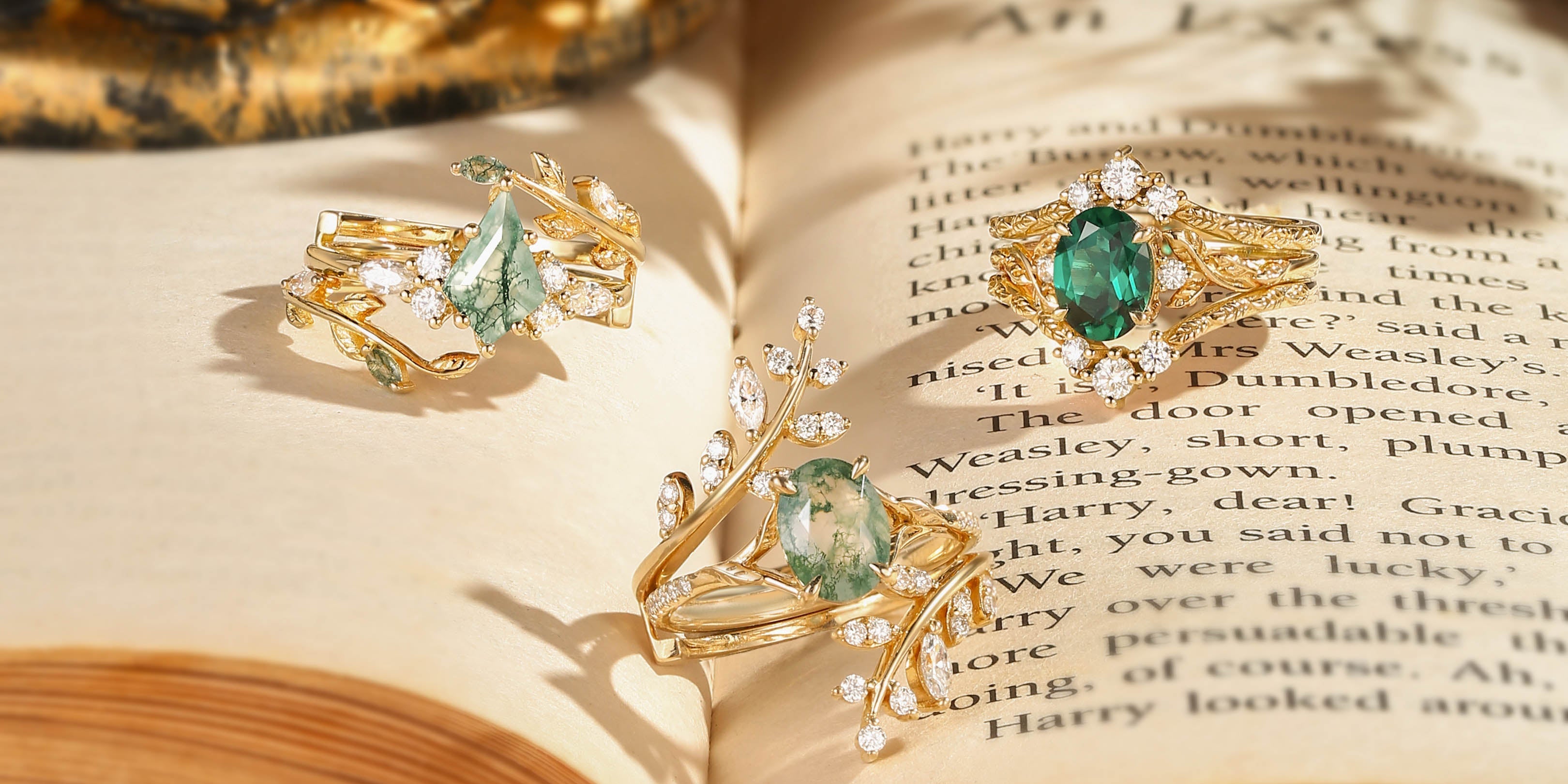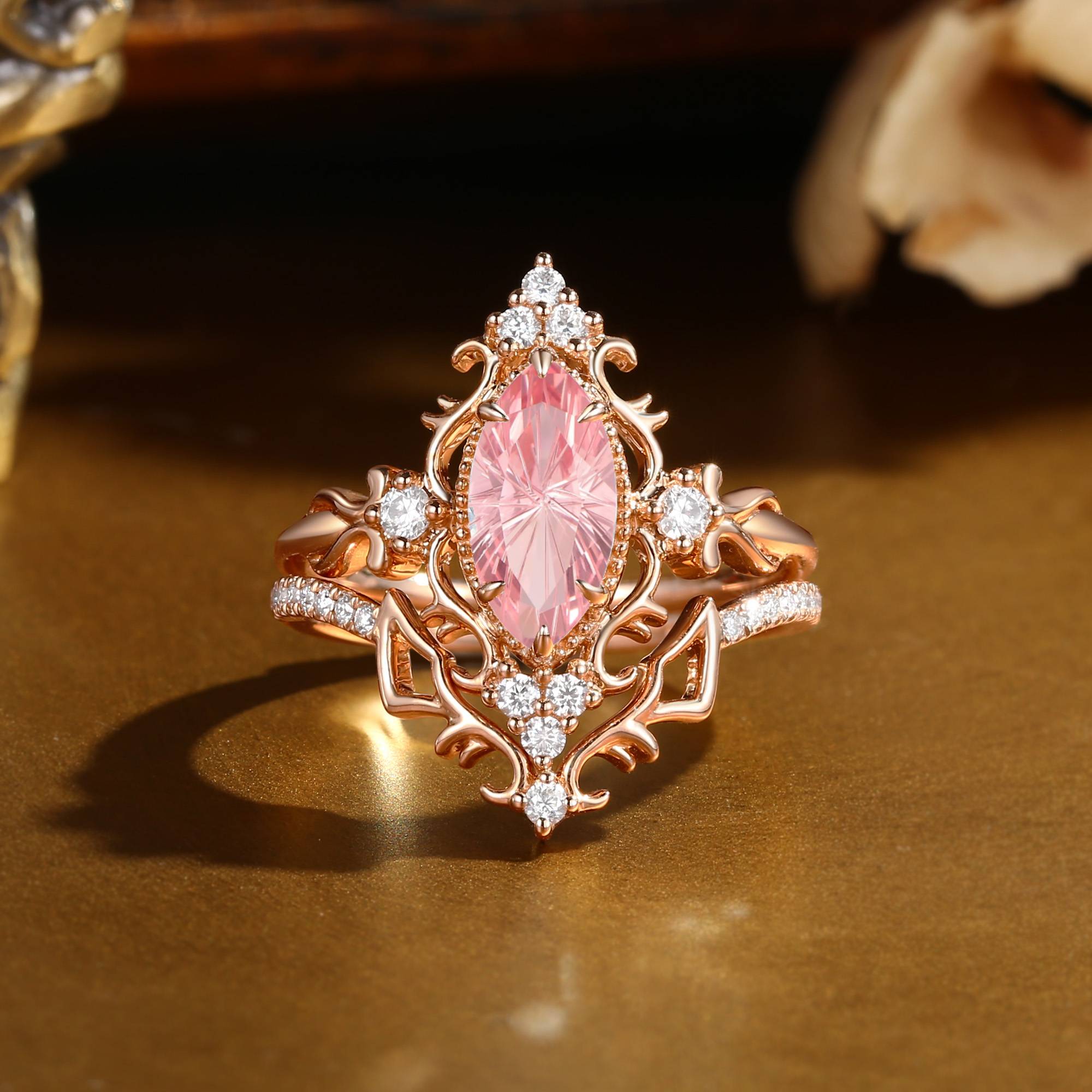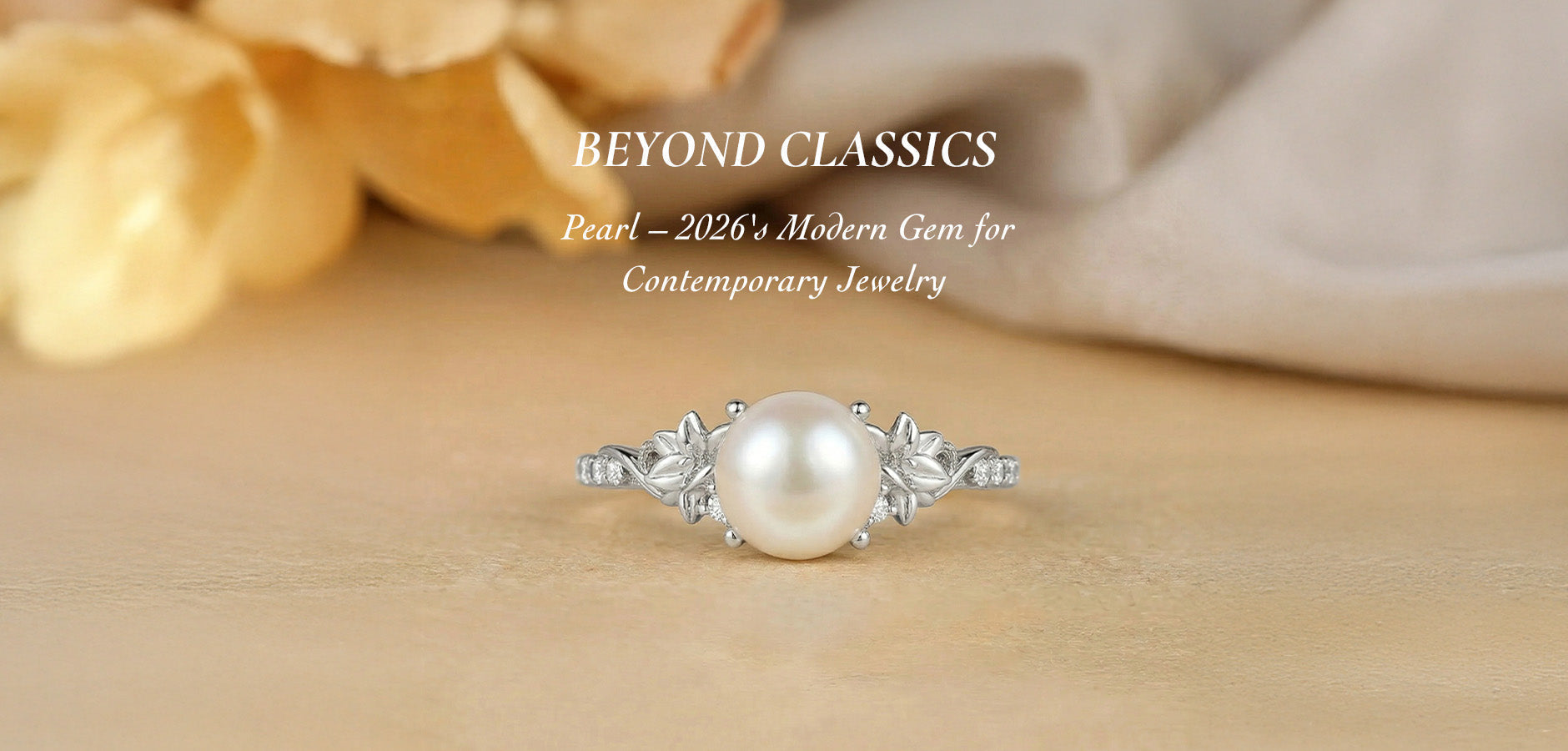
The pearl doesn't ask to be noticed. It simply is.
The Reinvention of an Ancient Stone
For most of the 20th century, pearl jewelry carried a specific set of associations. Grandmother's single strand. The graduating gift. Formal occasions and conservative elegance. Beautiful, yes. But somehow bounded.
That story is over.
In 2026, pearl has undergone a quiet revolution. You'll find it on the necks and fingers of the most style-forward dressers — not as an heirloom concession to formality, but as a deliberate, sophisticated choice. Pearl has become the stone of the person who knows exactly what they're doing. The anti-flashy statement. The intelligent counterpoint to an era saturated in maximalist sparkle.
At Blingflare, we've always understood pearl differently. For us, it's never been about tradition. It's been about what pearl is — something the ocean spent years perfecting, layer by patient layer, in the dark.
What Makes a Pearl: The Miracle of Nacre
Unlike every other gemstone, a pearl is not mined from the earth. It grows.
When an irritant — a grain of sand, a parasite, a small fragment — enters the shell of an oyster or mussel, the creature responds by secreting a substance called nacre: thin layers of calcium carbonate crystals bound by an organic protein called conchiolin. Over months or years, these layers accumulate around the irritant, creating a sphere of extraordinary smoothness and that characteristic soft luminosity — what jewelers call orient, the way a pearl's surface seems to glow from within rather than merely reflecting light.
It's the same phenomenon, in miniature, as the formation of a seashell. The ocean building architecture. Patient, layered, beautiful.
Freshwater pearls grow in mussels in rivers and lakes, primarily in China. They're generally more accessible in price and available in a wider range of shapes and colors — white, cream, lavender, peach, and subtle pinks. Modern culturing techniques have produced freshwater pearls of exceptional quality, making the best examples genuinely difficult to distinguish from their saltwater counterparts.
Akoya pearls, grown in saltwater oysters along the coasts of Japan and China, are the classic round white pearl — precisely round, high-luster, the archetype of what most people picture when they think "pearl." Their roundness and mirror-like luster come from a particularly uniform nacre deposition process.
South Sea pearls, grown in the largest pearl oyster species in the warm waters of Australia, Indonesia, and the Philippines, are the grandest: exceptionally large (often 10–16mm), with a satiny luster and colors ranging from bright white to golden yellow.
Pearl and the Nature Equation
Here is what we find endlessly compelling about pearl, from a design perspective: it is already nature. You don't have to evoke the natural world through a leaf motif or a vine-wrapped band — the stone itself is nature's own work, grown according to nature's own patient logic.
This creates a fascinating design tension: how do you honor that organic quality without overwhelming it?
Our answer, at Blingflare, has been to let the pearl speak — and support it with settings that echo its language.
Our Celestine ring pairs a delicate light green sapphire with pearl as its accent element — a combination that feels almost botanical, like finding two complementary things growing together in the same garden. The seafoam luminosity of the pearl against the soft green of the sapphire creates a pairing that feels less like a jewelry design and more like a discovered arrangement.
Pearl in 2026: The Styling Story
What's happening in the broader world of fine jewelry explains pearl's re-emergence.
We are living through a reaction against the purely maximalist era of jewelry — the period of stacked rings, heavy chains, and ostentatious diamond-adjacent everything. The pendulum is swinging toward the intentional, the personal, the quiet. People are reaching for pieces that say something specific rather than just a lot.
- The modern bridal pearl: Pearl is increasingly showing up in engagement and bridal contexts — not as the center stone (though that's happening too) but as an accent, a complement to colored stones, or in the wedding band. It offers softness and luminosity without competing with the center gem.
- The pearl-and-metal tension: Pairing a pearl's organic softness with the crisp geometry of a contemporary gold setting creates a compelling contrast. The pearl becomes more precious against the precision of the metal work; the metal becomes warmer against the natural imperfection of the pearl.
- The mix: Pearl alongside colored stones — sapphire, emerald, moss agate — has emerged as one of the most sophisticated styling moves of 2026. The organic, neutral quality of pearl allows it to harmonize with almost any color without competing.
- The solo statement: A single pearl, well-set, in a ring or pendant that gives it room to breathe. The confidence of restraint.
What Pearl Means: The Symbolism of Patience
Every culture that encountered pearls responded with reverence — not just for their beauty, but for what the process of their creation seemed to represent.
- Patience and transformation. A pearl takes years to form. It begins as an intrusion — something that doesn't belong — and becomes something precious through patient, layered response. There is a profound metaphor here for growth, for the way difficulty can become beauty with enough time and care.
- Purity and intention. In many traditions, pearl was associated with clarity of thought and purity of intention. Not innocence in a naive sense, but the clear-eyed commitment to one's own values. Hindu texts describe pearl as shukti, formed when drops of heavenly dew fall into the ocean at a specific celestial moment — the universe aligning to produce something rare.
- Feminine wisdom. Across traditions, pearl has been linked to the moon, to water, to feminine cycles of knowing. Not because pearls are "only for women" — they are emphatically not — but because the moon's influence over tides and seasons resonated with pearl's oceanic origin.
Caring for Your Pearl: Gentle as the Ocean
- Last on, first off: Apply perfume, hairspray, lotions, and makeup before putting on your pearl jewelry. These products contain chemicals and acids that can damage nacre over time.
- Wipe after wearing: A soft, slightly damp cloth after each wear removes skin oils and residue that could dull the luster. Allow to air dry before storing.
- Store separately: Pearls are easily scratched by harder stones. Store them in a soft pouch or lined compartment, away from other jewelry.
- Avoid submersion: Don't swim or shower with pearl jewelry. Prolonged exposure to water — especially chlorinated or salt water — can weaken the silk cord (in strands) and affect the nacre's surface.
- Never use ultrasonic cleaners or steam on pearls. The vibration and heat are damaging.
- Wear them: Counterintuitively, pearls benefit from being worn. The natural moisture of your skin helps maintain their luster. A pearl left in a box for years can dry out and crack.
Pearl at Blingflare: Where the Ocean Meets the Forest
Our approach to pearl in jewelry design starts from the same place as everything we make: nature as teacher, not just reference.
We don't use pearl as a nostalgic gesture toward the past. We use it as what it is — an organic, living material that carries the patience of the ocean in every layer of its nacre. In our hands, that becomes something new: pearl alongside sapphire in a leaf-framed setting, pearl as the luminous counterpoint to vivid green or deep blue, pearl as the thing that makes a nature-inspired design feel truly, fully alive.
If you've been sleeping on pearl — if you've dismissed it as too traditional, too simple, too expected — we'd like to change your mind.