News

Why Marquise Cut Is the Most Finger-Flattering Engagement Ring Shape of 2026
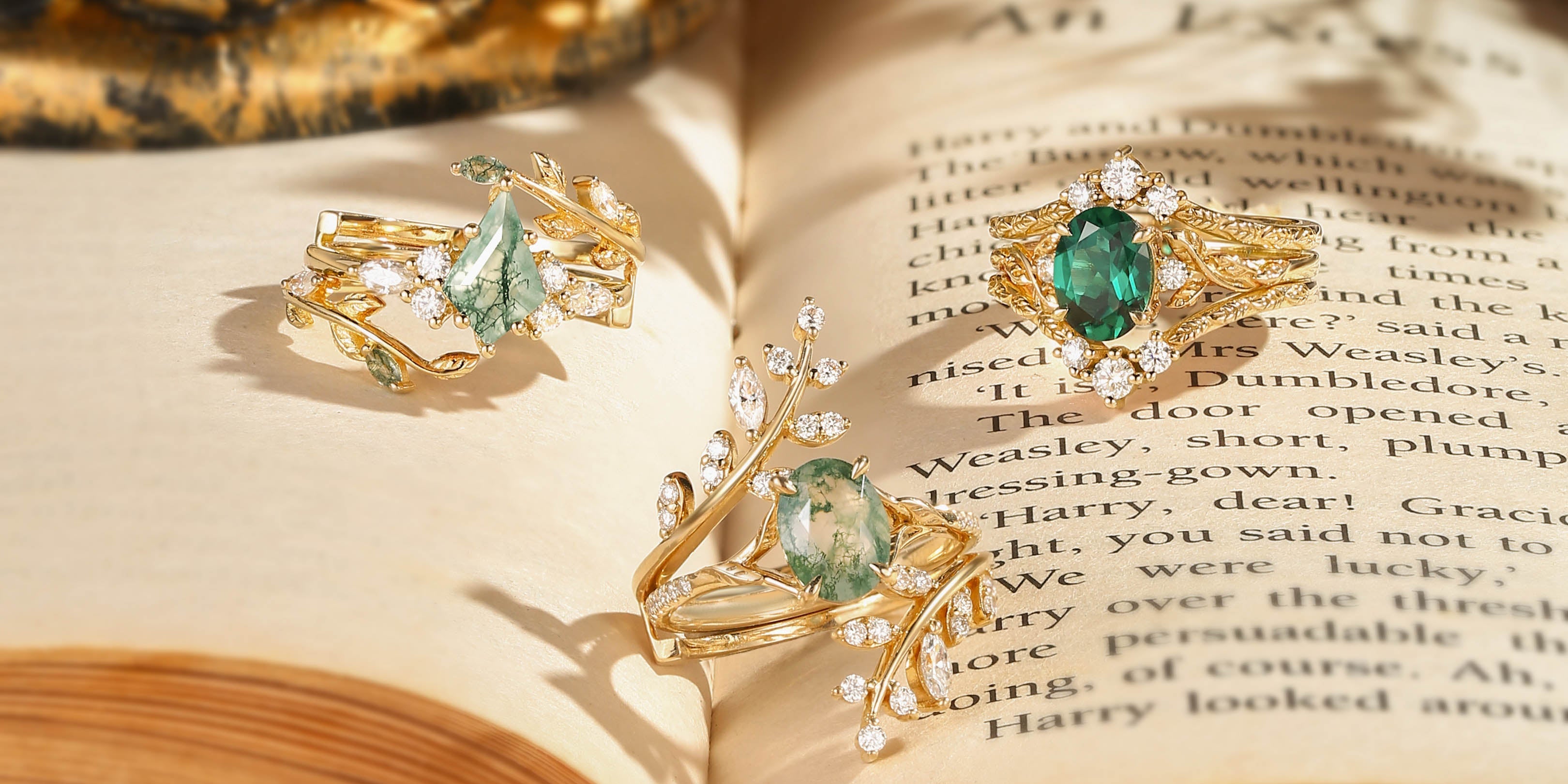
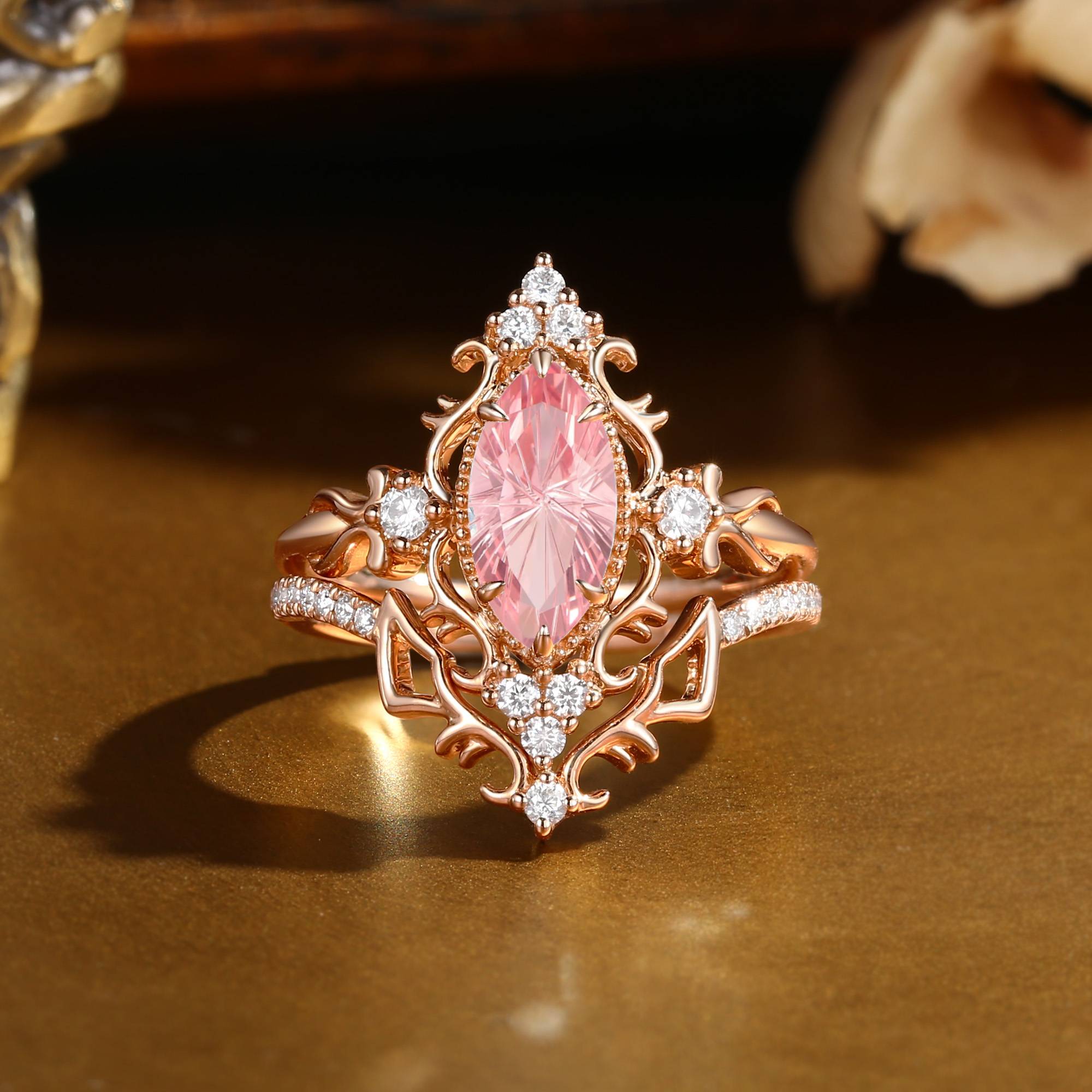
No cut divides opinion like the marquise. Other shapes disappear into familiarity — round brilliants, cushions, ovals. The marquise never does. Its elongated body and two sharp terminal points carry a presence that other cuts spend their entire surface area trying to achieve. It spent several decades being categorized as dated. It is now one of the most-searched ring shapes of 2026, and the reasons are not abstract. At BlingFlare, the marquise cut collection spans moss agate solitaires, green sapphire bridal sets, moissanite vintage designs, and lab diamond cluster rings — all in solid gold, all made to order. This guide covers the shape, who it is for, and which rings are worth your attention. Table of Contents What Is the Marquise Cut? What the Marquise Does to Your Hand Marquise vs. Oval vs. Pear: Shape Comparison Green Sapphire Marquise Rings — The Forest Bride's Stone Moissanite Marquise Rings — Maximum Fire in a Classic Profile Other Gemstone Options — Moss Agate, Lab Diamond, Emerald & Ruby How to Wear a Marquise: Orientation and Setting FAQ What Is the Marquise Cut? The marquise is an elongated stone shape with two pointed ends and a curved, symmetrical body between them. It belongs to the fancy cut family — anything outside the round brilliant. Its length-to-width ratio typically falls between 1.75:1 and 2.25:1. At 6×12mm — the standard for a 1ct equivalent — the stone spans roughly the width of two knuckle-joints along the finger. The name comes from 18th-century France. Louis XV commissioned a stone cut to mirror the shape of the Marquise de Pompadour's lips. Whether the full story is accurate is debated; what is not debated is that the shape emerged from that court era and carries the quality of something intentional and aristocratic from the beginning. What is technically notable: the marquise's elongated form gives it approximately 10–15% more face-up surface area than a round brilliant of equivalent carat weight. That is geometry, not styling. More face-up surface means more visible presence on the hand with fewer carats. The shape earns its size. One thing worth knowing before choosing: marquise cuts can produce a "bowtie effect" — a dark shadow across the widest part of the stone, visible from directly above, caused by light returning at angles that do not reach the viewer's eye. In a well-cut marquise, this reduces to a soft shadow that the stone's overall brilliance overwhelms. The cuts in BlingFlare's marquise collection are selected specifically to minimize bowtie while maximizing face-up brightness. What the Marquise Does to Your Hand When oriented with its long axis running along the finger — the traditional north-south position — the marquise creates an unbroken visual line from the base of the setting to the tip of the stone. The eye follows that line downward. Fingers appear longer and more slender than any round or square-cut stone achieves at the same carat weight. This is the same design principle behind pointed-toe shoes and vertical stripes: elongated lines draw perception in one direction and stretch the proportions of whatever surface they are placed on. The marquise applies it to a finger better than any other ring shape. Short fingers benefit most. Wide hands — elongation maximized. Narrower hands — the stone fills and anchors without overwhelming. The one scenario worth thinking through: very long, very slender fingers, where a smaller marquise stone can feel proportionally small. A 1ct+ center stone at that point resolves it visually. Marquise vs. Oval vs. Pear: Shape Comparison Shape L:W Ratio Finger Effect Visual Size vs. Round Bowtie? Trending Orientation Marquise 1.75–2.25:1 Most elongating ~10–15% larger Possible (minimize with quality cut) N-S and E-W both active Oval 1.30–1.50:1 Elongating ~5–10% larger Possible Primarily N-S Pear 1.45–1.75:1 Elongating ~8–12% larger Possible at shoulders N-S and E-W both active Round Brilliant 1:1 Neutral Benchmark None N/A Cushion 1:1–1.10:1 Neutral to widening Slightly smaller None N-S The marquise leads on finger elongation, perceived size per carat, and visual distinctiveness. Its trade-off: pointed ends require protective prongs to prevent chipping, and it is less common in the overall market — which is also precisely why it reads as deliberate when you see one. Green Sapphire Marquise Rings — The Forest Bride's Stone Lab-grown green sapphire scores 9.0 on the Mohs scale — second only to diamond and moissanite. It handles rings worn every day, through all conditions, without special maintenance. Lab-grown means traceable origin, consistent color saturation, and no mining impact. In a marquise cut, green sapphire reads as inherently botanical. The pointed, leaf-like silhouette of the stone mirrors the same organic shapes that define BlingFlare's nature-inspired settings — vines, leaves, petals, wings. The stone and the setting share a visual language before a single accent stone is added. Eulalie - Marquise Cut Lab Green Sapphire Elf Engagement Ring Forest Fairy Marquise Firework Cut Green Sapphire Leafy Inspired Bridal Set 2pcs - Fae Marquise Cut Lab Mint Green Sapphire Leafy Bridal Set 2pcs - Clarissa Flora Moon Marquise Cut Green Sapphire Leaf Engagement Ring - Ursa Vintage Marquise Cut Green Moissanite Leafy Floral Cluster Bridal Set 2pcs - Ivy Moissanite Marquise Rings — Maximum Fire in a Classic Profile Moissanite scores 9.25 on the Mohs scale — the hardest available engagement ring stone outside of diamond. Its refractive index sits at 2.65–2.69, above diamond's 2.42, which means it disperses more colored fire and more white brilliance per square millimeter of surface. In a marquise cut, that fire travels the full 12mm length of the stone. You see it from across a room. For brides who want a near-colorless white stone in a marquise profile — maximum brilliance, traditional bridal aesthetic, lab-grown ethics — moissanite gives you everything the shape can deliver with no compromise on hardness or optical performance. Eugenie - Marquise Cut Moissanite Victorian Vintage Ribbon Bridal Sets 2PCS Vintage Marquise Cut Moissanite Acanthus Leaf Wedding Ring Set 2pcs - Rhea Vintage Floral Marquise Cut Moissanite Engagement Ring - Daisy Vintage Moon Marquise Cut Cluster Moissanite Engagement Ring - Nova Vintage Marquise Cut Moissanite Leafy Cluster Bridal Set 2pcs - Lucia Other Gemstone Options — Moss Agate, Lab Diamond, Emerald & Ruby The marquise collection extends well beyond sapphire and moissanite. For brides who want a one-of-a-kind stone, a classic white diamond, or a vivid colored gemstone with a different character, there are four more categories worth knowing. Moss Agate — Florentina Moss agate is not manufactured to specification. Each stone contains its own pattern of dendrite inclusions — mineral threads that formed over thousands of years inside chalcedony — and no two are identical. In a marquise cut, that pattern runs the full 12mm length of the stone. You are looking through clarity at something that grew in the earth. For brides who want a ring that is genuinely one-of-a-kind, moss agate marquise makes that literal. Florentina places a 6×12mm marquise moss agate at the center of hand-sculpted rose blooms, unfurling leaves, and a butterfly accent in warm yellow gold. Moissanite accents trail along the band and read as dewdrops caught in morning light. The ring is designed as an environment for the stone, not just a frame for it. Center Stone: Moss Agate, 6×12mm, marquise cut Accent Stones: Moissanite, D clarity, VS-VVS, 0.26ct total Material: 14K or 18K solid gold / platinum Price: $1,399 Lab Diamond — Fleur & Elinor A marquise lab grown diamond is the shape that gives a diamond ring the most vintage character without requiring an antique stone or a reproduction setting. The form does that work for you. Lab-grown puts that at a price point mined equivalents cannot match: same hardness (10 Mohs), same refractive index, same chemical composition — with fully traceable origin. Fleur features a 1ct marquise lab diamond in a three-stone elf filigree setting — intricate metalwork that looks like it grew from the shank. Elinor is a complete Victorian cluster bridal set with a 1.5ct marquise lab diamond — two pieces engineered to nest flush together, both carrying a consistent heritage metalwork vocabulary. Lab Emerald & Ruby — Lois & Rosa The marquise cut is exceptionally suited to bold colored stones. Its elongated form presents emerald and ruby across maximum face-up surface area, and the pointed silhouette makes vivid color feel intentional rather than aggressive. Lois places a marquise lab emerald at the center of a Royalcore filigree setting — intricate wirework drawing from Victorian and Edwardian ornamental traditions. For the bride who wants vivid green with maximum historical gravitas. Rosa is a marquise lab ruby in an acanthus leaf Art Deco bridal set — structured, ornamental, and completely deliberate as an aesthetic statement. Nature Inspired Marquise Moss Agate Leafy Twist Engagement Ring Marquise Cut Ruby Acanthus Inspired Art Deco Bridal Set 2pcs - Rosa Lois - Marquise Lab Emerald Filigree Royalcore Wedding Ring Forest Fairy Marquise Cut Lavender Sapphire Leafy Inspired Bridal Set 2pcs - Fae Forest Fairy Marquise Firework Cut Alexandrite Leafy Inspired Bridal Set 2pcs - Fae How to Wear a Marquise: Orientation and Setting North-South (Traditional) — The pointed ends run along the finger's length. This is the orientation that delivers everything the marquise promises: maximum elongation, maximum face-up presence, the clearest expression of the shape's form. Correct for most hand types. East-West (Contemporary) — The pointed ends run horizontally across the finger. Trending heavily in 2026. The elongating property is exchanged for something graphic and deliberately unconventional — a ring that signals an aesthetic position rather than follows one. East-west marquise rings read as fashion-forward in a way that very little else in bridal jewelry currently does. Prong Placement — The marquise's pointed ends are its most structurally vulnerable points. Prongs or bezel elements at both tips are required to prevent chipping from direct impact. Six-prong settings (four side prongs plus two tip prongs) provide the most secure coverage while keeping the stone visible. Bezel settings offer maximum protection with a modern profile. All BlingFlare marquise settings include tip protection as standard. Solitaire vs. Cluster vs. Three Stone — Solitaire settings let the marquise shape dominate entirely: clean, intentional, maximalist in form. Cluster settings, like Florentina's floral design, add visual complexity at the band level without interrupting the stone's profile from above. Three-stone settings reinforce the elongated language of the center stone when all three pieces echo the marquise or pear silhouette. Metal Choice — Yellow gold is the historically correct pairing; the marquise originated in 18th-century French gold jewelry. White gold and platinum clean up the silhouette and maximize visual contrast with both colorless and colored stones. Rose gold adds warmth and pairs particularly well with moss agate and pink sapphire. All four metals are available throughout BlingFlare's marquise collection. Related Reads Wedding Season 2026: Which Engagement Ring Stone Is Right for You? Bridal Sets Collection — Designed to Nest Together FAQ Is the marquise cut back in style for 2026? Yes — and the return is real. Search data for "marquise engagement ring" has climbed consistently since 2022. The resurgence is partly driven by high-profile engagements featuring marquise stones, partly by the broader shift toward fancy cuts among younger buyers who want something less common than a round brilliant. For 2026, marquise is one of the top five fancy shapes actively being requested. The east-west orientation trend has introduced it to an entirely new audience. Does the marquise cut actually make fingers look longer? Yes, reliably — when oriented north-south. The elongated vertical axis creates a single continuous line along the finger that draws the eye downward and visually stretches the proportions of the hand. Among all engagement ring shapes, the marquise produces the most pronounced elongating effect. Short fingers benefit most. Very long slender fingers see the least visible difference — at that hand type, stone proportions matter more than orientation. Can I wear a marquise ring east-west (horizontal)? Yes, and it is a legitimate and increasingly popular choice. East-west orients the pointed ends side-to-side across the finger rather than along it. The finger-elongating effect is lost, but the result is a graphic, bold silhouette that reads as deliberately unconventional. Several BlingFlare marquise solitaire settings work well in either orientation — contact the team before ordering to confirm which settings are best suited to east-west. Is a marquise cut good for colored gemstones? Exceptionally well-suited. The elongated form shows color across a wide face-up surface area, and the pointed silhouette echoes organic shapes — leaves, petals, wings — that make marquise a natural fit for nature-inspired botanical settings. Moss agate, green sapphire, alexandrite, lab emerald, ruby, amethyst, and aquamarine all translate beautifully to the marquise cut. The shape makes colored stones feel more deliberate and distinctive than a round cut of the same stone would. How durable is a marquise ring for daily wear? As durable as the stone material itself — the marquise cut does not compromise the stone's hardness. The specific structural consideration is the pointed ends, which are the thinnest parts of the stone and most susceptible to chipping from direct hard impact. This is addressed in setting design: prong or bezel coverage at both tips protects these points in every BlingFlare marquise setting. With proper setting, a marquise ring handles daily wear without special precautions. What is BlingFlare's return and warranty policy? BlingFlare accepts returns within 30 days for quality issues at no cost. Custom modifications and engravings are non-returnable. Each piece comes with a complimentary one-year warranty covering quality issues from craftsmanship. One complimentary resize (±1 size) is available within the first year on most styles. Contact the team before ordering if you have questions about timeline, sizing, or customization options. BlingFlare's full marquise cut collection is at blingflare.com/collections/marquise-cut. The team is available to advise on stone selection, setting options, and metal choices for your specific brief.

Wedding Season 2026: Which Engagement Ring Stone Is Right for You?
Wedding season 2026 is already underway. Peak engagement months — December through February — have passed, and summer weddings are approaching fast. If you proposed over the holidays and are still deciding on a ring, you are not alone: production and shipping timelines mean that couples shopping in June for a July or August wedding are right at the edge. This guide is built for that window. Here is how wedding season actually works in 2026: proposals cluster from Thanksgiving through Valentine's Day, ceremonies concentrate from May through October (with June, September, and October the three busiest months), and the average engagement lasts around 13 months. That means right now — early summer — is simultaneously when newly engaged couples are finalizing their engagement rings and wedding bands and when couples from last fall's proposals are placing orders for bridal sets to arrive before their September dates. The market is at full pressure. If your wedding is this summer, order now. This guide covers every stone category in the bridal collection — with the information you need to choose confidently, not rush blindly. Table of Contents Why Colored Gemstone Engagement Rings Are Having a Moment Quick Comparison: Green Sapphire vs. Blue Sapphire vs. Pink Sapphire vs. Moissanite Green Sapphire Engagement Rings — The Nature Bride's Stone Blue Sapphire Engagement Rings — The Classic with a Story Pink Sapphire Engagement Rings — Soft Power Lab Emerald Engagement Rings — For the Bold Romantic Moissanite Engagement Rings — Maximum Sparkle, Zero Compromise Bridal Sets vs. Solo Ring: What to Buy First Cut Guide: Pear, Oval, Marquise, Kite — What Each Says on the Hand FAQ Why Colored Gemstone Engagement Rings Are Having a Moment The shift has been happening for years, but wedding season 2026 is making it undeniable: more brides are actively choosing colored gemstones over diamonds, and not as a budget compromise — as a preference. The reasons are practical and personal. Color is specific. A diamond ring is beautiful in a general way; a green sapphire ring says something exact about the person wearing it. Nature-inspired brides, people who prefer something unexpected, couples who want a ring that tells their story rather than signals a price point — they're all landing on color. There's also the durability question. Sapphire scores 9.0 on the Mohs hardness scale — second only to diamond and moissanite. It handles daily wear without special care. Emerald (7.5–8) and moissanite (9.25) both hold up for a lifetime of everyday wear. The old assumption that colored stones are fragile doesn't survive contact with the actual hardness numbers. What you're choosing when you choose a colored stone isn't a substitute. It's a deliberate decision about what kind of ring you want to wear for the rest of your life. Quick Comparison: Which Stone Is Right for Your Wedding Ring? Stone Mohs Hardness Color Range Meaning Best For Green Sapphire 9.0 Mint to forest green Growth, renewal, hope Nature brides, maximalists, anyone who wants something rare Blue Sapphire 9.0 Cornflower to deep navy Loyalty, fidelity, truth Classicists who want meaning behind the choice Pink Sapphire 9.0 Blush to vivid rose Romance, joy, tenderness Romantic personalities, brides who love color but want softness Lab Emerald 7.5–8.0 Vivid green Devotion, abundance, vitality Statement-makers, brides drawn to vintage and Art Deco references Moissanite 9.25 Near-colorless / icy white — Maximum brilliance, classic bridal look, lab-grown ethics Green Sapphire Engagement Rings — The Nature Bride's Stone Green sapphire is the stone that defines BlingFlare's bridal collection — and the reason is straightforward. Green sapphire in mint, sage, and forest tones pairs naturally with botanical settings in a way that no other stone does. The color reads as alive, rooted, and quietly unusual — exactly the feeling a nature-inspired engagement ring should carry. Lab-grown green sapphire scores 9.0 on the Mohs scale, identical to its mined counterpart. It handles rings worn every day, through all conditions, without special maintenance. And lab-grown means the stone was created without mining impact — traceable, ethical, and available in consistent color saturation across the collection. Clarissa — Pear Cut Green Sapphire Leafy Bridal Set (2-Piece) Clarissa is a complete bridal set: a pear cut green sapphire engagement ring and a curved leafy wedding band designed to nest against each other. The pear cut elongates the finger; the leafy band wraps around the base of the stone with botanical engraving that reads as a continuation of the ring itself. Together, they wear as a single piece — no visual gap, no styling effort required. This is the ring for someone who wants their engagement ring and wedding band to feel like they were made together. Because they were. Cut: Pear Stone: Lab Green Sapphire Setting: Leafy vine with accent stones Includes: Engagement ring + matching curved wedding band Material: Solid gold (10K / 14K / 18K) Filigree Leafy Pear Firework Cut Green Sapphire Engagement Ring Lab Green Sapphire Round Cut Engagement Ring Marquise Cut Lab Green Sapphire Elf Engagement Ring Oval Cut Lab Mint Green Sapphire Vine Fairytale Engagement Ring Blue Sapphire Engagement Rings — The Classic with a Story There is a reason blue sapphire appears in the most recognized engagement ring in modern history — Princess Diana's cornflower blue sapphire, now worn by Catherine, Princess of Wales. The stone's association with loyalty, faithfulness, and enduring love isn't a contemporary invention. It goes back over a thousand years in Western tradition. At 9.0 Mohs, blue sapphire is one of the most durable stones available for daily wear. The cornflower blue range — clear, vivid, with no greenish cast — is the most classic and most sought-after shade. Lab-grown cornflower blue sapphire delivers that exact hue consistently, without the provenance uncertainty of mined material. Abrielle — Oval Cut Lab Cornflower Blue Sapphire Vine Fairytale Ring "I told him I wanted something that looked like a fairy tale but felt like it was made for real life. Abrielle was exactly that. The vine setting is even more beautiful in person — you can see the detail in every twist." — Verified Buyer Abrielle is the blue sapphire engagement ring that earns its name. The oval cut maximizes the stone's color saturation — ovals show more color face-up than any other cut at the same carat weight — and the vine setting carries that botanical character through every angle of the ring. It reads as romantic without trying. It wears as practical without giving anything up. Cut: Oval Stone: Lab Cornflower Blue Sapphire Setting: Vine-wrapped fairytale setting with accent stones Material: Solid gold (10K / 14K / 18K) Oval Cut Lab Cornflower Blue Sapphire Vine Fairytale Engagement Ring Oval Cut Lab Cornflower Blue Sapphire Flower Engagement Ring Floral Fairy Oval Cut Cornflower Blue Sapphire Flower Engagement Ring Oval Cut Lab Cornflower Blue Sapphire Vine Fairy Bridal Ring Set 2pcs Pink Sapphire Engagement Rings — Soft Power Pink sapphire carries the same 9.0 Mohs hardness as its blue and green counterparts — there is no practical durability trade-off. What the color adds is warmth and a quality that's difficult to name but instantly recognizable: it's romantic without being sentimental, vivid without being aggressive. Pink sapphire reads differently depending on the light — soft and blush in daylight, luminous and rose-toned indoors. It's the choice for brides who know exactly what they want and aren't looking to anyone for permission. Faustine — Heart Cut Pink Sapphire Four Leaf Clover Filigree The heart cut is the most emotionally direct stone shape available, and in a four leaf clover filigree setting, Faustine turns that directness into something genuinely beautiful rather than obvious. The clover shape frames the heart cut perfectly — four rounded petals around a pointed stone, botanical and romantic at the same time. This is a ring with a clear point of view, and it makes no apologies for it. "I've never seen anything like this in a store. The clover around the heart stone is the most creative setting I've ever encountered. My fiancée cried when she opened the box." — Verified Buyer Cut: Heart Cut Stone: Lab Pink Sapphire Setting: Four leaf clover filigree flower Material: Solid gold (10K / 14K / 18K) Four Leaf Clover Heart Cut Pink Sapphire Flower Filigree Engagement Ring Forest Fairy Marquise Cut Pink Sapphire Leafy Engagement Ring Flower Oval Cut Pink Sapphire Bouble Halo Engagement Ring Crescent Moon Twisted Round Cut Pink Sapphire Bridal Set 2pcs Lab Emerald Engagement Rings — For the Bold Romantic Emerald has been the stone of royalty, romance, and drama for more than four thousand years. Cleopatra's collection is the most cited example; the Mughal emperors inscribed their most significant emeralds with prayers. The stone's vivid green — a different green than sapphire, warmer and deeper with a characteristic internal garden called jardin — has no equivalent in the gemstone world. Lab-grown emerald scores 7.5–8 on the Mohs scale, making it entirely appropriate for daily wear with normal care — avoid hard impacts, and this stone lasts a lifetime. For desk-job daily wear, emerald is a practical and stunning choice. Lab-grown means the color consistency is exceptional and the origin is traceable. Desiree — Oval Cut Lab Emerald Branch Leafy Engagement Ring Set (2-Piece) Desiree frames an oval lab emerald in a branch-textured leafy setting — the gold work mimics the way woody branches bend around something beautiful. The oval cut is the right choice for emerald: it shows the stone's vivid color across maximum face-up surface area, and the elongated shape echoes the organic lines of the branch setting. The matching wedding band nests cleanly against the base of the setting. For the bride who wants a ring that declares a point of view the moment someone sees it. Cut: Oval Stone: Lab Emerald Setting: Branch and leaf botanical Includes: Engagement ring + matching wedding band Material: Solid gold (10K / 14K / 18K) Lab Emerald Leafy Design Wedding Band Oval Cut Lab Emerald Gold Nature Leaf Engagement Ring Marquise Lab Emerald Filigree Royalcore Wedding Ring Nature Inspried Lab Emerald Pear Cut Leaf Engagement Ring Moissanite Engagement Rings — Maximum Sparkle, Zero Compromise Moissanite is the hardest available engagement ring stone after diamond itself, scoring 9.25 on the Mohs scale. It refracts light differently than any other gemstone — its refractive index is higher than diamond, which means it sends more colored fire (dispersion) across a room when light hits it. Under direct light, moissanite is extraordinary. Under low indoor light, it continues to perform when other stones go quiet. For brides who want the traditional bridal look — near-colorless, brilliant, white — but aren't interested in mining impact, moissanite is the logical choice. Lab-grown, traceable, and at a fraction of diamond's cost at equivalent carat weight. Daisy — Vintage Floral Marquise Cut Moissanite Daisy is the moissanite ring for the bride who references vintage but doesn't want a museum piece. The marquise cut gives the stone a pointed, antique silhouette; the floral setting brings in the delicate botanical detail of vintage jewelry without replicating any specific historical style. The result is a ring that reads as timeless without being dated — the kind of piece that looks as relevant in fifteen years as it does now. "I've looked at hundreds of rings online. Nothing came close to this. The detail in the flower petals is unbelievable. Every person at the engagement party asked about it." — Verified Buyer Cut: Marquise Stone: Moissanite Setting: Vintage floral Material: Solid gold (10K / 14K / 18K) Vine Leafy Moissanite Wedding Band Special Nature Inspired Wedding Enhancer Band Pear Cut Moissanite Branch Leafy Inspired Engagement Ring Pear Cut Moissanite & Sapphire & Emerald Butterfly Engagement Ring Bridal Sets vs. Solo Ring: What to Buy First This is one of the most common questions during wedding season — and the honest answer depends on when your wedding is and what you care more about: the proposal moment or the long-term look of both rings together. Factor Solo Engagement Ring Bridal Set (2-Piece) The proposal One ring, one moment. Simpler, more traditional Both rings presented together — or engagement ring now, band saved for the ceremony Design coherence Wedding band chosen later — may not nest perfectly against a separately purchased engagement ring Designed together to sit flush, share visual language, and wear as a unit Budget timing Spreads cost across two purchases One purchase; often better value as a combined set Ring stacking More flexibility to add different-style bands over time Optimized as a matched pair; stacking with additional rings is still possible Decision pressure Wedding band decision deferred — one less thing before the proposal Both decisions made at once — requires clarity about the complete look Recommendation: If you have a summer wedding date and you're shopping now, a bridal set is the efficient choice — one order, one production timeline, and you know both rings will work together. If the proposal is imminent and the wedding is further out, a solo engagement ring leaves room to choose the band when you're less time-pressured. Both Clarissa and Desiree are designed as complete bridal sets. Abrielle is available as a solo ring or as a matched two-piece set. All other engagement rings in the collection can be paired with BlingFlare's curved wedding bands, which are designed to nest against most of our engagement ring settings. Cut Guide: Pear, Oval, Marquise, Kite — What Each Says on the Hand Cut affects how large a stone looks, how it performs in different light conditions, and how it interacts with the setting and the hand wearing it. Here's the practical breakdown for the cuts in this collection: Cut Visual Effect Best Hand Shape Light Performance Character Pear Elongates the finger; pointed tip draws the eye upward Shorter or wider fingers High brilliance, especially at the tip Romantic, teardrop; bridal classic that never reads as ordinary Oval Maximizes face-up size and color; soft, feminine silhouette Most hand shapes; particularly flattering on narrow fingers Excellent face-up color and brilliance Vintage-modern; the most versatile choice in contemporary bridal Marquise Dramatically elongates; appears significantly larger than carat weight suggests Slender fingers; also elongates wider fingers effectively High brilliance at the pointed ends; bold presence in all light Daring, graphic; historical (favored by Marie Antoinette) but completely contemporary in the right setting Heart Immediately symbolic; pointed base draws the eye down to the finger Longer fingers carry this cut with the most elegance Good brilliance when cut with proper symmetry Direct, romantic, unapologetic — not for everyone, exactly right for some Kite Architectural; four flat facet planes give a clean, graphic presence Any hand shape; the angular silhouette is bold on larger fingers, precise on smaller ones Different from traditional cuts — reflects light in planar segments rather than sparkle points Confident, unusual, and completely coherent as a design choice About BlingFlare's Firework Cut: The Firework Cut is a proprietary modification to standard pear and marquise cuts, developed to maximize light return through the stone's pavilion in a dispersed, multi-directional pattern. Instead of sending light primarily upward, it distributes flash across a wider angle — visible to people standing beside the wearer, not just directly above. It's the reason Hesper and Fae photograph differently from standard cut stones. Related Reads Couple Rings for Every Love Story — Gemstone Sets That Mean Something Men's Wedding Bands — The Complete Guide to Choosing the Ring You'll Wear Every Day Why Sapphire Stays Brilliant: The Everyday Stone That Never Stops Catching Light FAQ Is a colored gemstone engagement ring as durable as a diamond? Sapphire (green, blue, pink) and moissanite are both 9.0+ on the Mohs scale — extremely close to diamond at 10. For practical daily wear purposes, there is no meaningful durability difference. Lab emerald at 7.5–8 Mohs is appropriate for desk-job daily wear with normal care; avoid hard impacts. All BlingFlare stones are hand-selected for quality before setting. How far in advance should I order before my wedding? Order at least 4–6 weeks before your wedding date. Standard production ships in 1–2 weeks; engravings or custom modifications add 2–3 weeks. Wedding season creates higher order volumes — don't cut it close. If your date is within the next 4 weeks, contact our team directly before ordering to confirm timeline. What's the difference between a bridal set and an engagement ring with a matching band? A bridal set is designed from the start as two pieces that function together: the engagement ring and the wedding band are engineered to sit flush against each other with no gap. A matching band is designed to coordinate with an existing ring but may not sit perfectly flush depending on the setting. If visual cohesion matters to you, a bridal set is the better approach. What is the Firework Cut, and why does it matter? BlingFlare's Firework Cut is a proprietary modification to pear and marquise cuts that disperses light across a wider horizontal angle rather than directing it straight up. The practical effect: the ring catches light from more angles and shows flash to people standing beside the wearer, not just looking directly down at the stone. It's particularly effective in sapphire, where the stone's color also gets distributed across the flash. Is lab-grown sapphire the same as natural sapphire? Lab-grown sapphire is chemically and physically identical to natural sapphire — the same aluminum oxide crystal structure, the same 9.0 Mohs hardness, and the same optical properties. The difference is origin: lab-grown is created in controlled conditions rather than mined. Lab-grown stones offer consistent color quality and traceable origin. All BlingFlare sapphires are hand-selected for color saturation and clarity before setting. Can I get a ring engraved for the wedding? Yes — inner band engraving (initials, a date, a short phrase) is available on most styles. Add 2–3 weeks to production time. Note that engraved rings cannot be returned or exchanged, so confirm all details carefully. Custom engraving is a one-way decision. What if I don't know my ring size? BlingFlare offers a complimentary resize (±1 size) within the first year of purchase on most styles. If you're between sizes, order the larger — it's easier to size down than to wear a ring that's too tight. Our team can also walk you through measuring at home. Contact us before ordering if you're uncertain. Can I coordinate my engagement ring with my partner's wedding band? Yes — this is what the couple ring collection is designed for. Sets are built around a shared stone (same sapphire, same emerald) in settings sized and proportioned separately for each hand. If you want to build a coordinated pair from our engagement ring and men's band collections, our team can advise on stone and metal combinations that work together. Contact us here. What's your return policy? BlingFlare accepts returns within 30 days for quality issues at no cost. For personal preference returns, a 30% restocking fee applies. Custom modifications, engravings, and personalized orders are non-returnable — all sales on these are final. One complimentary resize (±1 size) is available within the first year on most styles; return shipping is at the customer's expense. Shopping for your wedding ring this season? Our team is here to help you find the right stone, cut, and setting for the ring you'll wear every day. Chat with us at blingflare.com or find us on Instagram.

Men's Wedding Bands: How to Choose the Ring You'll Wear for the Rest of Your Life
A wedding ring is the only piece of jewelry most men will wear every single day for the rest of their lives. Not for a season. Not until the trend changes. Every day — through work, sleep, travel, and everything in between. That's a different standard than any other ring you'll ever buy. At BlingFlare, our men's wedding band collection is built in solid gold with nature-inspired designs — pieces that hold up to a lifetime of wear while looking like something worth passing down. This guide walks through everything that actually matters when you're choosing the ring you'll wear forever. Table of Contents What Makes a Wedding Band Different Quick Comparison: Plain Gold vs. Gemstone Plain Gold Wedding Bands — The Classics Gemstone Wedding Bands — The Statement Pieces Band Width: A Real-Life Guide by Lifestyle Coordinating With Your Partner's Ring Choosing Your Gold Color for a Wedding Band Sizing for Life FAQ What Makes a Wedding Band Different Most rings are worn when you feel like it. A wedding band doesn't get that option. It goes on the morning of your wedding and — for most men — it stays there. That changes what you're actually shopping for. The questions shift. It's no longer just about looks. It's about how the ring holds up at a keyboard, a workbench, a gym. Whether the setting height will snag on gloves or get in the way. Whether you'll still want to wear it in twenty years. Whether your fingers will still be the same size by then (spoiler: they probably won't be). There's also something else going on with a wedding band that doesn't apply to a regular men's ring: it's visible at every handshake, every meeting, every moment you reach for something. It's a signal that reads instantly. The ring you choose says something about how seriously you took the decision — not just the marriage, but the object you chose to mark it. None of this means the ring needs to be expensive. It means it needs to be right. And "right" for a wedding band looks different than right for a ring you buy because you like how it looks on your hand. Quick Comparison: Plain Gold vs. Gemstone Wedding Bands Factor Plain Gold Band Gemstone Wedding Band Daily wear convenience ✅ Nothing to snag or catch ✅ Low-profile settings handle daily use well Visual presence Understated — texture rewards a second look Immediate — color and stone visible at a glance Symbolic depth Classic permanence Stone adds a specific meaning (loyalty, protection, growth) Durability Exceptional — no stone to protect Excellent — sapphire and ruby at 9.0 Mohs handle daily wear Coordination with partner's ring Easy — metal color match is enough Can match stone type for a designed couple look Resizability Straightforward Possible — depends on setting type Starting price From $1,299 From $1,499 Plain Gold Wedding Bands — The Classics Plain gold doesn't mean plain design. BlingFlare's engraved gold bands carry hand-detailed botanical and nature-inspired texture across the entire band — invisible from ten feet, remarkable up close. These are the rings that look better the longer you wear them. No stone to maintain. Nothing to snag. Just solid gold developing a history with the person wearing it. 4MM Nature Inspired Flower Band "I got this for my husband and he hasn't taken it off since. Simple enough for work, but you can tell it's quality the moment you hold it." The most-worn wedding band in our collection — and it's easy to see why. Botanical floral engravings wrap the entire 4MM band in texture that rewards attention without demanding it. Solid gold throughout, no plating, no fade. The width sits at the classic sweet spot for wedding bands: present on the finger, never in the way. Band width: 4MM Material: Solid gold (10K / 14K / 18K) Available in: Yellow, rose, white, black gold Best for: First-time ring wearers, office professionals, anyone who wants craft without bulk 5MM Oak Leaf Promise Band The oak leaf is one of the oldest symbols of endurance in Western tradition — used on coins, crests, and monuments for centuries, because the oak outlives nearly everything around it. As a wedding band design, it carries exactly the right meaning without ever needing to explain itself. At 5MM, the Oak Leaf band has slightly more presence than the 4MM Flower — the right width for men with medium to larger hands who want a ring that holds its visual weight without going into statement territory. Solid gold throughout, all four gold colors, 10K / 14K / 18K. Band width: 5MM Material: Solid gold (10K / 14K / 18K) Best for: Men who want a wedding band with deliberate symbolism and everyday wearability Navy Blue Enamel Floral Vine Men Band — Aldric Some men want a wedding band that's unmistakably theirs — not a standard gold loop, not even a standard engraved band. Aldric is for that man. Deep navy enamel inlay runs along a hand-engraved floral vine — Art Nouveau in its reference, completely modern in how it wears. The color reads dark and grounded from a distance, revealing its navy depth only when looked at directly. As a wedding band, Aldric makes a particular statement: that you chose every detail deliberately, including this one. Available in 10K / 14K / 18K and 950 Platinum. Band width: 4MM Accent: Navy blue enamel inlay Material: Solid gold (10K / 14K / 18K) or 950 Platinum Best for: Men who want a distinctive, one-of-a-kind wedding band that still reads refined 4MM Nature Flower Band 5MM Oak Leaf Band Aldric — Navy Enamel Wedding Band Natural Inspired Leaf Wedding Band Art Deco Leaf-Inspired Hand-Engraved Royal Promise Ring Gemstone Wedding Bands — The Statement Pieces A gemstone wedding band carries a second layer of meaning that a plain band doesn't: the stone itself says something. Sapphire has meant loyalty for centuries. Ruby has been worn by kings as protection and passion. Moss agate gives you a ring that is genuinely, irreducibly unique — no two stones are alike, which means no two rings will ever be identical. For a wedding band, that added meaning matters more than it does for any other ring you'll buy. Blue Sapphire — The Wedding Stone There's a reason blue sapphire appears on the most famous engagement ring in modern history and in crown jewels across Europe and Asia. Sapphire has been associated with loyalty, faithfulness, and the kind of love that holds across time for over a thousand years. Hardness of 9.0 on the Mohs scale makes it one of the most durable stones available — the right choice for a ring worn every day, indefinitely. As a wedding band stone, it doesn't need introduction. It carries its own context. 5.5MM Branch Blue Sapphire Cluster Men Wedding Band Lab-grown blue sapphire and moissanite clustered into a 5.5MM branch-textured band. The setting sits low enough for daily wear without sacrificing visual presence. The sapphire reads as calm authority — deep, clear, and grounded. Exactly what a wedding band should feel like. Band width: 5.5MM Stone: Lab Blue Sapphire & Moissanite cluster Material: Solid gold (10K / 14K / 18K) Stone hardness: 9.0 Mohs — built for daily wear Moss Agate — The Ring No One Else Will Have Moss agate is a translucent stone with dark green mineral inclusions that form organic patterns inside clear quartz. No two stones are identical. Every ring is genuinely one of a kind — and for a wedding band, that matters more than it does for any ring you'd buy for style alone. For men drawn to natural materials — wood, stone, leather — moss agate is the obvious choice. It doesn't announce itself. It reveals itself, slowly, to anyone who looks closely enough. That quality wears well over decades. 8MM Moss Agate Branch Men Wedding Band Wide, grounded, and textured like something pulled from the earth. The 8MM width makes this a deliberate statement — the right choice for men with larger hands who want a wedding band with genuine physical presence. The branch engraving and moss agate inlay work together without competing. Available in yellow, white, rose, and black gold; 10K, 14K, and 18K. Band width: 8MM Stone: Natural Moss Agate inlay Material: Solid gold (10K / 14K / 18K) Best for: Men who want a bold, nature-first wedding band that is genuinely unique Ruby Filigree — The Heirloom Band Ruby has been the stone of kings, warriors, and protectors for over three thousand years. It scores 9.0 on the Mohs scale — built for daily wear. The deep red carries a gravity that no other stone matches. And as a wedding band stone, ruby speaks to something specific: not just love, but the kind of love that protects, endures, and commands. Antique Style Ruby Filigree Men Wedding Band — Rowan The most intricate piece in our collection. Rowan is fully filigree-worked across a 6MM band — fine gold wires soldered into scrollwork drawn from vintage lace patterns, with lab ruby and moissanite accents woven throughout. At arm's length it reads as engraved. Up close, it's a completely different object. This is the ring that gets passed down — not because it's expensive, but because nothing else exists that looks like it. Band width: 6MM Stone: Lab Ruby & Moissanite Material: Solid gold (10K / 14K / 18K) Best for: Men who want a wedding band built to become an heirloom 5.5MM Blue Sapphire Branch 8MM Moss Agate Branch Rowan — Antique Ruby Filigree Wedding Band Lab Cornflower Blue Sapphire Cluster Couple Ring Set Oval Cut Moss Agate Branch Leafy Engagement Ring Set 2pcs Band Width: A Real-Life Guide by Lifestyle Width is the most underestimated decision in choosing a wedding band. It determines how the ring reads, how it fits into daily life, and whether you'll still want to wear it in twenty years. The right width depends less on personal taste than on how you actually use your hands. Width Best Lifestyle Fit Daily Feel BlingFlare Picks 4MM Office professionals, surgeons, chefs — anyone whose hands need to stay nimble Barely there. You'll forget it's on within days 4MM Flower Band, Aldric, Mireille 5MM Most men — the universal sweet spot for wedding bands Present but not heavy. The obvious starting point for daily wear 5MM Oak Leaf, 5MM Emerald Cluster 5.5MM Medium-large hands, men who want slightly more surface for stone settings Noticeable weight without becoming a statement 5.5MM Blue Sapphire Branch 6MM Larger hands, men in roles where a confident ring presence fits naturally Confident — you know it's there Rowan Ruby Filigree 8MM Large hands, strong fingers, outdoor professionals, men making a deliberate statement Full commitment. Commands attention without asking for it 8MM Moss Agate Branch One practical note on trades and hands-on work: If your job involves significant hand contact — construction, mechanical work, heavy gym use — a lower-profile setting and a narrower band (4–5MM) will give you a ring that stays on without getting in the way. Gemstone settings in these rings are designed to sit low, but for the most physically demanding situations, an engraved plain gold band is the most practical choice. Size up half a step for wider bands. An 8MM band sits flush against more finger surface than a 4MM band in the same nominal size, which means it will feel tighter. Size up half a size for anything 6MM and above. Still unsure — contact our team before ordering. Coordinating With Your Partner's Ring A wedding band doesn't need to be a matching set to look intentional as a pair. There's a difference between "matched" and "coordinated" — and coordinated often looks more sophisticated. The simplest coordination is metal: if both rings share the same gold color, they read as a pair from across the room without looking like they came in the same box. That's often enough. A step further: shared stone. Our couple ring sets are designed specifically so both bands carry the same stone in settings calibrated separately for each hand — same sapphire, same moss agate, same emerald, but proportioned so each ring feels right on the person wearing it. The 8MM Moss Agate Branch pairs directly with our women's moss agate designs in the couple collection. The Blue Sapphire Branch has a matching women's counterpart. If you're buying both bands, consider starting with the stone and working outward from there — it's the decision that anchors everything else. Choosing Your Gold Color for a Wedding Band All BlingFlare men's wedding bands are available in yellow, white, rose, and black gold across 10K, 14K, and 18K. Most Aldric styles also come in 950 Platinum. Here's how to think about the choice in the specific context of a wedding band — not just a ring you're buying for yourself. Gold Color Wedding Band Context Coordination Note Yellow Gold The most traditional and universally readable wedding band metal. Never needs explanation. Gets better looking as it develops patina over years Easiest to match with a partner's yellow gold ring; pairs equally well with rose and white if you're coordinating rather than matching White Gold Clean and modern. Reads contemporary without being unconventional — a good choice if your partner's ring is white gold or platinum Will require professional replating over years (typically every 5–10 years) as the rhodium surface wears. Yellow and rose gold do not have this consideration Rose Gold Warmer than white, softer than yellow. Growing in popularity for men's wedding bands because it photographs beautifully and wears well on a wide range of skin tones Pairs naturally with both yellow and white gold on a partner's ring — the warm pink creates contrast that reads deliberate, not accidental Black Gold Yes — black gold is appropriate for a wedding band, and increasingly common. It reads as confident and intentional at a wedding, not unconventional. The dark finish pairs especially well with darker stones (moss agate, sapphire, ruby) A black gold men's band paired with a yellow or white gold women's ring creates strong, elegant contrast. The key is ensuring the stone is shared — same sapphire, different metal reads intentional rather than mismatched Sizing for Life Fingers change. Over years of marriage — with weight changes, pregnancy, aging, seasonal temperature shifts — the finger your ring is sized to today may not be the same finger in twenty years. That's not a reason for anxiety. It's a reason to build in a margin. A few practical points: Size at the end of the day. Fingers are slightly larger in the evening than in the morning. If you're between sizes, err toward the larger one for a ring you'll wear while sleeping. Temperature matters. In cold weather, fingers contract. In heat, they expand. A ring that fits perfectly in winter may feel tight in summer — factor in your climate, especially if you're being sized in an extreme season. Wider bands fit smaller. As noted above: an 8MM band sized to the same nominal number as a 4MM band will feel tighter. Size up half a step for anything 6MM and above. BlingFlare offers one free resize (±1 size) within the first year of purchase on most styles. If you're unsure between two sizes at the time of ordering, size up — it's easier to resize down than to live with a ring that's too tight. For engraved rings, resizing is straightforward. For gemstone bands, contact our team before ordering — some settings require additional consideration for resizing, and we'll advise you on the best approach for your specific style. Related Reads Couple Rings for Every Love Story — Gemstone Sets That Mean Something Men's Rings That Actually Mean Something — A Complete Guide to Nature-Inspired & Gemstone Bands Why Sapphire Stays Brilliant: The Everyday Stone That Never Stops Catching Light FAQ What's the difference between a men's wedding band and a regular men's ring? The ring itself may be identical — but the context changes what matters. A wedding band needs to handle daily wear without exceptions, sit comfortably during hands-on work, and look right in every setting from a formal ceremony to a Tuesday at the office. It also needs to be resizable, since fingers change over decades of marriage. When choosing a wedding band, durability, setting height, and long-term wearability should rank alongside aesthetics. Is a gemstone wedding band practical for everyday wear? Yes — with the right stone. Sapphire and ruby both score 9.0 on the Mohs hardness scale, second only to diamond and moissanite. They handle daily wear, moisture, and the minor impacts of regular life without issue. Moss agate (6.5–7 Mohs) is slightly softer and suits desk-job daily wear well; for physically demanding work environments, a plain gold or sapphire band is the more practical choice. All BlingFlare gemstone settings are designed with low profiles to minimize snagging. Should my wedding band match my partner's ring? Not necessarily — but it should coordinate. Sharing the same metal color is usually enough to make two rings read as a pair. Sharing the same stone (same sapphire, same moss agate) in settings calibrated for each hand goes a step further. Our couple ring sets are designed precisely for this: same stone, proportioned differently so both rings feel right on the person wearing them. Is black gold appropriate for a wedding band? Yes. Black gold (typically yellow gold with a black rhodium surface treatment) is increasingly common in men's wedding bands and reads as intentional and confident rather than unconventional. It pairs particularly well with darker stones — moss agate, blue sapphire, ruby — and creates strong visual contrast alongside a partner's yellow or white gold ring. The black rhodium surface will wear over time and can be re-treated professionally. What if my finger size changes after the wedding? It almost certainly will, at some point — fingers change with age, weight, temperature, and time. BlingFlare offers one complimentary resize (±1 size) within the first year of purchase on most styles. Beyond that, professional resizing is available. If you're between sizes at the time of ordering, size up: a slightly loose ring is easier to live with than one that's too tight, and easier to resize down when needed. How long does production and shipping take? Standard wedding bands ship in 1–2 weeks. Custom modifications or engraving add 2–3 weeks. If you have a wedding date, don't cut it close — order at least 4 weeks in advance. Rush options may be available; contact our team early if your timeline is tight. Can I get the inner band engraved? Yes. Both plain and gemstone bands can be engraved on the inner surface — a date, initials, or a short phrase. Please note that engraved rings cannot be returned or exchanged, so confirm all details carefully before ordering. I don't know which width to choose. Where do I start? Start with your job. If you work primarily at a desk or in an environment where your hands stay clean and relatively still, any width works — start at 5MM as your baseline and adjust based on your hand size. If your work involves significant physical hand use (construction, mechanics, kitchen work), go 4–5MM with an engraved plain band. When in doubt, our team is here to help: reach us here and we'll walk you through it. Do you have couple sets where both rings use the same stone? Yes. Our couple ring collection includes sets where men's and women's bands share the same stone in coordinated designs — moss agate, blue sapphire, green tourmaline, and more. Each ring is sized and proportioned independently. If you want a set built from scratch around a specific stone combination, our team can help you design it. Questions about our men's wedding band collection? Chat with our team at blingflare.com or find us on Instagram.

Why Retro Filigree, Why Pearl — and Why the Two Together Are Unmatched
There are rings made to impress at a distance. And there are rings made to reward every closer look. At BlingFlare, Retro Filigree and Pearl represent the second kind — and when they meet, they create something neither achieves alone. This guide breaks down what makes each aesthetic genuinely special, then shows what happens at their intersection. Table of Contents Why Retro Filigree Why Pearl Why the Two Together Which Direction Is Right for You? FAQ Why Retro Filigree — The Art of Making Metal Look Like Lace Filigree is one of the oldest jewelry-making techniques in human history. The word comes from the Latin filum (thread) and granum (grain) — fine gold wire twisted, shaped, and soldered into intricate lace-like patterns. No casting. No stamping. Just wire, patience, and craft that takes hours to produce a single band. What filigree does that no other technique matches: it makes the band itself the art. Most rings are settings — a mount for the stone. In a filigree ring, you remove the stone and the band is still extraordinary. What Makes Retro Filigree Special 1. Every Band Is an Architectural Object A filigree band operates on two visual registers simultaneously. At arm's length, it reads as engraved — textured, vintage, detailed. Up close, it reveals itself as something else entirely: hundreds of tiny gold wires, each one placed individually, forming scrollwork, florals, lattice. Two completely different experiences of the same ring. 2. It Carries Real Historical Weight Victorian and Edwardian jewelers elevated filigree to its highest form. The scrollwork patterns BlingFlare's retro filigree draws from have roots in those eras — but designed for now, in solid gold, with stones chosen for contemporary taste. Wearing filigree means wearing a technique that's survived millennia because it's genuinely beautiful. 3. It Suits Both Women's and Men's Jewelry Filigree is one of the few intricate design techniques that translates to wide men's bands without looking delicate or feminine. At 5–6MM, a fully filigree-worked band in solid gold reads as bold and substantial — it's the detail that makes it interesting, not the width. 4. Lab Stones in Filigree Settings Perform Better The intricate metalwork of a filigree band frames colored stones differently than a plain prong setting. Lab sapphire, emerald, or ruby set against scrollwork gold creates a visual layering — stone color, metalwork texture, and light all operating together — that a solitaire setting doesn't produce. 5.5MM Branch Blue Sapphire Cluster Men Ring Celestine - Filigree Pear Firework Cut Light Green Sapphire & Pearl Engagement Ring Eugenie - Marquise Cut Moissanite Victorian Vintage Ribbon Bridal Sets 2PCS Couple Ring - Nature Inspired Leaf Promise Ring Set Lois - Marquise Lab Emerald Filigree Royalcore Wedding Ring ➡️ Shop Retro Filigree Ring → Why Pearl — The Only Gem a Living Creature Makes Pearls are the only gemstones produced by living organisms. A mollusk coats an irritant — a grain of sand, a parasite — with layer upon layer of nacre, the same material that lines its shell. Over months and years, the result is a gem with no parallel: soft, luminous, and made by something alive. That origin shows in how pearl behaves with light. Diamonds and sapphires refract light through the crystal — it enters, bends, exits as sparkle. Pearl reflects light from the surface, creating what gemologists call orient: a depth of luster that appears lit from within. The effect is warmer, softer, and more directional than any cut stone can produce. What Makes Pearl Special 1. No Two Pearls Are Identical Every pearl has its own surface, its own overtone, its own weight. Even freshwater pearls from the same harvest differ slightly in their luster and color. A pearl accent in a ring is a genuinely unique element — not replicated, not manufactured to spec, grown. 2. Pearl Luster Photographs Differently Every Time The orient — that lit-from-within luminosity — shifts as the pearl moves. In photos, it appears as a soft glow. In person, it changes with every angle of the hand. This is the opposite of what a faceted stone does: a diamond performs consistently; a pearl surprises. 3. Pearl Has Been the Most Coveted Gem in History For centuries before modern diamond cutting, no gem was more valuable or more desired. Cleopatra dissolved one in vinegar to demonstrate wealth. Elizabeth I wore them in every portrait. Pearls are not a "traditional" gem — they're an ancient one, with a history that dwarfs the diamond era. 4. Pearl Works as an Accent Stone Unlike Anything Else Most accent stones — moissanite, diamond, sapphire — contribute sparkle. Pearl contributes texture: a different quality of light, a softer interruption in the visual rhythm. In a ring with multiple accent elements, pearl creates contrast that no faceted stone can replicate. Blanche - Heart Cut Moissanite Butterfly Pearl Ring Bridal Sets 3pcs Josephine - Lab Emerald & Pearl Leafy Filigree Bridal Set 2pcs Floral Fairy Round Cut Pearl Flower Engagement Ring - Fanchon Floral Round Cut Pearl Flower Leafy Engagement Ring - Citronella Round Pearl Twist Inspired Enhancer Engagement Ring Set 3pcs - Drisana ➡️ Shop Pearl Ring → Why the Two Together — What Neither Can Achieve Alone Here's what happens when filigree metalwork meets pearl accents: two types of texture that both reward close examination combine into something with more visual depth than either produces separately. Filigree brings structure. The scrollwork, the lattice, the tiny gold wires — these are fixed, precise, architectural. They create a surface that catches light from multiple angles because there are multiple physical elements catching it. Pearl brings warmth. The nacre luster is soft where the filigree is sharp, warm where the gold is bright, organic where the metalwork is geometric. The two textures are genuine opposites — and opposites, set side by side, make each other more visible. The result: a ring with more layers to see than either style produces alone. At a glance, it reads as vintage and detailed. A step closer, the filigree reveals itself. Closer still, the pearl accents do something different than the moissanite accents beside them. Three completely different visual experiences of the same ring. This is what we mean by a ring that rewards proximity — and the filigree-pearl combination is the most complete version of that idea in the entire BlingFlare collection. Which Direction Is Right for You? Choose Retro Filigree (without pearl) if you… Want the metalwork itself to be the defining element Are drawn to the structured, architectural quality of Victorian and Art Nouveau scrollwork Are choosing a men's band — Marigold and Rowan translate filigree into bold, wide bands Prefer a colored stone center that the filigree frames and enhances Choose Pearl (without filigree) if you… Want the gem to carry the ring's visual identity Are drawn to soft, luminous warmth over intricate metalwork Like the idea of a material made by a living creature — genuinely organic in origin Are building a bridal set where the pearl accent creates a recurring visual thread across pieces Choose Both together if you… Want maximum depth — a ring that operates on multiple visual levels simultaneously Understand that the combination of filigree structure and pearl warmth is more than the sum of its parts Are looking at Josephine or Celestine — designs built around the filigree-pearl pairing as a deliberate design choice Want the ring that rewards every closer look — forever FAQ What is filigree and why does it take so long to make? Filigree is a technique where fine gold wire is twisted, shaped, and soldered into intricate lace-like patterns — one wire at a time. There's no shortcut: no casting, no machine stamping. A single filigree band can take several hours of skilled work. That's why the result looks like no other band — because it isn't made the way other bands are made. What makes pearl luster different from gemstone sparkle? Faceted stones like diamonds and sapphires refract light — it enters the stone, bends through the crystal, and exits as sparkle. Pearl reflects light from its nacre surface, creating orient: a soft, warm depth that appears lit from within. The effect is warmer and more diffused than any cut stone. It also changes with the angle of the hand, which faceted stones don't do in the same way. Are the pearls in BlingFlare rings natural or synthetic? BlingFlare uses freshwater pearls — grown in mussels in freshwater lakes, primarily in China. Freshwater pearls are natural gems (not synthetic), with a thicker nacre layer than saltwater Akoya pearls, which means better durability and a warmer, more diffused luster. They're used as accent stones in protected settings across the collection. Why does filigree work so well with colored stones? A filigree band creates visual layering that a plain prong setting doesn't. The scrollwork gold texture, the stone's color, and the play of light across the metalwork all operate simultaneously — three visual elements instead of one. Colored stones like sapphire, emerald, and padparadscha perform better in this context than in an isolated solitaire setting. Can filigree rings be resized? Filigree rings are harder to resize than plain bands because the metalwork is continuous around the band. Resizing by ±1 size is usually still possible, but BlingFlare recommends confirming your size before ordering. Contact the team — they'll help you measure accurately before the ring is made. What's the difference between Josephine and Celestine? Both are filigree rings with pearl accents. Josephine is a bridal set (2 pieces) centered on a lab emerald in a leafy filigree band — the pearl and emerald combination is the focal design choice. Celestine is a single engagement ring centered on a pear firework cut green sapphire in a scrollwork filigree band — more architectural, slightly smaller price point. Josephine pairs down; Celestine stands alone. Do filigree rings work for men? Yes — and differently than you'd expect. The Marigold (5MM) and Rowan (6MM) bands are fully filigree-worked at a width that reads as bold and substantial. The intricate surface catches light from more angles than plain gold and rewards close inspection in a way plain bands don't. They don't look delicate at that width. They look detailed — which is a different thing. What gold karat should I choose for a filigree ring? 14K (58.3% gold) is the recommended choice for filigree — it balances color richness with the added hardness the fine wire work benefits from. 18K is slightly softer, which matters more in intricate metalwork than in a plain band. 10K is the hardest option and a reasonable choice for daily-wear men's bands. Explore the full collections at blingflare.com/collections/retro-filigree and blingflare.com/collections/pearl. Questions? Our team is at blingflare.com.

Men's Rings That Actually Mean Something — A Complete Guide to Nature-Inspired & Gemstone Bands
Men's rings are having a moment — and the reason isn't hard to see. A well-made ring carries something a watch or chain can't: permanence. It's always there, always visible, developing a history with the person wearing it. At BlingFlare, our men's ring collection is built around nature-inspired design in solid gold, with real gemstones chosen for what they say. With Father's Day approaching, this guide walks through our two main style directions — so you can find the ring that fits the man, not just the occasion. Table of Contents Quick Comparison Colored Gemstones Plain Gold & Special Materials — The Everyday Standard How to Wear a Men's Ring Choosing Your Band Width: 4MM to 8MM Choosing Your Gold Color Which Style Is Right for You? FAQ Quick Comparison Stone / Material Hardness (Mohs) Character Best Picks Price From ✦ Colored Gemstones Moss Agate 6.5–7 Organic, earthy, always unique 8MM Branch, Art Deco $1,579 Lab Emerald 7.5–8 Deep green, luxurious, nature-rooted 5MM Cluster Leaf, Marigold $1,559 Blue Sapphire 9.0 Calm authority, timeless clarity 5.5MM Branch $1,499 Navy Enamel — Art Nouveau, midnight blue, distinctive Aldric $1,499 Ruby 9.0 Passion, protection, historical weight Mireille, Rowan $1,696 ✦ Plain Gold & Special Materials Plain Gold — Understated, wearable every day 4MM Flower, Oak Leaf $1,299 Opal 5.5–6.5 Play-of-color, modern edge, budget-friendly Black Blue Opal Inlay $699 Colored Gemstones Every stone in this category tells a different story — organic and ever-changing, deep and historical, calm and authoritative, or vivid and commanding. What they share: real gemstones set in solid gold, designed to be worn for a lifetime. All lab-grown stones are chemically and optically identical to their natural counterparts, with significantly less environmental impact. Moss Agate — The Organic Choice Moss agate isn't a uniform stone — it's a world inside a ring. Each stone carries its own green mineral inclusions, forming organic forest-like patterns inside clear quartz. No two are identical. No two rings will ever look exactly alike. For men who are drawn to natural materials — leather, wood, stone — moss agate is the obvious choice. It doesn't announce itself. It reveals itself, slowly, to anyone who looks closely enough. Emerald — Deep Green, Deep Craft Emerald is one of the oldest gemstones in recorded history. Ancient Egyptians buried the dead with it as a symbol of eternal youth. The Romans associated it with Venus. Today, it simply means someone who knows what they want — and isn't interested in explaining it. All BlingFlare emerald men's rings use lab-grown stones: chemically and optically identical to natural emeralds, without the environmental cost or price premium. 8MM Moss Agate Branch Yellow Gold Men Rings 5.5MM Branch Blue Sapphire Cluster Men Ring 5MM Unique Emerald Cluster Leaf Men Ring Antique Style Ruby Filigree Men Band - Rowan Vintage Floral Filigree Engraved Emerald Men Band - Marigold Blue Sapphire & Enamel — Quiet Authority Blue sapphire scores 9.0 on the Mohs scale — second only to diamond and moissanite in hardness. It's been the stone of wisdom, judgment, and quiet confidence for centuries, worn by kings and clergy not for show but for what it was believed to sharpen. Today it simply reads as calm authority: deep, clear, and grounded. If blue sapphire is about restraint, Aldric's navy enamel takes the same color into Art Nouveau territory — organic, flowing, and unmistakably intentional. Ruby — History You Can Wear Ruby scores 9.0 on the Mohs scale and has been the stone of kings, warriors, and protectors for over three thousand years. The deep red carries a gravity that no other stone matches — it doesn't ask for attention, it commands it. Both BlingFlare ruby men's rings use lab-grown stones: identical chemical composition to natural ruby, identical optical properties, at a fraction of the environmental cost. Plain Gold & Special Materials — The Everyday Standard Not every man wants a gemstone. Some want a band that disappears into daily life — until someone notices the detail and asks. BlingFlare's solid gold bands carry nature-inspired engravings that do exactly that: invisible at a glance, remarkable up close. This category also includes our special-material pieces that stand apart from both gemstone rings and standard gold bands. Unique Black Inlay Green Forest Tungsten Steel Men Wedding Band 4MM Nature Inspired Flower Band For Men & Women 5MM Oak Leaf Promise Band Unique Black Blue Opal Inlay Men Band Navy Blue Enamel Floral Vine Gold Art Nouveau Inspired Men Band - Aldric How to Wear a Men's Ring Most men who hesitate about rings aren't unsure about the ring — they're unsure about the rules. There aren't many. Here's what actually matters. Which Finger? There's no wrong answer, but there are conventions worth knowing: Ring finger, left hand — The most universal placement. In Western tradition, it's associated with commitment (wedding/engagement rings), but plenty of men wear any ring here without that implication. Ring finger, right hand — Common in many European and South American cultures for engagement and wedding rings. Also the default for men who want ring-finger placement without the marital signal. Index finger — Historically associated with authority and confidence. Feels more intentional, more of a statement. Works well for wider bands and statement stones. Middle finger — Neutral placement. No cultural weight, which makes it versatile. Good starting point for first-time ring wearers. Pinky finger — Classic for signet rings. Slim, doesn't interfere with grip. Works especially well with narrower bands (4–5MM). Stacking: One Ring or More? Stacking men's rings is increasingly common — and the rules are simple: odd numbers work better than even, and contrast matters more than matching. One ring: Let it be the statement. A wide band (6–8MM) or a gemstone ring works best solo. Two rings: Put them on different hands or different fingers of the same hand with a gap. Avoid two adjacent rings of the same width — they read as one thick band. Three rings: Classic stack: one wider piece in the center, two slimmer bands flanking. The 4MM Flower Band and 5MM Oak Leaf stack naturally with any of the gemstone rings. What Does It Pair With? Watch + ring: Keep them on opposite wrists. Two statement pieces on the same arm compete. Bracelet + ring: Works on the same wrist when materials don't clash. Gold ring + leather bracelet reads well. Gold ring + gold chain bracelet needs a light touch — keep one minimal. Wedding band + gemstone ring: Different fingers, different hands. Or same finger if the widths are deliberately contrasting (e.g., a slim wedding band and a wider statement ring). Choosing Your Band Width: 4MM to 8MM Width is the most underestimated decision in buying a men's ring. It changes how the ring reads, how it fits into daily life, and whether it works with your hand proportions. BlingFlare men's rings range from 4MM to 8MM — here's how to think about it. Width Best For Daily Wear Feel BlingFlare Picks 4MM Slim hands, pinky placement, stacking, first ring Barely there — you'll forget it's on 4MM Flower Band, Mireille, Aldric 5MM Most hand sizes, everyday versatility Present but not heavy — the everyday sweet spot 5MM Emerald Cluster, Art Deco Moss Agate, Marigold 5.5MM Slightly wider hands, wants more surface for gemstones Noticeable weight without bulk 5.5MM Blue Sapphire Branch 6MM Medium to large hands, statement intent, intricate designs Confident presence — you notice it's there Rowan Ruby Filigree 8MM Large hands, strong fingers, deliberate statement Full commitment — commanding and grounded 8MM Moss Agate Branch Practical Rules Hand size matters more than ring size. A size 9 ring on a thick finger reads differently than a size 9 on a slim one. Wider bands on proportionate hands look intentional. The same width on a slim hand can overwhelm. Start narrower if unsure. It's easier to add a second ring or go wider later than to realize an 8MM band isn't your daily style. The 4–5MM range is where most first-time ring wearers land. Wider bands size slightly smaller. An 8MM band will feel tighter than a 4MM ring in the same nominal size, because more surface area means less slip. Size up half a size for anything 6MM and above. Gemstone rings read wider than plain bands. A 5MM sapphire cluster with a raised setting has more visual weight than a 5MM engraved plain band. Factor in the stone height, not just the band measurement. Choosing Your Gold Color All BlingFlare men's rings come in four gold colors — yellow, white, rose, and black — across 10K, 14K, and 18K. Most styles also offer platinum. The choice matters more than most people expect. Gold Color Character Best Skin Tone Pairing Style Match Yellow Gold Warm, classic, rich — the traditional default Warm and olive tones (also works universally) Vintage, nature-inspired, timeless White Gold Cool, clean, modern — closer to silver in appearance Cool and neutral tones Minimalist, contemporary, pairs well with silver watches Rose Gold Warm pink tone, softer and more contemporary Fair and warm tones Romantic, artisan, subtle warmth without the loudness of yellow Black Gold Dark, dramatic, high-contrast — the most distinctive choice Works across all tones; strongest on medium to dark skin Bold, modern, pairs well with dark stone accents A Few Things Worth Knowing Yellow gold is the most timeless. Trends move around it. It's never out of place and never reads as trying too hard. White gold requires occasional replating. It's yellow gold alloyed with white metals and rhodium-plated for brightness. Over years of wear, the plating wears down to a warmer tone underneath. A quick professional replate restores it. Yellow and rose gold don't have this consideration. Black gold is bold. It's a surface treatment — usually black rhodium plating — that creates dramatic contrast with gemstones and engravings. It pairs especially well with darker stones (moss agate, ruby, sapphire). If you're unsure, it's easier to start with yellow and go black on a second ring. Match your existing metals loosely, not exactly. You don't need to match your ring to your watch to the millimeter. A yellow gold ring with a silver-toned watch is fine. Two metals in the same piece, or on the same hand, work when the overall palette stays coherent. Which Style Is Right for You? Choose Colored Gemstones if you… Want a ring with color, character, and visible presence Are drawn to stones with history, meaning, or organic beauty Want something that reads as more than a standard band Prefer organic textures (moss agate), deep historical craft (emerald, ruby), or calm authority (sapphire) Choose Plain Gold & Special Materials if you… Want something that disappears into daily life — and rewards a second look Prefer texture and engraving craft over gemstone presence Are looking for a daily-wear band that's never in the way Want something visually unexpected without a traditional gemstone (opal inlay) All stones are ethically sourced. All gold bands are solid throughout. All will last a lifetime. Related Reads The Ultimate Guide to Men’s Rings: Styles, Materials & How to Choose the Perfect One Designing Your Dream Wedding Ring: A Guide to Selecting the Perfect Gemstone and Metal Pairing Minimalist Yet Meaningful: Top 5 Core Trends in Men's Ring Design for 2025 FAQ Are solid gold men's rings worth it over plated options? Yes, without question for daily wear. Gold-plated rings lose their finish within months — scratches, moisture, and friction all accelerate it. Solid gold doesn't plate or fade. It scratches like any metal, but those scratches develop into a patina over time. It can be professionally polished and resized indefinitely. What's the difference between 10K, 14K, and 18K gold? 10K (41.7% gold) is the hardest and most scratch-resistant — best for high-wear situations. 14K (58.3% gold) balances durability with rich warm color; the most practical choice for daily wear. 18K (75% gold) has the deepest color but is slightly softer. Most BlingFlare men's rings default to 14K. What does moss agate look like in person? Moss agate is a translucent stone with dark green mineral inclusions that form organic, forest-like patterns inside clear quartz. No two stones are identical — each ring looks slightly different. In person, the depth reads almost three-dimensional, especially in natural light. Are the gemstones lab-grown or natural? Most gemstones in BlingFlare men's rings are lab-grown — chemically and optically identical to natural stones, with significantly less environmental impact. Moss agate is a natural stone. Where natural stones are used in other pieces, it's noted in the product listing. I've never worn a ring before. Will it feel strange? Most men report an adjustment period of under a week. Narrower bands (4–5MM) are a good starting point — they feel less present initially. Within a month, most people find not wearing it feels stranger than wearing it. Can I match a men's ring with one from the couple's collection? Yes. BlingFlare's couple rings collection includes matching sets where the men's band complements the women's ring in stone, metal, and design. A good option for couples who want coordinated rings without a full bridal set. I'm buying this as a gift and don't know the size. What should I do? BlingFlare offers free resizing (±1 size) within 1 year of purchase on most styles. A practical trick: borrow one of his rings for an hour, trace the inside circumference on paper, measure the diameter, and reference our size chart. Or take it to any local jeweler for a free reading. Which ring should I start with if I can't decide? Start with the question: does he wear other accessories with color or pattern, or does he keep things minimal? If he leans expressive — go colored gemstones. If he gravitates toward clean, understated pieces — the 4MM Flower Band is the safest bet. Still unsure — contact our team and we'll help you choose. Questions about our men's ring collection? Chat with our team at blingflare.com or find us on Instagram.

Couple Rings for Every Love Story — Gemstone Sets That Mean Something
When two people choose to wear the same ring, it's not just a fashion statement — it's a quiet, daily promise. Whether you're looking for a perfect couple ring set to mark a milestone, or simply want a shared symbol that keeps you connected across the distance, the right couple ring starts with a real gemstone and a real intention. At BlingFlare, we handcraft nature-inspired couple rings featuring our signature Firework Cut and leaf-inspired settings — each piece designed as a matched unit so both rings look right on two different hands. This guide breaks down everything you need to know before choosing your set. Table of Contents Quick Overview: Him & Her vs Him & Him vs Her & Her What Do Couple Rings Actually Mean? Why Choose a Gemstone Couple Ring? Matching Rings for Him & Her Matching Rings for Him & Him Matching Rings for Her & Her Couple Ring Product & Reviews What Makes BlingFlare Couple Rings Different How to Choose the Right Set FAQ Quick Overview: Him & Her vs Him & Him vs Her & Her Him & Her Him & Him Her & Her Design approach Mirrored but proportioned separately Both rings carry equal weight Most intricate, detail-forward designs Top stone choice Blue Sapphire Blue or Teal Sapphire Sapphire + complementary pairing Symbolism Loyalty, steadiness, lasting love Courage, identity, grounded commitment Clarity, faithfulness, mutual trust Popular occasions Engagement, anniversary, promise Engagement, commitment ceremony Engagement, commitment ceremony Customizable? ✅ Yes — size, metal, stone ✅ Yes — size, metal, stone ✅ Yes — mixed stones available ➡️ Shop All Couple Ring Sets → What Do Couple Rings Actually Mean? Couple rings carry meaning on two levels: the shared symbol between two people, and the individual gem each person wears. The shared symbol says we chose each other — no caption needed. A matched ring is visible, immediate, and requires no explanation. The gemstone adds a second layer. Here's what the most popular stones in our couple sets represent: 💙 Blue Sapphire — Loyalty, faithfulness, steadiness. The same stone worn by royalty for centuries. 💚 Green Tourmaline — Growth, vitality, and love that keeps renewing itself. 🩵 Teal Sapphire — Balance between emotion and clarity. A stone that shifts with the light. 💜 Amethyst — Calm, protection, and deep commitment. At BlingFlare, we design couple sets where both elements work together. The pairing is recognizable. The stones are chosen intentionally. The result is a ring that means something the moment you put it on — and keeps meaning it years later. Why Choose a Gemstone Couple Ring? Plain gold or silver bands are classic. But gemstone couple rings offer something more: Plain Metal Bands Gemstone Couple Sets Timeless simplicity Color with emotional meaning Understated look Personality visible at a glance Same appearance over time Catches light differently every day Easy to match Variety within unity No stone to care for Hand-selected, verified gemstone Couple Ring - Nature Inspired Promise Ring Set Monique - Unique Gold Design Moissanite Leafy Couple Ring Color that communicates. A sapphire, a tourmaline, a ruby — each brings a hue with its own weight. When your ring glows in morning light and deepens by candlelight, it stays interesting in a way that plain metal doesn't. Built for two. BlingFlare's couple sets feature the same stone design in calibrated proportions — so both rings are clearly a match, but each one feels right on the hand wearing it. Matching Rings for Him & Her The classic pairing — but our take doesn't default to "delicate for her, chunky for him." Same stone, same setting style — proportions calibrated separately for each hand. Blue sapphire has been the stone of faithful love across European and Asian traditions for over a thousand years. It's the gem on the late Princess Diana's engagement ring — now worn by Kate Middleton — arguably the most recognizable piece of jewelry in the world. That association with lasting, public commitment isn't accidental. Blue sapphire symbolizes: ✦ Loyalty and faithfulness between partners ✦ Wisdom in commitment ✦ Honesty — sapphire was said to reveal deception ✦ Love that holds across years and circumstances Best for: Partners who want something recognizable as a couple set, but don't want to look like they're wearing identical rings. Also popular as anniversary upgrades from plain wedding bands. Matching Rings for Him & Him Two grooms. Two rings. No template to follow — which is exactly the point. BlingFlare's male couple sets are designed without the assumption that one person wants a "lighter" version. Both rings carry full weight — substantial bands, confident stone settings, designs that hold up on hands that wear them every day. Stone Why Couples Choose It Vibe Blue Sapphire Classic loyalty, deep color, works in gold or silver Grounded, definitive Teal Sapphire Less expected, shifts with light, bold without being loud Expressive, unconventional Green Tourmaline Vivid, nature-inspired, uncommon choice Individual, alive Best for: Engagements, anniversaries, commitment ceremonies, or simply because you found the person and you want something on your hand that says so. Matching Rings for Her & Her Two brides. Two rings. The couples who shop these sets bring a clear, collaborative energy — two people comparing notes, making the decision together, and unwilling to settle for the first option. Our her & her sets reward that kind of attention. Pairing Look What It Says Matching Blue Sapphire Unified, classic Two sides of the same commitment Cornflower + Royal Blue Same family, different depth Similar but distinct — like you two Blue Sapphire + Green Tourmaline Complementary contrast Different colors, unmistakably a pair Matching Teal Sapphire Fluid, artistic Love that shifts and adapts Sapphire symbolizes: ✦ Faithfulness and trust in a relationship ✦ Clarity of feeling — knowing what you want ✦ Protection of the bond over time ✦ Love that stays consistent, not just intense Best for: Engagements, commitment ceremonies, and couples who've been together long enough to know that the right ring is worth waiting for. Couple Ring Product & Reviews Leaves Inspired Lab Green Sapphire Pear Cut Couple Ring Set - Clarissa Couple Ring - Nature Inspired Leaf Promise Ring Set Vintage Filigree Ruby Gold Couple Rings - Rowan Monique - Unique Gold Design Moissanite Leafy Couple Ring Grape Leaf Nature Inspired Hexagon Cut Moss Agate & 5.5mm Men Band Couple Rings Set "We absolutely love our rings. We find the shade perfect, not too yellow at all. There's still a light shine to the material — it's beautiful. We can't wait for our wedding now." — Ray McGovin "Highly recommend!!! Such a beautiful ring — it's even bigger than I had thought it would be and it's made to order but came super quickly. Highly recommend this seller!" — Ryan Sharp "I'm absolutely blown away with this ring. The seller was extremely thorough with making sure my order was exactly what I wanted before it was made. I get comments all the time on how beautiful it is and they're always blown away when I tell them the price." — Sammie What Makes BlingFlare Couple Rings Different Feature What It Means for You Hand-selected, verified gemstones Every stone is individually reviewed for color, clarity, and origin — because what's on your finger should be exactly what you chose. Designed as matched units Proportions, stone sizes, and band profiles calibrated together so the pair looks right on two different hands. Built for daily wear Secure settings, appropriate band thickness, and metals chosen for longevity — not just photogenic appeal. Inclusive by default Every set available to any two people. Size and preference are the factors — not who you're buying with. Complimentary resize within your first year We offer one free resize (within ±1 size) during your warranty period. Just ship it back and we'll handle the rest. ➡️ Browse All Couple Ring Sets →➡️ Contact Our Team → How to Choose the Right Set Start with the stone — agree on a gemstone before you think about setting style or metal. The stone carries most of the visual and emotional weight, and it's the one decision both people need to feel good about. From there, think about both wearers' lifestyles: if one person works with their hands daily, a lower bezel-set stone will hold up better than a raised prong setting. Make sure the metal matches across both rings — yellow gold on one and white gold on the other creates visual dissonance, even when the stones are identical. Finally, build in time: standard sets ship in 1–2 weeks, and any custom modifications take 2–3 weeks. If you have a specific date in mind, don't cut it close. And if you're unsure about anything — stone pairing, sizing, mixed metals — reach out to our team before you commit. It's free, and it's exactly what we're here for. A few practical notes before you buy: match the metal across both rings (yellow gold on one and white gold on the other creates visual dissonance); think about both wearers' lifestyles when choosing setting height; and order with at least 2–3 weeks to spare for any modifications. Related Reads Why Do Couples Favor Nature-Inspired Gemstone Wedding Rings 5 Customization Tips for Personalized Gemstone Couple Rings Couple Rings: Symbolizing Love with Unique & Nature-Inspired Designs FAQ Can we wear couple rings as engagement rings? Absolutely. Many customers use our couple sets as their primary engagement ring, or alongside a traditional solitaire. There's no rule that says an engagement ring has to be a single stone on one hand. Do both rings have to be the same size? No. Each ring is sized independently. You and your partner order your own sizes, and we make each to specification. Are your couple rings suitable for same-sex couples? Yes, unconditionally. All BlingFlare couple ring sets are available to any two people. We don't categorize by gender or orientation. What's the most popular stone for couple rings? Blue sapphire, consistently. It photographs beautifully, wears well over time, and carries strong cultural resonance around loyalty and commitment. Green tourmaline and teal sapphire are rising favorites for couples who want something less expected. How are your gemstones selected? Every stone is hand-picked and individually reviewed for color, clarity, and origin before it goes into a ring. We don't source in bulk and drop whatever arrives — each gemstone is chosen to match what you see in our product photos. Can we choose different stones for each ring in the set? Yes. Several sets offer complementary stone options — blue sapphire on one, teal sapphire on the other, for example. Contact us with your combination in mind and we'll advise on what's available. How do I know what size to order? Use our ring sizing guide to measure at home. When between two sizes, order up — resizing a ring with a gemstone setting is more involved than resizing a plain band. And if it still doesn't fit perfectly, we offer one complimentary resize within ±1 size during your first year. Do your rings tarnish? Our rings are made in rhodium-plated sterling silver, 14k gold, or 18k gold. Rhodium-plated sterling resists tarnish well under normal conditions and can be re-plated if needed. Gold settings don't tarnish. What if we have different metal preferences? We can accommodate mixed-metal sets on request — white gold for one person, yellow gold for the other, same stone and setting design. Contact our team to discuss. How long does production take? Standard sets: 2–3 weeks. Custom or modified sets: 3–4 weeks. Rush options may be available — reach out early if you have a specific date in mind. Do you offer engraving? Yes. Both rings can be engraved on the inner band — a date, initials, a short phrase. Please note that engraved and custom orders cannot be returned or exchanged, so confirm your details carefully at checkout. What's your return and exchange policy? For manufacturing defects, we offer free returns and exchanges within 30 days of delivery. For style changes or personal reasons, a 30% restocking fee applies. Custom and engraved orders are not eligible for return or exchange. See our full return policy for complete details. Have questions about our couple ring collection? Message us on Instagram or chat with our team at blingflare.com.

Green Moissanite vs. Green Sapphire: Which Stunning Green Gem Belongs on Your Finger?
If you've fallen in love with the lush, nature-inspired beauty of green gemstones, you've likely landed between two show-stopping choices: green moissanite and green sapphire. Both radiate that enchanting forest-green brilliance — but they couldn't be more different in how they're made, how they sparkle, and what they say about you. At BlingFlare, we specialize in handcrafted rings featuring our signature Firework Cut and nature-inspired designs. We've spent years working with both stones, and we're here to break it all down so you can shop with total confidence. Table of Contents Quick Comparison: Green Moissanite vs. Green Sapphire What Is Green Moissanite? What Is Green Sapphire? Sparkle & Fire: Which Wins? Durability & Everyday Wear Price: What's the Real Difference? Which One Is Right for You? FAQ Quick Comparison: Green Moissanite vs. Green Sapphire Green Moissanite Green Sapphire Origin Lab-created (silicon carbide) Natural or lab-grown (corundum) Hardness (Mohs) 9.25 9.0 Refractive Index 2.65–2.69 1.76–1.77 Fire & Brilliance 2.4× more than diamond Subtle, elegant glow Color Range Forest green, mint, olive Teal green, sage, deep emerald Price (1ct equivalent) $150–$500 $200–$800+ (natural) Ethical Sourcing Always lab-created Lab-grown = 100% conflict-free Best For Maximum sparkle lovers Classic, nature-inspired elegance ➡️ Shop Green Moissanite Rings →➡️ Shop Green Sapphire Rings → What Is Green Moissanite? Green moissanite is a lab-created gemstone born from silicon carbide — the same mineral originally discovered in a meteorite crater in 1893 by Nobel Prize-winning chemist Henri Moissan. Today, every green moissanite is grown in a controlled lab environment, making it one of the most ethical and sustainable gemstones available. What sets green moissanite apart is its extraordinary fire — the rainbow flashes of color that dance across its surface. Its refractive index of 2.65–2.69 is higher than any other gemstone, including diamonds (2.42), meaning it disperses light into vivid spectral color unlike anything else. At BlingFlare, our green moissanite rings are cut with our proprietary Firework Cut, maximizing the stone's natural radiance for a display that literally looks like fireworks. Hardness: 9.25 Mohs (nearly as hard as a diamond) 100% lab-created → zero mining impact Available in: Forest Green · Mint Green · Olive Green · Teal Ideal setting styles: Halo, solitaire, nature-inspired vine settings Marquise Green Moissanite Filigree Royalcore Wedding Ring - Lois Clarissa - Pear Cut Green Moissanite Leafy Bridal Set 2pcs Three Stone Oval Cut Green Moissanite Triangel Moissanite Bridal Set 2pcs - Nerina Tivona - Hexagon Cut Mint Green Moissanite Women Wedding Ring Vintage Marquise Cut Green Moissanite Leafy Floral Cluster Bridal Set 2pcs - Ivy What Is Green Sapphire? Green sapphire belongs to the corundum mineral family — the same family as rubies and blue sapphires, just with trace amounts of iron that create its distinctive green hue. Natural green sapphires are genuinely rare; most on the market today are lab-grown, offering identical chemical properties to natural stones at a fraction of the cost. Unlike moissanite's explosive fire, green sapphire delivers a deep, velvety luster — think the quiet elegance of a forest after rain. Its color palette skews toward teal greens, sage, and deep emerald, making it a popular choice for those drawn to earthy, botanical aesthetics. According to the Gemological Institute of America (GIA), sapphire's hardness of 9.0 Mohs makes it one of the most durable stones for daily wear, second only to moissanite and diamond. Hardness: 9.0 Mohs (excellent for everyday wear) Available natural or lab-grown Colors: Teal Green · Sage · Deep Emerald · Forest Ideal setting styles: Vintage, nature-inspired, east-west settings Clarissa - Pear Cut Lab Green Sapphire Leafy Bridal Set 2pcs Hesper - Filigree Leafy Pear Firework Cut Green Sapphire Engagement Ring Zoe - Lab Green Sapphire Round Cut Engagement Ring Clarissa - Lab Grown Green Sapphire Vine Inspired Leafy Pear Cut Engagement Ring Celestine - Filigree Pear Firework Cut Light Green Sapphire & Pearl Engagement Ring Sparkle & Fire: Which Wins? Green moissanite is the undisputed champion of fire and brilliance. Its double-refractive structure means light enters, bends, splits, and explodes back out as rainbow flashes visible across a room. In sunlight or candlelight, a green moissanite ring becomes a conversation piece. Green sapphire is more of a slow burn. It has a richer, more saturated color depth, and its sparkle is closer to what you'd expect from a classic fine jewelry stone — refined, luminous, and deeply beautiful without being flashy. "I wanted something that looked like it came from an enchanted forest — not a disco ball. Green sapphire was the obvious choice." — Jonas "It’s absolutely stunning! I love wearing it and do so often. I’ve gotten compliments on it and it really pops against my hand It’s the perfect size." — Alexis Green Sapphire Green Moissanite Durability & Everyday Wear Both stones are excellent for everyday wear — far more durable than popular alternatives like emerald (7.5–8 Mohs) or peridot (6.5–7 Mohs). Green Moissanite Green Sapphire Scratch Resistance ✅ Exceptional (9.25) ✅ Excellent (9.0) Chip Resistance ✅ High ✅ High Heat Resistance ✅ High ✅ High Safe for Ultrasonic Cleaning? ✅ Yes ✅ Yes (lab-grown) Suitable for Engagement Rings? ✅ Absolutely ✅ Absolutely Price: What's the Real Difference? Stone Price Range (1ct eq.) Green Moissanite (lab) $150 – $500 Green Sapphire (lab-grown) $200 – $600 Green Sapphire (natural) $400 – $1,500+ For buyers seeking the most sparkle per dollar, green moissanite is the clear winner. For buyers who prioritize natural origin and heritage, natural green sapphire carries that provenance — though lab-grown sapphire offers the same chemistry at a far lower price. At BlingFlare, all stones are sourced ethically and certified conflict-free. Which One Is Right for You? Choose Green Moissanite if you… Want maximum fire, sparkle, and visual impact Love a stone that commands attention Want the most affordable option without sacrificing brilliance Care deeply about ethical, zero-mining sourcing Are drawn to our Firework Cut for breathtaking light performance Choose Green Sapphire if you… Prefer a deep, rich color over explosive sparkle Love the idea of a stone with geological heritage Are drawn to teal, sage, or muted forest greens Want a classic fine jewelry feel with a nature-inspired twist Are considering a natural stone as a meaningful investment Both are stunning. Both are ethical. Both will last a lifetime. Related Reads The Green That Doesn't Exist in Nature — And Why That's the Point Green Sapphire Rings: Timeless Elegance for Every Moment The Fireworks Cut: A Gemstone with a Thousand Stories to Sparkle FAQ Is green moissanite a real gemstone? Yes. Green moissanite is a genuine gemstone made from silicon carbide. It was originally discovered in a meteorite and is now lab-created, making it chemically and physically distinct from glass, cubic zirconia, or simulants. Does green moissanite look fake? Not at all. Its extraordinary fire (rainbow light flashes) is a natural optical property, not an artificial coating. The color is permanent and won't fade. Are green sapphires natural or lab-grown? Both options exist. Natural green sapphires are quite rare and more expensive. Lab-grown green sapphires are chemically identical to natural ones, conflict-free, and available at a lower price point — which is what we use at BlingFlare. Which is harder, green moissanite or green sapphire? Green moissanite scores 9.25 on the Mohs scale, while green sapphire scores 9.0. Both are excellent for daily wear, but moissanite has a slight edge in scratch resistance. Can I use green moissanite as an engagement ring? Absolutely. With a hardness of 9.25 and exceptional durability, green moissanite is one of the best engagement ring stones available — and at BlingFlare, our Firework Cut maximizes its brilliance for a ring that will dazzle for decades. What's the difference between teal moissanite and green moissanite? Teal moissanite has a blue-green dual tone, while green moissanite leans more purely green. BlingFlare offers both; the right choice depends on whether you prefer a cooler (teal) or warmer (forest/olive) green. Is green sapphire the same as emerald? No — they're entirely different minerals. Emerald is a variety of beryl (hardness 7.5–8), while green sapphire is corundum (hardness 9.0). Green sapphire is significantly harder and more durable than emerald, making it a smarter choice for everyday rings. Which is more ethical — green moissanite or lab-grown green sapphire? Both are equally ethical. Since both are lab-grown, neither involves mining, habitat disruption, or conflict sourcing. If zero environmental impact is your priority, either stone is an excellent choice. Have questions about our green gemstone collection? Message us on Instagram or chat with our team at blingflare.com.

Fairy Whispers & Forest Magic: The Timeless Allure of Fairy-Inspired Jewelry
Where ancient legend meets eternal love Long before diamond rings existed, humans believed in fairies. They danced at the edge of moonlit forests, left glittering dew on spider webs at dawn, and breathed magic into the wild places of the world. Every culture from the Celtic highlands of Ireland to the misty mountains of East Asia told stories of these luminous beings — creatures of pure enchantment who lived between the visible and invisible worlds. Today, that magic hasn't disappeared. It's simply found a new home: in the delicate curves of a ring, the shimmer of a rare gemstone, and the whisper of leaves wrought in precious metal. The Fairy in Human Imagination Fairies are among the oldest figures in human mythology. In Celtic tradition, the Aos Sí — the fairy folk — were believed to be the ancient gods of the earth, retreated into the hills and forests after the coming of humanity. They were not small, harmless creatures with wings. They were powerful, beautiful, and deeply connected to nature's cycles. In Shakespeare's A Midsummer Night's Dream, Titania and Oberon rule a fairy court where love is unpredictable, intoxicating, and utterly transforming. The fairy world, in these stories, is where hearts go when they fall beyond reason — into the kind of love that cannot be explained, only felt. The Victorians turned the fairy into something more intimate: delicate wings, moonflower gowns, and a home inside a flower's bell. This version captured something real too — the idea that magic lives in small, exquisite things. In a single petal. In the curve of a vine. In the way light catches a sapphire and sets the room on fire. Why Fairy Aesthetics Endure There's a reason the fairy theme never goes out of fashion in jewelry, art, or storytelling. It speaks to something we all feel but rarely say aloud: that love itself is a kind of magic. When you fall in love, the world changes. Colors seem more vivid. Familiar streets become adventures. Time moves differently. Ancient peoples looked at this transformation and said — this must be fairy work. And honestly? They weren't wrong. Fairy-inspired jewelry carries that feeling forward. It doesn't just sit on a finger or hang from an ear — it means something. It says: I believe in a love that's larger than the ordinary world. Into the Forest: Jewelry Born from Fairy Tales At BlingFlare, the fairy world isn't just an aesthetic — it's a language. Every piece in the fairy-inspired collection is designed to feel like something you found at the edge of an enchanted wood, something ancient and alive. 🌿 The Forest Fairy Bridal Set The Forest Fairy Marquise Firework Cut Green Sapphire Leafy Bridal Set is perhaps the most literal translation of fairy legend into wearable form. The marquise cut — long, pointed at both ends, like the eye of a forest spirit — creates a stone that seems to glow from within. The green sapphire evokes the deep moss and canopy light of an ancient wood. Leaf-shaped settings spiral around the band like a living vine. Wearing this set is like carrying a piece of the fairy realm on your hand. 🌙 The Fairytale Vine Ring In old fairy stories, vines are not decoration. They are pathways — the routes fairies use to travel unseen between trees, to carry messages, to bind promises. The Abrielle — Oval Cut Lab Cornflower Blue Sapphire Vine Fairytale Engagement Ring captures this beautifully. The cornflower blue sapphire at its heart is the blue of a summer sky just before the stars come out — that magical threshold hour the Celts called the gloaming, when the fairy world was said to be closest to ours. The vine band wraps around the finger like a promise whispered through leaves. 🌸 The Letitia Forest Fairy Ring The pink sapphire has long been associated with tenderness, romance, and the gentler magic of the heart. In fairy folklore, pink and blush tones were the colors of the good fairies — those who blessed lovers and protected children. The Forest Fairy Marquise Cut Pink Sapphire Leafy Engagement Ring — Letitia speaks directly to this tradition. Soft, feminine, yet structurally bold — the marquise cut and leafy setting create something that is both delicate and deeply magical. 🍀 The Four-Leaf Clover Ring No fairy-themed collection would be complete without a nod to the luckiest charm in the fairy world. Four-leaf clovers were said to give mortals the power to see fairies — to pierce the veil between worlds and glimpse what was hidden. The Four Leaf Clover Heart Cut Pink Sapphire Flower Filigree Engagement Ring — Faustine is a celebration of that magical luck. The heart-cut sapphire nestled within filigree petals is both whimsical and deeply romantic — a ring that says: finding you was the luckiest magic of my life. What Makes Fairy Jewelry So Powerful Beyond the beauty, there's something more going on with fairy-themed jewelry that's worth naming: 1. It tells a story. Unlike a simple solitaire, a fairy-inspired piece has narrative built in. The leaves, the vines, the woodland motifs — they all say something. They transform a piece of jewelry from an object into a world. 2. It connects to something ancient. Humans have been telling fairy stories for thousands of years. When you wear a fairy-inspired ring, you're connecting to that vast, unbroken chain of imagination — to every person who ever looked at a forest and wondered what lived inside. 3. It honors nature. Fairies have always been nature's guardians in mythology. Fairy jewelry, with its leaves and vines and forest motifs, is a quiet act of reverence — a reminder that we belong to the earth, and the earth is beautiful. 4. It's unapologetically romantic. In an age of minimalism, there's something gloriously brave about a ring that says I believe in magic. Fairy jewelry doesn't hedge. It commits fully to wonder. Wearing Your Own Fairy Tale There's an old belief that if you wear something that carries fairy magic — a sprig of heather, a four-leaf clover, a ring etched with forest leaves — you carry a piece of that enchantment with you always. We're not here to make any metaphysical claims. But we will say this: every time you look down at a ring that holds a forest in its band, a piece of moonlit vine in its setting, or a sapphire that glows like the fairy gloaming — you feel something. A small lift. A quiet joy. A reminder that the world is more beautiful and more mysterious than the ordinary day suggests. Maybe that's what fairy magic always was. Not spells and wings and glittering dust. Just the stubborn, radical decision to find the world enchanting. Wear that on your finger. Let it remind you. Explore BlingFlare's fairy-inspired collection at blingflare.com — where nature, legend, and love come together in every stone.

Why Sapphire Stays Brilliant: The Everyday Stone That Never Stops Catching Light
There's a reason sapphire keeps showing up on fingers, necks, and ears — not just in museums or royal jewelry cases. It glows. And unlike a lot of gemstones that need to be saved for special occasions, sapphire actually earns its place in daily wear.Here's what you should know before you add one to your collection. Sapphire Is Built Different — That's Not Hype Not every gemstone can handle a regular Tuesday. Perfume. Coffee. Keys in a bag. The casual bump against a bathroom counter. These are the things that quietly degrade softer stones over time.Sapphire ranks 9 out of 10 on the Mohs hardness scale — second only to diamond. In practice, that means the surface holds up against almost every material you'll encounter in real life. Metal doesn't mark it. Glass doesn't mark it. The average countertop doesn't stand a chance.What's worth knowing beyond just the number: sapphire also has no natural cleavage planes. Cleavage planes are invisible structural fault lines that can cause a gemstone to split under impact. Diamonds have them. Sapphire doesn't. That makes sapphire slightly more forgiving if it takes a knock at an odd angle — which is exactly the kind of thing that happens when you're living in a ring, not storing it in a box. The Sparkle Factor: Why Hardness Actually Affects Brilliance This is where sapphire pulls away from softer colored stones in a way most people don't think about.Softness kills shine. A stone that scratches easily develops micro-abrasions on the surface — tiny scuff marks that scatter light instead of reflecting it cleanly. The result? A gem that looks progressively duller over months or years, even without major damage.Sapphire's hardness keeps the surface smooth. Light hits cleanly. The color stays saturated. The glow stays real.That deep blue catches the light at one angle. Swing your wrist, and it shifts. That movement — that life inside the stone — stays intact year after year in a sapphire in a way it simply won't in a softer gem. Every Color Has Its Own Personality When people think sapphire, they think blue. And deep royal blue sapphire is genuinely stunning — there's a reason it's been the go-to stone for statement pieces for centuries. But sapphire comes in almost every color of the spectrum, and the durability story applies to all of them: Blue sapphire — the classic. Deep, rich, and commanding. Goes with everything and draws the eye from across the room. Pink sapphire — softer and warmer than ruby, with a light-catching quality that photographs beautifully. Teal sapphire — where blue meets green. Unexpected, modern, and somehow both bold and easy to wear. Yellow sapphire — sunny without being flashy. A genuinely underrated pick that stands out in the best way. White sapphire — clean, bright, and an honest alternative to diamond for people who love the look of a white stone but want something with more character Every single one of these holds its color and surface over time because the mineral itself is that hard. That's not true of softer colored stones, many of which can dull, cloud, or chip with regular wear. How Does Sapphire Compare to Diamond? Diamond is the hardest natural material on Earth — a 10 on the Mohs scale. Sapphire sits right behind it at 9.In actual daily wear, that gap is almost irrelevant. What matters more is how a stone behaves when life happens to it, and sapphire behaves well. It resists scratches from everything short of another sapphire or a diamond. It holds its polish. It doesn't cloud or fade. The real difference between the two is color. Diamond is largely colorless (or near-colorless). Sapphire brings a full spectrum of options — meaning you get the durability story without being locked into a single look.For people who want a stone that does something visually — that has a color presence, that shifts in different lighting, that actually catches and plays with light — sapphire often delivers more than diamond does at a comparable or lower price point. What Can Actually Damage Sapphire (Be Honest With Yourself) Sapphire is hard. It is not indestructible.A strong enough impact — dropping a ring directly onto tile, catching the stone on a sharp metal edge — can chip the girdle or corners of a faceted stone. This is uncommon, but it's possible. Sapphire doesn't scratch easily, but it can break if the force is sharp enough at exactly the wrong angle.The short version: wear your sapphire jewelry through your regular day without worrying about it. Take it off when you're doing something that involves real force — heavy gym work, construction, anything with significant hand-contact risk. That's not paranoia. That's just common sense that applies to any gemstone, including diamond. Keeping It Looking Right Sapphire is low-maintenance by nature, but a little care goes a long way.Clean it simply. Warm water, a drop of mild soap, a soft brush. That's all. Work around the setting where dust and product tend to accumulate. Rinse well and pat dry.Avoid ultrasonic cleaners if the stone has inclusions. Most sapphires are heat-treated (a common and accepted practice in the industry), and while this typically holds up fine, stones with significant internal features are better cleaned by hand.Store it separately. Sapphire won't be scratched by most other jewelry, but it can scratch softer gems. Keep pieces separated in a pouch or lined box.Get the setting checked once a year if you wear it daily. This has nothing to do with the stone — it's about making sure prongs and bezels stay secure over time. A loose setting is the most common reason stones get lost, and a five-minute check prevents that entirely. The Bottom Line Sapphire is one of the few colored gemstones that actually makes sense for everyday wear — not just for special occasions, not just behind glass. The hardness is real, the color range is real, and the sparkle holds up.If you want a stone that moves with your life and still looks the way it did the day you got it, sapphire is the answer.Explore BlingFlare's sapphire collection at blingflare.com and find the color that catches your light. Quick Questions, Straight Answers Does sapphire scratch easily?No. At hardness 9, sapphire resists scratching from nearly all everyday materials. Only diamond or another sapphire can reliably scratch the surface.Can sapphire crack or chip?A direct, hard impact at the right angle can chip a sapphire — but this is uncommon in normal wear. The stone has no cleavage planes, which makes it more impact-tolerant than many people expect.Does sapphire stay shiny over time?Yes. Because the surface resists micro-scratches, sapphire holds its polish well and doesn't dull the way softer stones do.Is blue the only option?Not even close. Sapphire comes in pink, teal, yellow, white, purple, and more — all with the same hardness and durability profile.How do I clean sapphire jewelry at home?Warm water, mild soap, soft brush. Rinse well. That's it.Is sapphire worth buying over diamond?Depends on what you want. Diamond is the hardest, but sapphire is nearly as tough, comes in a full color range, and often costs significantly less for a given carat size. If color matters to you, sapphire wins.