What Makes This Blue Different — A Closer Look
To understand why cornflower blue sapphire occupies its own category, you have to understand what it's being distinguished from.
Blue sapphires span an enormous range. At one end, you have pale, washed-out blues that look beautiful in photographs but lack presence in real life. At the other extreme, you have stones so deep and saturated they veer into inky navy — impressive in scale, but closed. The color sits inside the stone like something trapped.
Cornflower blue lives in neither of these places.
It is medium-toned but fully saturated — vivid without heaviness. And it has, in the finest examples, a quality that gemologists describe as velvety: a softness to the surface of the light that makes the stone appear to glow from within rather than merely reflect from without.
This quality isn't an accident of aesthetics. It has a cause.
The finest cornflower blue sapphires — particularly those from Kashmir, the historical source for the most legendary examples of this color — contain microscopic inclusions of fine, rutile silk. These inclusions, distributed evenly throughout the stone, scatter incident light in a way that eliminates the harsh specular reflection you see in a highly included or overly commercial stone. The result is a stone whose color doesn't flash or perform. It simply emanates.
A Kashmir cornflower sapphire in natural light doesn't look like it's trying to show you something. It looks like the blue arrived of its own accord, settled in, and made itself at home.
The Color Itself: What Cornflower Blue Does to a Room
Color theory has a name for what cornflower blue does: simultaneous contrast. A blue of this particular saturation and temperature — cool enough to read as pure blue, warm enough not to veer into cold — creates a visual effect that makes surrounding colors appear more vivid. Paired with a warm gold setting, the gold reads warmer. Paired with white gold or platinum, the contrast sharpens and the blue saturates further.
This is why cornflower sapphires are so effective across different metals when other colored stones can be finicky.
It's also why they're so effective on different skin tones. The cornflower's particular middle-ground temperature — not icy, not warm — allows it to harmonize without competing. It doesn't drain warmth from olive or deep complexions the way cold blues can. It doesn't disappear against fair skin the way pale stones sometimes do.
It simply works. Consistently, effortlessly, in a way that the best colors always do.
Lab-Grown Cornflower: Where Consistency Meets Color
Here's something the fine jewelry world doesn't say loudly enough: true cornflower blue is rare in nature. Genuinely rare. The famous Kashmir sapphires — the benchmark for this color — came from a single deposit discovered in the Himalayas in the 1880s, effectively mined out within a few decades. What Kashmir cornflower blue sapphires still exist on the market are mostly traded at auction between collectors. They are not things most people can simply purchase.
This is where lab-grown changes everything.
A lab-grown cornflower blue sapphire carries the same mineral composition as its mined counterpart — corundum, colored by trace iron and titanium, at precisely the ratio that produces this specific hue. The crystal structure is identical. The hardness is identical (a 9 on the Mohs scale, second only to diamond). The color, rather than being a matter of geological luck, can be dialed in with precision.
What lab-grown delivers that nature rarely does, at accessible price points, is consistency. A saturated, evenly distributed cornflower blue throughout the stone. Eye-clean clarity that doesn't distract from the color. The full experience of this extraordinary hue, not a compromise version of it.
At Blingflare, our lab-grown cornflower blue sapphires are selected specifically for their color depth and evenness — the kind of stones that would cost multiples more in natural form, if you could find them at all.
Cornflower Blue and the Way It's Worn: Design Notes
The sapphire is, in a certain sense, a generous stone for a jewelry designer. Its properties are well-suited to almost any cut and setting. But cornflower blue specifically rewards design choices that let the color speak.
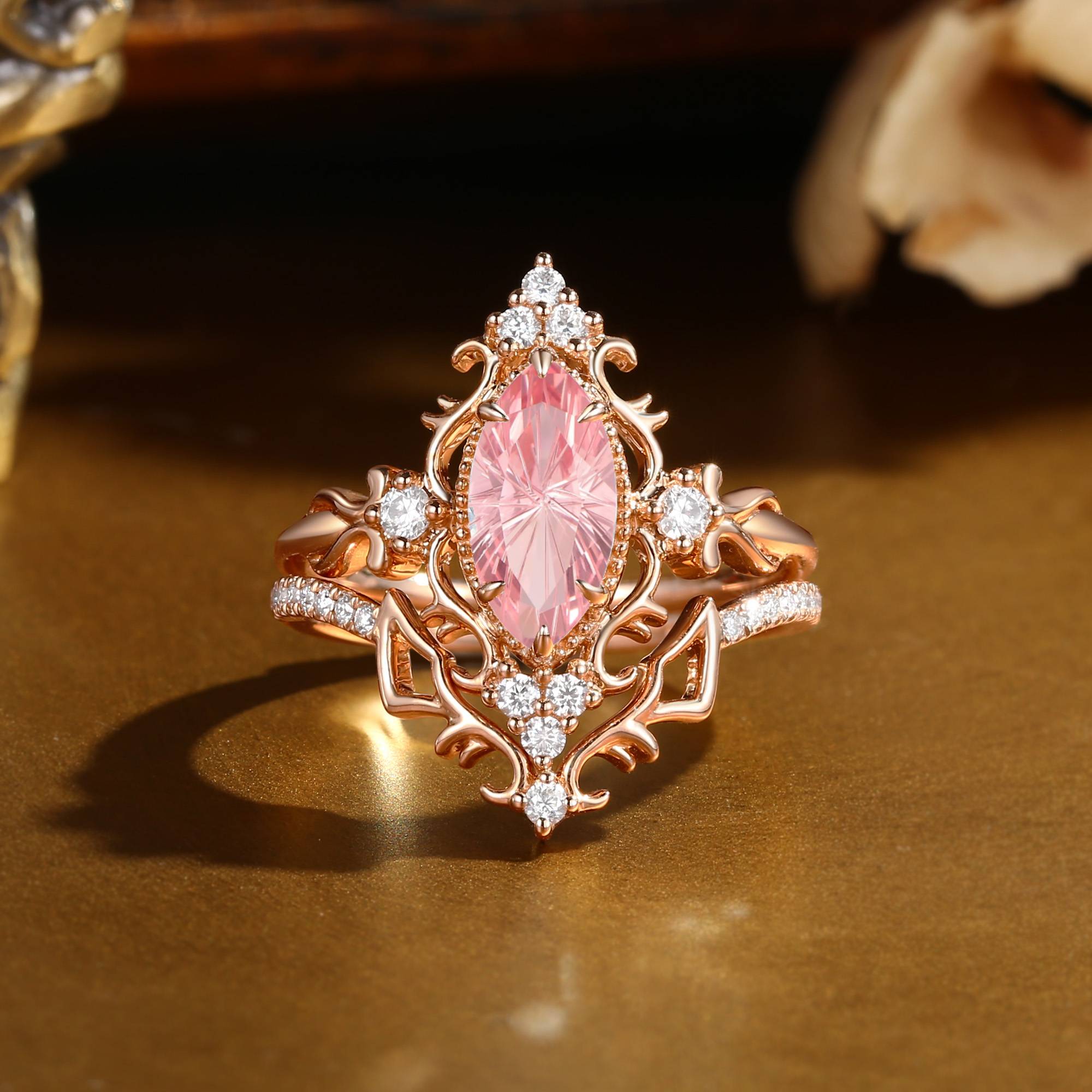
On metal: Yellow gold is the traditional pairing, and it remains extraordinary — the warmth of the gold amplifying the faint violet undertones in the blue, creating something that feels simultaneously ancient and alive. White gold turns the stone cooler and more contemporary; the contrast is sharper, the blue seems bluer. Rose gold offers something unexpected: a romantic warmth that plays against the blue's natural coolness, the combination reading more emotional, somehow — like a late afternoon sky reflected in a still lake.
On cut: Cornflower blue is generous across shapes. The oval is the most classic choice, maximizing color surface while maintaining proportion. The round is the most saturated — the faceting pattern creates the most even color distribution. The pear brings movement, the stone's color shifting slightly as the angle changes. And in our Firework Cut — Blingflare's proprietary radial faceting pattern — the velvety quality of the stone becomes something active: the color doesn't sit still, it rotates and catches and releases light in patterns the eye wants to follow.
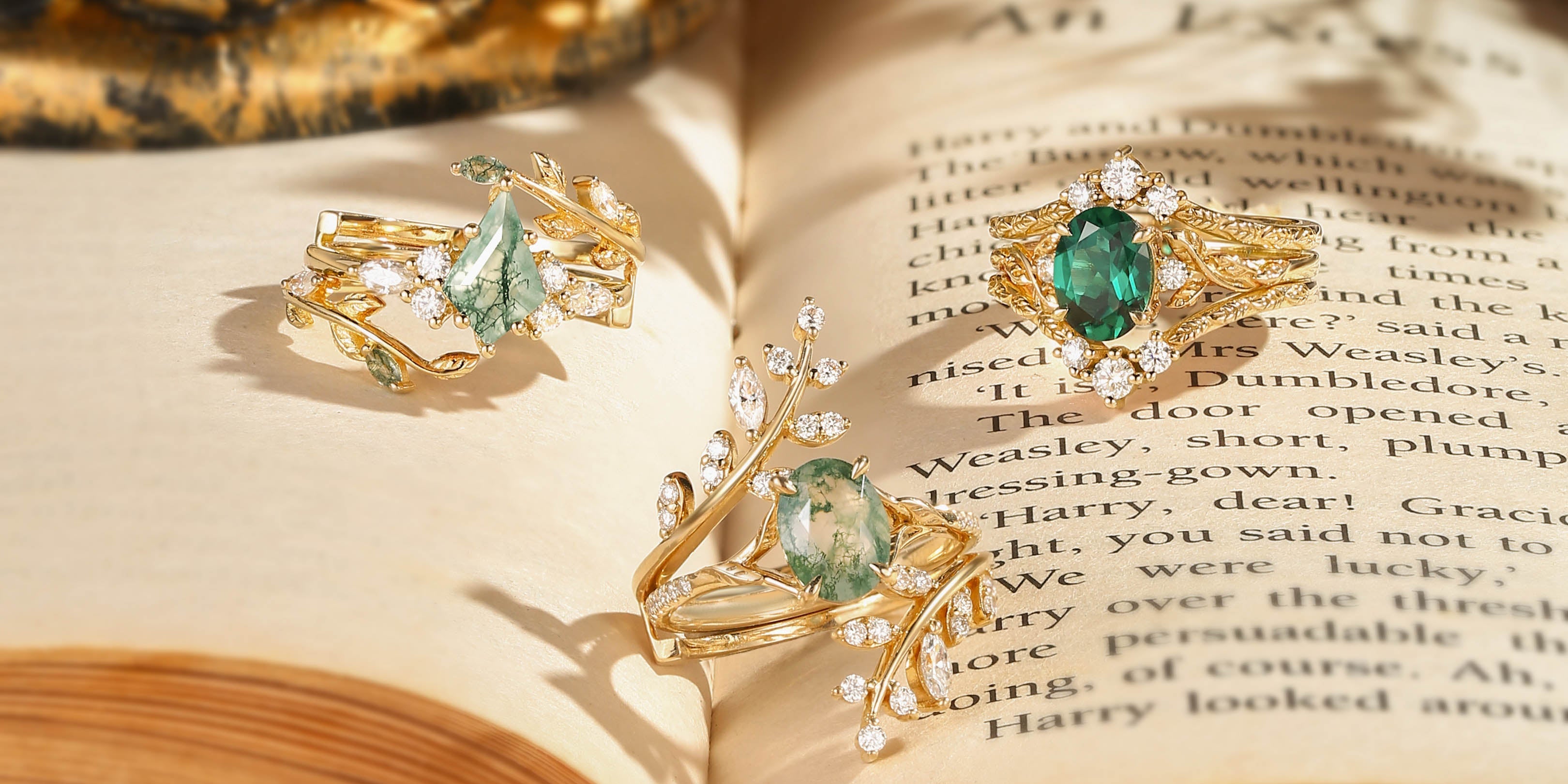
On setting style: Cornflower blue is quietly sophisticated, and it meets its equal in settings with precision and detail. Filigree work and nature-inspired vine or leaf motifs bring something out of this stone specifically — the organic curves of a leafy setting seem to reach toward the blue the way a garden reaches toward a clear sky.
What This Color Has Always Meant
Before it was a gemological designation, before it was a collector's benchmark, cornflower blue was simply a color that people across centuries and cultures associated with the same things: constancy, clarity, and trust.
Ancient Hindu texts placed blue sapphire under Saturn — a planet associated with discipline, the long game, and earned wisdom. Medieval European royalty wore it not for display but for belief — the blue of a sapphire was the blue of heaven, and to wear it was to carry that certainty close.
The most famous blue sapphire in the world — the one on the finger of Princess Diana, now worn by Princess Catherine — is often described as cornflower blue. Whether the description is precisely accurate by gemological standards is a conversation for appraisers. What it reveals is which shade of blue the culture reaches for when it wants to describe something that has endured.
Not the flashiest blue. Not the darkest. The one in the middle, steady and vivid and true.
There's a reason people keep returning to it.
A Note on Choosing
If you're considering a cornflower blue sapphire for an engagement ring, a meaningful gift, or a piece you intend to wear for decades — here is the honest advice we give to every customer who asks.
Don't choose it because it's the classic choice. Choose it because, in person, something happens when you hold it in the light.
The stone will either stop you or it won't. With cornflower blue, in our experience, it almost always does.
Our Abrielle Cornflower Blue Sapphire Ring — a vine-detailed design with hand-set leaf accents and our signature Firework Cut — is where we'd suggest beginning. Not because it's the only option, but because it shows you what this color can do when the setting and the stone are working together toward the same purpose: jewelry that looks like it grew, rather than was assembled.
Browse our full cornflower blue sapphire collection at blingflare.com/collections/blue-sapphire — or reach out to our team to discuss custom cuts, carat weights, and metal choices that fit exactly what you have in mind.
Some colors find you when you're ready for them. Cornflower blue tends to be one of those.
Blingflare designs nature-inspired sapphire jewelry for people who want something specific: stones chosen with care, settings built to last, and pieces that feel as alive as the world they draw from. Lab-grown and natural options available in every collection.