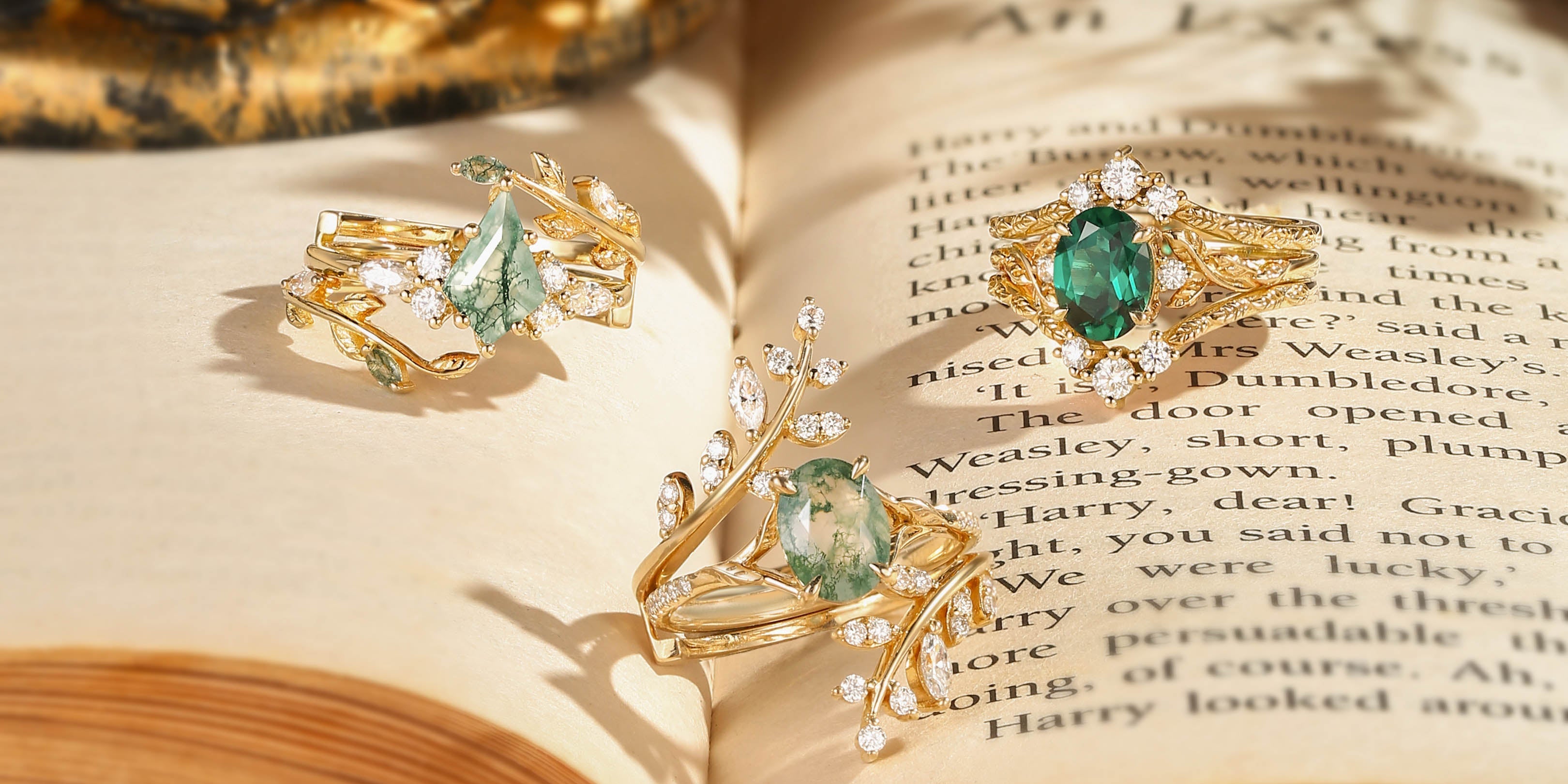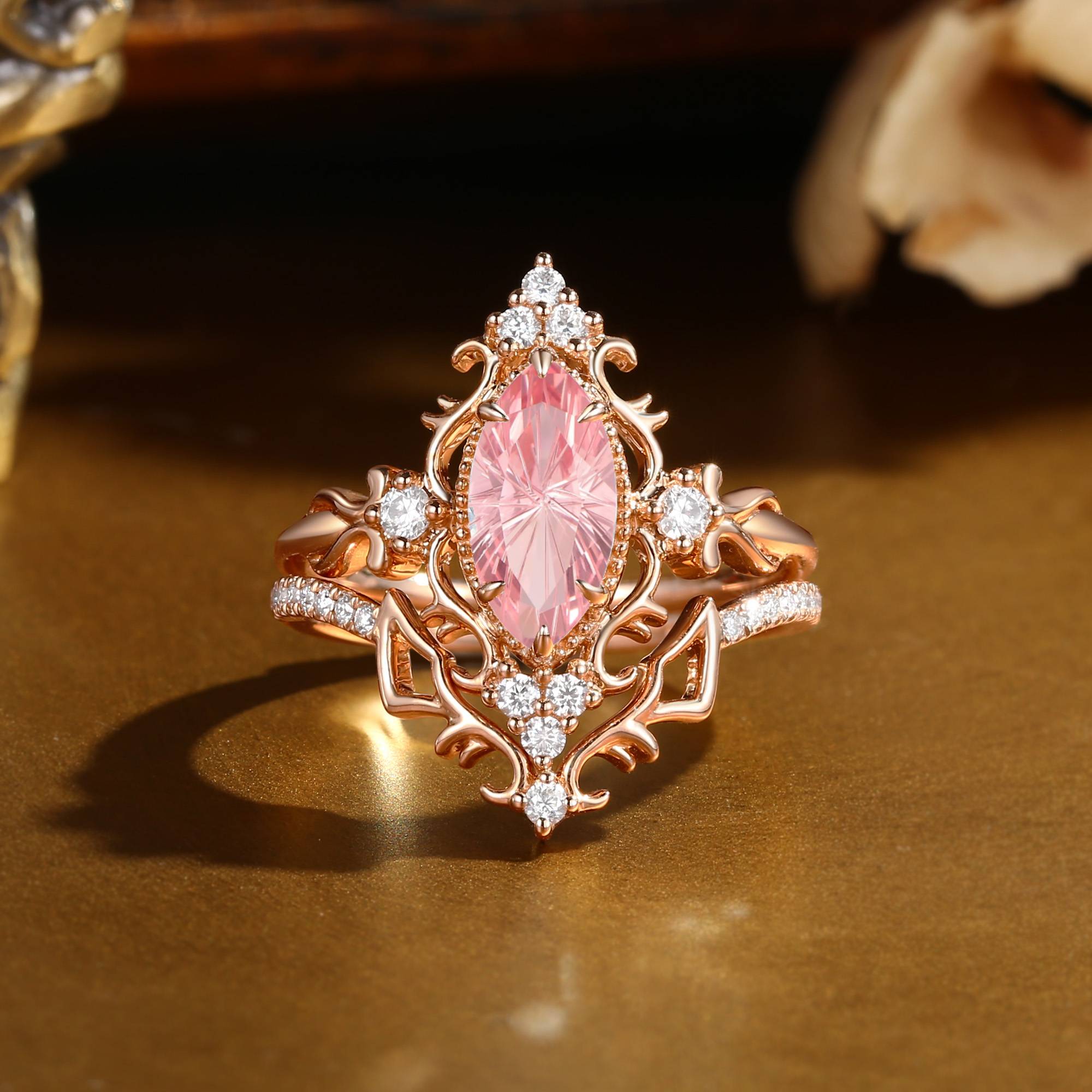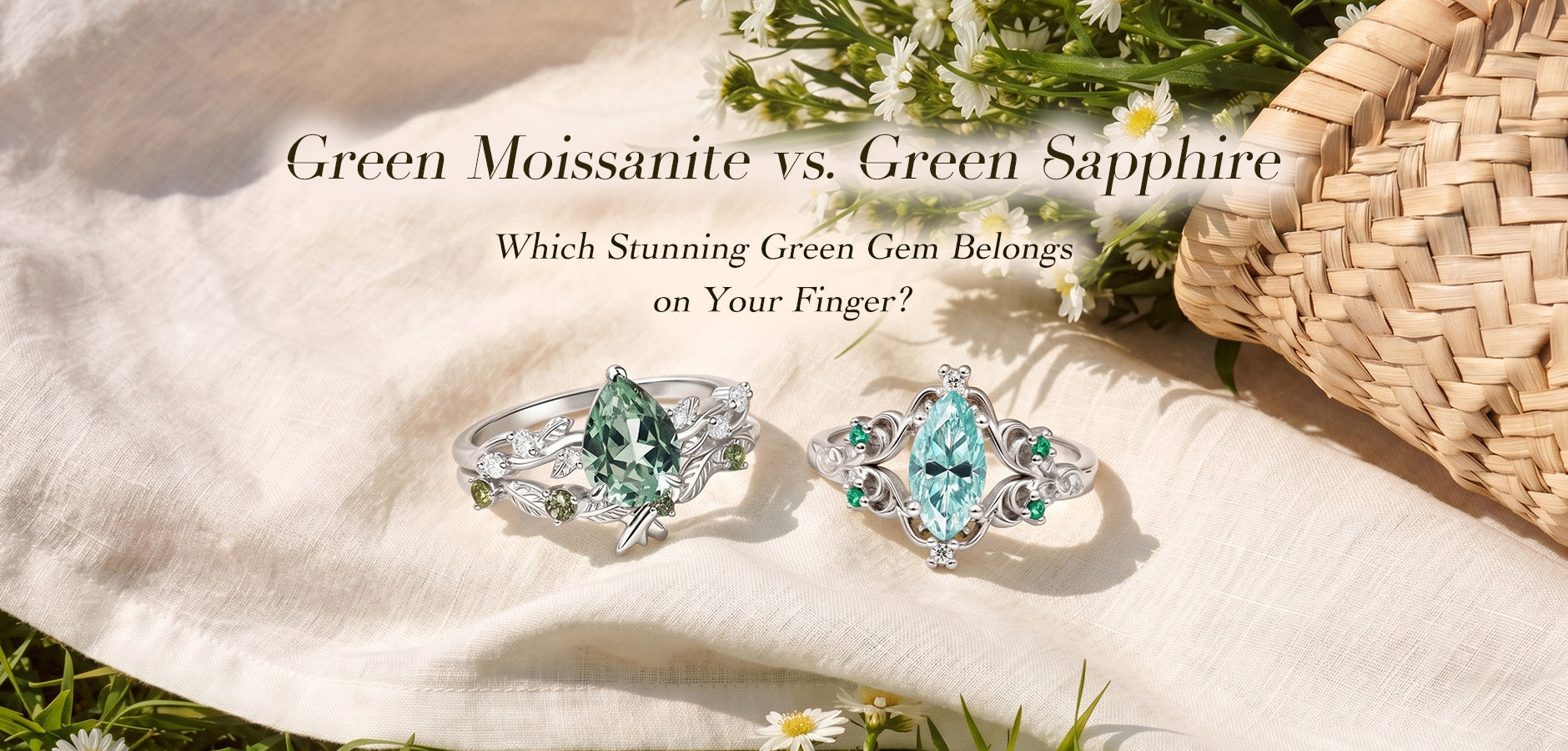
If you've fallen in love with the lush, nature-inspired beauty of green gemstones, you've likely landed between two show-stopping choices: green moissanite and green sapphire. Both radiate that enchanting forest-green brilliance — but they couldn't be more different in how they're made, how they sparkle, and what they say about you.
At BlingFlare, we specialize in handcrafted rings featuring our signature Firework Cut and nature-inspired designs. We've spent years working with both stones, and we're here to break it all down so you can shop with total confidence.
Table of Contents
- Quick Comparison: Green Moissanite vs. Green Sapphire
- What Is Green Moissanite?
- What Is Green Sapphire?
- Sparkle & Fire: Which Wins?
- Durability & Everyday Wear
- Price: What's the Real Difference?
- Which One Is Right for You?
- FAQ
Quick Comparison: Green Moissanite vs. Green Sapphire
| Green Moissanite | Green Sapphire | |
|---|---|---|
| Origin | Lab-created (silicon carbide) | Natural or lab-grown (corundum) |
| Hardness (Mohs) | 9.25 | 9.0 |
| Refractive Index | 2.65–2.69 | 1.76–1.77 |
| Fire & Brilliance | 2.4× more than diamond | Subtle, elegant glow |
| Color Range | Forest green, mint, olive | Teal green, sage, deep emerald |
| Price (1ct equivalent) | $150–$500 | $200–$800+ (natural) |
| Ethical Sourcing | Always lab-created | Lab-grown = 100% conflict-free |
| Best For | Maximum sparkle lovers | Classic, nature-inspired elegance |
➡️ Shop Green Moissanite Rings →
➡️ Shop Green Sapphire Rings →
What Is Green Moissanite?
Green moissanite is a lab-created gemstone born from silicon carbide — the same mineral originally discovered in a meteorite crater in 1893 by Nobel Prize-winning chemist Henri Moissan. Today, every green moissanite is grown in a controlled lab environment, making it one of the most ethical and sustainable gemstones available.
What sets green moissanite apart is its extraordinary fire — the rainbow flashes of color that dance across its surface. Its refractive index of 2.65–2.69 is higher than any other gemstone, including diamonds (2.42), meaning it disperses light into vivid spectral color unlike anything else.
At BlingFlare, our green moissanite rings are cut with our proprietary Firework Cut, maximizing the stone's natural radiance for a display that literally looks like fireworks.
- Hardness: 9.25 Mohs (nearly as hard as a diamond)
- 100% lab-created → zero mining impact
- Available in: Forest Green · Mint Green · Olive Green · Teal
- Ideal setting styles: Halo, solitaire, nature-inspired vine settings


What Is Green Sapphire?
Green sapphire belongs to the corundum mineral family — the same family as rubies and blue sapphires, just with trace amounts of iron that create its distinctive green hue. Natural green sapphires are genuinely rare; most on the market today are lab-grown, offering identical chemical properties to natural stones at a fraction of the cost.
Unlike moissanite's explosive fire, green sapphire delivers a deep, velvety luster — think the quiet elegance of a forest after rain. Its color palette skews toward teal greens, sage, and deep emerald, making it a popular choice for those drawn to earthy, botanical aesthetics.
According to the Gemological Institute of America (GIA), sapphire's hardness of 9.0 Mohs makes it one of the most durable stones for daily wear, second only to moissanite and diamond.
- Hardness: 9.0 Mohs (excellent for everyday wear)
- Available natural or lab-grown
- Colors: Teal Green · Sage · Deep Emerald · Forest
- Ideal setting styles: Vintage, nature-inspired, east-west settings


Sparkle & Fire: Which Wins?
Green moissanite is the undisputed champion of fire and brilliance. Its double-refractive structure means light enters, bends, splits, and explodes back out as rainbow flashes visible across a room. In sunlight or candlelight, a green moissanite ring becomes a conversation piece.
Green sapphire is more of a slow burn. It has a richer, more saturated color depth, and its sparkle is closer to what you'd expect from a classic fine jewelry stone — refined, luminous, and deeply beautiful without being flashy.
"I wanted something that looked like it came from an enchanted forest — not a disco ball. Green sapphire was the obvious choice." — Jonas
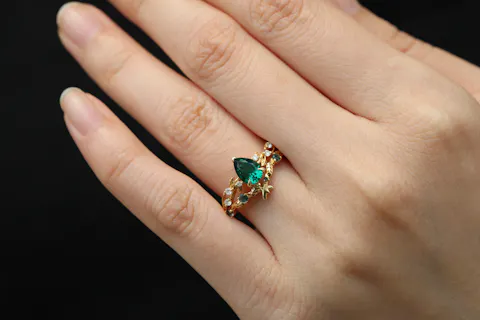
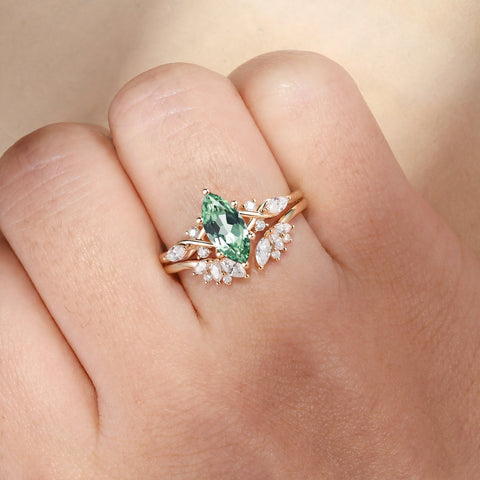
"It’s absolutely stunning! I love wearing it and do so often. I’ve gotten compliments on it and it really pops against my hand It’s the perfect size." — Alexis
Durability & Everyday Wear
Both stones are excellent for everyday wear — far more durable than popular alternatives like emerald (7.5–8 Mohs) or peridot (6.5–7 Mohs).
| Green Moissanite | Green Sapphire | |
|---|---|---|
| Scratch Resistance | ✅ Exceptional (9.25) | ✅ Excellent (9.0) |
| Chip Resistance | ✅ High | ✅ High |
| Heat Resistance | ✅ High | ✅ High |
| Safe for Ultrasonic Cleaning? | ✅ Yes | ✅ Yes (lab-grown) |
| Suitable for Engagement Rings? | ✅ Absolutely | ✅ Absolutely |
Price: What's the Real Difference?
| Stone | Price Range (1ct eq.) |
|---|---|
| Green Moissanite (lab) | $150 – $500 |
| Green Sapphire (lab-grown) | $200 – $600 |
| Green Sapphire (natural) | $400 – $1,500+ |
For buyers seeking the most sparkle per dollar, green moissanite is the clear winner. For buyers who prioritize natural origin and heritage, natural green sapphire carries that provenance — though lab-grown sapphire offers the same chemistry at a far lower price.
At BlingFlare, all stones are sourced ethically and certified conflict-free.
Which One Is Right for You?
Choose Green Moissanite if you…
- Want maximum fire, sparkle, and visual impact
- Love a stone that commands attention
- Want the most affordable option without sacrificing brilliance
- Care deeply about ethical, zero-mining sourcing
- Are drawn to our Firework Cut for breathtaking light performance
Choose Green Sapphire if you…
- Prefer a deep, rich color over explosive sparkle
- Love the idea of a stone with geological heritage
- Are drawn to teal, sage, or muted forest greens
- Want a classic fine jewelry feel with a nature-inspired twist
- Are considering a natural stone as a meaningful investment
Both are stunning. Both are ethical. Both will last a lifetime.
Related Reads
- The Green That Doesn't Exist in Nature — And Why That's the Point
- Green Sapphire Rings: Timeless Elegance for Every Moment
- The Fireworks Cut: A Gemstone with a Thousand Stories to Sparkle
FAQ
Is green moissanite a real gemstone?
Yes. Green moissanite is a genuine gemstone made from silicon carbide. It was originally discovered in a meteorite and is now lab-created, making it chemically and physically distinct from glass, cubic zirconia, or simulants.
Does green moissanite look fake?
Not at all. Its extraordinary fire (rainbow light flashes) is a natural optical property, not an artificial coating. The color is permanent and won't fade.
Are green sapphires natural or lab-grown?
Both options exist. Natural green sapphires are quite rare and more expensive. Lab-grown green sapphires are chemically identical to natural ones, conflict-free, and available at a lower price point — which is what we use at BlingFlare.
Which is harder, green moissanite or green sapphire?
Green moissanite scores 9.25 on the Mohs scale, while green sapphire scores 9.0. Both are excellent for daily wear, but moissanite has a slight edge in scratch resistance.
Can I use green moissanite as an engagement ring?
Absolutely. With a hardness of 9.25 and exceptional durability, green moissanite is one of the best engagement ring stones available — and at BlingFlare, our Firework Cut maximizes its brilliance for a ring that will dazzle for decades.
What's the difference between teal moissanite and green moissanite?
Teal moissanite has a blue-green dual tone, while green moissanite leans more purely green. BlingFlare offers both; the right choice depends on whether you prefer a cooler (teal) or warmer (forest/olive) green.
Is green sapphire the same as emerald?
No — they're entirely different minerals. Emerald is a variety of beryl (hardness 7.5–8), while green sapphire is corundum (hardness 9.0). Green sapphire is significantly harder and more durable than emerald, making it a smarter choice for everyday rings.
Which is more ethical — green moissanite or lab-grown green sapphire?
Both are equally ethical. Since both are lab-grown, neither involves mining, habitat disruption, or conflict sourcing. If zero environmental impact is your priority, either stone is an excellent choice.
Have questions about our green gemstone collection? Message us on Instagram or chat with our team at blingflare.com.