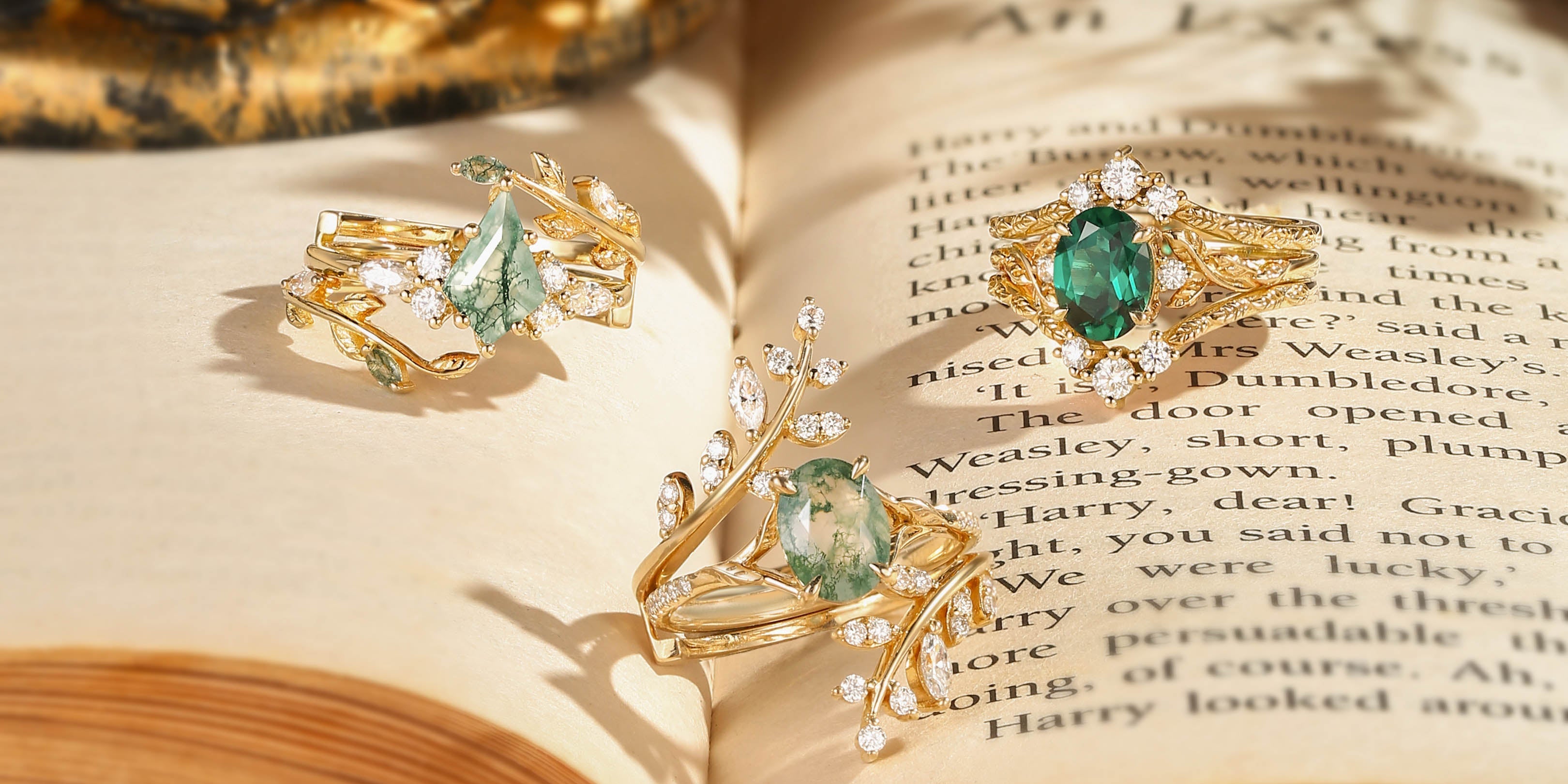
There are rings made to impress at a distance. And there are rings made to reward every closer look. At BlingFlare, Retro Filigree and Pearl represent the second kind — and when they meet, they create something neither achieves alone.
This guide breaks down what makes each aesthetic genuinely special, then shows what happens at their intersection.
Table of Contents
Why Retro Filigree — The Art of Making Metal Look Like Lace
Filigree is one of the oldest jewelry-making techniques in human history. The word comes from the Latin filum (thread) and granum (grain) — fine gold wire twisted, shaped, and soldered into intricate lace-like patterns. No casting. No stamping. Just wire, patience, and craft that takes hours to produce a single band.
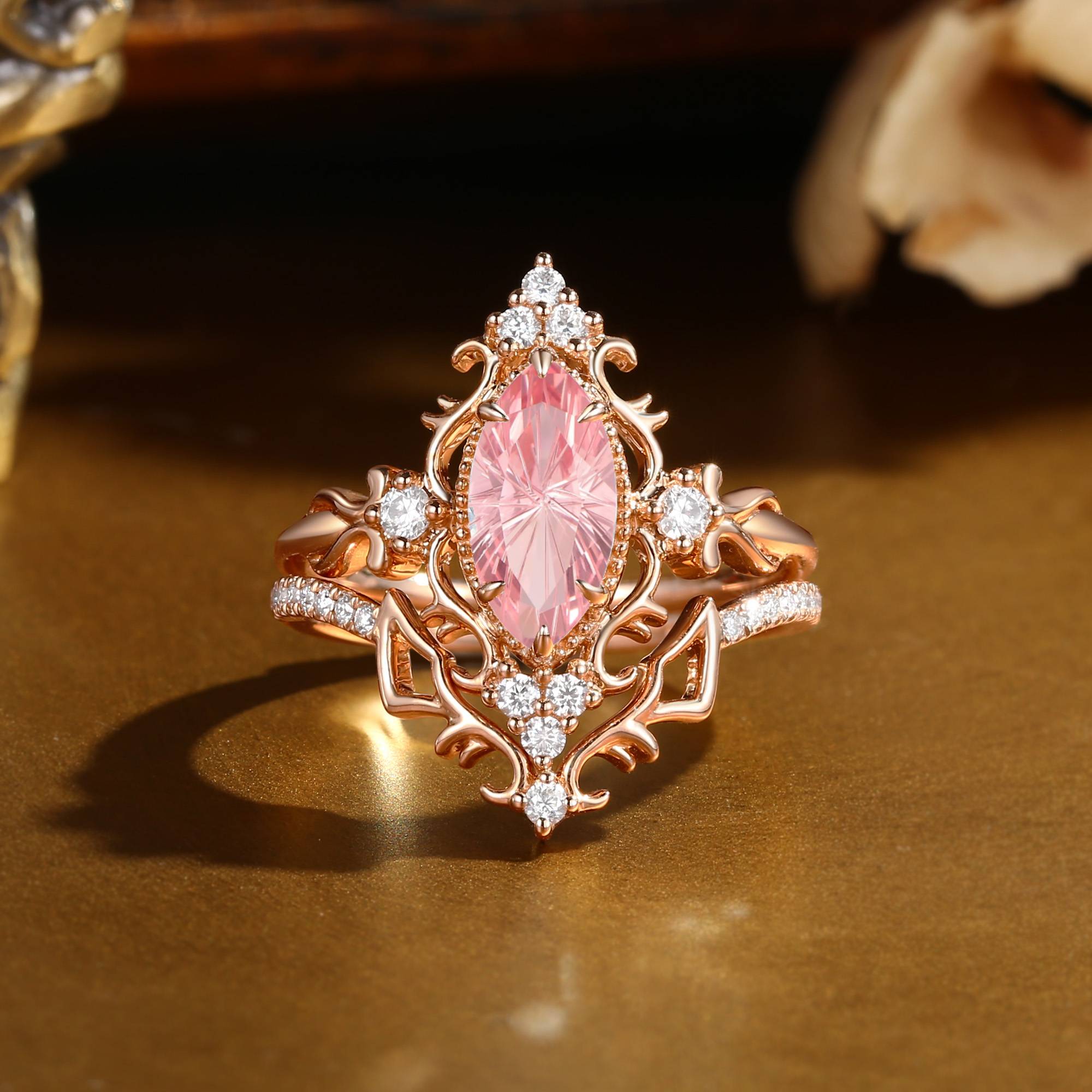
What filigree does that no other technique matches: it makes the band itself the art. Most rings are settings — a mount for the stone. In a filigree ring, you remove the stone and the band is still extraordinary.
What Makes Retro Filigree Special
1. Every Band Is an Architectural Object
A filigree band operates on two visual registers simultaneously. At arm's length, it reads as engraved — textured, vintage, detailed. Up close, it reveals itself as something else entirely: hundreds of tiny gold wires, each one placed individually, forming scrollwork, florals, lattice. Two completely different experiences of the same ring.
2. It Carries Real Historical Weight
Victorian and Edwardian jewelers elevated filigree to its highest form. The scrollwork patterns BlingFlare's retro filigree draws from have roots in those eras — but designed for now, in solid gold, with stones chosen for contemporary taste. Wearing filigree means wearing a technique that's survived millennia because it's genuinely beautiful.
3. It Suits Both Women's and Men's Jewelry
Filigree is one of the few intricate design techniques that translates to wide men's bands without looking delicate or feminine. At 5–6MM, a fully filigree-worked band in solid gold reads as bold and substantial — it's the detail that makes it interesting, not the width.
4. Lab Stones in Filigree Settings Perform Better
The intricate metalwork of a filigree band frames colored stones differently than a plain prong setting. Lab sapphire, emerald, or ruby set against scrollwork gold creates a visual layering — stone color, metalwork texture, and light all operating together — that a solitaire setting doesn't produce.


Why Pearl — The Only Gem a Living Creature Makes
Pearls are the only gemstones produced by living organisms. A mollusk coats an irritant — a grain of sand, a parasite — with layer upon layer of nacre, the same material that lines its shell. Over months and years, the result is a gem with no parallel: soft, luminous, and made by something alive.
That origin shows in how pearl behaves with light. Diamonds and sapphires refract light through the crystal — it enters, bends, exits as sparkle. Pearl reflects light from the surface, creating what gemologists call orient: a depth of luster that appears lit from within. The effect is warmer, softer, and more directional than any cut stone can produce.
What Makes Pearl Special
1. No Two Pearls Are Identical Every pearl has its own surface, its own overtone, its own weight. Even freshwater pearls from the same harvest differ slightly in their luster and color. A pearl accent in a ring is a genuinely unique element — not replicated, not manufactured to spec, grown.
2. Pearl Luster Photographs Differently Every Time The orient — that lit-from-within luminosity — shifts as the pearl moves. In photos, it appears as a soft glow. In person, it changes with every angle of the hand. This is the opposite of what a faceted stone does: a diamond performs consistently; a pearl surprises.
3. Pearl Has Been the Most Coveted Gem in History For centuries before modern diamond cutting, no gem was more valuable or more desired. Cleopatra dissolved one in vinegar to demonstrate wealth. Elizabeth I wore them in every portrait. Pearls are not a "traditional" gem — they're an ancient one, with a history that dwarfs the diamond era.
4. Pearl Works as an Accent Stone Unlike Anything Else Most accent stones — moissanite, diamond, sapphire — contribute sparkle. Pearl contributes texture: a different quality of light, a softer interruption in the visual rhythm. In a ring with multiple accent elements, pearl creates contrast that no faceted stone can replicate.


Why the Two Together — What Neither Can Achieve Alone
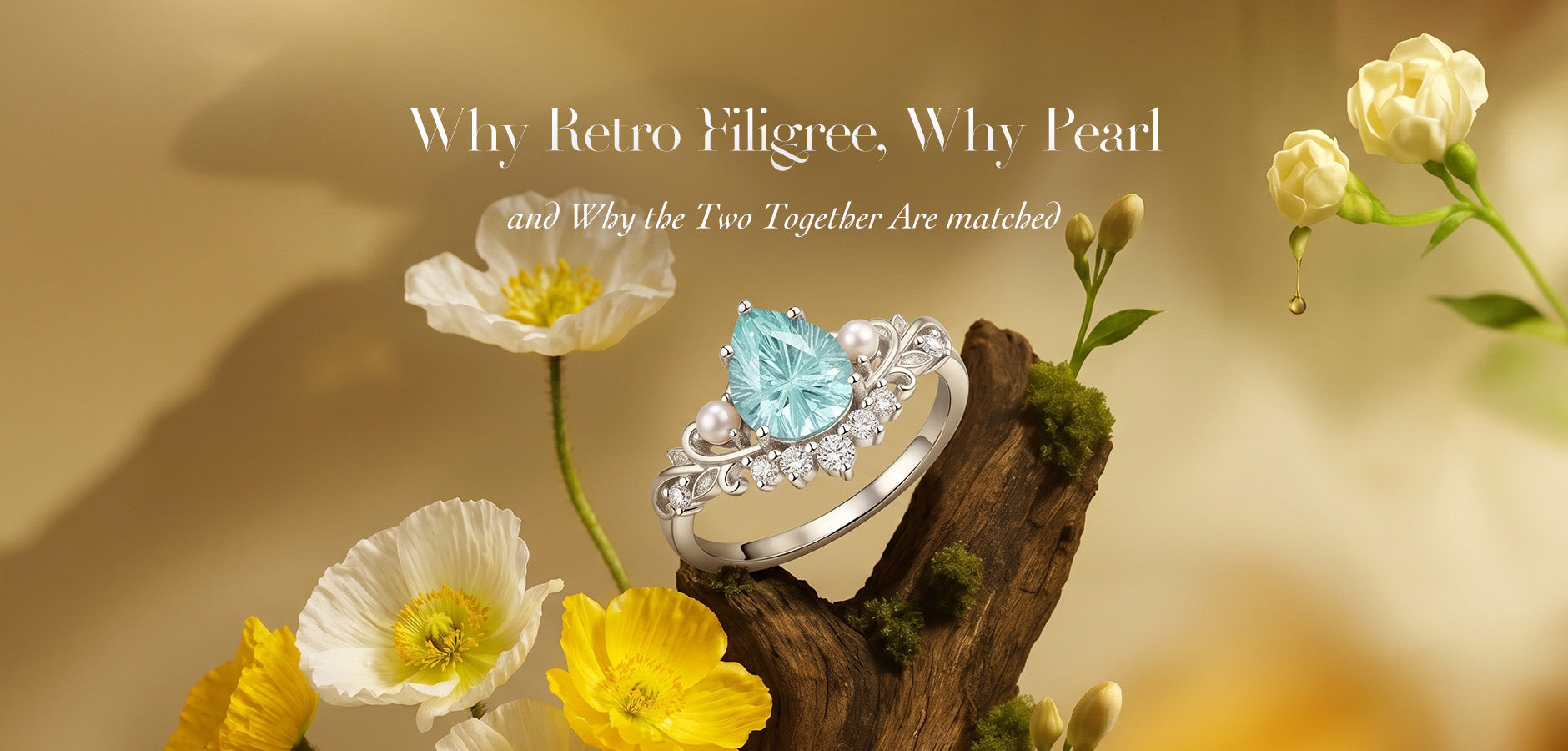
Here's what happens when filigree metalwork meets pearl accents: two types of texture that both reward close examination combine into something with more visual depth than either produces separately.
Filigree brings structure. The scrollwork, the lattice, the tiny gold wires — these are fixed, precise, architectural. They create a surface that catches light from multiple angles because there are multiple physical elements catching it.
Pearl brings warmth. The nacre luster is soft where the filigree is sharp, warm where the gold is bright, organic where the metalwork is geometric. The two textures are genuine opposites — and opposites, set side by side, make each other more visible.
The result: a ring with more layers to see than either style produces alone. At a glance, it reads as vintage and detailed. A step closer, the filigree reveals itself. Closer still, the pearl accents do something different than the moissanite accents beside them. Three completely different visual experiences of the same ring.
This is what we mean by a ring that rewards proximity — and the filigree-pearl combination is the most complete version of that idea in the entire BlingFlare collection.
Which Direction Is Right for You?
Choose Retro Filigree (without pearl) if you…
- Want the metalwork itself to be the defining element
- Are drawn to the structured, architectural quality of Victorian and Art Nouveau scrollwork
- Are choosing a men's band — Marigold and Rowan translate filigree into bold, wide bands
- Prefer a colored stone center that the filigree frames and enhances
Choose Pearl (without filigree) if you…
- Want the gem to carry the ring's visual identity
- Are drawn to soft, luminous warmth over intricate metalwork
- Like the idea of a material made by a living creature — genuinely organic in origin
- Are building a bridal set where the pearl accent creates a recurring visual thread across pieces
Choose Both together if you…
- Want maximum depth — a ring that operates on multiple visual levels simultaneously
- Understand that the combination of filigree structure and pearl warmth is more than the sum of its parts
- Are looking at Josephine or Celestine — designs built around the filigree-pearl pairing as a deliberate design choice
- Want the ring that rewards every closer look — forever
FAQ
What is filigree and why does it take so long to make?
Filigree is a technique where fine gold wire is twisted, shaped, and soldered into intricate lace-like patterns — one wire at a time. There's no shortcut: no casting, no machine stamping. A single filigree band can take several hours of skilled work. That's why the result looks like no other band — because it isn't made the way other bands are made.
What makes pearl luster different from gemstone sparkle?
Faceted stones like diamonds and sapphires refract light — it enters the stone, bends through the crystal, and exits as sparkle. Pearl reflects light from its nacre surface, creating orient: a soft, warm depth that appears lit from within. The effect is warmer and more diffused than any cut stone. It also changes with the angle of the hand, which faceted stones don't do in the same way.
Are the pearls in BlingFlare rings natural or synthetic?
BlingFlare uses freshwater pearls — grown in mussels in freshwater lakes, primarily in China. Freshwater pearls are natural gems (not synthetic), with a thicker nacre layer than saltwater Akoya pearls, which means better durability and a warmer, more diffused luster. They're used as accent stones in protected settings across the collection.
Why does filigree work so well with colored stones?
A filigree band creates visual layering that a plain prong setting doesn't. The scrollwork gold texture, the stone's color, and the play of light across the metalwork all operate simultaneously — three visual elements instead of one. Colored stones like sapphire, emerald, and padparadscha perform better in this context than in an isolated solitaire setting.
Can filigree rings be resized?
Filigree rings are harder to resize than plain bands because the metalwork is continuous around the band. Resizing by ±1 size is usually still possible, but BlingFlare recommends confirming your size before ordering. Contact the team — they'll help you measure accurately before the ring is made.
What's the difference between Josephine and Celestine?
Both are filigree rings with pearl accents. Josephine is a bridal set (2 pieces) centered on a lab emerald in a leafy filigree band — the pearl and emerald combination is the focal design choice. Celestine is a single engagement ring centered on a pear firework cut green sapphire in a scrollwork filigree band — more architectural, slightly smaller price point. Josephine pairs down; Celestine stands alone.
Do filigree rings work for men?
Yes — and differently than you'd expect. The Marigold (5MM) and Rowan (6MM) bands are fully filigree-worked at a width that reads as bold and substantial. The intricate surface catches light from more angles than plain gold and rewards close inspection in a way plain bands don't. They don't look delicate at that width. They look detailed — which is a different thing.
What gold karat should I choose for a filigree ring?
14K (58.3% gold) is the recommended choice for filigree — it balances color richness with the added hardness the fine wire work benefits from. 18K is slightly softer, which matters more in intricate metalwork than in a plain band. 10K is the hardest option and a reasonable choice for daily-wear men's bands.
Explore the full collections at blingflare.com/collections/retro-filigree and blingflare.com/collections/pearl. Questions? Our team is at blingflare.com.