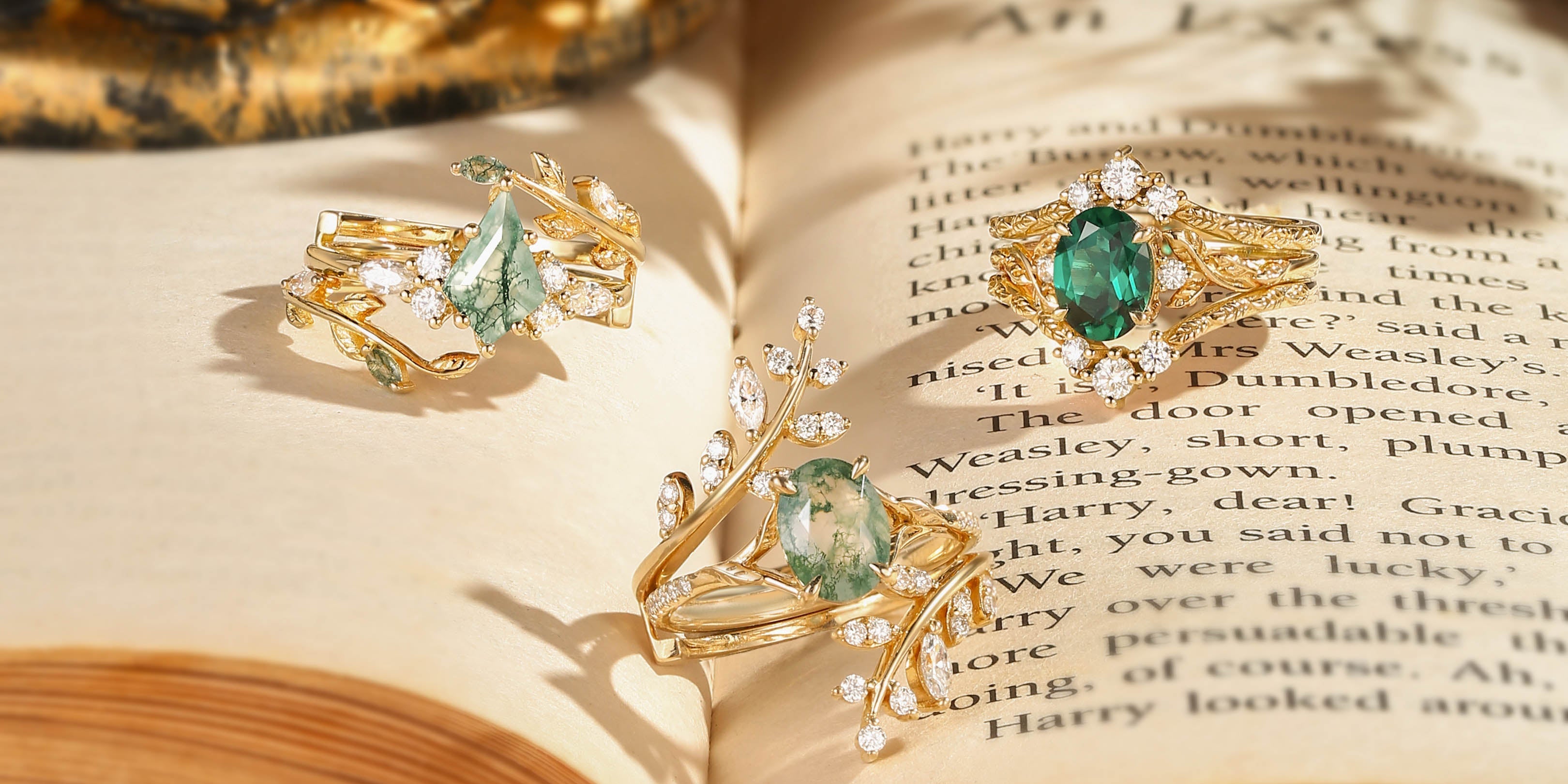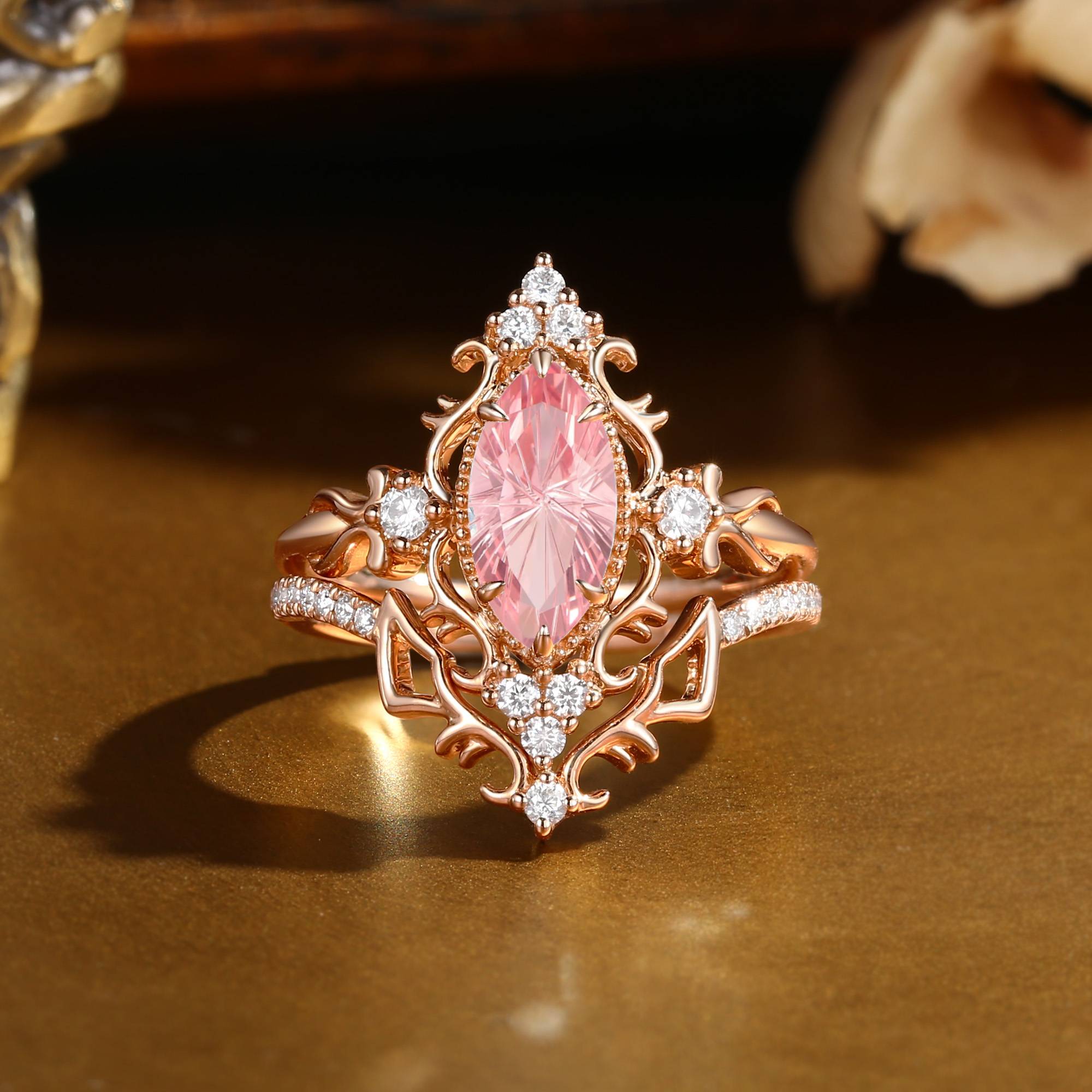
Pinterest bridal stacking content has surged nearly 60% in engagement this year, and it's no coincidence—more brides than ever are choosing to upgrade their existing engagement rings rather than replace them. The secret? A ring enhancer. These versatile wraps transform a single solitaire into a layered, bridal-ready statement without the cost of a brand-new setting.
At BlingFlare, we specialize in nature-inspired designs and our signature Firework Cut gemstones—pieces that pair effortlessly with enhancers to create a cohesive, organic look. Whether you're stacking for your wedding day or simply want to refresh your everyday ring, this guide walks you through everything you need to know about choosing the perfect engagement ring wrap.
Table of Contents
- What Is a Ring Enhancer?
- Match Your Enhancer to Your Ring Shape
- Should You Match Metals?
- BlingFlare Enhancer Pairings
- How to Shop for a Ring Enhancer
- FAQ
What Is a Ring Enhancer?
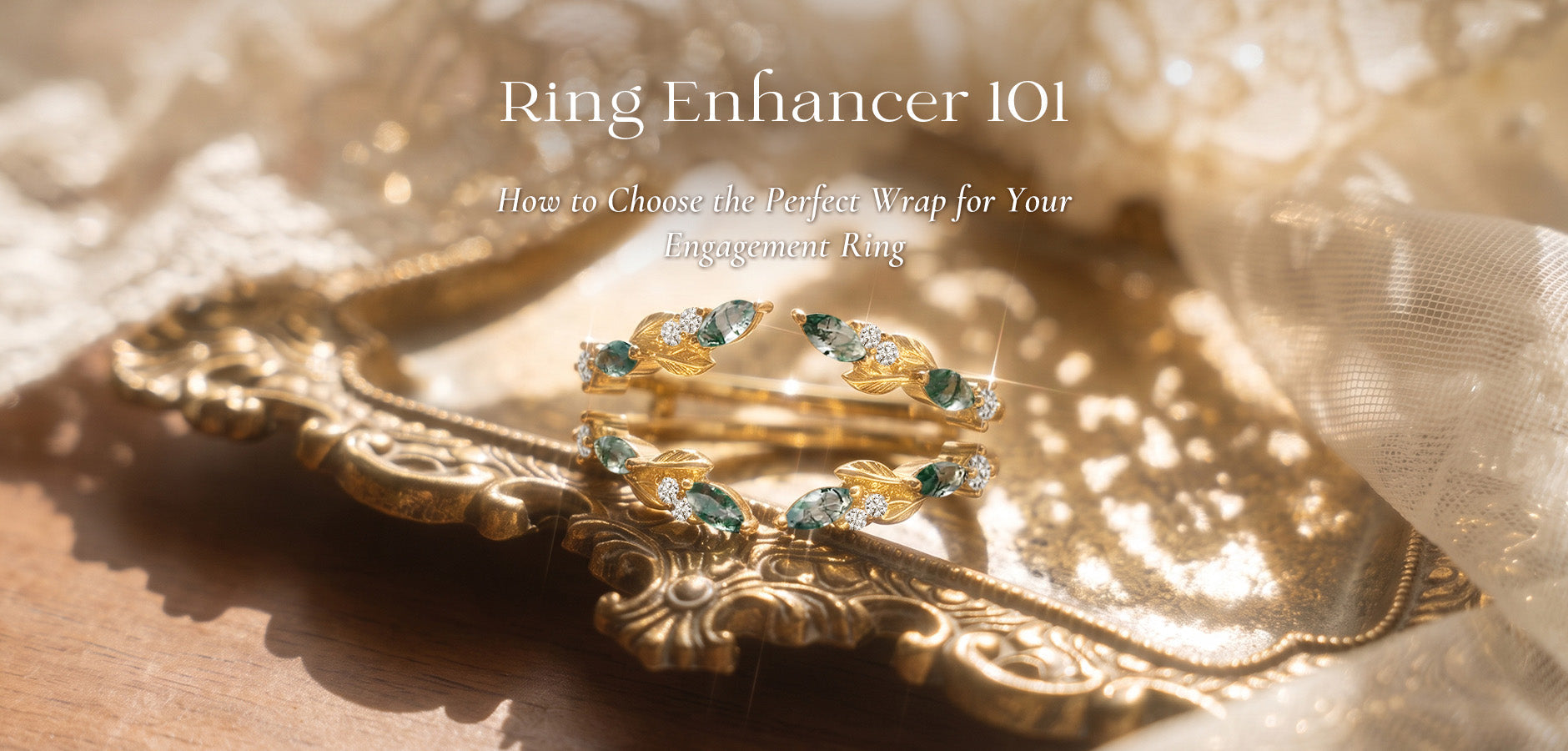
Let's clear up a common misconception right away: a ring enhancer is not a wedding band. While a wedding band sits plainly beside your engagement ring, an enhancer is designed to complement, frame, and visually "upgrade" your existing piece. Think of it as jewelry architecture—it wraps around or nestles against your solitaire to create the illusion of a more intricate, custom-designed set.
Here are the most popular styles you'll encounter:
- Wrap style (envelopment): Curves around both sides of your center stone, creating a "hugged" effect that adds width and brilliance.
- Chevron / V-shape: Features a pointed edge that aligns perfectly with pear, marquise, or oval stones, framing them without hiding their silhouette.
- Curved / Contour band: A simple arc that follows the profile of a round or cushion-cut stone—minimalist but effective.
- Shadow band: A thinner, often textured band that sits flush beneath your engagement ring, adding subtle detail without overwhelming the main event.
Choosing the right enhancer starts with understanding your ring's shape and setting profile. A mismatched enhancer can leave awkward gaps or compete with your center stone, so let's break down which styles work best for each silhouette.
Match Your Enhancer to Your Ring Shape
The shape of your center stone is the single most important factor when selecting an enhancer. Here's a quick-reference guide:
| Ring Shape | Best Enhancer Style | Why It Works | Avoid |
|---|---|---|---|
| Round Solitaire | Curved / Contour band | Wraps snugly around the round stone | Straight bands (leaves gaps) |
| Oval / Pear | V-tip / Marquise-shaped enhancer | Frames the elongated stone, emphasizes the teardrop silhouette | Bulky halo enhancers (overwhelms the shape) |
| Fairy / Nature-inspired (BlingFlare specialty) | Twisted vine / Leaf-shaped enhancer | Harmonizes with organic design; feels like one piece | Geometric / angular enhancers (clashes with nature motif) |
Round solitaires are the most forgiving—nearly any curved band will sit flush against the stone's profile. But once you move into elongated shapes like oval or pear, precision matters. A V-tip enhancer follows the natural taper of these stones, creating a frame that draws the eye without competing for attention.
If you own a nature-inspired piece from BlingFlare—think leafy prongs, vine-textured bands, or our signature Firework Cut gemstones—you'll want an enhancer that speaks the same visual language. Twisted vine details and organic leaf motifs ensure your set looks intentional, not like two unrelated rings awkwardly pushed together.
The goal is harmony: your enhancer should feel like it grew from the same design as your engagement ring, not bolted on as an afterthought.


Should You Match Metals?
The old rule was simple: match your metals. Yellow gold engagement ring? Yellow gold enhancer. Done. But modern bridal stacking has thrown that rule out the window—and for good reason. Mixed metals, when styled intentionally, create depth, contrast, and a look that feels curated rather than cookie-cutter.
The trick is making it look deliberate. One approach is the "bridge ring" method: use a middle piece that incorporates both metal tones to tie the stack together. Another is the odd-number rule—stacking three bands in alternating metals creates visual rhythm that feels balanced. And if you're new to mixing, start subtle: a yellow gold engagement ring with a rose gold enhancer adds warmth without feeling disjointed.
BlingFlare offers all three metal options—14K Yellow Gold, White Gold, and Rose Gold—across most of our collections, so you can mix and match with confidence. Here's how each metal brings a different energy to your stack:
| Yellow Gold | White Gold | Rose Gold | |
|---|---|---|---|
| Vibe | Warm, editorial, romantic | Cool, minimal, classic | Soft, feminine, vintage |
| Best skin tone | Warm/olive/dark | Fair/cool undertones | All skin tones (universally flattering) |
| 2026 Trend | ★★★★★ | ★★★☆☆ | ★★★★☆ |
| Pairs best with | Green/blue/earth-tone gems | Diamond, white sapphire | Pink sapphire, morganite |
| Stacking tip | Mix with rose gold for warmth | Stacks clean with yellow gold accents | Bridges yellow + white gold beautifully |
Yellow gold dominates 2026 bridal trends, especially when paired with green or blue gemstones—think emerald, sapphire, or our signature green moissanite. Rose gold remains a strong second choice, particularly for vintage-inspired stacks. White gold isn't disappearing, but it's taking a backseat to warmer tones this year.
BlingFlare Enhancer Pairings
At BlingFlare, we design with stacking in mind. Our leafy bridal sets and nature-inspired engagement rings are meant to work together—each piece shares the same organic DNA, so pairing them feels effortless rather than forced. Below are three real-world pairing scenarios to spark ideas.
Case 1: Round Diamond Solitaire + Curved Vine Enhancer
The setup: A classic round diamond solitaire in 14K yellow gold, paired with a curved vine-textured enhancer in the same metal.
Why it works: The curved band follows the round stone's profile perfectly, eliminating gaps. Vine detailing adds botanical interest without competing with the diamond's brilliance.
The vibe: Classic meets botanical—timeless enough for daily wear, distinctive enough for a wedding day.
Case 2: Oval Green Sapphire + V-Shape Leafy Enhancer
The setup: An oval green sapphire engagement ring (like our Clarissa setting), paired with a V-tip enhancer featuring leaf motifs.
Why it works: The V-shape frames the oval stone's elongated silhouette, drawing the eye upward. Leaf details echo the natural feel of green sapphire, creating a cohesive, editorial look.
The vibe: Modern vintage—bold enough for a statement, refined enough for everyday.
Case 3: Nature-Inspired Engagement Ring + Twisted Vine Enhancer
The setup: A leafy prong-set engagement ring (like our Hesper design with Firework Cut green sapphire), paired with a twisted vine enhancer from the same collection.
Why it works: Both pieces share the same design language—organic textures, vine-inspired details, nature-forward aesthetics. Together, they look like one cohesive botanical set rather than two separate rings.
The vibe: Cohesive botanical—earthy, romantic, and unmistakably BlingFlare.
"Great quality ring enhancer. Comfortable for all-day wear, and the stones shine beautifully. Totally worth the purchase!" — Rachel
"Looks amazing with my engagement ring! 10/10." — Mia


How to Shop for a Ring Enhancer
Buying a ring enhancer online requires a bit more precision than purchasing a standalone ring. Here's what to check before you click "add to cart":
- Size up slightly: When stacking, you'll need about a half-size larger than your usual ring size. Your fingers will feel the difference between a comfortable stack and a painful one.
- Check the profile height: If your solitaire sits high (think cathedral setting or tall prongs), you'll need a low-profile enhancer that tucks underneath. High-profile enhancers work best with low-set stones.
- Measure your band width: The enhancer's inner diameter must match your engagement ring's band width. A 2mm band needs a different enhancer than a 3mm band—most product pages list this spec.
- Online shopping tips: Look for retailers with clear size guides, hassle-free returns, and metal authenticity guarantees. BlingFlare provides detailed sizing charts and a 30-day return policy, so you can order with confidence.
- Consider the occasion: Are you stacking for your wedding day, or adding an enhancer to your everyday rotation? Wedding stacks often prioritize comfort (you'll wear it for hours), while everyday enhancers can be bolder and more ornate.
If you're unsure about sizing, most jewelers recommend ordering your enhancer first, then having your engagement ring sized to fit the stack. This ensures a perfect fit from day one.
Related Reads
- Green Moissanite vs. Green Sapphire: Which Green Stone Is Right for You?
- Fairy Whispers & Forest Magic: The Timeless Allure of Fairy-Inspired Jewelry
- Forest-Inspired Lab Emerald: The Top Green Gem for Eco Jewelry
FAQ
What is the difference between a ring enhancer and a wedding band?
A wedding band is a simple ring that sits beside your engagement ring. A ring enhancer is designed to wrap around, frame, or nestle against your engagement ring, creating a more intricate, cohesive look. Enhancers add visual interest and can transform a solitaire into a bridal set.
Can I wear a ring enhancer as a wedding band?
Absolutely. Many brides choose enhancers as their wedding bands because they add brilliance and detail that a plain band can't match. Just ensure the enhancer fits comfortably with your engagement ring and matches your daily wear needs.
How do I know what size ring enhancer to order?
Order a half-size larger than your usual ring size if you're stacking. Check the product page for band width specifications—your enhancer's inner diameter should match your engagement ring's band width. When in doubt, consult the retailer's size guide or customer service.
Does a ring enhancer have to match my engagement ring metal?
Not necessarily. Matching metals creates a uniform look, but mixed metals are trendy and can add depth to your stack. Rose gold works as a bridge between yellow and white gold. Just ensure the combination feels intentional, not accidental.
Can I stack more than one enhancer?
Yes! Stacking multiple enhancers creates a layered, curated look. Use the odd-number rule (three bands tend to look most balanced) and mix textures or metals for visual interest. Just ensure each piece fits comfortably and doesn't feel too tight on your finger.
Do ring enhancers damage engagement rings?
When sized correctly and worn properly, enhancers shouldn't damage your engagement ring. However, friction between metals can cause minor wear over time. To minimize this, have your rings checked annually by a jeweler and consider rhodium plating for white gold pieces to maintain their finish.
Have questions about finding the perfect enhancer for your ring? Chat with our team at blingflare.com or message us on Instagram.