Choosing a sapphire engagement ring used to mean choosing one color: blue. That era is over. Sapphire now spans a spectrum — from deep royal blue to verdant green, from soft cornflower to the pink-orange glow of padparadscha — and each color tells a fundamentally different story about the person wearing it. The question is no longer "sapphire or not." The question is which sapphire color belongs on your hand.
This guide breaks down every major sapphire color available in lab-grown form, what each one looks like on the hand, which metal pairing suits it, and how lighting changes the way the stone reads. Whether you're after something classic and regal or nature-inspired and unconventional, the right sapphire color exists. Here's how to find it — and where to find it at BlingFlare.
Table of Contents
- Quick Color Comparison
- Royal Blue Sapphire — Classic & Formal
- Cornflower Blue Sapphire — Romantic & Delicate
- Green Sapphire — Nature-Inspired & Whimsical
- Teal Sapphire — Modern & Edgy
- Padparadscha Sapphire — Unique & Sunset-Inspired
- Metal Pairing Guide
- How Light Changes Everything
- Personal Style Decision Framework
- FAQ
Quick Color Comparison
Before diving into each color's nuances, here's the at-a-glance breakdown:
| Sapphire Color | Best For Style | Ideal Metal | Vibe |
|---|---|---|---|
| Royal Blue | Classic, formal, structured | White gold, platinum | Regal, timeless, authoritative |
| Cornflower Blue | Romantic, vintage, delicate | Yellow gold, rose gold | Soft, feminine, old-world charm |
| Green | Nature-inspired, botanical, whimsical | Yellow gold, rose gold | Fresh, earthy, unconventional |
| Teal | Modern, artistic, edgy | White gold, black gold | Contemporary, bold, unexpected |
| Padparadscha | Unique, sunset-inspired, rare | Rose gold, yellow gold | Warm, exotic, one-of-a-kind |
Royal Blue Sapphire — Classic & Formal
Royal blue sapphire is the color most people picture when they hear "sapphire." It's a deep, saturated blue with strong chromatic intensity — the kind of blue that reads as authoritative and composed. Historically, this is the color of British crown jewels and aristocratic signet rings. It carries weight, both visually and culturally.
Royal blue works best for someone who wants a colored stone but values tradition. It photographs well in any lighting condition, holds its visual presence in large crowd settings (wedding photos, group events), and pairs cleanly with formal wear. It's the safe choice in the best sense of the word — universally flattering, universally recognized, universally respected.
On the hand, royal blue sapphire reads as cool and precise. Under daylight, the blue deepens. Under warm indoor lighting, it can shift slightly violet. In either condition, the stone maintains its commanding presence.
Cornflower Blue Sapphire — Romantic & Delicate
Cornflower blue is a softer, warmer blue than royal blue — named for the cornflower petal, which carries a slightly dusty, medium-saturated blue with subtle violet undertones. Where royal blue projects authority, cornflower blue projects warmth. It's the sapphire color that reads as approachable rather than imposing.
This color dominates vintage and Edwardian-inspired jewelry for a reason: it reads as "old world romantic" without feeling dated. On the hand, cornflower blue is gentler than royal blue, more likely to read as a personal statement than a power move. It pairs naturally with filigree metalwork, milgrain detailing, and organic settings — the kind of design language that references gardens and heirloom pieces rather than boardrooms.
Cornflower blue is the most versatile blue for skin tones. It flatters warm and cool undertones equally, making it the safest "surprise proposal" color when you can't confirm the wearer's preference.


Green Sapphire — Nature-Inspired & Whimsical
Green sapphire is the color for someone who has actively decided not to wear what everyone else is wearing. It sits in the sapphire family (corundum, 9.0 Mohs) but reads as entirely different — fresh, organic, alive. Where blue sapphire references the sky and water, green sapphire references the forest floor, new growth, and botanical gardens.
Lab-grown green sapphire has become one of the strongest performers in the alternative engagement ring market. The color saturation is consistent, the durability matches any other sapphire, and the visual effect on the hand is striking — particularly in botanical settings with leaf and vine metalwork. The stone and the setting share a visual language, both pulling from the natural world.
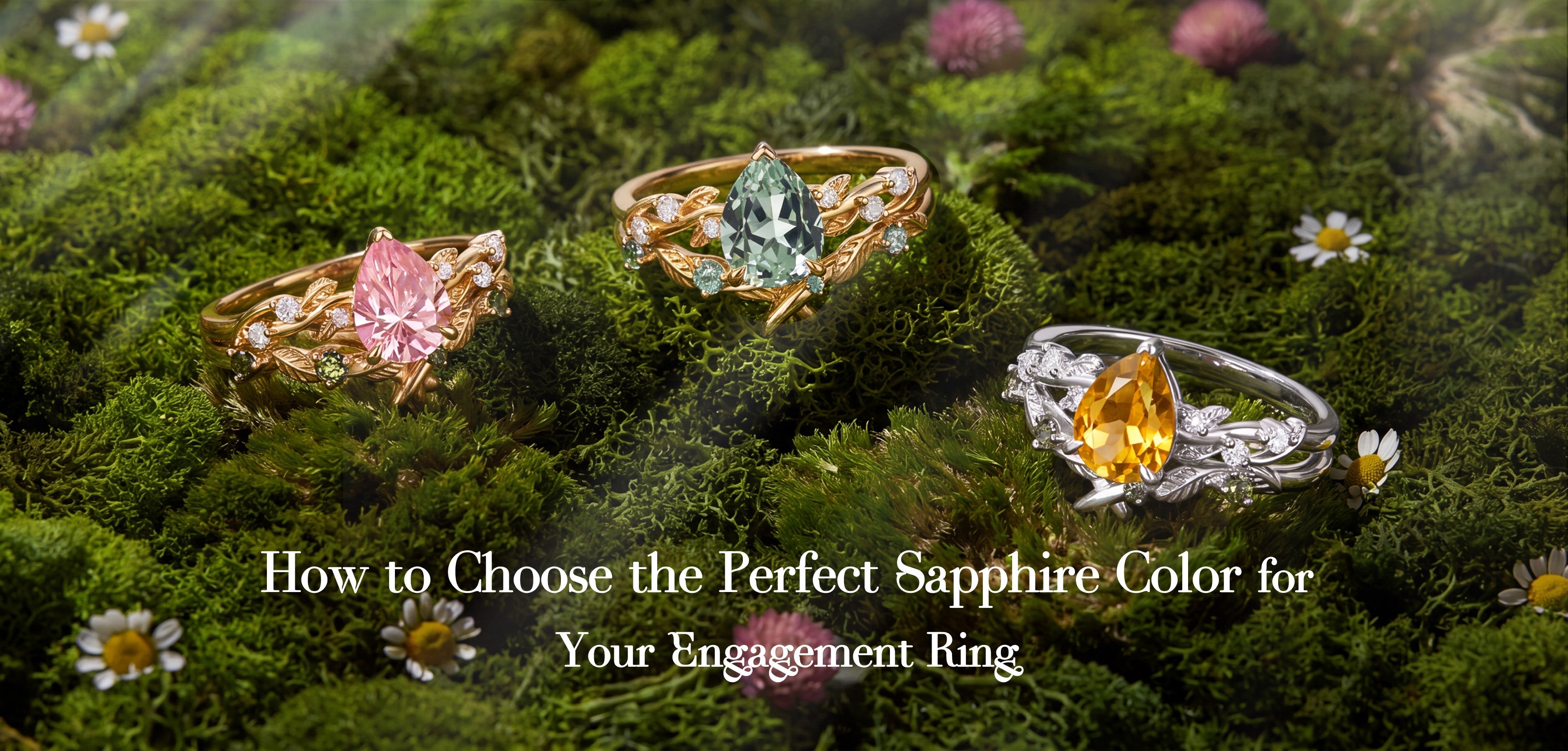
At BlingFlare, the Clarissa Green Sapphire Leafy Bridal Set has become a flagship piece — a pear-cut lab green sapphire set in a leaf-and-vine bridal set that amplifies the stone's verdant character. The set includes a matching band, designed to nest flush against the engagement ring for a unified botanical look.


Teal Sapphire — Modern & Edgy
Teal sapphire occupies the space between blue and green — a blue-green with enough saturation to read as deliberate rather than ambiguous. It's the color of deep ocean water, of tide pools in shadow, of minerals that look like they belong in a geology museum rather than a jewelry store. And that's exactly the point.
Teal sapphire appeals to the wearer who wants colored stone legitimacy without traditional blue. It's modern without being trendy, distinctive without being loud. In white gold or platinum, teal reads as clinical and sharp. In black gold, it becomes almost otherworldly — the dark metal pulls the blue-green into a moodier register. Teal is the color for someone whose personal style leans architectural, artistic, or minimalist.
On the hand, teal sapphire reads differently at every angle. In direct light, the blue surfaces. In indirect light, the green emerges. It's a chameleon stone — and that shifting quality is what makes it so compelling for people who want something that can't be reduced to a single word.
Padparadscha Sapphire — Unique & Sunset-Inspired
Padparadscha is the rarest sapphire color in existence. Named for the lotus flower (padparadscha means "lotus blossom" in Sinhalese), it occupies a narrow color zone between pink and orange — specifically, a pinkish-orange or orange-pink that evokes a tropical sunset. Natural padparadscha commands prices that rival fine ruby. Lab-grown padparadscha delivers the identical color balance with full traceability.
The color is difficult to describe in words and nearly impossible to capture in photographs. It's warm without being red, vibrant without being neon, delicate without being pale. On the hand, padparadscha reads as exotic and unmistakable — it is not a color that anyone will mistake for something else. It announces itself.
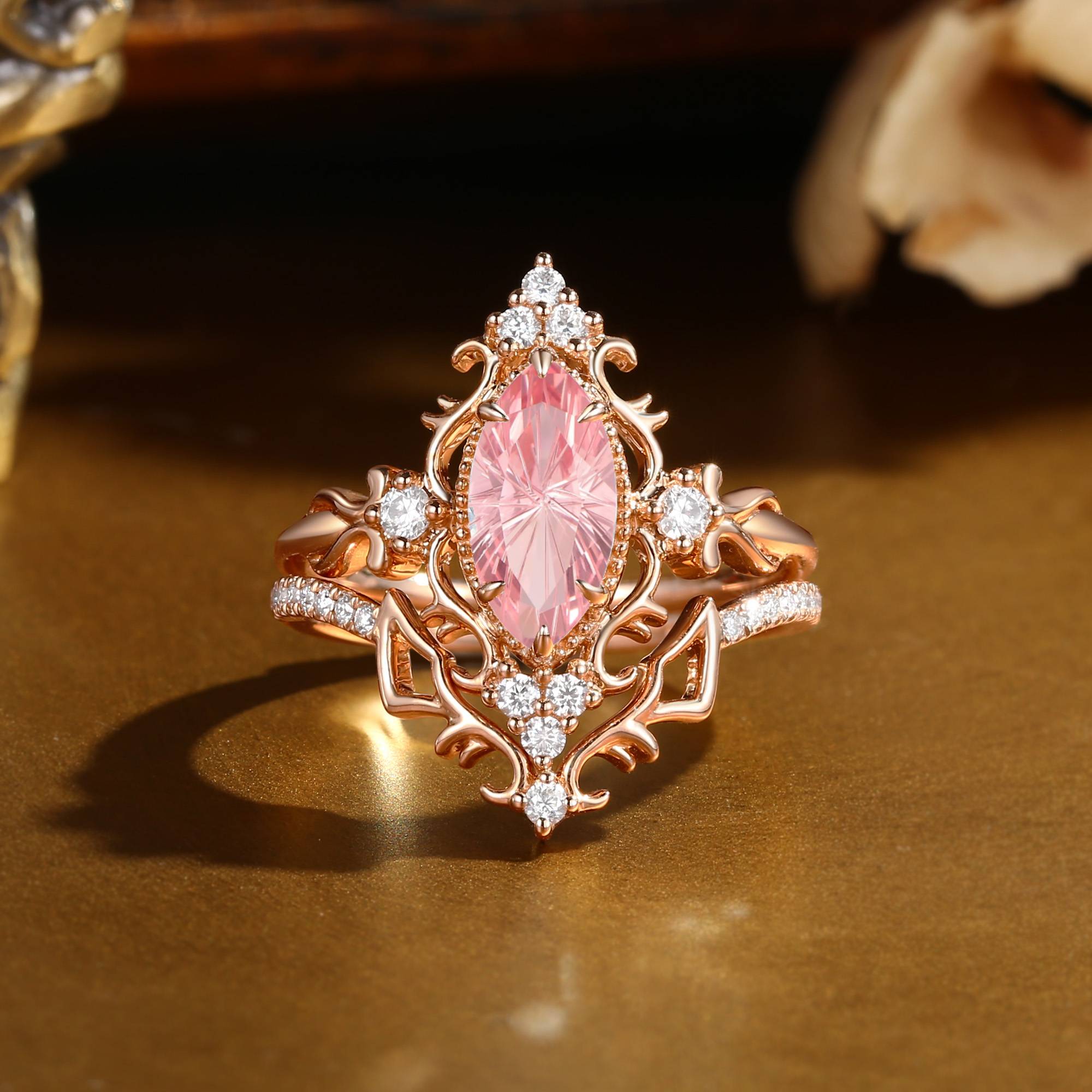
At BlingFlare, the Clarissa Firework Cut Padparadscha Sapphire Leafy Bridal Set pairs this rare color with a proprietary cut that disperses the pink-orange light outward — the stone's color becomes ambient rather than contained. The leafy setting adds botanical framing that echoes the lotus-flower origin of the name.


Metal Pairing Guide
The metal you choose changes how the sapphire color reads. Here's the definitive pairing guide:
Yellow Gold amplifies warmth. It pushes green sapphire deeper into its earthy register, makes padparadscha glow with sunset intensity, and softens cornflower blue into a vintage tone. Yellow gold is the natural pairing for botanical settings and warm-toned stones. If your style leans organic, vintage, or romantic — yellow gold is your default.
White Gold & Platinum create contrast. Cool metal against a warm stone (padparadscha, green) produces a striking tension that makes the color pop. Against cool stones (royal blue, teal), white metal extends the cool register for a clean, modern aesthetic. White gold is the right choice if your style is structured, minimalist, or contemporary.
Rose Gold bridges warm and cool. It's the most universally flattering metal because its pink undertone mediates between the warmth of yellow gold and the coolness of white gold. Rose gold pairs particularly well with padparadscha (extending its pink register), green sapphire (creating an unexpected warm-cool tension), and cornflower blue (softening it further into romantic territory).
Black Gold is the dramatic option. Against teal sapphire, it creates a moody, almost gothic effect. Against padparadscha, it makes the pink-orange glow appear to float against darkness. Black gold is not for everyone — but for the right wearer, it's unforgettable.
How Light Changes Everything
A sapphire does not look the same everywhere. Understanding this before you buy prevents disappointment and helps you choose a color that performs well in the conditions where you'll actually wear it.
Outdoor daylight is the most revealing light. It shows the stone's true body color at full saturation. Royal blue deepens, green becomes vivid, and padparadscha shows its full pink-orange range. If you want maximum color impact, daylight is your friend.
Indoor warm lighting (incandescent, candlelight, restaurant ambiance) shifts every sapphire warmer. Blue stones shift slightly violet. Green stones can look slightly yellowish. Teal pulls more blue. Padparadscha intensifies — warm light is where this color truly comes alive. If you spend most evenings in warm-lit environments and want a stone that glows in those conditions, padparadscha and cornflower blue are your strongest options.
Overhead fluorescent lighting (typical office lighting) is the least flattering for most stones. It washes out saturation and can make lighter-toned sapphires look pale. If you work in a fluorescent-lit office and want your ring to maintain presence, choose a more saturated color — royal blue or deep green — rather than a lighter cornflower or pale padparadscha.
The practical takeaway: choose a color that looks good in your most common lighting environment, not just in the showroom spotlight.
Personal Style Decision Framework
If you're still narrowing down, start with your style identity. The color that matches your wardrobe and aesthetic instinct is almost always the right call:
Classic / Formal style — You wear structured pieces, neutral palettes, and clean lines. Royal blue sapphire in white gold or platinum is your match. It's the most "jewelry-store" of the sapphire colors, and it projects refinement without effort.
Vintage / Romantic style — You love heirloom aesthetics, filigree, milgrain, and soft silhouettes. Cornflower blue sapphire in yellow gold or rose gold aligns with your visual language. Alternatively, padparadscha in rose gold delivers old-world glamour with a sunset twist.
Nature-inspired / Botanical style — Your aesthetic references the natural world: leaves, vines, gardens, forests. Green sapphire in yellow gold is the definitive pairing. The stone's organic color combined with botanical metalwork creates a cohesive aesthetic that no other stone-metal combination achieves. BlingFlare's green sapphire collection was designed for exactly this style identity.
Modern / Edgy style — You lean architectural, minimalist, or unconventional. Teal sapphire in white gold or black gold matches your register. It's the most "now" of all sapphire colors — distinctive enough to start conversations, sophisticated enough to never feel gimmicky.
Related Reads
- The Blue That Stops Everything: On Cornflower Sapphires and the Color We Keep Coming Back To
- The Symbolism Behind Fairy Ring Designs: What Each Element Means
- Why Sapphire Is 2026's Most Coveted Engagement Ring Gem
FAQ
What color sapphire is most popular for engagement rings?
Blue sapphire — specifically cornflower blue and royal blue — remains the most popular choice for sapphire engagement rings. Blue is the color most associated with sapphire historically, and it photographs well, photographs consistently, and reads clearly as "sapphire" to anyone who sees it. That said, green sapphire and padparadscha have seen the fastest growth in popularity over the past two years, driven by the demand for non-traditional engagement rings.
Which sapphire color looks best in yellow gold?
Green sapphire and cornflower blue sapphire are the strongest pairings for yellow gold. Yellow gold's warmth amplifies green's earthy character and softens cornflower blue into a vintage register. Padparadscha also pairs beautifully with yellow gold, intensifying its sunset-like warmth. The combination of warm metal and warm-toned stone creates a cohesive, golden aesthetic.
Does sapphire color fade over time?
No. Lab-grown sapphire — in every color — is color-stable. The chromatic elements (iron and titanium for blue, chromium for red/pink, and specific trace elements for green and teal) are integrated into the crystal structure at the atomic level. They do not fade, shift, or degrade with light exposure. Your sapphire will look the same in twenty years as it does today.
What is the difference between royal blue and cornflower blue sapphire?
Royal blue is deeper, more saturated, and cooler — it reads as authoritative and formal. Cornflower blue is medium-saturated with warmer, slightly violet undertones — it reads as romantic and approachable. Think of royal blue as the color of a navy blazer and cornflower blue as the color of a summer sky. Both are blue. They project entirely different energy.
Can I wear a sapphire engagement ring every day?
Yes. Sapphire is 9.0 on the Mohs hardness scale — harder than any gemstone except diamond (10) and moissanite (9.25). It withstands daily wear without scratching or chipping under normal conditions. The only precaution: protect pointed stone shapes (marquise, pear) from direct hard impact, as the points are structurally more vulnerable than the body of the stone.
How do I know which sapphire color suits my skin tone?
Cool skin tones (pink or blue undertones) pair naturally with royal blue, teal, and white gold settings. Warm skin tones (yellow or golden undertones) pair naturally with green, padparadscha, cornflower blue, and yellow gold settings. Rose gold is universally flattering and bridges both tone categories. If you're unsure, cornflower blue and padparadscha are the two most universally flattering sapphire colors across all skin tones.
BlingFlare's complete sapphire engagement ring collection — including green, cornflower blue, royal blue, teal, and padparadscha — is available at blingflare.com. Each piece is crafted in solid gold with nature-inspired settings designed to complement the stone's natural character.