If you've ever hesitated before buying a lab-grown sapphire — wondering "Is this actually a real sapphire, or am I being tricked?" — you're not alone. This is the single most common question we hear at BlingFlare, and the answer might surprise you.
Yes. Lab-grown sapphires are 100% real sapphires. They share the same chemical composition, the same crystal structure, and the same Mohs hardness (9 out of 10) as natural sapphires mined from the earth. The only difference? Where they were born — not what they are.
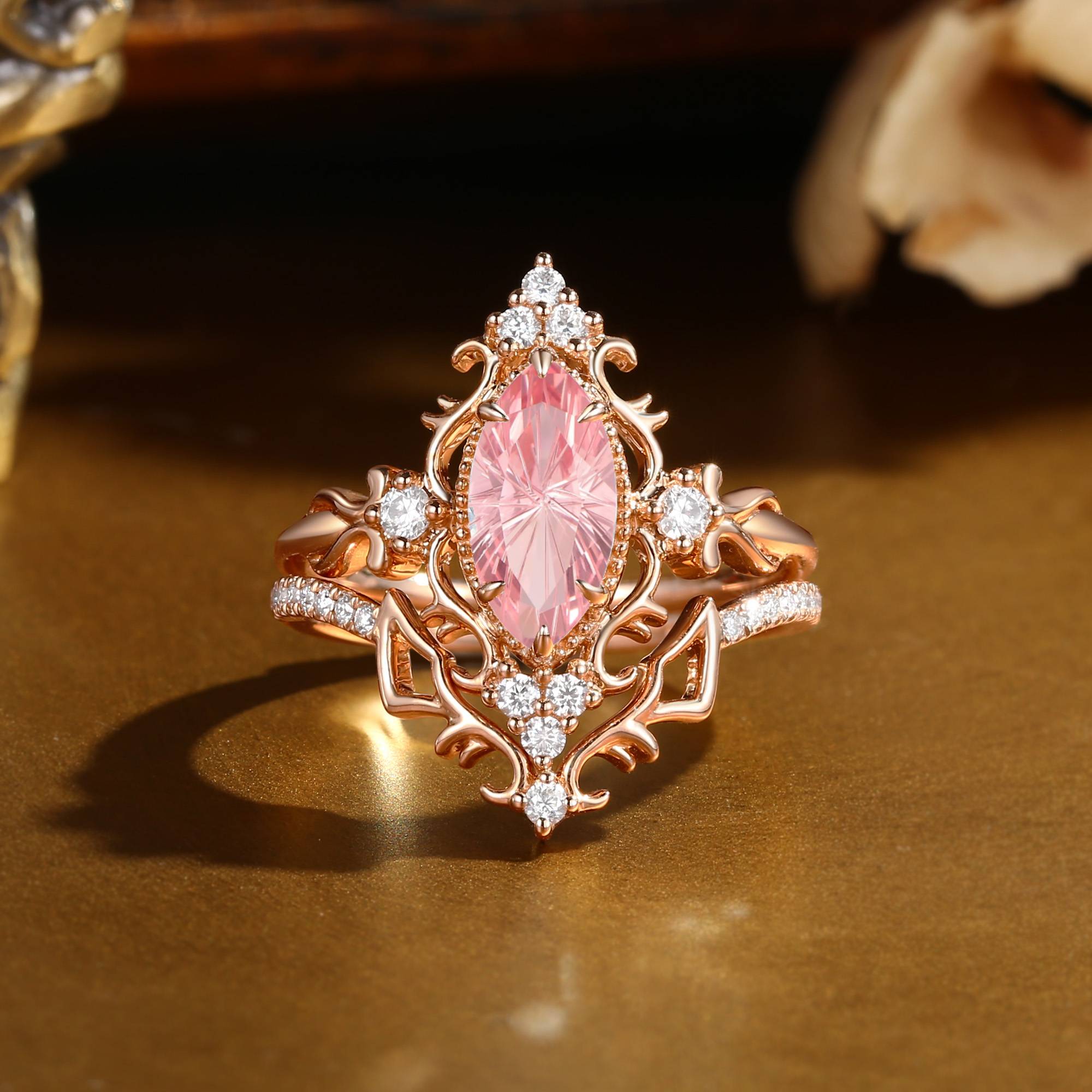
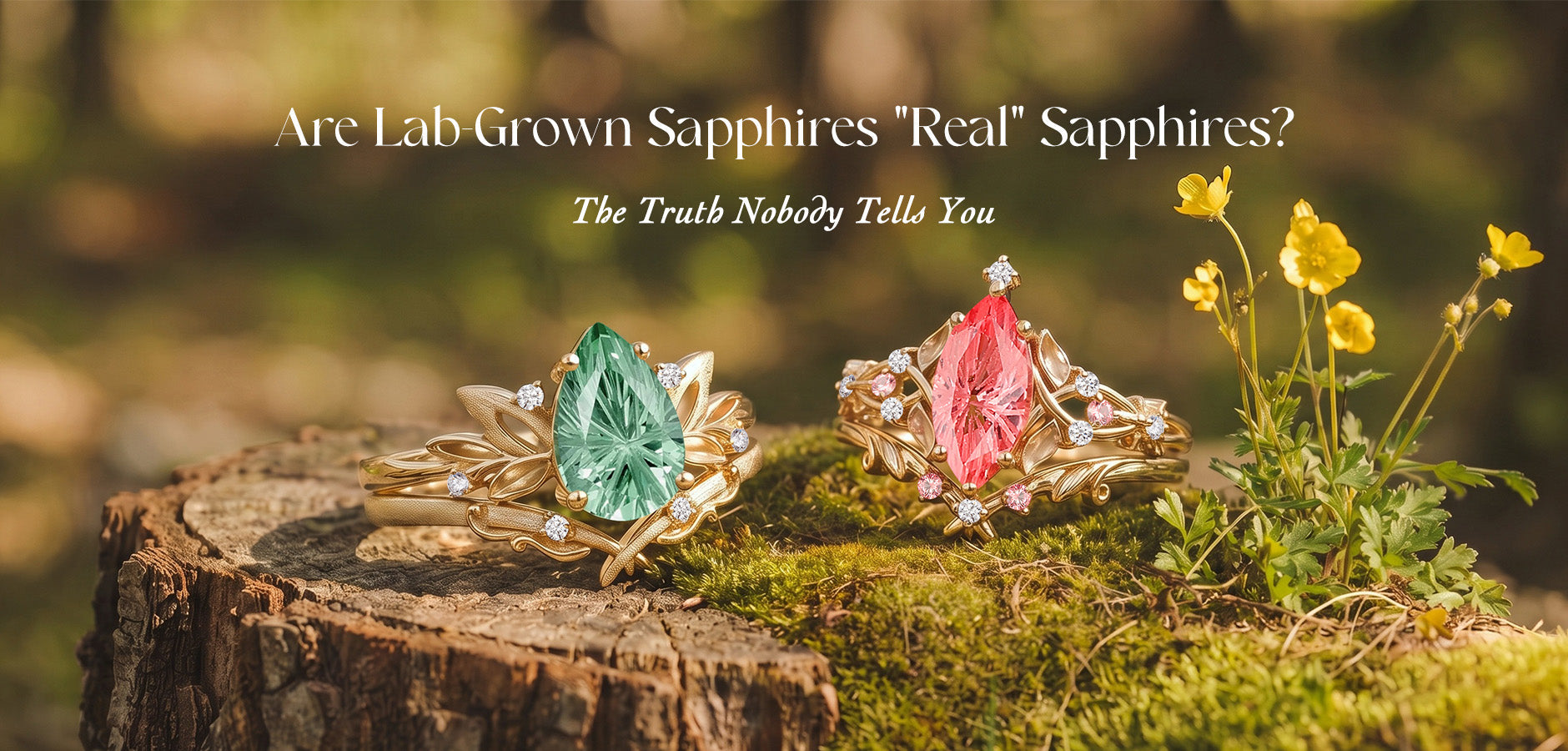
Whether you're drawn to the lush green of a green sapphire or the dreamy pink-orange of a padparadscha sapphire, this guide will help you understand exactly what you're getting — and why more couples are choosing lab-grown over natural.
Table of Contents
- What Makes a Sapphire "Real"?
- How Lab-Grown Sapphires Are Created
- Lab-Grown vs. Natural Sapphire: What's Actually Different?
- Why More Consumers Are Choosing Lab Sapphires
- Common Myths — Debunked
- Are Lab Sapphires Right for Your Engagement Ring?
- FAQ
What Makes a Sapphire "Real"?
A sapphire is defined by science, not by geography.
The mineral corundum (crystallized aluminum oxide, Al₂O₃) becomes a sapphire when trace elements give it color — iron and titanium create blue, chromium creates pink, and a precise balance produces the coveted padparadscha. If the chemistry is identical, the crystal is identical. Period.
The Gemological Institute of America (GIA), the world's leading authority on gemstones, states clearly: lab-grown sapphires have essentially the same physical and optical properties as natural sapphires. Major gemological labs worldwide classify lab-grown corundum as sapphire — full stop.
How Lab-Grown Sapphires Are Created
Two primary methods replicate nature's process in a controlled environment:
Flame Fusion (Verneuil Process) — The oldest and most cost-effective technique. Fine aluminum oxide powder is dropped through a high-temperature flame (~2,000°C), melting and crystallizing onto a rotating boule. The result: a vibrant sapphire crystal grown in hours rather than millions of years.
Flux Growth — A slower, more precise method where aluminum oxide dissolves in a molten flux at lower temperatures over weeks or months. Flux-grown sapphires often exhibit more natural-looking inclusions and richer color saturation — making them a favorite for fine jewelry.
Both methods produce sapphires that are chemically, optically, and structurally identical to their natural counterparts. Under a gemologist's microscope, the distinction is subtle: lab stones may show curved striae (growth lines from flame fusion) or tiny flux inclusions, while naturals display angular color zoning and mineral inclusions formed over eons.
- Hardness: 9.0 Mohs (second only to moissanite and diamond)
- 100% chemically identical to natural corundum
- Available in: Blue · Green · Pink · Padparadscha · Yellow · White
- Ideal setting styles: Vintage, nature-inspired, halo, solitaire
Lab-Grown vs. Natural Sapphire: What's Actually Different?
| Natural Sapphire | Lab-Grown Sapphire | |
|---|---|---|
| Chemical Composition | Al₂O₃ + trace elements | Al₂O₃ + trace elements (identical) |
| Crystal Structure | Hexagonal | Hexagonal (identical) |
| Hardness (Mohs) | 9 | 9 (identical) |
| Refractive Index | 1.76–1.78 | 1.76–1.78 (identical) |
| Origin | Earth's crust, millions of years | Laboratory, hours to months |
| Price (1ct equivalent) | $200–$1,500+ | $50–$300 |
| Color Consistency | Variable, depends on mine | More consistent and controllable |
| Environmental Impact | Mining, land disruption | Minimal land use, controlled process |
| Supply Chain Transparency | Often opaque | Fully traceable |


Why More Consumers Are Choosing Lab Sapphires
Choose Lab Sapphires if you…
- Want to get your ideal color — precise color control means no settling for "close enough"
- Want significantly more affordable fine jewelry — typically 50–80% less than natural
- Care about fully transparent supply chain — complete origin documentation
- Value sustainability — no large-scale mining, lower carbon footprint
- Love the idea of a stone that's chemically identical to natural but without the rarity markup
At BlingFlare, we specialize in handcrafted rings featuring our signature Firework Cut and nature-inspired designs. Every lab sapphire in our collection is ethically sourced and fully traceable.
Common Myths — Debunked
Myth: "Lab-Grown Sapphires Are Fake Gemstones"
False. Lab-grown sapphires are real sapphires. They are not simulants like glass, cubic zirconia, or synthetic spinel — those are entirely different materials that merely look like sapphire. Lab-grown sapphires are sapphire, grown in a lab instead of the earth. Even the FTC (U.S. Federal Trade Commission) recognizes lab-created corundum as genuine sapphire.
Myth: "Lab-Grown Sapphires Aren't Durable"
False. Lab-grown sapphires rate 9 on the Mohs hardness scale — second only to moissanite (9.25) and diamond (10). They will not scratch easily, chip under normal wear, or lose their color over time. They are absolutely suitable for everyday jewelry, including engagement rings worn daily.
Myth: "Lab-Grown Sapphires Look Cheap or Artificial"
False. A well-cut lab sapphire is indistinguishable from a natural one to the naked eye. The brilliance, fire, and color saturation are identical. In fact, because lab sapphires allow for better color consistency, you may end up with a stone that looks more vivid than many natural alternatives at the same price point.
Myth: "Lab-Grown Means Low Quality"
False. Quality in sapphires is determined by the Four Cs — Color, Clarity, Cut, and Carat — regardless of origin. A premium lab-grown sapphire with excellent cut, vivid color, and high clarity will always outperform a poorly cut natural stone. At BlingFlare, we curate only top-grade lab sapphires for every piece in our collection.
Are Lab Sapphires Right for Your Engagement Ring?
Absolutely yes — and here's why:
- Durability: Mohs 9 hardness means it will withstand decades of daily wear
- Beauty: Identical brilliance and color to natural sapphire
- Value: Get a larger, more stunning stone for your budget
- Ethics: A clear conscience with transparent sourcing and minimal environmental impact
- Uniqueness: Choose from colors that are rare or nearly impossible to find in natural sapphire — like vivid padparadscha or rich teal
Related Reads
- The Green That Doesn't Exist in Nature — And Why That's the Point
- Green Sapphire Rings: Timeless Elegance for Every Moment
- The Fireworks Cut: A Gemstone with a Thousand Stories to Sparkle
FAQ
Will a jeweler be able to tell if my sapphire is lab-grown?
Not with the naked eye. A trained gemologist using specialized equipment can detect subtle growth patterns, but to everyone else — including your friends and family — your lab sapphire looks exactly like a natural one.
Do lab-grown sapphires come with certificates?
Yes. Reputable sellers like BlingFlare provide gemological certification for their lab sapphires, confirming the stone's identity, characteristics, and lab-grown origin.
Will a lab-grown sapphire fade or change color over time?
No. Lab-grown sapphires have the same exceptional color stability as natural sapphires. They will not fade, discolor, or change with exposure to light or normal conditions.
Can lab-grown sapphires be set in any metal?
Yes. Lab sapphires work beautifully with all jewelry metals — white gold, yellow gold, rose gold, platinum, and sterling silver. The setting process is identical to natural sapphires.
How should I clean my lab-grown sapphire jewelry?
Warm soapy water and a soft brush work perfectly. Ultrasonic cleaners are generally safe (avoid if the stone has fracture fillings). Steam cleaning is also fine for most lab sapphires.
Are lab-grown sapphires the same as simulated sapphires?
No. Simulants (like glass or synthetic spinel) are different materials that mimic sapphire's appearance. Lab-grown sapphires are real sapphire — same chemistry, same structure, same beauty.
Is it okay to choose a lab sapphire for an engagement ring?
Absolutely. Lab sapphires are one of the most popular choices for modern engagement rings — durable, beautiful, ethical, and affordable. Many couples specifically seek them out for these reasons.
Where can I buy trustworthy lab-grown sapphire jewelry?
Always buy from sellers who clearly disclose the origin of their stones. At BlingFlare, every lab sapphire is explicitly labeled, certified, and backed by our quality guarantee. Browse our Sapphire Collection to find your perfect piece.
Have questions about our sapphire collection? Message us on Instagram or chat with our team at blingflare.com.