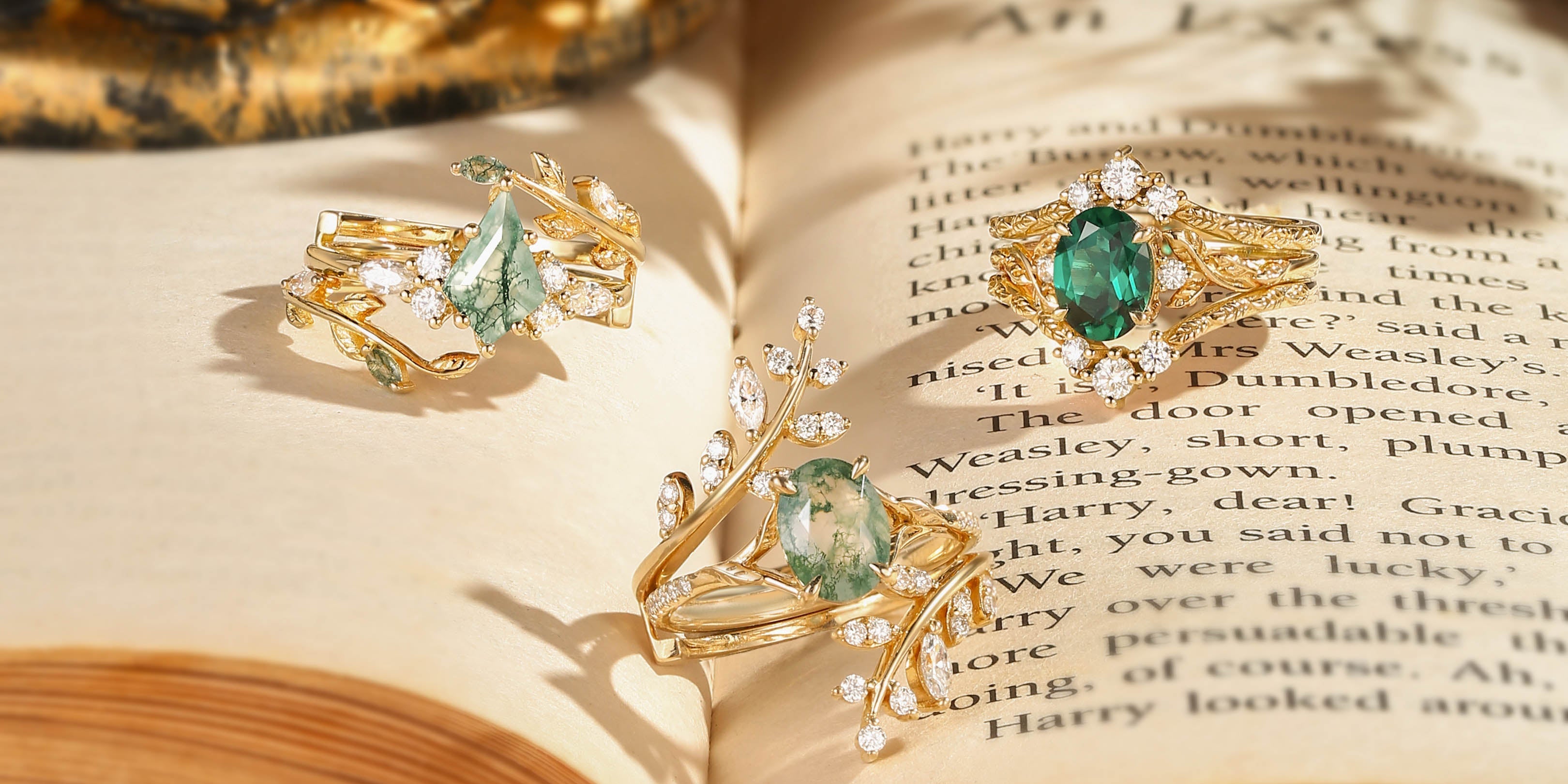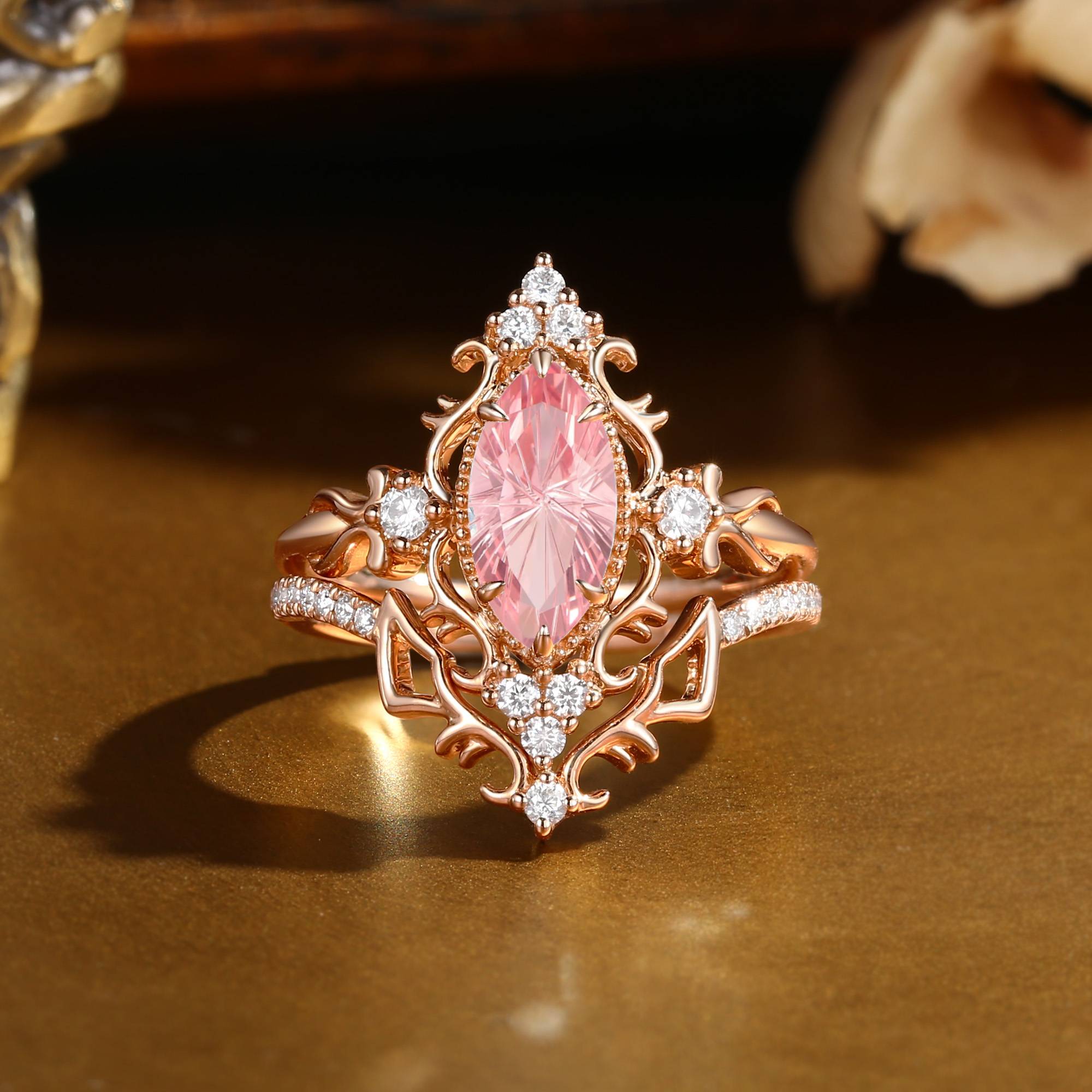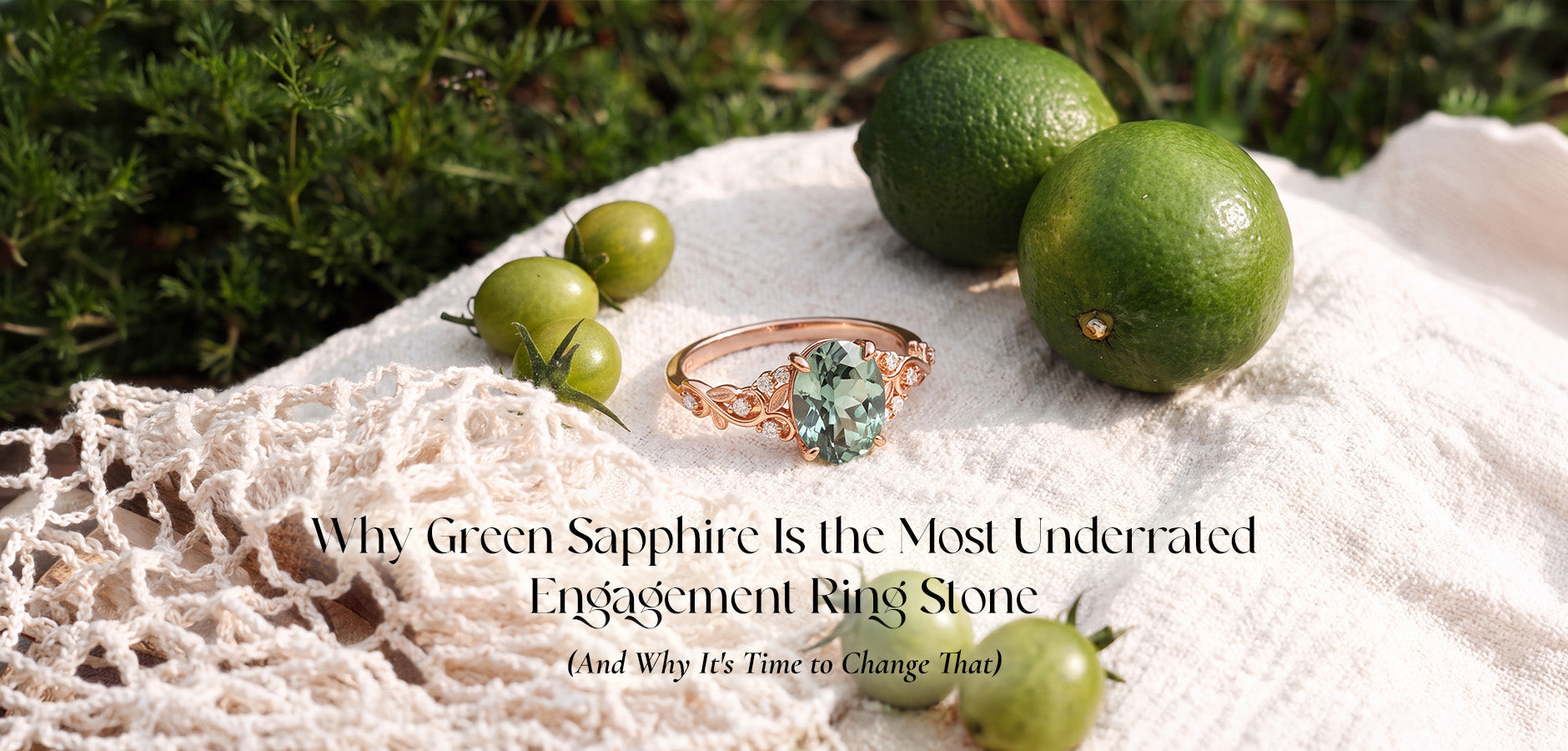
Everyone talks about blue sapphire. Everyone talks about emerald. But the gemstone that quietly sits in the corner — the one that combines the durability of sapphire, the color of spring forests, and a rarity that natural blue sapphire can't even match — is green sapphire. It is, without question, the most underrated engagement ring stone on the market today. And it is time that changed.
At BlingFlare, we have been watching more and more brides choose green sapphire over the usual suspects — not because it is trendy, but because it is genuinely better in ways most people never think to consider. If you are looking for a green sapphire engagement ring, or simply curious about why this stone deserves a second look, this is the guide you have been waiting for.
Table of Contents
- The Symbolism of Green Sapphire: Nature, Rebirth & Calm
- Green Sapphire vs. Emerald: The Durability Winner Is Clear
- Why Natural Green Sapphire Is Rarer Than Blue (But Lab-Made Changes Everything)
- Green Sapphire Fits Every Style — Vintage, Nature-Inspired & Bohemian
- The BlingFlare Green Sapphire Collection
- Frequently Asked Questions
The Symbolism of Green Sapphire: Nature, Rebirth & Calm
Gemstones have always carried meaning. Diamonds mean forever. Rubies mean passion. Sapphires, in their blue form, mean wisdom and loyalty. But green sapphire speaks a different language entirely — one that speaks to the part of us that craves grounding, renewal, and quiet strength.
Nature. Green is the color of the living world. Forests, meadows, moss-covered stones — green sapphire carries the visual weight of everything that grows. For brides who feel most at peace in the woods, who choose wildflowers over roses, who want their ring to feel like an extension of the natural world, green sapphire is the obvious choice.
Rebirth. In ancient gemstone traditions, green stones were associated with renewal and new beginnings. Green sapphire carries this symbolism forward — making it an especially meaningful choice for an engagement ring, which is, at its core, a promise of a new life together.
Calm. Unlike the fiery intensity of red or the dramatic depth of black, green is inherently soothing. Green sapphire does not demand attention — it earns it quietly. For brides who want their ring to feel like a deep breath rather than a shout, this is the stone.
There is also a quieter kind of luxury in choosing something unexpected. Green sapphire says: I did not follow the crowd. I found something beautiful that most people overlooked. That is the kind of confidence that makes an engagement ring feel truly personal.
Green Sapphire vs. Emerald: The Durability Winner Is Clear
This is the comparison that should be made more often — and the one that, once you see the numbers, makes the choice almost obvious.
| Factor | Green Sapphire | Emerald |
|---|---|---|
| Mohs Hardness | 9 | 7.5–8 |
| Daily Wear Suitability | Excellent | Moderate — requires protective settings |
| Inclusions & Fractures | Fewer, more structurally stable | Naturally included ("jardin"), more prone to chipping |
| Color Stability | Stable — does not fade or change | Can be treated with oils; color may shift over time |
| Price (1ct, good quality) | $300–$1,500 (lab: significantly less) | $1,000–$5,000+ |
| Rarity (natural) | Rarer than blue sapphire | Rare, but widely available in lower grades |
Let that sink in: green sapphire is a 9 on the Mohs scale. That puts it right next to blue sapphire, ruby, and moissanite — and well above emerald, which sits at 7.5–8. For an engagement ring that will be worn every day for decades, that difference is not small. It is the difference between a ring that looks as good in 20 years as it does today, and one that needs careful handling, protective settings, and occasional re-polishing.
Emerald is beautiful — no one denies that. But its natural inclusions (called "jardin," French for garden) make it structurally more fragile. A hard knock against a countertop can chip an emerald. That same knock would not even register on a sapphire. For a bride who wants green in her ring without the maintenance anxiety, green sapphire is simply the smarter stone.
Why Natural Green Sapphire Is Rarer Than Blue (But Lab-Made Changes Everything)
Here is something most people do not know: in nature, green sapphire is rarer than blue sapphire.
Blue sapphire gets its color from iron and titanium. Green sapphire gets its color from iron alone — and the specific geological conditions required to produce a pure, saturated green are far less common than those that produce blue. Most green sapphires mined from the earth have secondary tones of yellow or blue, making them technically "blue-green" or "yellow-green." A truly pure green natural sapphire is a collector's stone.
So why is green sapphire less famous than blue? Partly because blue sapphire has centuries of royal marketing behind it — Princess Diana's ring, Victorian coronation jewels, the British Crown Jewels. Green sapphire never had that kind of spotlight. It has been the quiet alternative, known to gemstone collectors but rarely featured in mainstream jewelry marketing.
That is where lab-grown green sapphire changes the equation.
Lab-grown sapphires are physically, chemically, and optically identical to natural ones. They have the same hardness (9), the same brilliance, the same color. The difference is origin and price — and for green sapphire, the price difference is dramatic. A high-quality natural green sapphire can command $1,000–$3,000 per carat due to rarity. A lab-grown green sapphire of identical visual quality costs a fraction of that.
This means every bride who wants the look, durability, and meaning of green sapphire can have it — without the rarity premium. At BlingFlare's Green Sapphire Collection, our lab-grown green sapphire rings start under $1,500 — a price point that would be impossible with natural stones of the same quality.
Green Sapphire Fits Every Style — Vintage, Nature-Inspired & Bohemian
One of green sapphire's greatest strengths is how well it adapts to different design aesthetics. It is not a stone that demands a specific setting — it elevates whatever surrounds it.
Vintage & Victorian
Green sapphire's muted, earthy tone fits perfectly in vintage-inspired settings. Think filigree metalwork, milgrain detailing, and Art Deco geometry. In yellow gold or rose gold, a green sapphire set in a Victorian-style ring feels like it was pulled from a 19th-century jewelry box — timeless, elegant, quietly luxurious.
BlingFlare's Breeze is a perfect example: a mint green lab sapphire set in an intricate Victorian filigree band — the kind of ring that looks like it has been in the family for generations.
Nature-Inspired & Botanical
This is where green sapphire truly shines. The stone's color naturally echoes leaves, vines, and moss — making it the ideal centerpiece for botanical ring designs. Leaf-wrapped bands, vine-engraved shanks, and organic, flowing silhouettes all look extraordinary with a green sapphire at the center. It is the stone that makes a nature-inspired ring feel complete.
Bohemian & Non-Traditional
For brides who do not want a "traditional" engagement ring — the kind that looks like everyone else's — green sapphire is a natural choice. It is unexpected, individual, and quietly bold. Paired with unconventional cuts (kite, hexagon, pear) or alternative metals (black gold, rose gold), green sapphire becomes the stone for women who want their ring to be as unique as they are.
The BlingFlare Green Sapphire Collection
At BlingFlare, we offer one of the most diverse selections of green sapphire engagement rings available online. Every ring is handmade to order in 14K or 18K solid gold, with lab-grown green sapphires that are optically and chemically identical to natural stones. Here are a few of our standout designs:


Every ring is handmade to order. Lead time is typically 3–4 weeks. We also offer virtual try-on and detailed videos of every stone — so you can see exactly what your green sapphire will look like before it ships.
Frequently Asked Questions
What is the difference between green sapphire and emerald?
The key differences are hardness and durability. Green sapphire (Mohs 9) is significantly harder than emerald (Mohs 7.5–8) and less prone to chipping or scratching. Emeralds are also naturally included, which makes them more fragile. Green sapphire offers the same lush green color with far greater durability for everyday wear.
Is green sapphire rarer than blue sapphire?
Yes. In nature, pure green sapphire is rarer than blue sapphire. The geological conditions required to produce green sapphire (iron-only coloration without titanium) are less common than those that produce blue. However, lab-grown green sapphires are widely available and offer the same optical and chemical properties as natural stones — at a fraction of the cost.
Are lab-grown green sapphires "real" sapphires?
Yes. Lab-grown sapphires have the exact same chemical composition (aluminum oxide), crystal structure, hardness, and brilliance as natural sapphires. Even professional gemologists cannot tell them apart without specialized equipment. The only difference is origin — and the price.
What metal goes best with green sapphire?
Yellow gold creates the most classic, vintage look — the warm metal enhances the stone's earthy green tones. Rose gold adds a romantic, modern feel. White gold or platinum creates a crisp, contemporary contrast that lets the green color stand out. All three pairings work beautifully; it depends on your personal style.
How do I clean a green sapphire ring?
Green sapphire is easy to care for. Use warm soapy water and a soft brush (a baby toothbrush works perfectly) to gently clean around the stone and setting. Avoid harsh chemicals, ultrasonic cleaners, and steam cleaning. Rinse thoroughly and pat dry. With regular gentle cleaning, your green sapphire will maintain its brilliance for a lifetime.
What cut looks best for green sapphire?
Green sapphire is versatile and looks stunning in a variety of cuts. Oval and pear cuts maximize the stone's color saturation and create an elegant, elongated silhouette. Kite and hexagon cuts offer a modern, architectural edge. Round and cushion cuts provide classic brilliance. At BlingFlare, we offer green sapphire in every popular cut — from traditional to unconventional.
Can I customize a green sapphire engagement ring?
Absolutely. BlingFlare offers full customization on all our engagement rings. You can choose your preferred metal (14K or 18K yellow, white, or rose gold; or platinum), select your stone cut and size, and work with our design team to create a ring that is uniquely yours. Contact us for a custom quote.