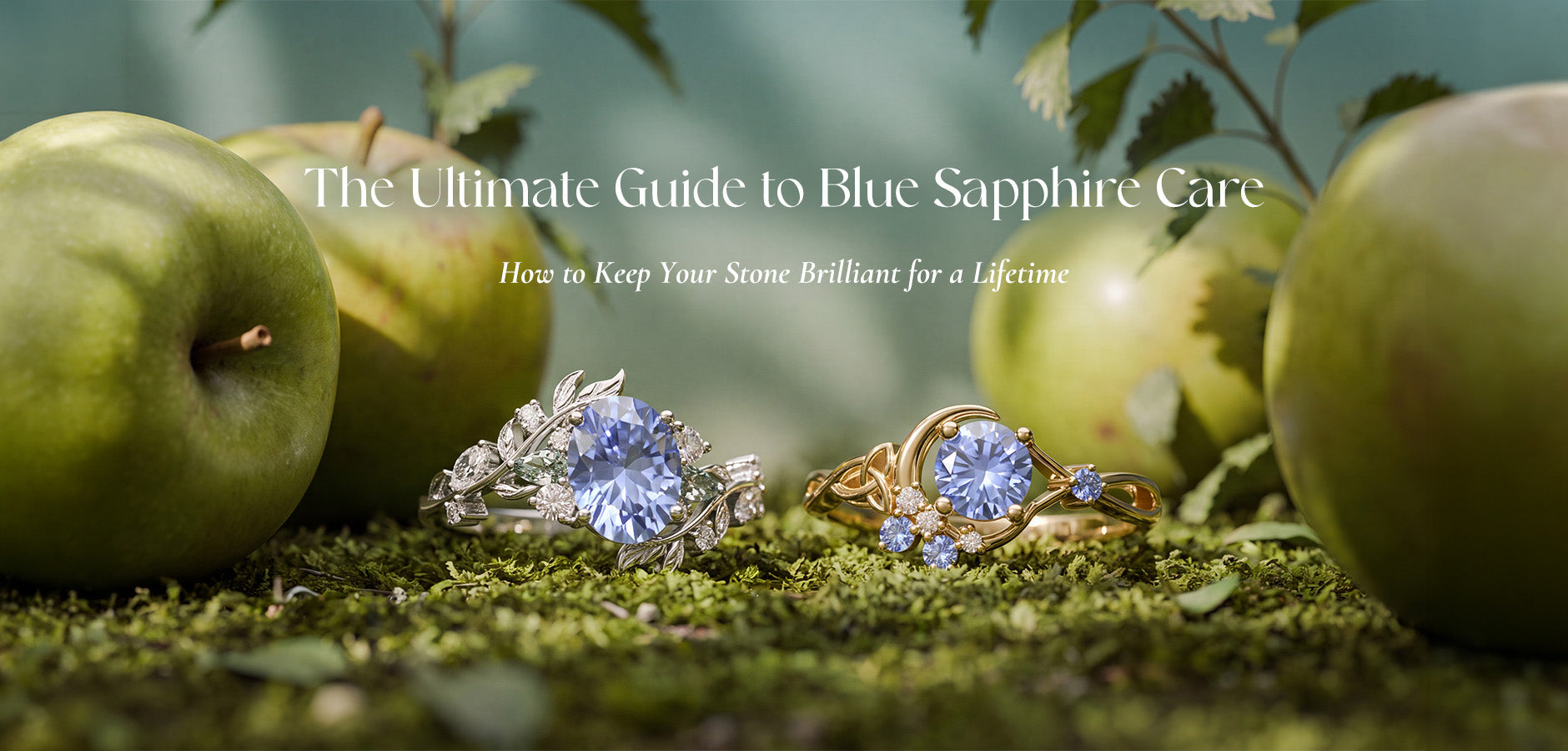
Blue sapphire engagement rings have captivated hearts for centuries — from Princess Diana's iconic ring to modern celebrity proposals. But even the world's second hardest gemstone (Mohs 9) needs proper care to maintain its breathtaking brilliance. Whether you've just said "yes" to a stunning blue sapphire ring or are considering one, this complete guide covers everything about blue sapphire care, from daily cleaning to long-term storage.
Discover how to clean sapphire jewelry like a pro, understand the differences between Royal Blue, Cornflower Blue, and Teal sapphires, and learn why lab-grown sapphires are becoming the smartest choice for lifetime wear. Plus, explore how the innovative Firework Cut takes sapphire brilliance to the next level.
If you're shopping for the perfect blue sapphire engagement ring, start with our Blue Sapphire Collection or browse our Engagement Rings Collection for timeless designs crafted to last generations.
Table of Contents
- Why Blue Sapphire Is the Classic Choice for Engagement Rings
- Royal Blue vs. Cornflower Blue vs. Teal: Understanding the Shades
- How Light Affects Blue Sapphire Color
- The Firework Cut: Maximizing Brilliance in Blue Sapphires
- How to Clean Sapphire Jewelry: Daily and Deep Cleaning
- What to Avoid: Common Sapphire Care Mistakes
- Proper Storage for Sapphire Jewelry
- Why Lab-Grown Sapphires Excel as Everyday Heirloom Pieces
- Maintenance Schedule: Keeping Your Sapphire Ring in Peak Condition
- Frequently Asked Questions
Why Blue Sapphire Is the Classic Choice for Engagement Rings
Blue sapphire has been the gold standard for engagement rings since Prince Albert presented Queen Victoria with a blue sapphire ring in 1840 — a tradition continued when Prince Charles gave Princess Diana that now-iconic 12-carat oval blue sapphire.
Why has this gemstone endured as the ultimate symbol of eternal love?
Unmatched Durability: With a Mohs hardness of 9, blue sapphire is second only to diamond, making it ideal for rings worn every single day. Unlike softer gemstones that scratch easily, sapphire withstands decades of daily wear while maintaining its polish and brilliance.
Timeless Color: Blue is the world's most popular favorite color, and blue sapphire offers a richness that no other gemstone can replicate. From deep royal blue to delicate cornflower blue, the range of shades ensures every person finds their perfect match.
Symbolic Meaning: Throughout history, blue sapphire has represented loyalty, fidelity, and wisdom — exactly the qualities a marriage is built on. Ancient Persians believed the sky was painted blue by the reflection of a giant sapphire upon which the Earth rested.
Investment Value: High-quality blue sapphires continue to appreciate in value, especially larger stones with rich color saturation. A well-chosen sapphire ring is both a love token and a wise investment.
At BlingFlare, our lab-grown blue sapphires offer all these benefits with the added advantage of ethical sourcing and exceptional value. Explore our Blue Sapphire Engagement Ring Collection to find your forever ring.
Royal Blue vs. Cornflower Blue vs. Teal: Understanding the Shades
Not all blue sapphires look the same. The three most popular shades each have distinct characteristics that appeal to different tastes and occasions.
| Feature | Royal Blue | Cornflower Blue | Teal Sapphire |
|---|---|---|---|
| Color Profile | Deep, saturated blue with violet undertones | Medium blue with soft violet hints, velvety appearance | Blue-green blend, reminiscent of tropical waters |
| Best Lighting | Brilliant indoor light, evening events | Natural daylight, outdoor settings | Any lighting; shifts dramatically |
| Style Vibe | Bold, luxurious, statement-making | Romantic, soft, classic elegance | Modern, unique, nature-inspired |
| Rarity | Highly prized, classic choice | Most sought-after shade | Increasingly popular, rare finds |
| Best Metal Pairing | White gold, platinum | White gold, yellow gold | White gold, rose gold |
| Skin Tone Match | All skin tones, especially rich complexions | Fair to medium skin tones | Cool undertones, bohemian style |
Royal Blue Sapphire delivers the deepest, most saturated blue. It photographs beautifully and makes a powerful statement — perfect for those who want maximum impact.
Cornflower Blue Sapphire offers a softer, medium-tone blue with a velvety quality that collectors prize. This is the most classic choice for engagement rings and pairs beautifully with vine or floral settings.
Teal Sapphire combines blue and green in a way that shifts depending on the light. For the non-traditional bride who wants something truly unique, teal is the perfect choice.
Ready to find your shade? Shop our Cornflower Blue Sapphire Collection or our Royal Blue Sapphire Collection.


How Light Affects Blue Sapphire Color
One of the most fascinating aspects of blue sapphire is how dramatically its appearance changes under different lighting conditions. Understanding this helps you choose the right shade for your lifestyle and ensures your sapphire engagement ring maintenance routine includes proper lighting awareness.
Natural Daylight (North-facing): This is the most accurate light for evaluating sapphire color. North-facing daylight reveals the true saturation and tone without warming or cooling the stone. Cornflower Blue sapphires show their signature velvety softness best in this light.
Warm Incandescent Light: Indoor lighting with yellow undertones (like traditional bulbs) enhances the violet components in blue sapphire. Royal Blue stones appear even richer and deeper under warm light, making them perfect for evening events.
Cool LED/Fluorescent Light: Cool-toned lighting emphasizes the green components in sapphire. Teal sapphires really come alive under cool light, with their blue-green character becoming more pronounced.
Direct Sunlight: Bright, direct sun reveals the full spectrum of a sapphire's color. This is when you'll see the most saturation — but also when any color zoning (uneven color distribution) becomes visible. High-quality stones from reputable sources like BlingFlare show even color distribution even in harsh sunlight.
Candlelight: The warm, flickering glow of candlelight brings out the romantic side of any blue sapphire. This is why sapphire engagement rings look so stunning at proposal dinners and wedding receptions.
Pro tip: When shopping for blue sapphire jewelry online, look for photos taken in multiple lighting conditions. At BlingFlare, we photograph each stone in natural daylight, indoor lighting, and direct sun so you know exactly what to expect.
The Firework Cut: Maximizing Brilliance in Blue Sapphires
Blue sapphire's beauty isn't just about color — it's also about how light dances within the stone. The Firework Cut is a specialized faceting technique designed to maximize a blue sapphire's light performance, creating a spectacular display of brilliance that rivals even diamonds.
What Is Firework Cut?
Unlike traditional brilliant cuts that prioritize a single type of light return, the Firework Cut uses a complex arrangement of facets that create multiple light paths within the stone. The result is a starburst pattern of reflections that resembles — you guessed it — fireworks.
Why Firework Cut Enhances Blue Sapphire
Blue sapphire has a high refractive index (1.76-1.78), meaning it naturally bends and reflects light beautifully. The Firework Cut leverages this optical property by:
- Creating deeper light return: More light enters the stone and bounces back to your eye, rather than leaking out the bottom
- Enhancing color saturation: The multiple light paths intensify the blue color, making it appear more vivid
- Adding scintillation: That sparkle you see when a sapphire moves? Firework Cut maximizes it
- Reducing windowing: A common issue in poorly cut sapphires where the center appears transparent. Firework Cut eliminates this.
Caring for Firework Cut Sapphires
The same cleaning methods apply to Firework Cut sapphires as other cuts (more below), but the brilliance of this cut means even small amounts of oil or lotion will be immediately visible. We recommend cleaning Firework Cut sapphire rings weekly to maintain that spectacular sparkle.
Experience the difference: Our Abrielle Oval Cut Lab Cornflower Blue Sapphire Vine Fairytale Engagement Ring showcases the Firework Cut's brilliance in a romantic vine setting.


How to Clean Sapphire Jewelry: Daily and Deep Cleaning
Proper blue sapphire care starts with regular cleaning. Here's your complete guide to how to clean sapphire jewelry safely and effectively.
Daily Cleaning (30 seconds)
The simplest and most effective daily cleaning method:
- After wearing, wipe your sapphire ring with a soft, lint-free microfiber cloth
- Focus on the back of the stone where oils and lotion accumulate
- Store in a soft pouch or jewelry box overnight
This takes less than a minute but prevents the buildup that dulls sapphire's brilliance over time.
Weekly Deep Cleaning (5 minutes)
For a thorough clean that restores your sapphire's original sparkle:
- Fill a small bowl with warm (not hot) water
- Add 2-3 drops of mild dish soap (clear, fragrance-free works best)
- Soak your sapphire jewelry for 15-20 minutes
- Gently scrub with a soft-bristle toothbrush, paying attention to the setting and back of the stone
- Rinse under lukewarm running water
- Pat dry with a soft, lint-free cloth
Monthly Professional-Level Clean
For maintenance that keeps your sapphire looking showroom-fresh:
- Follow the weekly deep cleaning steps above
- Use a wooden toothpick to gently remove any debris from prong settings
- Inspect the setting under bright light to check for any loose prongs
- Polish the metal bands with a jewelry polishing cloth
How often should you clean your sapphire ring? For everyday wear, weekly cleaning is ideal. For occasional wear, monthly cleaning keeps it in peak condition.
What to Avoid: Common Sapphire Care Mistakes
Even with sapphire's impressive durability, certain activities and substances can damage your stone or setting. Here's what to avoid for proper sapphire engagement ring maintenance:
Harsh Chemicals
- Chlorine (pools, hot tubs, bleach) — can damage metal settings and dull sapphire's surface
- Ammonia-based cleaners — may harm treated sapphires or fracture fillings
- Acetone (nail polish remover) — dissolves some setting adhesives
- Hairspray, perfume, lotion — leave filmy residue that dulls brilliance
Always put your sapphire ring on AFTER applying cosmetics, perfume, and lotion. Remove it before swimming or cleaning.
Ultrasonic Cleaners: Use with Caution
While ultrasonic cleaners are generally safe for untreated blue sapphire, they can:
- Damage sapphires with fracture fillings or cavity treatments
- Loosen stones in older or delicate settings
- Harm other gemstones in multi-stone rings
When in doubt, stick to the gentle soap-and-water method or professional cleaning.
Physical Impact
Even sapphire (Mohs 9) can chip if struck hard enough against a sharp edge. Avoid:
- Gym workouts (barbells can strike the stone)
- Manual labor without removing the ring first
- Stacking sapphire rings directly against diamond rings (diamond is harder and can scratch sapphire)
Extreme Temperature Changes
Sudden temperature shifts can cause thermal shock, especially in stones with internal inclusions. Don't move your sapphire ring directly from hot water to ice cold.
Proper Storage for Sapphire Jewelry
How you store your sapphire jewelry matters just as much as how you clean it. Proper storage prevents scratches, protects settings, and maintains your sapphire's brilliance between wears.
Individual Storage Is Key
Always store sapphire pieces separately from other jewelry. While sapphire is very hard, it can still be scratched by diamonds or other sapphires. Use:
- Individual soft pouches for each piece
- Jewelry boxes with separate compartments
- Anti-tarnish strips in your storage area to protect metal settings
Avoid Tangled Chains and Stacked Rings
Necklaces and bracelets should be laid flat or hung individually. Stacking rings causes friction that wears down both the metal and the stone's polish over time.
Climate Control
Store jewelry in a cool, dry place away from direct sunlight. While sapphire itself won't fade, extreme heat or humidity can:
- Damage certain metal alloys in settings
- Affect any secondary gemstones in the piece
- Cause metal to expand and contract, loosening prongs
Travel Storage
When traveling, use a hard-sided jewelry case with individual slots. Never toss sapphire rings loosely into a purse or suitcase where they can be scratched or knocked.
Why Lab-Grown Sapphires Excel as Everyday Heirloom Pieces
The debate between natural and lab-grown sapphires is settled when it comes to everyday wear: lab-grown sapphires are the superior choice for engagement rings and daily-wear jewelry. Here's why.
Identical Physical Properties
Lab-grown sapphires are chemically, physically, and optically identical to natural sapphires. They have the same:
- Mohs hardness of 9 (scratch resistance)
- Crystal structure (corundum)
- Refractive index (brilliance and light performance)
- Color saturation potential
The only difference? Lab sapphires are grown in controlled environments over weeks rather than formed in the Earth over millions of years.
Superior Durability for Daily Wear
Lab-grown sapphires often have fewer internal inclusions than natural stones because they're grown under controlled conditions. Fewer inclusions means:
- Greater resistance to chipping and cracking
- More consistent color throughout the stone
- Better structural integrity for rings worn every day
Ethical and Environmental Benefits
Lab-grown sapphires require no mining, which means:
- Zero habitat destruction
- No water contamination from mining runoff
- No humanitarian concerns associated with some mining operations
- Complete traceability of origin
At BlingFlare, all our lab-grown sapphires are created using the flame fusion method, which produces stones with exceptional clarity and color consistency.
Better Value for Heirloom Quality
Because lab-grown sapphires cost significantly less than comparable natural stones, you can:
- Choose a larger, more impressive stone within your budget
- Invest in higher quality settings (platinum, 18k gold) that last longer
- Have matching sets (engagement ring, wedding band, earrings) without breaking the bank
A lab-grown sapphire engagement ring offers the same lifetime of beauty as a natural stone — at a fraction of the cost — making it the smart choice for couples who want heirloom quality without the heirloom price tag.
Related Reading
- Are Lab-Grown Sapphires "Real" Sapphires? The Truth Nobody Tells You
- How to Pick the Perfect Lab Sapphire Color for Your Skin Tone
- What Is the Firework Cut? The Engagement Ring Cut That Throws Color From Every Angle
Frequently Asked Questions
How often should I clean my blue sapphire ring?
For everyday wear, clean your blue sapphire ring once a week with mild soap and warm water. Daily wiping with a soft cloth helps maintain brilliance between deep cleanings. Professional cleaning every 6 months keeps the setting secure and the stone sparkling.
Does blue sapphire fade or lose color over time?
No, blue sapphire is extremely color-stable and will not fade with exposure to light or normal wear. Unlike some gemstones (like amethyst or kunzite), sapphire's color is permanent. Proper cleaning keeps it looking as vibrant as the day it was cut.
What is the best way to clean a sapphire engagement ring at home?
The best home cleaning method for sapphire is: soak in warm water with mild dish soap for 15-20 minutes, gently scrub with a soft toothbrush (especially under the stone), rinse under lukewarm water, and dry with a lint-free cloth. Avoid harsh chemicals and ultrasonic cleaners for treated stones.
Can sapphire scratch or get damaged?
While sapphire ranks 9 on the Mohs scale (second only to diamond), it can still be scratched by diamond or other sapphires. It can also chip if struck hard against a sharp surface. Proper storage (separate from other jewelry) and removing your ring during heavy activity prevents damage.
Are lab-grown sapphires good for everyday wear?
Absolutely. Lab-grown sapphires have identical physical properties to natural sapphires — same hardness, same durability, same brilliance. In fact, lab stones often have fewer inclusions, making them even more resistant to chipping. They're ideal for engagement rings and daily-wear jewelry.
Can I resize a sapphire engagement ring?
Yes, sapphire rings can be resized like any other gemstone ring, but the process requires care. The jeweler must remove the sapphire before resizing to protect it from heat. Always work with a jeweler experienced with sapphire settings.
How do I restore shine to an old sapphire ring?
For an old sapphire ring that's lost its shine: deep clean with soap and water, have a jeweler professionally clean and polish the stone, check and tighten any loose prongs, and consider having the metal band re-polished. A well-maintained sapphire can look brand new even after decades of wear.