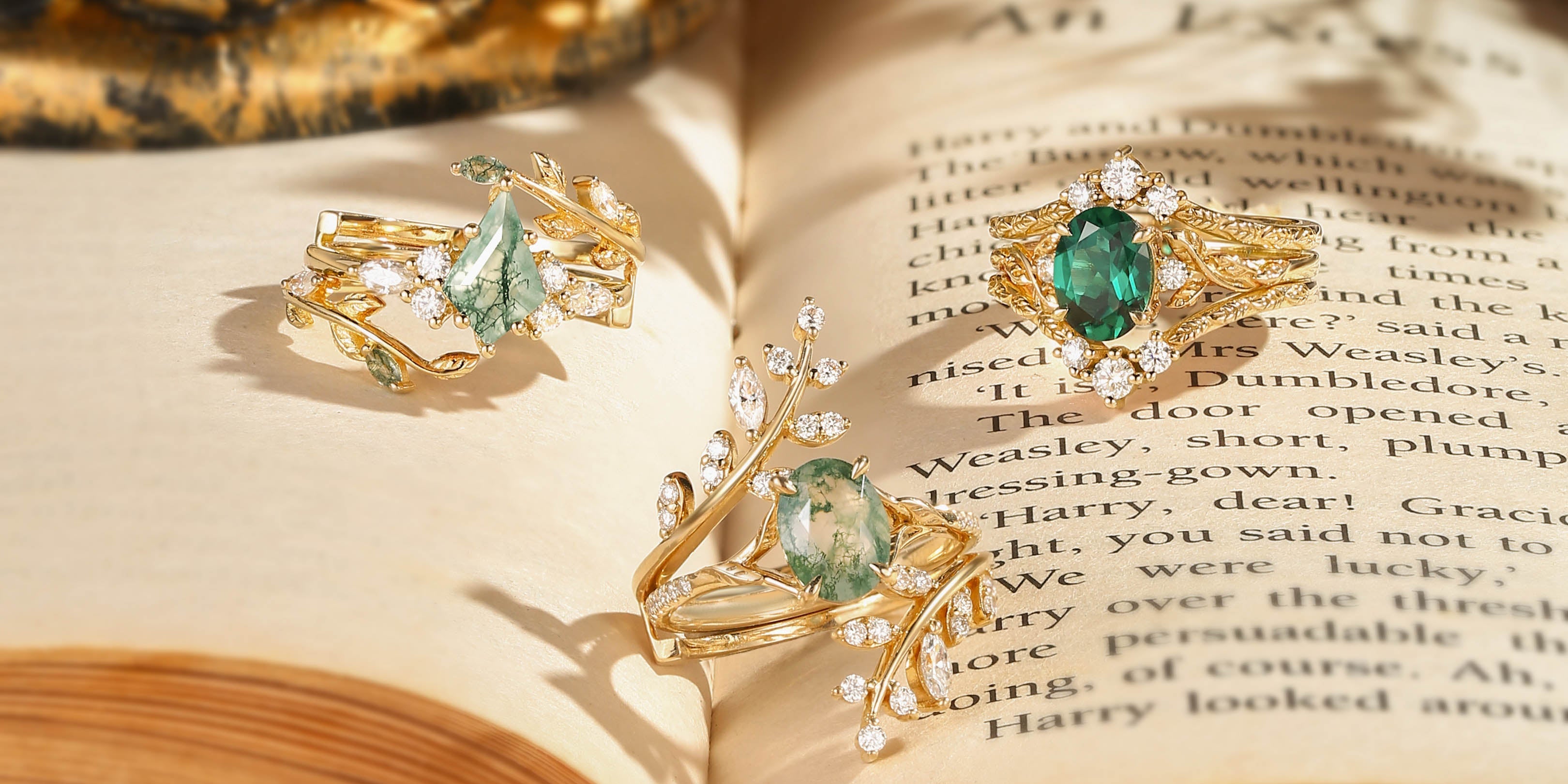
The engagement ring landscape is shifting — and it's more colorful than ever. In 2026, colored gemstone engagement rings have moved from niche alternative to mainstream desire, with searches for sapphire, emerald, and alexandrite engagement rings climbing year over year. Couples are no longer asking "Should we go with a diamond?" but rather "What gemstone tells our story?"
In this guide, we'll break down why colored gemstone engagement rings are trending, the symbolism behind the most popular stones, how lab-grown gemstones are making these rings more accessible, and which design styles make colored gems truly shine. Whether you're ring-shopping right now or just dreaming, this is your complete 2026 guide to choosing a colored gemstone engagement ring.
Table of Contents
- Why Couples Are Choosing Colored Gemstones Over Diamonds
- The Symbolism Behind Popular Colored Gemstones
- Colored Gemstones vs. Diamonds: A Practical Comparison
- How Lab-Grown Gemstones Changed the Game
- Design Styles That Make Colored Gems Shine
- Featured Rings: Our Top Picks for 2026
- Why BlingFlare for Colored Gemstone Engagement Rings
- Frequently Asked Questions
Quick-Glance: Colored Gemstone Engagement Rings at a Glance
| Gemstone | Color Range | Mohs Hardness | Symbolism | Best For |
|---|---|---|---|---|
| Blue Sapphire | Deep blue to light blue | 9 | Loyalty, wisdom, nobility | Everyday wear, classic lovers |
| Green Sapphire | Olive to emerald green | 9 | Growth, balance, new beginnings | Nature-inspired designs |
| Purple Sapphire | Light lavender to deep violet | 9 | Individuality, romance, uniqueness | Statement rings, creative souls |
| Pink Sapphire | Blush to hot pink | 9 | Love, compassion, femininity | Romantic, fairy-tale aesthetics |
| Alexandrite | Green → purple color-change | 8.5 | Change, mystery, duality | Adventurous spirits |
| Emerald | Rich green | 7.5–8 | Renewal, hope, fertility | Vintage and Art Deco styles |
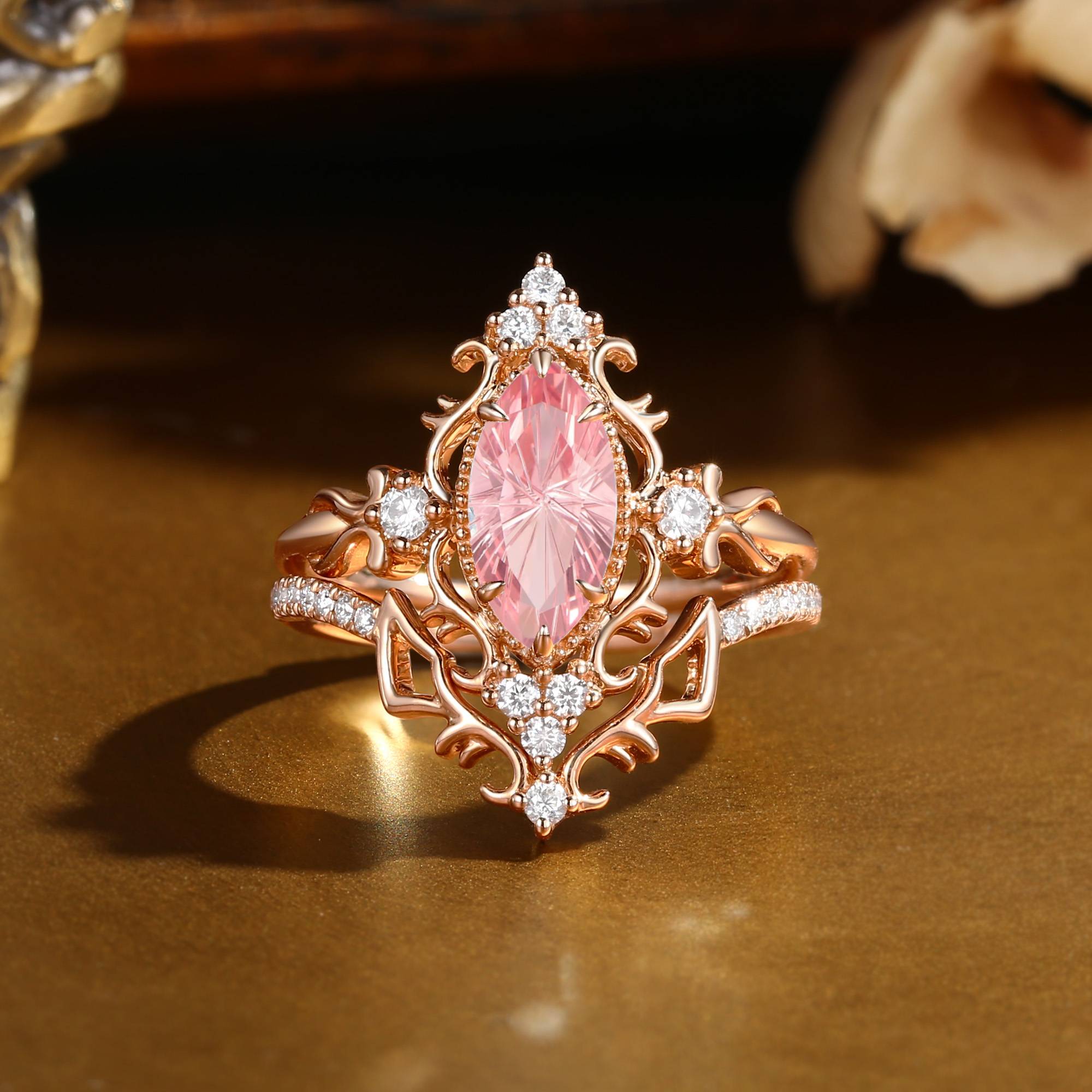
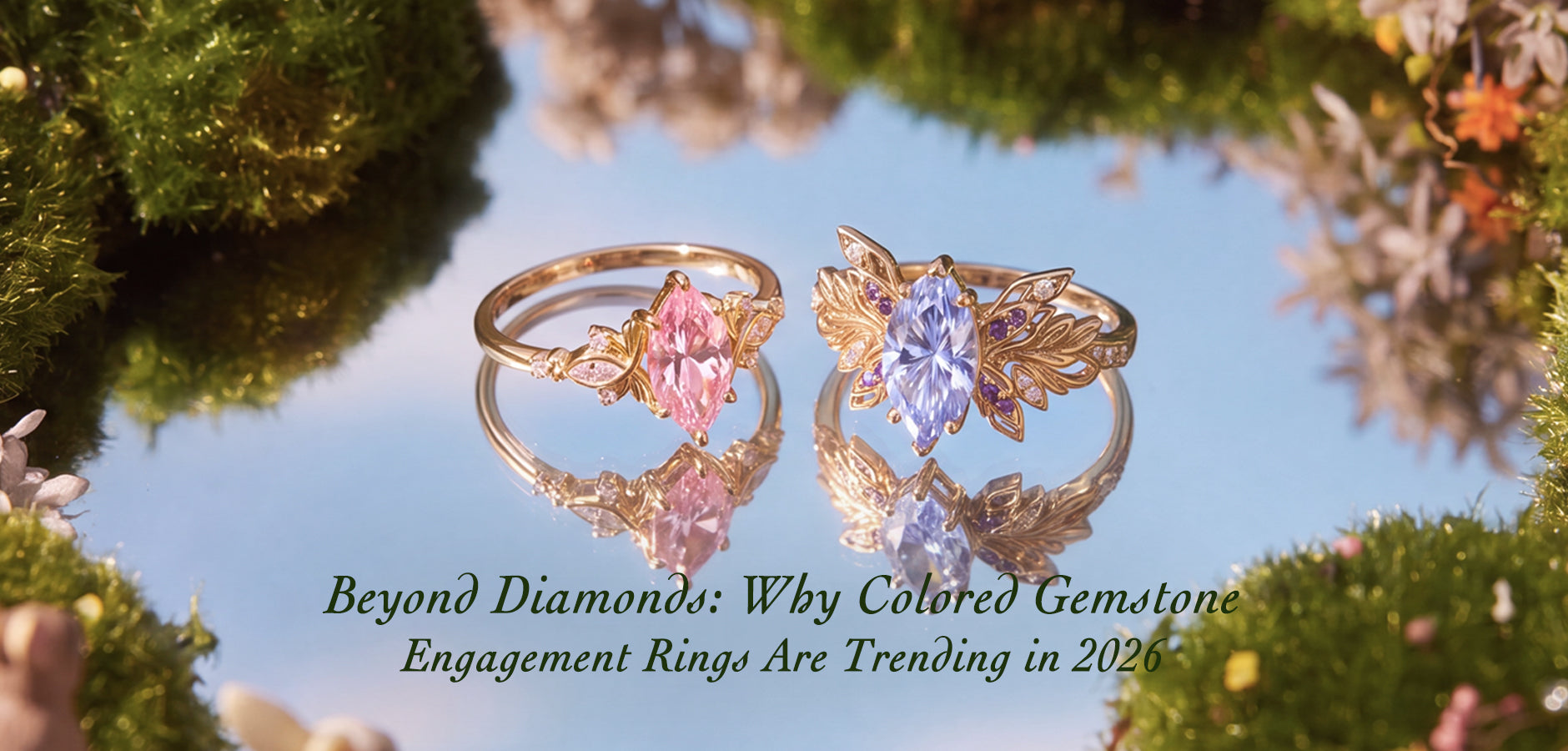
Ready to see these gemstones in real life? Explore our Forest Fairy Marquise Cut Pink Sapphire Leafy Engagement Ring "Letitia" and Butterfly Wing Forest Fairy Marquise Firework Cut Purple Sapphire Leafy Engagement Ring "Inara" — two of our most beloved colored gemstone rings.
Why Couples Are Choosing Colored Gemstones Over Diamonds
Let's be honest: the diamond engagement ring tradition was, to a significant degree, a marketing invention. De Beers' "A Diamond Is Forever" campaign, launched in 1947, fundamentally shaped what we thought an engagement ring should look like. But in 2026, that script is being rewritten — and a new generation is holding the pen.
The Individuality Factor
Gen Z and Millennial couples are prioritizing personal expression over tradition in ways their parents never did. According to multiple industry surveys conducted in early 2026, over 38% of couples under 35 now consider non-diamond gemstones for their engagement ring — up from under 15% just a decade ago.
A colored gemstone engagement ring says something. It says, "We didn't default to what was expected. We chose something that reflects us." A green sapphire might speak to a couple who met in a botanical garden. A purple sapphire might channel a partner's love of all things regal and unconventional. Alexandrite — the stone that literally changes color — might represent a love story full of surprising twists.
This isn't about rejecting diamonds entirely. Many couples still love diamonds and choose them freely. But the default is shifting. The question is no longer "What size diamond?" but "What stone resonates with our story?"
Personal Storytelling Through Stones
Beyond aesthetics, colored gemstones offer a rich symbolic language that diamonds, by their transparent nature, simply cannot match. Every color carries centuries of cultural meaning, folklore, and emotional resonance. When you choose a purple sapphire engagement ring, you're not just picking a pretty stone — you're choosing a gem that historically symbolizes wisdom, spiritual awakening, and creative individuality.
At BlingFlare, we've seen this firsthand. Many of our customers share deeply personal reasons for choosing their colored gemstone: a birthstone connection, a favorite color, a travel memory tied to a particular hue, or simply a feeling of "this is me" when they first see the stone. That emotional resonance is exactly what makes colored gemstone engagement rings so meaningful.
The Social Media Effect
It's impossible to discuss this trend without acknowledging the role of social media. TikTok, Instagram, and Pinterest have democratized ring inspiration. Where once a bride-to-be might only have seen the rings in her immediate social circle, today's couples browse thousands of colored gemstone engagement rings from independent jewelers worldwide. Unique gemstone rings go viral. Color-change alexandrite videos rack up millions of views. The visual impact of a vivid green sapphire or a dreamy pink sapphire in golden hour light is inherently shareable — and shareable content drives desire.
The Symbolism Behind Popular Colored Gemstones
One of the most beautiful things about choosing a colored gemstone engagement ring is the layered meaning behind each stone. Here's a deeper look at the symbolism driving the biggest trends in 2026.
Green Sapphire: Growth, Balance, and New Beginnings
Green sapphires have surged in popularity over the past two years, and for good reason. Their color — ranging from a soft olive to a vivid emerald-like green — evokes nature, renewal, and forward momentum.
In gemological tradition, green sapphires are associated with growth and balance. They're thought to promote emotional stability, encourage new beginnings, and deepen one's connection to the natural world. For a couple embarking on marriage — itself a journey of growth — a green sapphire engagement ring carries a beautifully fitting symbolism.
According to GIA data, natural green sapphires owe their color to trace amounts of iron and, occasionally, vanadium. Lab-grown green sapphires share the same chemical composition and crystal structure, but offer more consistent color saturation at an accessible price point.


Purple Sapphire: Individuality, Romance, and Uniqueness
If green sapphires are for the grounded romantic, purple sapphires are for the bold dreamer. Purple sapphires span a breathtaking range — from soft lavender to deep violet — and each shade carries connotations of individuality, spiritual depth, and creative romance.
What does purple sapphire symbolize? Throughout history, purple has been the color of royalty, mysticism, and artistic vision. A purple sapphire engagement ring signals that the wearer marches to their own beat — gracefully, unapologetically, and with impeccable taste.
The trace elements of iron and titanium that create purple sapphire's color are the same as those in blue sapphire; it's the specific ratio and heat treatment conditions that produce the purple hue. In lab-grown form, purple sapphires can be cultivated with remarkable color consistency — meaning you can find that perfect shade of violet without the natural-stone lottery.


Alexandrite: The Stone of Change and Mystery
Alexandrite is arguably the most mesmerizing gemstone on the market. Its signature trait? A dramatic color change — green or bluish-green in daylight, shifting to raspberry purple or red under incandescent light. It's like wearing two gemstones in one.
This color-change phenomenon is caused by the complex way alexandrite absorbs light, a property of its chromium content within the chrysoberyl mineral family. Natural alexandrite is exceptionally rare (and expensive), but lab-grown alexandrite provides the same stunning color-shift effect at a fraction of the cost.
Symbolically, alexandrite represents duality, adaptability, and mystery — perfect for a couple whose love story defies simple categorization. It's a conversation starter, a head-turner, and a daily reminder that beauty comes in many forms.


Colored Gemstones vs. Diamonds: A Practical Comparison
Let's address the elephant in the room: how do colored gemstones stack up against diamonds for everyday wear, durability, and long-term beauty?
Durability
For engagement rings, durability matters. You're wearing this ring every day — through cooking, cleaning, gym sessions, and toddler snuggles. The Mohs hardness scale is the standard reference:
- Diamond: 10 (hardest natural material)
- Sapphire (all colors): 9 (excellent for daily wear)
- Alexandrite: 8.5 (very good, slightly more careful wear recommended)
- Emerald: 7.5–8 (beautiful but more fragile; best in protective settings)
Are sapphire engagement rings durable enough for everyday wear? Absolutely. At Mohs 9, sapphires are second only to diamonds in hardness. GIA confirms that sapphire's toughness and scratch resistance make it one of the best-colored gemstone choices for engagement rings.
Color Palette
This is where colored gemstones truly outshine diamonds. A diamond's beauty lies in its brilliance and fire — how it reflects and refracts white light. But if color is what makes your heart sing, a diamond's palette is inherently limited.
Colored gemstones offer virtually unlimited options. Want a ring that matches your eyes? A blue sapphire. Want something that echoes the wildflowers from your proposal spot? A green or purple sapphire. Want a ring that literally changes color throughout the day? Alexandrite.
Uniqueness
Diamond engagement rings, while classic, are incredibly common. If having a one-of-a-kind ring matters to you, colored gemstones offer an almost infinite design space. Two sapphire engagement rings can look completely different based on cut, shade, setting style, and accent stones.
Value
Colored gemstones — particularly lab-grown options — generally offer more carat-per-dollar than diamonds. This means you can choose a larger stone, a more elaborate setting, or invest in premium metal work without stretching the budget.
How Lab-Grown Gemstones Changed the Game
Lab-grown gemstones are not "fake." They are chemically, physically, and optically identical to their mined counterparts. The only difference is their origin: grown in a controlled laboratory environment rather than extracted from the earth.
Why This Matters for Colored Gemstones
For colored gemstones specifically, lab-grown options solve several challenges that have historically limited the market:
1. Consistent Color: Natural colored gemstones are notorious for color inconsistency. Two "natural purple sapphires" might look dramatically different. Lab-grown stones allow precise control over trace elements, producing consistent, saturated colors batch after batch.
2. Ethical Sourcing: Lab-grown gemstones eliminate concerns about mining practices, environmental impact, and supply-chain transparency. For ethically conscious couples — a growing demographic in 2026 — this matters deeply.
3. Affordability: Lab-grown sapphires, alexandrites, and other colored gemstones typically cost 50–80% less than comparable natural stones. This makes vivid, high-quality colored gemstone engagement rings accessible to a much wider audience.
4. Quality Control: Lab environments allow growers to minimize inclusions, optimize clarity, and ensure structural integrity. The result? Gemstones that are not only beautiful but built to last a lifetime.
At BlingFlare, every colored gemstone in our collection is lab-grown — because we believe that ethical sourcing, consistent quality, and accessible pricing shouldn't be compromises. They should be the standard.
Design Styles That Make Colored Gems Shine
A colored gemstone is only half the story. The setting and design style are what truly bring the stone to life. Here are the three most popular design directions for colored gemstone engagement rings in 2026.
Nature-Inspired Designs
There's an intuitive harmony between colored gemstones and nature-inspired settings. A green sapphire set among delicate gold leaves feels like a tiny forest captured in metal. A pink sapphire surrounded by vine-like filigree evokes a garden in bloom.
Nature-inspired designs work particularly well with colored gemstones because the stone's color already echoes the natural world. Pairing it with organic motifs — leaves, vines, flowers, branches — creates a cohesive, storybook aesthetic that feels both timeless and deeply personal.
Featured Ring: Our Forest Fairy Marquise Cut Pink Sapphire Leafy Engagement Ring "Letitia" is a stunning example. The pink sapphire sits nestled among intricate leaf and vine details, creating a ring that looks like it grew from an enchanted garden. It's romantic, whimsical, and unmistakably unique.
Vintage-Inspired Designs
Vintage and Art Deco-inspired settings bring a sense of history and craftsmanship to colored gemstone rings. Think milgrain edges, filigree work, geometric halos, and intricate metalwork. These designs pair beautifully with deep, saturated gem colors — a royal blue sapphire in an Art Deco halo, or a rich purple sapphire in an Edwardian-inspired bezel.
Vintage-inspired designs also tend to use more metal work, which provides additional protection for the center stone — a practical benefit for colored gemstones that may benefit from a more protective setting.
Fairy / Botanical Designs
Fairy and botanical designs take the nature-inspired aesthetic a step further, adding whimsical, otherworldly elements. Butterfly wings, fairy silhouettes, mushroom caps, flower buds, and fantasy motifs create rings that feel like they belong in an illustrated storybook.
Featured Ring: The Butterfly Wing Forest Fairy Marquise Firework Cut Purple Sapphire Leafy Engagement Ring "Inara" is a masterpiece of fantasy-inspired design. The marquise firework cut purple sapphire is cradled by delicate butterfly wing accents and leafy details, creating a ring that is at once ethereal and bold. It's the kind of ring that makes people stop and stare — in the best possible way.
Featured Rings: Our Top Picks for 2026
1. Forest Fairy Marquise Cut Pink Sapphire Leafy Engagement Ring "Letitia"
- Center Stone: Lab-grown marquise cut pink sapphire
- Design: Nature-inspired leafy vine setting
- Metal: Available in 14k yellow gold, white gold, and rose gold
- Style: Fairy-tale botanical
- Perfect For: The romantic who dreams of an enchanted forest proposal
2. Butterfly Wing Forest Fairy Marquise Firework Cut Purple Sapphire Leafy Engagement Ring "Inara"
- Center Stone: Lab-grown marquise firework cut purple sapphire
- Design: Butterfly wing + leafy forest fairy setting
- Metal: Available in 14k white gold, yellow gold, and rose gold
- Style: Fantasy botanical
- Perfect For: The bold dreamer who wants a ring as unique as their love story
Why BlingFlare for Colored Gemstone Engagement Rings?
At BlingFlare, we specialize in lab-grown gemstone engagement rings that blend ethical sourcing with extraordinary design. Every ring in our collection is crafted with attention to detail, from the precision of each gem cut to the delicacy of each hand-finished metal element.
We believe that choosing an engagement ring should feel exciting, not overwhelming. That's why we offer detailed gemstone guides, transparent information about lab-grown vs. natural stones, and design styles that cater to every aesthetic — from classic solitaires to fantasy botanical masterpieces.
Our colored gemstone engagement rings are more than jewelry. They're conversation starters, storykeepers, and daily reminders that love, like color, comes in infinite beautiful variations.
Frequently Asked Questions
Are sapphire engagement rings durable enough for everyday wear?
Yes. Sapphires rank 9 on the Mohs hardness scale, making them the second-hardest gemstone after diamonds. According to GIA, sapphires are excellent choices for engagement rings due to their durability and scratch resistance. They can withstand decades of daily wear with proper care.
What does purple sapphire symbolize?
Purple sapphire symbolizes individuality, romance, creativity, and spiritual depth. Historically, purple has been associated with royalty and mysticism across many cultures. A purple sapphire engagement ring is a powerful statement of uniqueness and creative spirit.
Lab-grown vs. natural gemstone engagement ring — which should I choose?
Lab-grown gemstones are chemically, physically, and optically identical to natural stones. The key differences are origin (lab vs. earth), price (lab-grown is typically 50–80% less), and ethical considerations (lab-grown eliminates mining concerns). If ethical sourcing, consistent quality, and value matter to you, lab-grown is an excellent choice.
What does a green sapphire engagement ring mean?
Green sapphire symbolizes growth, balance, renewal, and new beginnings. Its natural green hue connects it to the natural world, making it a meaningful choice for couples who value nature, personal growth, and fresh starts.
Can I get a colored gemstone engagement ring in a custom design?
Absolutely. At BlingFlare, we offer customization options for many of our ring designs. You can choose your preferred gemstone, metal type, and design elements to create a ring that's uniquely yours. Contact our team to discuss custom options.
What metal color works best with colored gemstones?
It depends on the stone and your personal preference. Yellow gold brings warmth and complements green and pink sapphires beautifully. White gold or platinum provides a cool, modern contrast that makes blue and purple sapphires pop. Rose gold adds a romantic warmth that pairs gorgeously with pink and purple stones.
Are colored gemstone engagement rings more expensive than diamond rings?
Generally, colored gemstones offer more carat-per-dollar than diamonds, especially lab-grown options. A 1-carat lab-grown sapphire typically costs significantly less than a 1-carat lab-grown diamond of comparable quality. This allows you to choose a larger or more vivid stone within the same budget.
How do I care for a colored gemstone engagement ring?
For sapphires and alexandrite (Mohs 8.5+), standard jewelry care applies: gentle cleaning with warm soapy water, avoiding harsh chemicals, and removing the ring during heavy manual work. For softer stones like emerald, be extra gentle and consider protective settings. Store your ring separately from other jewelry to prevent scratching.