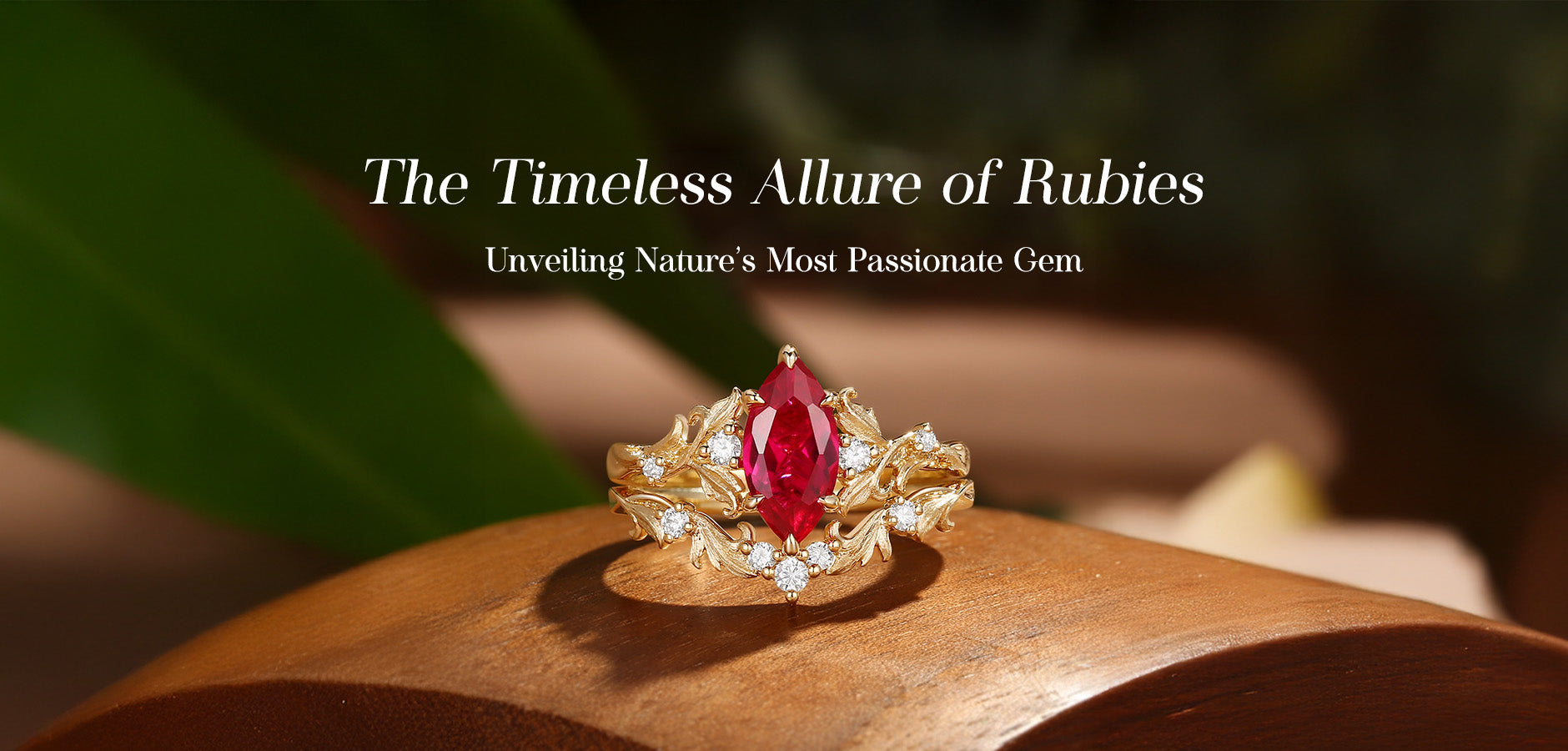
The Timeless Allure of Rubies: Unveiling Nature’s Most Passionate Gem
Related Posts
What Is the Firework Cut? The Engagement Ring Cut That Throws Color From Every Angle
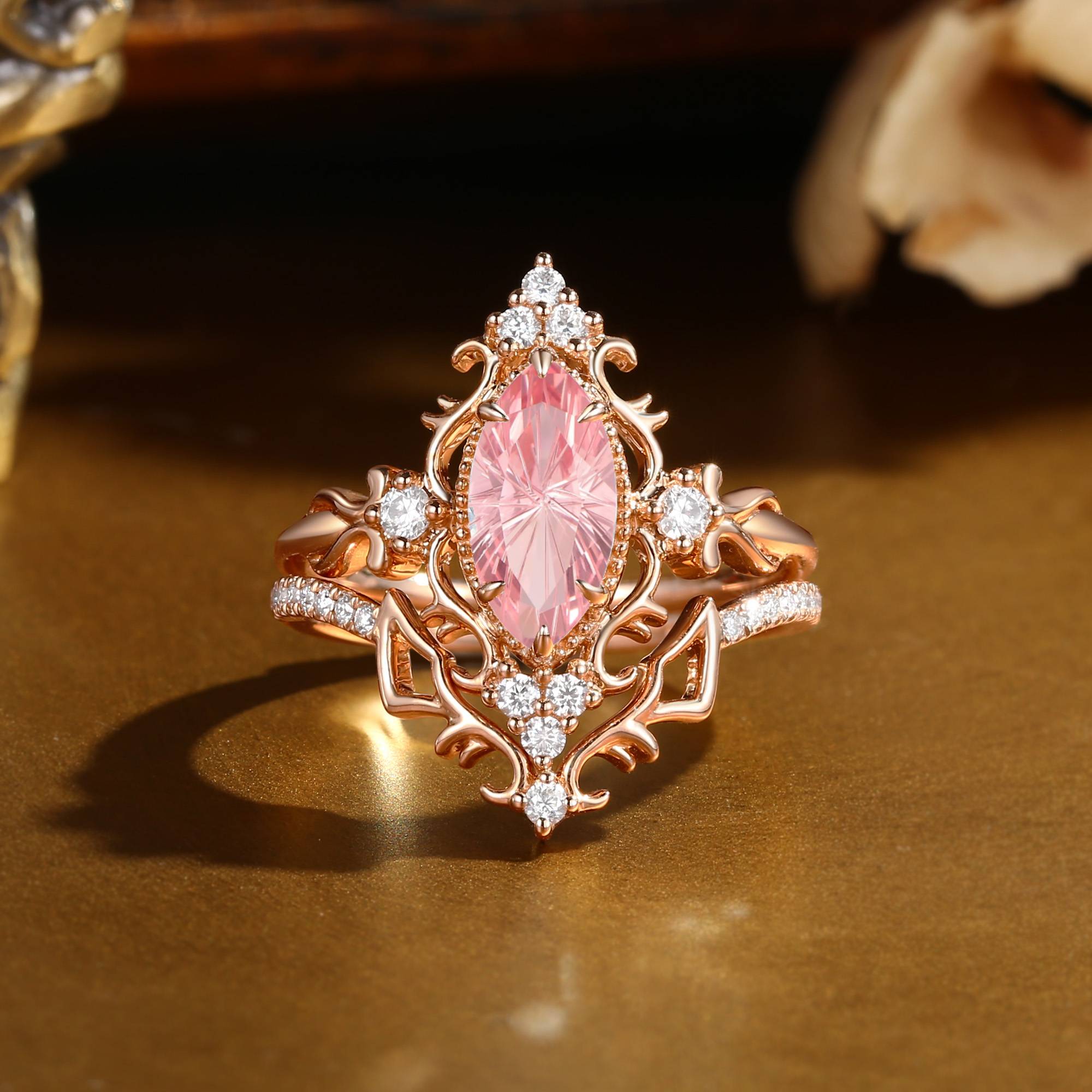
Most engagement ring cuts are engineered for one audience: the person looking straight down at the stone. Every facet is calibrated to return light upward through the table, maximizing brilliance from a single vantage point. It is a rational approach. It is also, from a design standpoint, incomplete. The Firework Cut — a proprietary modification developed by BlingFlare — changes that equation. By altering the pavilion facet angles, it disperses light across a wider horizontal angle rather than directing it primarily upward. The result: the stone catches light from more directions and shows visible flash to people standing beside the wearer, not just to the person looking directly down at it. In colored gemstones — where the stone's hue rides the scattered light — the effect is particularly dramatic. The ring announces itself from across a room. At BlingFlare, the Firework Cut is available in green sapphire, cornflower sapphire, lab ruby, and padparadscha — set in solid gold with nature-inspired botanical metalwork. This guide covers what the cut is, how it works, and which colors carry it. Table of Contents What Is the Firework Cut? How Firework Faceting Changes Light Behavior Firework Cut vs. Standard Cut Green Firework Cut — The Forest Bride's Flash Blue Firework Cut — Vivid Cornflower, Wider Reach Other Colors — Ruby & Padparadscha Firework Cut How to Choose a Firework Cut Ring FAQ What Is the Firework Cut? The Firework Cut is a modified fancy cut — applied to marquise and pear-shaped stones — that redistributes the stone's light return pattern. Where a standard cut directs most reflected light upward through the table (the flat top surface of the stone), the Firework Cut angles a significant portion of that light outward, across a broader horizontal plane. Think of the difference between a spotlight and a lantern. A standard cut is a spotlight: intense, focused, visible from one direction. The Firework Cut is closer to a lantern: the light travels outward in multiple directions, filling the space around the stone rather than projecting through a single axis. The name is literal. In low light or side-angle illumination, the stone scatters colored flashes that resemble the radial burst of a firework — light radiating outward from the center of the stone in multiple directions, rather than reflecting straight back up. How Firework Faceting Changes Light Behavior A gemstone's cut determines how light enters, reflects internally, and exits. In a standard cut, the pavilion facets (the angled surfaces below the girdle) are calculated to reflect light back upward through the table. The Firework Cut modifies these pavilion angles, causing a portion of the light to exit through the crown's side facets — the surfaces facing outward, toward the viewer's peripheral position. The practical consequences: Side-angle visibility: People standing next to the wearer see flash and color that would be invisible in a standard cut. The ring is active from 360 degrees, not just from above. Movement-responsive sparkle: As the wearer's hand moves, the angle of incident light changes continuously. The Firework Cut's wider return window means the stone catches and releases light more frequently during natural hand movement — more flashes per gesture. Color amplification: In colored stones, the light that exits through side facets carries the stone's body color. A green sapphire throws green light, cornflower sapphire throws blue, ruby throws red. The color becomes ambient, not just directional. Low-light performance: In candlelight, restaurant lighting, or evening settings — where overhead illumination is weak — the Firework Cut's wider return window captures more of the available light. The stone stays active in conditions where standard cuts go quiet. Firework Cut vs. Standard Cut Property Standard Cut Firework Cut (BlingFlare) Primary Light Direction Upward through table Upward + lateral (wider horizontal dispersion) Side-Angle Visibility Limited — mostly visible from above High — visible from multiple angles Movement Response Flashes at specific angles More frequent flashes during hand movement Color Projection Color contained within stone body Color rides dispersed light outward Low-Light Performance Reduced in diffuse lighting Maintains activity in ambient light Best Viewing Position Directly above Any position — above, beside, across The Firework Cut does not replace the standard cut — it extends it. A standard cut optimized for overhead brilliance is the right choice for someone who wants maximum brightness from a single viewing angle. The Firework Cut is the right choice for someone who wants the stone to be active and visible from every angle, in every lighting condition, during every gesture. Green Firework Cut — The Forest Bride's Flash Lab-grown green sapphire scores 9.0 on the Mohs scale — second only to diamond and moissanite among engagement ring stones. It handles daily wear without special maintenance, with traceable origin and consistent color saturation. In a Firework Cut, green sapphire does something no other cut achieves: it throws green-tinted light outward. The dispersed flashes carry the stone's verdant hue with them, amplifying the perceived color beyond what the body saturation alone would deliver. In a forest-inspired setting with branch and leaf metalwork, the effect is cohesive — the stone and the setting share a visual language, both referencing the organic world. Hesper - Filigree Leafy Pear Firework Cut Green Sapphire Engagement Ring Forest Fairy Marquise Firework Cut Green Sapphire Leafy Inspired Bridal Set 2pcs - Fae Drisana - Fireworks Cut Pear Green Sapphire Engagement Ring Set 2pcs Forest Fairy Marquise Firework Cut Green Sapphire Leafy Vine Engagement Ring Set 2pcs - Fawn Celestine - Filigree Pear Firework Cut Light Green Sapphire & Pearl Engagement Ring Forest Fairy Firework Cut Pear Green Sapphire Leafy Bridal Set 2pcs - Lavinia Blue Firework Cut — Vivid Cornflower, Wider Reach Cornflower sapphire is named for the specific blue of the cornflower — a saturated, slightly warm blue that sits between pure blue and violet-blue. It is one of the most sought-after sapphire colors, historically associated with Kashmir stones. Lab-grown cornflower sapphire delivers that exact hue with full traceability and consistent saturation. In the Firework Cut, cornflower sapphire's vivid blue gets an additional dimension: the dispersed lateral light carries the blue with it, creating a halo effect that makes the stone appear to project its color into the surrounding metal and setting. The ring looks bluer than the stone alone would suggest — the color escapes the stone's borders and becomes ambient. Clarissa - Firework Cut Cornflower Blue Sapphire Leafy Bridal Set 2pcs Constance - Fireworks Cut Cornflower Sapphire Engagement Ring Set 2pcs Firework Cut Hexagon Cornflower Blue Sapphire Princesscore Vintage Bridal Set 2pcs - Swan Basilia - Oval Firework Cut Cornflower Sapphire Acanthus Leaf Inspired Bridal Set 2pcs Cordelia - Firework Round Cut Aquamarine Yellow Gold Bridal Set 2pcs Clarissa - Firework Cut Cornflower Sapphire Vine Inspired Leafy Bridal Set 2pcs Other Colors — Ruby & Padparadscha Firework Cut The Firework Cut extends beyond green and blue into two of the most historically significant gemstone colors: lab ruby and padparadscha sapphire. Lab Ruby Firework Cut Ruby has been the red standard for colored engagement rings for centuries. Lab-grown ruby delivers the same chemical composition (chromium-doped corundum), the same hardness (9.0 Mohs), and the same deep red fluorescence as mined ruby — with full traceability. In the Firework Cut, ruby does something visually unique: the lateral light dispersion carries the stone's deep red saturation outward. Where a standard ruby cut contains the red within the stone's body, the Firework Cut projects it. The ring appears to glow red from multiple angles, not just from the table. Padparadscha Firework Cut Padparadscha is the rarest sapphire color — a pinkish-orange to orange-pink hue named for the lotus flower. Historically, natural padparadscha commands prices that exceed fine ruby. Lab-grown padparadscha delivers the same delicate color balance at an accessible price point. The Firework Cut is perhaps most transformative in padparadscha. The stone's subtle pink-orange hue — already difficult to capture in photographs — becomes ambient. The lateral light dispersion carries the lotus-colored flash outward, making the padparadscha's unique color visible from every angle rather than only from directly above. Blanche - Firework Heart Cut Lavender Sapphire Butterfly Pearl Ring Bridal Sets 3pcs Eden - Orange Sapphire Leaf Women Oval Firework Cut Engagement Ring Set 2pcs Eugenie - Marquise Firework Cut Padparadscha Royalcore Victorian Vintage Ribbon Bridal Sets 2PCS Kezia - Firework Cut Ruby Ginkgo Leaf Inspired Bridal Set 2pcs Forest Fairy Firework Cut Pear Moissanite Leafy Bridal Set 2pcs - Lavinia How to Choose a Firework Cut Ring Choose by stone color first. The Firework Cut amplifies whatever color the stone carries. Green sapphire throws green light, cornflower sapphire throws blue, ruby throws red, padparadscha throws pink-orange. The cut does not change the color — it extends its reach. Start with the color that resonates. Choose by shape second. Marquise Firework Cut stones have two pointed ends and maximum elongation — the shape that makes fingers look longest and most slender. Pear Firework Cut stones have one pointed end and one rounded end — a softer silhouette that still elongates while feeling less angular. Choose by setting third. BlingFlare's botanical settings — branch, leafy, vine, forest fairy, filigree — are designed to work with the Firework Cut's light behavior. The stone's light behavior and the setting's visual language both reference the natural world. Victorian and ribbon settings offer a more historical frame for the same technology. Choose by metal last. Yellow gold is the warmest pairing for botanical settings. White gold and platinum maximize contrast with colored stones. Rose gold adds warmth that pairs particularly well with padparadscha and green sapphire. Black gold creates maximum drama — the dark metal makes the Firework Cut's colored light dispersion visually striking. Related Reads Marquise Cut Engagement Rings: The Complete Guide Wedding Season 2026: Which Engagement Ring Stone Is Right for You? Bridal Sets Collection — Designed to Nest Together FAQ What exactly is the Firework Cut? The Firework Cut is a proprietary modification to standard fancy cuts (marquise and pear) developed by BlingFlare. It alters the pavilion facet angles so that light is dispersed across a wider horizontal angle rather than directed primarily upward through the table. The result: the stone shows visible flash and color from multiple viewing angles — not just from directly above. The name is literal: in side lighting, the stone scatters colored light in a radial pattern that resembles a firework burst. Which stone color shows the Firework Cut effect most dramatically? Green sapphire and padparadscha show the most visually distinctive effects. Green sapphire throws green-tinted light outward, which is unusual and immediately noticeable. Padparadscha — with its subtle pink-orange hue — becomes ambient in a way that is difficult to achieve with any other cut. Cornflower sapphire and ruby also show strong lateral color projection, but their saturated body colors are already visible from multiple angles even in standard cuts. Does the Firework Cut affect the stone's durability? No. The Firework Cut modifies facet angles, not the stone's structural integrity. The hardness of the stone — 9.0 Mohs for sapphire and ruby — remains unchanged. The cut does not introduce thin points or structural vulnerabilities beyond what the base shape (marquise or pear) already presents. Standard care applies: protective prongs at pointed ends, avoid direct hard impact. Can you see the Firework Cut effect in photographs? Partially. Photographs typically capture the stone from a single angle with controlled lighting, which favors the standard upward light return. The Firework Cut's full effect — the lateral flash, the 360-degree visibility, the movement-responsive sparkle — is best experienced in person. Every buyer review of Firework Cut rings at BlingFlare mentions that the stone "does things in person that photos don't show." What shapes are available in Firework Cut? Marquise and pear. Both shapes have elongated profiles that provide sufficient surface area for the Firework Cut's modified facet pattern to operate effectively. The marquise delivers maximum finger elongation and a bold, pointed silhouette. The pear offers a softer teardrop profile with one pointed end and one rounded end. What is BlingFlare's return and warranty policy? BlingFlare accepts returns within 30 days for quality issues at no cost. Custom modifications and engravings are non-returnable. Each piece comes with a complimentary one-year warranty covering quality issues from craftsmanship. One complimentary resize (±1 size) is available within the first year on most styles. Contact the team at support@blingflare.com with questions about timeline, sizing, or customization. BlingFlare's Firework Cut collection is available at blingflare.com. The team is available to advise on stone selection, setting options, and metal choices for your specific brief.
Learn moreWhy Marquise Cut Is the Most Finger-Flattering Engagement Ring Shape of 2026
No cut divides opinion like the marquise. Other shapes disappear into familiarity — round brilliants, cushions, ovals. The marquise never does. Its elongated body and two sharp terminal points carry a presence that other cuts spend their entire surface area trying to achieve. It spent several decades being categorized as dated. It is now one of the most-searched ring shapes of 2026, and the reasons are not abstract. At BlingFlare, the marquise cut collection spans moss agate solitaires, green sapphire bridal sets, moissanite vintage designs, and lab diamond cluster rings — all in solid gold, all made to order. This guide covers the shape, who it is for, and which rings are worth your attention. Table of Contents What Is the Marquise Cut? What the Marquise Does to Your Hand Marquise vs. Oval vs. Pear: Shape Comparison Green Sapphire Marquise Rings — The Forest Bride's Stone Moissanite Marquise Rings — Maximum Fire in a Classic Profile Other Gemstone Options — Moss Agate, Lab Diamond, Emerald & Ruby How to Wear a Marquise: Orientation and Setting FAQ What Is the Marquise Cut? The marquise is an elongated stone shape with two pointed ends and a curved, symmetrical body between them. It belongs to the fancy cut family — anything outside the round brilliant. Its length-to-width ratio typically falls between 1.75:1 and 2.25:1. At 6×12mm — the standard for a 1ct equivalent — the stone spans roughly the width of two knuckle-joints along the finger. The name comes from 18th-century France. Louis XV commissioned a stone cut to mirror the shape of the Marquise de Pompadour's lips. Whether the full story is accurate is debated; what is not debated is that the shape emerged from that court era and carries the quality of something intentional and aristocratic from the beginning. What is technically notable: the marquise's elongated form gives it approximately 10–15% more face-up surface area than a round brilliant of equivalent carat weight. That is geometry, not styling. More face-up surface means more visible presence on the hand with fewer carats. The shape earns its size. One thing worth knowing before choosing: marquise cuts can produce a "bowtie effect" — a dark shadow across the widest part of the stone, visible from directly above, caused by light returning at angles that do not reach the viewer's eye. In a well-cut marquise, this reduces to a soft shadow that the stone's overall brilliance overwhelms. The cuts in BlingFlare's marquise collection are selected specifically to minimize bowtie while maximizing face-up brightness. What the Marquise Does to Your Hand When oriented with its long axis running along the finger — the traditional north-south position — the marquise creates an unbroken visual line from the base of the setting to the tip of the stone. The eye follows that line downward. Fingers appear longer and more slender than any round or square-cut stone achieves at the same carat weight. This is the same design principle behind pointed-toe shoes and vertical stripes: elongated lines draw perception in one direction and stretch the proportions of whatever surface they are placed on. The marquise applies it to a finger better than any other ring shape. Short fingers benefit most. Wide hands — elongation maximized. Narrower hands — the stone fills and anchors without overwhelming. The one scenario worth thinking through: very long, very slender fingers, where a smaller marquise stone can feel proportionally small. A 1ct+ center stone at that point resolves it visually. Marquise vs. Oval vs. Pear: Shape Comparison Shape L:W Ratio Finger Effect Visual Size vs. Round Bowtie? Trending Orientation Marquise 1.75–2.25:1 Most elongating ~10–15% larger Possible (minimize with quality cut) N-S and E-W both active Oval 1.30–1.50:1 Elongating ~5–10% larger Possible Primarily N-S Pear 1.45–1.75:1 Elongating ~8–12% larger Possible at shoulders N-S and E-W both active Round Brilliant 1:1 Neutral Benchmark None N/A Cushion 1:1–1.10:1 Neutral to widening Slightly smaller None N-S The marquise leads on finger elongation, perceived size per carat, and visual distinctiveness. Its trade-off: pointed ends require protective prongs to prevent chipping, and it is less common in the overall market — which is also precisely why it reads as deliberate when you see one. Green Sapphire Marquise Rings — The Forest Bride's Stone Lab-grown green sapphire scores 9.0 on the Mohs scale — second only to diamond and moissanite. It handles rings worn every day, through all conditions, without special maintenance. Lab-grown means traceable origin, consistent color saturation, and no mining impact. In a marquise cut, green sapphire reads as inherently botanical. The pointed, leaf-like silhouette of the stone mirrors the same organic shapes that define BlingFlare's nature-inspired settings — vines, leaves, petals, wings. The stone and the setting share a visual language before a single accent stone is added. Eulalie - Marquise Cut Lab Green Sapphire Elf Engagement Ring Forest Fairy Marquise Firework Cut Green Sapphire Leafy Inspired Bridal Set 2pcs - Fae Marquise Cut Lab Mint Green Sapphire Leafy Bridal Set 2pcs - Clarissa Flora Moon Marquise Cut Green Sapphire Leaf Engagement Ring - Ursa Vintage Marquise Cut Green Moissanite Leafy Floral Cluster Bridal Set 2pcs - Ivy Moissanite Marquise Rings — Maximum Fire in a Classic Profile Moissanite scores 9.25 on the Mohs scale — the hardest available engagement ring stone outside of diamond. Its refractive index sits at 2.65–2.69, above diamond's 2.42, which means it disperses more colored fire and more white brilliance per square millimeter of surface. In a marquise cut, that fire travels the full 12mm length of the stone. You see it from across a room. For brides who want a near-colorless white stone in a marquise profile — maximum brilliance, traditional bridal aesthetic, lab-grown ethics — moissanite gives you everything the shape can deliver with no compromise on hardness or optical performance. Eugenie - Marquise Cut Moissanite Victorian Vintage Ribbon Bridal Sets 2PCS Vintage Marquise Cut Moissanite Acanthus Leaf Wedding Ring Set 2pcs - Rhea Vintage Floral Marquise Cut Moissanite Engagement Ring - Daisy Vintage Moon Marquise Cut Cluster Moissanite Engagement Ring - Nova Vintage Marquise Cut Moissanite Leafy Cluster Bridal Set 2pcs - Lucia Other Gemstone Options — Moss Agate, Lab Diamond, Emerald & Ruby The marquise collection extends well beyond sapphire and moissanite. For brides who want a one-of-a-kind stone, a classic white diamond, or a vivid colored gemstone with a different character, there are four more categories worth knowing. Moss Agate — Florentina Moss agate is not manufactured to specification. Each stone contains its own pattern of dendrite inclusions — mineral threads that formed over thousands of years inside chalcedony — and no two are identical. In a marquise cut, that pattern runs the full 12mm length of the stone. You are looking through clarity at something that grew in the earth. For brides who want a ring that is genuinely one-of-a-kind, moss agate marquise makes that literal. Florentina places a 6×12mm marquise moss agate at the center of hand-sculpted rose blooms, unfurling leaves, and a butterfly accent in warm yellow gold. Moissanite accents trail along the band and read as dewdrops caught in morning light. The ring is designed as an environment for the stone, not just a frame for it. Center Stone: Moss Agate, 6×12mm, marquise cut Accent Stones: Moissanite, D clarity, VS-VVS, 0.26ct total Material: 14K or 18K solid gold / platinum Price: $1,399 Lab Diamond — Fleur & Elinor A marquise lab grown diamond is the shape that gives a diamond ring the most vintage character without requiring an antique stone or a reproduction setting. The form does that work for you. Lab-grown puts that at a price point mined equivalents cannot match: same hardness (10 Mohs), same refractive index, same chemical composition — with fully traceable origin. Fleur features a 1ct marquise lab diamond in a three-stone elf filigree setting — intricate metalwork that looks like it grew from the shank. Elinor is a complete Victorian cluster bridal set with a 1.5ct marquise lab diamond — two pieces engineered to nest flush together, both carrying a consistent heritage metalwork vocabulary. Lab Emerald & Ruby — Lois & Rosa The marquise cut is exceptionally suited to bold colored stones. Its elongated form presents emerald and ruby across maximum face-up surface area, and the pointed silhouette makes vivid color feel intentional rather than aggressive. Lois places a marquise lab emerald at the center of a Royalcore filigree setting — intricate wirework drawing from Victorian and Edwardian ornamental traditions. For the bride who wants vivid green with maximum historical gravitas. Rosa is a marquise lab ruby in an acanthus leaf Art Deco bridal set — structured, ornamental, and completely deliberate as an aesthetic statement. Nature Inspired Marquise Moss Agate Leafy Twist Engagement Ring Marquise Cut Ruby Acanthus Inspired Art Deco Bridal Set 2pcs - Rosa Lois - Marquise Lab Emerald Filigree Royalcore Wedding Ring Forest Fairy Marquise Cut Lavender Sapphire Leafy Inspired Bridal Set 2pcs - Fae Forest Fairy Marquise Firework Cut Alexandrite Leafy Inspired Bridal Set 2pcs - Fae How to Wear a Marquise: Orientation and Setting North-South (Traditional) — The pointed ends run along the finger's length. This is the orientation that delivers everything the marquise promises: maximum elongation, maximum face-up presence, the clearest expression of the shape's form. Correct for most hand types. East-West (Contemporary) — The pointed ends run horizontally across the finger. Trending heavily in 2026. The elongating property is exchanged for something graphic and deliberately unconventional — a ring that signals an aesthetic position rather than follows one. East-west marquise rings read as fashion-forward in a way that very little else in bridal jewelry currently does. Prong Placement — The marquise's pointed ends are its most structurally vulnerable points. Prongs or bezel elements at both tips are required to prevent chipping from direct impact. Six-prong settings (four side prongs plus two tip prongs) provide the most secure coverage while keeping the stone visible. Bezel settings offer maximum protection with a modern profile. All BlingFlare marquise settings include tip protection as standard. Solitaire vs. Cluster vs. Three Stone — Solitaire settings let the marquise shape dominate entirely: clean, intentional, maximalist in form. Cluster settings, like Florentina's floral design, add visual complexity at the band level without interrupting the stone's profile from above. Three-stone settings reinforce the elongated language of the center stone when all three pieces echo the marquise or pear silhouette. Metal Choice — Yellow gold is the historically correct pairing; the marquise originated in 18th-century French gold jewelry. White gold and platinum clean up the silhouette and maximize visual contrast with both colorless and colored stones. Rose gold adds warmth and pairs particularly well with moss agate and pink sapphire. All four metals are available throughout BlingFlare's marquise collection. Related Reads Wedding Season 2026: Which Engagement Ring Stone Is Right for You? Bridal Sets Collection — Designed to Nest Together FAQ Is the marquise cut back in style for 2026? Yes — and the return is real. Search data for "marquise engagement ring" has climbed consistently since 2022. The resurgence is partly driven by high-profile engagements featuring marquise stones, partly by the broader shift toward fancy cuts among younger buyers who want something less common than a round brilliant. For 2026, marquise is one of the top five fancy shapes actively being requested. The east-west orientation trend has introduced it to an entirely new audience. Does the marquise cut actually make fingers look longer? Yes, reliably — when oriented north-south. The elongated vertical axis creates a single continuous line along the finger that draws the eye downward and visually stretches the proportions of the hand. Among all engagement ring shapes, the marquise produces the most pronounced elongating effect. Short fingers benefit most. Very long slender fingers see the least visible difference — at that hand type, stone proportions matter more than orientation. Can I wear a marquise ring east-west (horizontal)? Yes, and it is a legitimate and increasingly popular choice. East-west orients the pointed ends side-to-side across the finger rather than along it. The finger-elongating effect is lost, but the result is a graphic, bold silhouette that reads as deliberately unconventional. Several BlingFlare marquise solitaire settings work well in either orientation — contact the team before ordering to confirm which settings are best suited to east-west. Is a marquise cut good for colored gemstones? Exceptionally well-suited. The elongated form shows color across a wide face-up surface area, and the pointed silhouette echoes organic shapes — leaves, petals, wings — that make marquise a natural fit for nature-inspired botanical settings. Moss agate, green sapphire, alexandrite, lab emerald, ruby, amethyst, and aquamarine all translate beautifully to the marquise cut. The shape makes colored stones feel more deliberate and distinctive than a round cut of the same stone would. How durable is a marquise ring for daily wear? As durable as the stone material itself — the marquise cut does not compromise the stone's hardness. The specific structural consideration is the pointed ends, which are the thinnest parts of the stone and most susceptible to chipping from direct hard impact. This is addressed in setting design: prong or bezel coverage at both tips protects these points in every BlingFlare marquise setting. With proper setting, a marquise ring handles daily wear without special precautions. What is BlingFlare's return and warranty policy? BlingFlare accepts returns within 30 days for quality issues at no cost. Custom modifications and engravings are non-returnable. Each piece comes with a complimentary one-year warranty covering quality issues from craftsmanship. One complimentary resize (±1 size) is available within the first year on most styles. Contact the team before ordering if you have questions about timeline, sizing, or customization options. BlingFlare's full marquise cut collection is at blingflare.com/collections/marquise-cut. The team is available to advise on stone selection, setting options, and metal choices for your specific brief.
Learn moreWedding Season 2026: Which Engagement Ring Stone Is Right for You?
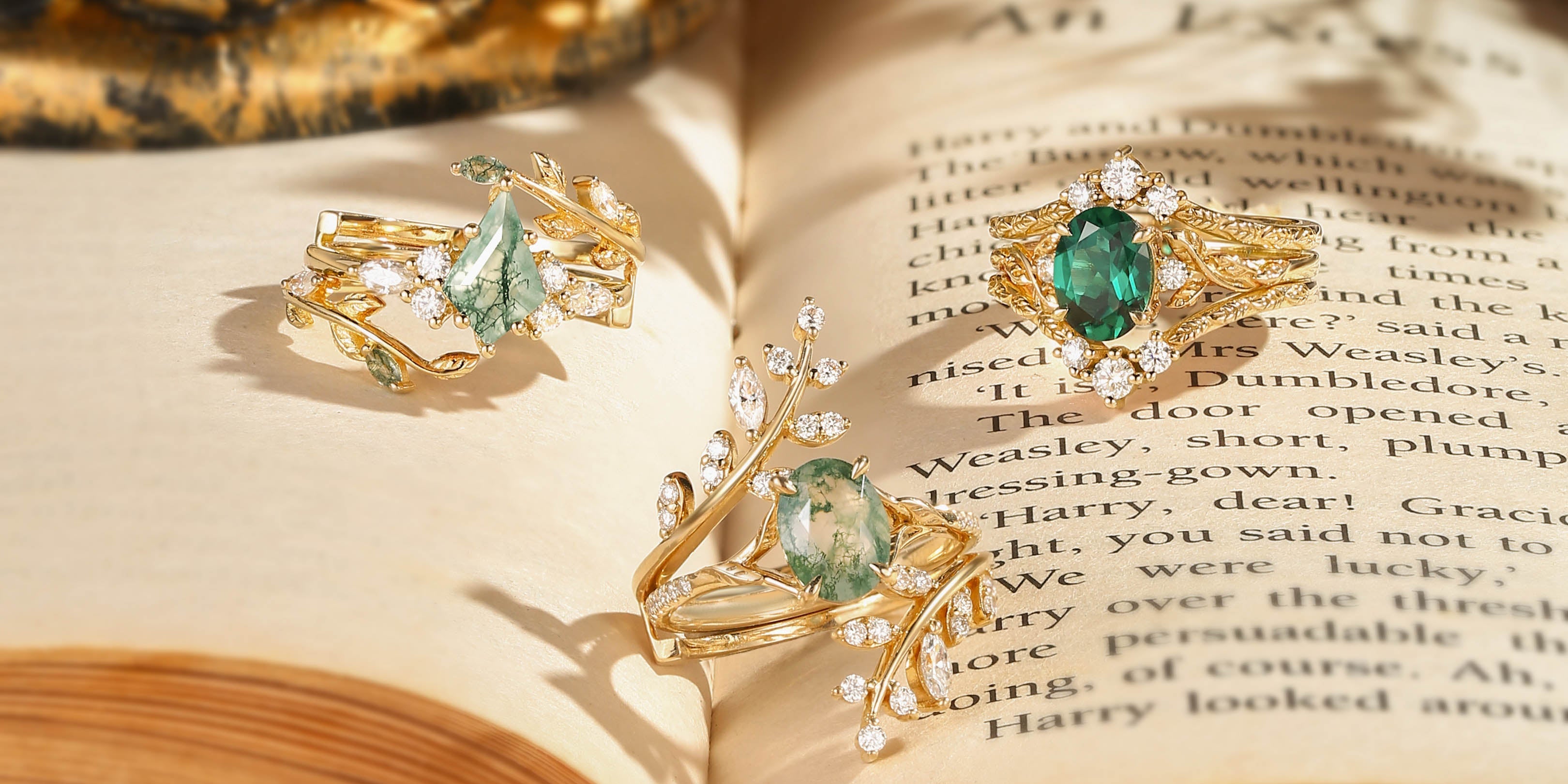
Wedding season 2026 is already underway. Peak engagement months — December through February — have passed, and summer weddings are approaching fast. If you proposed over the holidays and are still deciding on a ring, you are not alone: production and shipping timelines mean that couples shopping in June for a July or August wedding are right at the edge. This guide is built for that window. Here is how wedding season actually works in 2026: proposals cluster from Thanksgiving through Valentine's Day, ceremonies concentrate from May through October (with June, September, and October the three busiest months), and the average engagement lasts around 13 months. That means right now — early summer — is simultaneously when newly engaged couples are finalizing their engagement rings and wedding bands and when couples from last fall's proposals are placing orders for bridal sets to arrive before their September dates. The market is at full pressure. If your wedding is this summer, order now. This guide covers every stone category in the bridal collection — with the information you need to choose confidently, not rush blindly. Table of Contents Why Colored Gemstone Engagement Rings Are Having a Moment Quick Comparison: Green Sapphire vs. Blue Sapphire vs. Pink Sapphire vs. Moissanite Green Sapphire Engagement Rings — The Nature Bride's Stone Blue Sapphire Engagement Rings — The Classic with a Story Pink Sapphire Engagement Rings — Soft Power Lab Emerald Engagement Rings — For the Bold Romantic Moissanite Engagement Rings — Maximum Sparkle, Zero Compromise Bridal Sets vs. Solo Ring: What to Buy First Cut Guide: Pear, Oval, Marquise, Kite — What Each Says on the Hand FAQ Why Colored Gemstone Engagement Rings Are Having a Moment The shift has been happening for years, but wedding season 2026 is making it undeniable: more brides are actively choosing colored gemstones over diamonds, and not as a budget compromise — as a preference. The reasons are practical and personal. Color is specific. A diamond ring is beautiful in a general way; a green sapphire ring says something exact about the person wearing it. Nature-inspired brides, people who prefer something unexpected, couples who want a ring that tells their story rather than signals a price point — they're all landing on color. There's also the durability question. Sapphire scores 9.0 on the Mohs hardness scale — second only to diamond and moissanite. It handles daily wear without special care. Emerald (7.5–8) and moissanite (9.25) both hold up for a lifetime of everyday wear. The old assumption that colored stones are fragile doesn't survive contact with the actual hardness numbers. What you're choosing when you choose a colored stone isn't a substitute. It's a deliberate decision about what kind of ring you want to wear for the rest of your life. Quick Comparison: Which Stone Is Right for Your Wedding Ring? Stone Mohs Hardness Color Range Meaning Best For Green Sapphire 9.0 Mint to forest green Growth, renewal, hope Nature brides, maximalists, anyone who wants something rare Blue Sapphire 9.0 Cornflower to deep navy Loyalty, fidelity, truth Classicists who want meaning behind the choice Pink Sapphire 9.0 Blush to vivid rose Romance, joy, tenderness Romantic personalities, brides who love color but want softness Lab Emerald 7.5–8.0 Vivid green Devotion, abundance, vitality Statement-makers, brides drawn to vintage and Art Deco references Moissanite 9.25 Near-colorless / icy white — Maximum brilliance, classic bridal look, lab-grown ethics Green Sapphire Engagement Rings — The Nature Bride's Stone Green sapphire is the stone that defines BlingFlare's bridal collection — and the reason is straightforward. Green sapphire in mint, sage, and forest tones pairs naturally with botanical settings in a way that no other stone does. The color reads as alive, rooted, and quietly unusual — exactly the feeling a nature-inspired engagement ring should carry. Lab-grown green sapphire scores 9.0 on the Mohs scale, identical to its mined counterpart. It handles rings worn every day, through all conditions, without special maintenance. And lab-grown means the stone was created without mining impact — traceable, ethical, and available in consistent color saturation across the collection. Clarissa — Pear Cut Green Sapphire Leafy Bridal Set (2-Piece) Clarissa is a complete bridal set: a pear cut green sapphire engagement ring and a curved leafy wedding band designed to nest against each other. The pear cut elongates the finger; the leafy band wraps around the base of the stone with botanical engraving that reads as a continuation of the ring itself. Together, they wear as a single piece — no visual gap, no styling effort required. This is the ring for someone who wants their engagement ring and wedding band to feel like they were made together. Because they were. Cut: Pear Stone: Lab Green Sapphire Setting: Leafy vine with accent stones Includes: Engagement ring + matching curved wedding band Material: Solid gold (10K / 14K / 18K) Filigree Leafy Pear Firework Cut Green Sapphire Engagement Ring Lab Green Sapphire Round Cut Engagement Ring Marquise Cut Lab Green Sapphire Elf Engagement Ring Oval Cut Lab Mint Green Sapphire Vine Fairytale Engagement Ring Blue Sapphire Engagement Rings — The Classic with a Story There is a reason blue sapphire appears in the most recognized engagement ring in modern history — Princess Diana's cornflower blue sapphire, now worn by Catherine, Princess of Wales. The stone's association with loyalty, faithfulness, and enduring love isn't a contemporary invention. It goes back over a thousand years in Western tradition. At 9.0 Mohs, blue sapphire is one of the most durable stones available for daily wear. The cornflower blue range — clear, vivid, with no greenish cast — is the most classic and most sought-after shade. Lab-grown cornflower blue sapphire delivers that exact hue consistently, without the provenance uncertainty of mined material. Abrielle — Oval Cut Lab Cornflower Blue Sapphire Vine Fairytale Ring "I told him I wanted something that looked like a fairy tale but felt like it was made for real life. Abrielle was exactly that. The vine setting is even more beautiful in person — you can see the detail in every twist." — Verified Buyer Abrielle is the blue sapphire engagement ring that earns its name. The oval cut maximizes the stone's color saturation — ovals show more color face-up than any other cut at the same carat weight — and the vine setting carries that botanical character through every angle of the ring. It reads as romantic without trying. It wears as practical without giving anything up. Cut: Oval Stone: Lab Cornflower Blue Sapphire Setting: Vine-wrapped fairytale setting with accent stones Material: Solid gold (10K / 14K / 18K) Oval Cut Lab Cornflower Blue Sapphire Vine Fairytale Engagement Ring Oval Cut Lab Cornflower Blue Sapphire Flower Engagement Ring Floral Fairy Oval Cut Cornflower Blue Sapphire Flower Engagement Ring Oval Cut Lab Cornflower Blue Sapphire Vine Fairy Bridal Ring Set 2pcs Pink Sapphire Engagement Rings — Soft Power Pink sapphire carries the same 9.0 Mohs hardness as its blue and green counterparts — there is no practical durability trade-off. What the color adds is warmth and a quality that's difficult to name but instantly recognizable: it's romantic without being sentimental, vivid without being aggressive. Pink sapphire reads differently depending on the light — soft and blush in daylight, luminous and rose-toned indoors. It's the choice for brides who know exactly what they want and aren't looking to anyone for permission. Faustine — Heart Cut Pink Sapphire Four Leaf Clover Filigree The heart cut is the most emotionally direct stone shape available, and in a four leaf clover filigree setting, Faustine turns that directness into something genuinely beautiful rather than obvious. The clover shape frames the heart cut perfectly — four rounded petals around a pointed stone, botanical and romantic at the same time. This is a ring with a clear point of view, and it makes no apologies for it. "I've never seen anything like this in a store. The clover around the heart stone is the most creative setting I've ever encountered. My fiancée cried when she opened the box." — Verified Buyer Cut: Heart Cut Stone: Lab Pink Sapphire Setting: Four leaf clover filigree flower Material: Solid gold (10K / 14K / 18K) Four Leaf Clover Heart Cut Pink Sapphire Flower Filigree Engagement Ring Forest Fairy Marquise Cut Pink Sapphire Leafy Engagement Ring Flower Oval Cut Pink Sapphire Bouble Halo Engagement Ring Crescent Moon Twisted Round Cut Pink Sapphire Bridal Set 2pcs Lab Emerald Engagement Rings — For the Bold Romantic Emerald has been the stone of royalty, romance, and drama for more than four thousand years. Cleopatra's collection is the most cited example; the Mughal emperors inscribed their most significant emeralds with prayers. The stone's vivid green — a different green than sapphire, warmer and deeper with a characteristic internal garden called jardin — has no equivalent in the gemstone world. Lab-grown emerald scores 7.5–8 on the Mohs scale, making it entirely appropriate for daily wear with normal care — avoid hard impacts, and this stone lasts a lifetime. For desk-job daily wear, emerald is a practical and stunning choice. Lab-grown means the color consistency is exceptional and the origin is traceable. Desiree — Oval Cut Lab Emerald Branch Leafy Engagement Ring Set (2-Piece) Desiree frames an oval lab emerald in a branch-textured leafy setting — the gold work mimics the way woody branches bend around something beautiful. The oval cut is the right choice for emerald: it shows the stone's vivid color across maximum face-up surface area, and the elongated shape echoes the organic lines of the branch setting. The matching wedding band nests cleanly against the base of the setting. For the bride who wants a ring that declares a point of view the moment someone sees it. Cut: Oval Stone: Lab Emerald Setting: Branch and leaf botanical Includes: Engagement ring + matching wedding band Material: Solid gold (10K / 14K / 18K) Lab Emerald Leafy Design Wedding Band Oval Cut Lab Emerald Gold Nature Leaf Engagement Ring Marquise Lab Emerald Filigree Royalcore Wedding Ring Nature Inspried Lab Emerald Pear Cut Leaf Engagement Ring Moissanite Engagement Rings — Maximum Sparkle, Zero Compromise Moissanite is the hardest available engagement ring stone after diamond itself, scoring 9.25 on the Mohs scale. It refracts light differently than any other gemstone — its refractive index is higher than diamond, which means it sends more colored fire (dispersion) across a room when light hits it. Under direct light, moissanite is extraordinary. Under low indoor light, it continues to perform when other stones go quiet. For brides who want the traditional bridal look — near-colorless, brilliant, white — but aren't interested in mining impact, moissanite is the logical choice. Lab-grown, traceable, and at a fraction of diamond's cost at equivalent carat weight. Daisy — Vintage Floral Marquise Cut Moissanite Daisy is the moissanite ring for the bride who references vintage but doesn't want a museum piece. The marquise cut gives the stone a pointed, antique silhouette; the floral setting brings in the delicate botanical detail of vintage jewelry without replicating any specific historical style. The result is a ring that reads as timeless without being dated — the kind of piece that looks as relevant in fifteen years as it does now. "I've looked at hundreds of rings online. Nothing came close to this. The detail in the flower petals is unbelievable. Every person at the engagement party asked about it." — Verified Buyer Cut: Marquise Stone: Moissanite Setting: Vintage floral Material: Solid gold (10K / 14K / 18K) Vine Leafy Moissanite Wedding Band Special Nature Inspired Wedding Enhancer Band Pear Cut Moissanite Branch Leafy Inspired Engagement Ring Pear Cut Moissanite & Sapphire & Emerald Butterfly Engagement Ring Bridal Sets vs. Solo Ring: What to Buy First This is one of the most common questions during wedding season — and the honest answer depends on when your wedding is and what you care more about: the proposal moment or the long-term look of both rings together. Factor Solo Engagement Ring Bridal Set (2-Piece) The proposal One ring, one moment. Simpler, more traditional Both rings presented together — or engagement ring now, band saved for the ceremony Design coherence Wedding band chosen later — may not nest perfectly against a separately purchased engagement ring Designed together to sit flush, share visual language, and wear as a unit Budget timing Spreads cost across two purchases One purchase; often better value as a combined set Ring stacking More flexibility to add different-style bands over time Optimized as a matched pair; stacking with additional rings is still possible Decision pressure Wedding band decision deferred — one less thing before the proposal Both decisions made at once — requires clarity about the complete look Recommendation: If you have a summer wedding date and you're shopping now, a bridal set is the efficient choice — one order, one production timeline, and you know both rings will work together. If the proposal is imminent and the wedding is further out, a solo engagement ring leaves room to choose the band when you're less time-pressured. Both Clarissa and Desiree are designed as complete bridal sets. Abrielle is available as a solo ring or as a matched two-piece set. All other engagement rings in the collection can be paired with BlingFlare's curved wedding bands, which are designed to nest against most of our engagement ring settings. Cut Guide: Pear, Oval, Marquise, Kite — What Each Says on the Hand Cut affects how large a stone looks, how it performs in different light conditions, and how it interacts with the setting and the hand wearing it. Here's the practical breakdown for the cuts in this collection: Cut Visual Effect Best Hand Shape Light Performance Character Pear Elongates the finger; pointed tip draws the eye upward Shorter or wider fingers High brilliance, especially at the tip Romantic, teardrop; bridal classic that never reads as ordinary Oval Maximizes face-up size and color; soft, feminine silhouette Most hand shapes; particularly flattering on narrow fingers Excellent face-up color and brilliance Vintage-modern; the most versatile choice in contemporary bridal Marquise Dramatically elongates; appears significantly larger than carat weight suggests Slender fingers; also elongates wider fingers effectively High brilliance at the pointed ends; bold presence in all light Daring, graphic; historical (favored by Marie Antoinette) but completely contemporary in the right setting Heart Immediately symbolic; pointed base draws the eye down to the finger Longer fingers carry this cut with the most elegance Good brilliance when cut with proper symmetry Direct, romantic, unapologetic — not for everyone, exactly right for some Kite Architectural; four flat facet planes give a clean, graphic presence Any hand shape; the angular silhouette is bold on larger fingers, precise on smaller ones Different from traditional cuts — reflects light in planar segments rather than sparkle points Confident, unusual, and completely coherent as a design choice About BlingFlare's Firework Cut: The Firework Cut is a proprietary modification to standard pear and marquise cuts, developed to maximize light return through the stone's pavilion in a dispersed, multi-directional pattern. Instead of sending light primarily upward, it distributes flash across a wider angle — visible to people standing beside the wearer, not just directly above. It's the reason Hesper and Fae photograph differently from standard cut stones. Related Reads Couple Rings for Every Love Story — Gemstone Sets That Mean Something Men's Wedding Bands — The Complete Guide to Choosing the Ring You'll Wear Every Day Why Sapphire Stays Brilliant: The Everyday Stone That Never Stops Catching Light FAQ Is a colored gemstone engagement ring as durable as a diamond? Sapphire (green, blue, pink) and moissanite are both 9.0+ on the Mohs scale — extremely close to diamond at 10. For practical daily wear purposes, there is no meaningful durability difference. Lab emerald at 7.5–8 Mohs is appropriate for desk-job daily wear with normal care; avoid hard impacts. All BlingFlare stones are hand-selected for quality before setting. How far in advance should I order before my wedding? Order at least 4–6 weeks before your wedding date. Standard production ships in 1–2 weeks; engravings or custom modifications add 2–3 weeks. Wedding season creates higher order volumes — don't cut it close. If your date is within the next 4 weeks, contact our team directly before ordering to confirm timeline. What's the difference between a bridal set and an engagement ring with a matching band? A bridal set is designed from the start as two pieces that function together: the engagement ring and the wedding band are engineered to sit flush against each other with no gap. A matching band is designed to coordinate with an existing ring but may not sit perfectly flush depending on the setting. If visual cohesion matters to you, a bridal set is the better approach. What is the Firework Cut, and why does it matter? BlingFlare's Firework Cut is a proprietary modification to pear and marquise cuts that disperses light across a wider horizontal angle rather than directing it straight up. The practical effect: the ring catches light from more angles and shows flash to people standing beside the wearer, not just looking directly down at the stone. It's particularly effective in sapphire, where the stone's color also gets distributed across the flash. Is lab-grown sapphire the same as natural sapphire? Lab-grown sapphire is chemically and physically identical to natural sapphire — the same aluminum oxide crystal structure, the same 9.0 Mohs hardness, and the same optical properties. The difference is origin: lab-grown is created in controlled conditions rather than mined. Lab-grown stones offer consistent color quality and traceable origin. All BlingFlare sapphires are hand-selected for color saturation and clarity before setting. Can I get a ring engraved for the wedding? Yes — inner band engraving (initials, a date, a short phrase) is available on most styles. Add 2–3 weeks to production time. Note that engraved rings cannot be returned or exchanged, so confirm all details carefully. Custom engraving is a one-way decision. What if I don't know my ring size? BlingFlare offers a complimentary resize (±1 size) within the first year of purchase on most styles. If you're between sizes, order the larger — it's easier to size down than to wear a ring that's too tight. Our team can also walk you through measuring at home. Contact us before ordering if you're uncertain. Can I coordinate my engagement ring with my partner's wedding band? Yes — this is what the couple ring collection is designed for. Sets are built around a shared stone (same sapphire, same emerald) in settings sized and proportioned separately for each hand. If you want to build a coordinated pair from our engagement ring and men's band collections, our team can advise on stone and metal combinations that work together. Contact us here. What's your return policy? BlingFlare accepts returns within 30 days for quality issues at no cost. For personal preference returns, a 30% restocking fee applies. Custom modifications, engravings, and personalized orders are non-returnable — all sales on these are final. One complimentary resize (±1 size) is available within the first year on most styles; return shipping is at the customer's expense. Shopping for your wedding ring this season? Our team is here to help you find the right stone, cut, and setting for the ring you'll wear every day. Chat with us at blingflare.com or find us on Instagram.
Learn more