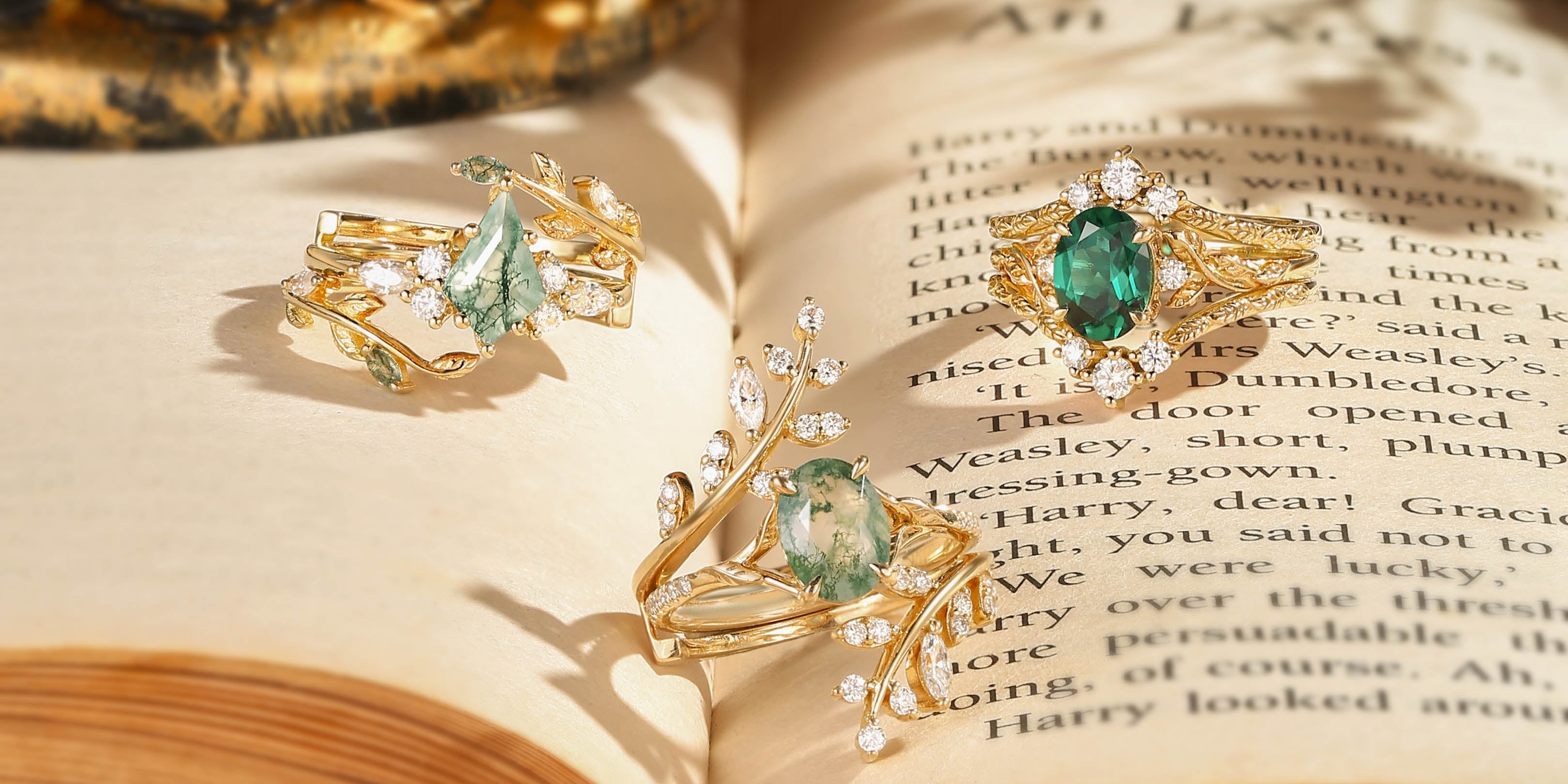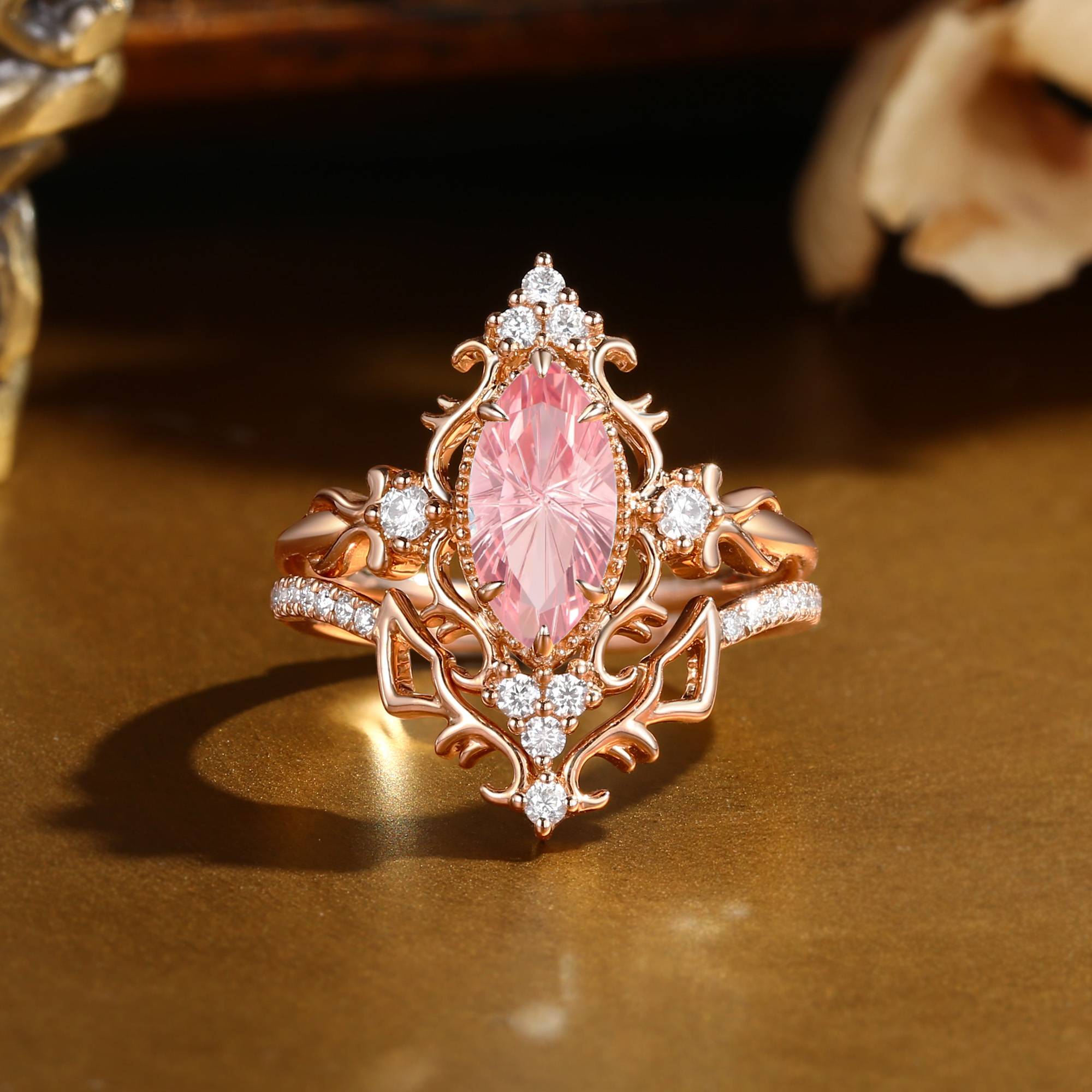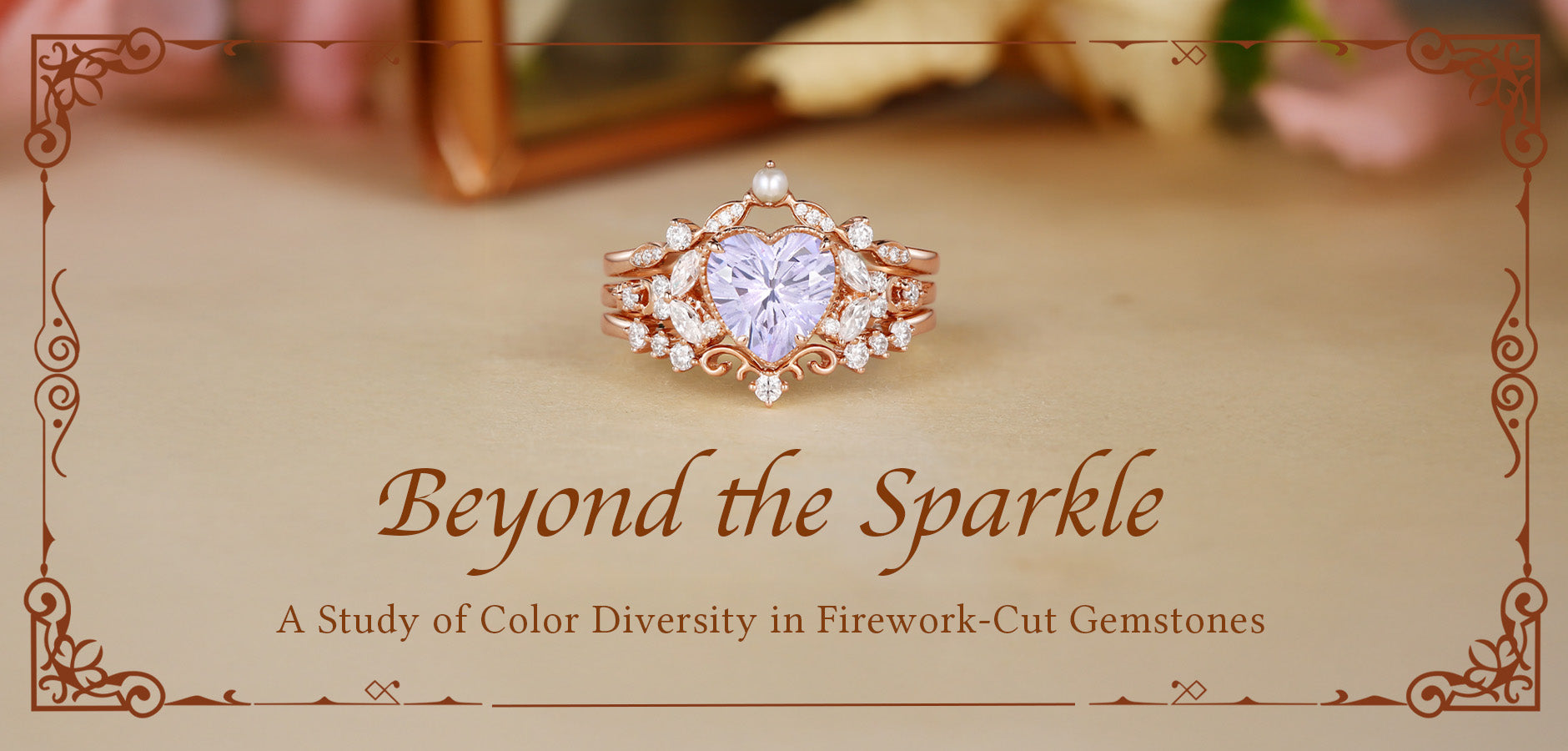
Ever seen a gemstone that explodes with color like a firework in the night sky? It's all in the cut! Dive into the world of the Firework Cut, an innovative gemstone design that doesn't just enhance brilliance—it orchestrates a symphony of light and color. We'll explore how this cutting style makes every hue, from the deepest ruby red to the most electric sapphire blue, more vibrant and dynamic than ever before.

Beyond the Sparkle: A Study of Color Diversity in Firework-Cut Gemstones
Related Posts
Black Friday Best Sellers: Discover the Rings Everyone Loves
Every November, one question lands in our inbox more than any other: which rings do people actually buy? Not the ones that photograph best. Not the ones that trend for a week on Pinterest. The ones that get chosen, worn, resized, and then recommended to a sister or a best friend two years later. That short list is what Black Friday is really about — and this year, one design has been at the top of it since February. So here is the honest version of a Black Friday guide, from a shop that builds every ring to order. Our Early Black Friday event is live now: 15% off through the Early Access collection, a gift box with every set, and the full catalog still in stock. What we can't do is make a ring faster than we make it. So the useful thing we can offer you is not a bigger banner — it's the pieces, the pricing logic, and the dates, in one place. Table of Contents Why “Best Seller” Means Something Different for Rings The Ring Everyone Asks About: Liliosa The Four Best-Selling Categories This Black Friday How to Choose in 15 Minutes (Without Regret) Solid Gold vs. Plated: The Only Value Math That Matters Sizing, Customization, and Black Friday Timing Your Black Friday Shopping Calendar Frequently Asked Questions Why “Best Seller” Means Something Different for Rings A best-selling dress is a dress that looks good in a photo. A best-selling ring is a ring that still looks good after four years of dishes, gym sessions, and a move across the country. Those are not the same brief. When we looked at what our customers repurchase, gift, and come back to review, three patterns kept repeating: It has to read well from a distance The rings people stop wearing are usually the ones that disappear on the hand — too thin, too pale, too “safe.” A distinct silhouette gets compliments in line at the coffee shop, and compliments are surprisingly good at keeping a ring on a finger. It has to survive being worn Solid gold, a properly set centre stone, and a band that isn't 1mm wide matter more than any certificate language. This is why our solid gold engagement rings are what we build, all year and during sale season alike — people buying a Black Friday deal still want a forever ring. It has to feel like theirs The single biggest reason a design goes viral for us isn't the stone. It's the story. Botanical motifs, fairy-tale references, his-and-hers pairing — buyers aren't shopping for a category, they're shopping for a sentence they can say out loud when someone asks about the ring. That third point is exactly why one set has dominated our best-seller list all year. None of the above is a Black Friday offer — it's what the transaction looks like here all year, which is why we'd rather tell you to buy on the right date than on the loudest one. The Ring Everyone Asks About: Liliosa The Forest Fairy Marquise Firework Cut Green Sapphire Leafy Inspired Couple Ring Set — Liliosa is the design our customers forward to each other. It is a two-piece set: an engagement ring built around a marquise-cut green sapphire with leafy, vine-like shoulders, and a matching men's band engraved with the same botanical line and set with a small marquise green sapphire of its own. What makes it work is the cut. A firework cut is a faceting style that radiates from the centre outward, so the stone throws light in a starburst instead of a single broad flash. On a marquise — the elongated “navette” shape — the effect is unusually dramatic: the stone looks lit from inside, and the green reads deep forest in low light and bright spring green in daylight. Detail Engagement Ring Men's Band Metal 14k / 18k solid gold or platinum (yellow, white, rose, black) 10k / 14k / 18k solid gold or platinum (yellow, white, rose) Centre stone Lab green sapphire, 6×12mm marquise Lab green sapphire, 0.2ct total Accent stones Moissanite / lab green sapphire, D clarity, VS–VVS, 0.26ct total — Band width 1.6mm 4.5mm Style Leafy inspired, twist detail, firework cut Vine engraving, single marquise accent Packaging Gift box included Gift box included Two things worth saying plainly. First, “lab green sapphire” is a real sapphire — same corundum, same hardness (9 on the Mohs scale), grown in a lab instead of mined. It is not a simulant, and it will not cloud or scratch the way softer green stones do. Second, the 1.6mm band is delicate by design. If you're hard on your hands, ask us about a thicker band before ordering; we would rather adjust the design than have you baby the ring. The set starts at $2,729.99 in 10k gold, and 15% off during Early Access puts that under $2,320 — for two solid gold rings, sized, finished and boxed together. Who it's for: couples who want a matching set that doesn't look like a matching set from a mall kiosk. The engagement ring is unmistakably bridal; the men's band is quietly botanical, so he can wear it to work without it reading as jewelry. The Four Best-Selling Categories This Black Friday Liliosa isn't the only design moving fast. If you're shopping for a different taste — or a different budget — these are the four categories our customers return to most. 1. Green Sapphire Rings Green sapphire has quietly become the alternative stone of the decade. It photographs like an emerald, wears like a diamond, and costs a fraction of either. Our green sapphire rings collection covers oval, pear, kite, and marquise cuts, so you can pick the shape first and the setting second. Best for: anyone who wants colour but refuses to compromise on durability. 2. Couple Ring Sets Matching sets are the highest-conversion category during Black Friday, because the math is obvious: two solid gold rings, one purchase, one box, no “we'll get his later” that turns into never. Browse couple rings if you want the pairing to be intentional rather than accidental. Best for: engaged couples planning a small wedding, elopements, and anniversary upgrades. 3. Leafy & Botanical Designs Vine shoulders, acanthus carving, leaf prongs. These are the rings people describe as “romantic” without being able to explain why — and they are also the designs that age best, because organic forms never look dated the way geometric trends do. Best for: nature-lovers, garden weddings, and anyone who finds halo settings a little too expected. 4. Marquise Cuts Long and narrow, the marquise makes a finger look longer and a stone look bigger than its carat weight. It is the most-complimented shape we sell, and the one most often requested after someone sees it on a friend. Best for: small hands, vintage leanings, and shoppers who want maximum presence per dollar. How to Choose in 15 Minutes (Without Regret) Black Friday rewards decisiveness and punishes impulse. Here's the four-question filter we use with customers who can't decide. What metal does she actually wear? Look at her existing jewelry — watch, earrings, the necklace she never takes off. If it's all silver-toned, do not buy yellow gold because a Pinterest board said so. Liliosa is available in yellow, white, rose, and black gold, precisely so this question doesn't force a compromise. How wide does the band need to be? Under 2mm is delicate and beautiful and requires care. 2–3mm is the everyday sweet spot. 4mm+ is for people who work with their hands. If the answer is “she's a nurse,” skip the dainty band or ask us to modify it. Is the stone protected? A marquise's pointed ends are the vulnerable part. Ask whether the setting covers the tips — ours do, with prongs at each point rather than an open gallery. Will it arrive in time? Made-to-order solid gold is not sitting in a warehouse. This is the single most common Black Friday mistake, and it's why the calendar below exists. Solid Gold vs. Plated: The Only Value Math That Matters A Black Friday discount on a plated ring is not a deal — it's a countdown timer. Gold plating wears through at the high points of a band within 12–24 months of daily wear, and once it goes, the ring is done. Resizing is usually impossible, and repair costs more than the piece. Solid gold behaves differently. It can be resized, re-polished, re-tipped, and passed down. Over a decade, a $400 plated ring replaced three times costs more than a solid gold ring bought once — and only one of them exists in 2036. This is why our Black Friday offers focus on solid 10k, 14k, and 18k gold and platinum, not on entry-level fashion pieces. If you're spending on a ring you intend to wear every day, buy the metal that can be fixed. Sizing, Customization, and Black Friday Timing Three practical notes before you check out: Get sized properly, or don't guess. Ring size changes with temperature and time of day, and a half size off on a 1.6mm band is noticeable. If you're planning a surprise, take an existing ring from the correct finger and have a jeweler measure it — most will do this free in under five minutes. Customization is where the value is. Metal colour, karat, stone choice, engraving, and band width are all adjustable on most designs, including Liliosa. Ask before you order rather than after; changes are far easier on the production side than in the return window. Order earlier than the calendar suggests. Every set is made to order. Black Friday volume adds production days, and international shipping adds transit days on top. If the ring is for a specific date, order at the start of the sale, not the last hour of it. Your Black Friday Shopping Calendar Window What's happening What to do Now – Nov 26 Early access: 15% off, full catalog, best size availability, no checkout queue Order now if your date is fixed. This is the window with slack in it Nov 27 – Nov 29 Black Friday weekend: peak traffic, fastest-selling sizes gone first Decide metal and size before the weekend so you're only choosing, not researching Nov 30 Cyber Monday: the last window, and the most likely to be limited to what hasn't sold Fine for a second-choice design. Risky for the Liliosa set in popular sizes Which produces an uncomfortable but useful conclusion: the discount has already started; the calendar has not. The 15% is live now, exactly when the timeline still works. If the ring is a Christmas gift, waiting three weeks buys you a possible few extra points of discount and costs you the delivery date. The exception is an engagement rather than a gift — proposals are usually planned further out, so if the ring is for a proposal in the new year, waiting is genuinely rational. Frequently Asked Questions What is a firework cut? A faceting style where the facets radiate outward from the centre of the stone, creating a starburst of light rather than one broad flash. On a marquise shape it makes the stone appear lit from within, and it hides inclusions better than a step cut. Do both rings have to be the same metal? No. Many couples choose white gold for her and yellow gold for him. The botanical motif is what ties the set together, not the metal colour. Why is the women's band only 1.6mm? It's a design choice to keep the leafy shoulders visually light. If you need durability over delicacy, ask us about widening it to 2mm — we do this regularly. How do I size a ring if it's a surprise? Borrow a ring from the correct finger and have a jeweler measure it, or trace the inner circle on paper and send us the diameter. Avoid guessing from a photo of her hand. Can the men's band be engraved on the inside? Yes, inside-band engraving is available. Keep it under 20 characters for legibility on a 4.5mm band. Do you ship internationally, and who pays duties? We ship worldwide. Import duties and taxes are set by your country's customs authority and are the recipient's responsibility — worth factoring in before checkout rather than after delivery. Related Collection Best Sellers & Customer Favorites Green Sapphire Rings: The Complete Collection The short version: the 15% is live, the pieces are above, and the one thing you can't buy back is production time. If your date matters, start with the Liliosa couple ring set, put both rings in one order, and tell us the date you need it by — we'd rather say yes while we still can.
Learn moreAutumn Engagement Rings: A Love Story in Green
There is a particular kind of light in late October. It comes in low and amber, catches the edge of a gold band, and turns a green stone into something that looks lit from within. That is the moment most autumn proposals are built around — a walk that runs a little longer than planned, a coat pocket with something heavy in it, a question asked while the trees are doing their loudest, most beautiful work of the year. If you are shopping for an autumn engagement ring, you have probably noticed that the usual suspects — clear diamonds, white gold, halo settings — feel a little out of step with the season. Green gemstones do not. They carry the color of the moment: moss after rain, fir needles, the deep cool green of a shaded pond. They also carry meaning. Green has long been associated with renewal, growth, and the quiet daily work of staying in love. At BlingFlare, our green sapphire engagement rings and nature-inspired engagement rings are designed for exactly this kind of proposal — intimate, outdoor, and unmistakably personal. And if you are planning the whole set, our Celestine bridal set carries the same forest language from engagement ring to wedding band. Table of Contents The Romance of an Autumn Proposal Why Green Gemstones Belong to Autumn Forest-Inspired Details in Engagement Rings Choosing Your Autumn Engagement Ring Discover BlingFlare's Green Gemstone Rings The Romance of an Autumn Proposal Autumn has become the quiet season of engagement. Summer proposals get the daylight and the beach photographs; December gets the holiday sparkle. October and November sit in between, and that is precisely the appeal. The crowds are gone from the trails. Restaurants are easier to book. The light is softer, the air is cooler, and everything outdoors looks like it was styled for a photograph. There is also something about the season that makes people honest. Summer proposals can feel performative — a crowd, a sunset, an audience. An autumn proposal tends to be two people on a path, maybe with a dog, maybe with cold hands. The question arrives without much staging. That intimacy is worth designing around, and it is why so many of the couples we work with describe their proposal as “just us, somewhere quiet.” The ring should match that register. A green stone in warm gold reads as understated in daylight and remarkable in candlelight — which is exactly the arc of a good proposal day. It does not shout across a room. It rewards a closer look, the way a good relationship does. Consider the season's own palette. Autumn is usually described in rust, amber, ochre, and burgundy, but stand on an actual forest floor in October and you will find green everywhere: moss on north-facing bark, ferns that have not yet browned, the deep blue-green of a river under an overcast sky. Green is not a contrast to autumn. It is the constant underneath it — the color that stays while everything else turns. A green gemstone ring works the same way against a wardrobe of camel coats, wool, and leather: it grounds the whole picture instead of competing with it. One customer, Emily R. from Portland, OR, put it this way: “We got engaged on a trail we'd hiked a dozen times. He had the ring in his jacket pocket for four miles. When he opened the box, the stone was this soft sea-green and it matched the moss on the trees behind him. I still can't look at it without seeing that trail.” That is the standard we design against — a ring that does not merely mark an occasion but stores one. A photograph fades into a folder; a ring stays on a hand, in the weather, through every October that follows. Celestine - Filigree Pear Firework Cut Light Green Sapphire & Pearl Engagement Ring Filigree Fiary Pear Firework Cut Light Green Sapphire & Pearl Bridal Set 2pcs - Celestine Bina - Oval Cut Lab Mint Light Green Sapphire Vine Engagement Ring Why Green Gemstones Belong to Autumn Color psychology is not a soft science here — it is a well-documented effect. Green sits in the middle of the visible spectrum, which is part of why the eye rests on it so easily. Studies of color preference consistently rank green among the most calming hues, associated with safety, restoration, and natural environments. In a season defined by transition, that association lands differently: green is what remains when everything else turns. There is a practical argument too, and it matters more than any mood board. An engagement ring is worn every day for decades. It goes through dish soap, doorframes, gym lockers, and the inside of a winter glove. Whatever stone you choose has to survive that, and hardness is the single best predictor of whether it will. The practical case for sapphire Green sapphire is the most wearable choice in this category, and the reason is straightforward. Corundum — the mineral family that includes sapphire and ruby — rates 9 on the Mohs scale, placing it second only to diamond in hardness. The Gemological Institute of America notes that sapphire's durability makes it suitable for everyday wear in a way that softer stones are not. For a ring someone will wear for forty years, that matters more than any other specification. Emerald, for all its beauty, sits at 7.5 to 8 and is famously included — the internal fractures that give it character also make it vulnerable to chipping. Tsavorite and green tourmaline are lovely and often less expensive, but they will show wear sooner. Peridot, at 6.5 to 7, is best kept to accent stones or protected settings. If you want the color of the season without the maintenance anxiety, green sapphire is the answer. Green sapphire also has a quality that photographs badly and lives beautifully: pleochroism. Many stones shift between green, teal, and olive depending on the light, so the ring you put on at breakfast is not quite the ring you see by candlelight. It is the closest thing jewelry has to weather. Stone Mohs Hardness Best For Color Range Notes Green sapphire 9 Daily wear, heirloom pieces Mint to deep forest Second only to diamond in hardness; excellent durability Emerald 7.5–8 Statement and vintage styles Vivid blue-green Beautiful but brittle; needs a protective setting Tsavorite garnet 7–7.5 Budget-friendly vivid green Bright grass green No treatment needed; smaller stones common Green tourmaline 7–7.5 Large, dramatic center stones Olive to teal Great value per carat; softer for everyday wear Peridot 6.5–7 Accent stones, casual rings Yellow-green Affordable; best in protected settings ➡️ Shop Green Sapphire Rings There is one more thing worth saying about color. Green stones behave differently against metal than white diamonds do. A diamond is a mirror; a green sapphire is a window. It absorbs some light and returns the rest slowly, which is why it looks softer in photographs and richer in person. If you have only seen green sapphires on a screen, the first thing you will notice in daylight is how much less “sparkly” and how much more “alive” they are. Katriel - Pear Cut Lab Moss Agate Oak Leaf Engagement Ring Forest Fairy Marquise Firework Cut Green Sapphire Butterfly Inspired Engagement Ring - Yara Forest Fairy Marquise Cut Green Sapphire Leafy Engagement Ring - Letitia Forest-Inspired Details in Engagement Rings The difference between a green ring and a forest ring is in the details. A colored stone alone is a color choice. Add the right metalwork and it becomes a story — one that only reveals itself when someone is close enough to hold your hand. Metal Warm yellow gold is the natural pairing — it echoes late-afternoon light and makes green stones look richer rather than cooler. Rose gold pushes the palette toward dusk and flatters olive and sage tones especially well. White gold or platinum will make the green read sharper and more modern, which is a valid choice but a different mood: less woodland, more gallery. Settings Look for bezels with milgrain edging, which read as hand-finished rather than machine-perfect. Six-prong settings in a slightly raised profile let light into the stone, which matters most for deep greens that can look flat when boxed in. A low basket keeps the ring practical for hands that work. Botanical motifs Vine and leaf shoulders, tiny fern fronds tucked under the basket, a hidden leaf on the inside of the band. These are the details no one sees from across a table and everyone sees when they hold your hand. They are also what separates a mass-market ring from something that feels authored. Compare a stamped leaf pattern — repeated, identical, a little flat — with a carved one, where the depth varies because a person cut it. The difference is not decorative. It is the difference between a print and a drawing. Side stones Pearls bring a soft, vintage, almost Edwardian quality — they read as heirloom even when new. Small white diamonds or moissanite keep things brighter and more contemporary. A row of tiny green stones along the band creates a continuous thread of color that ties the whole piece together. Finish A lightly brushed or satin finish holds up better against daily wear and looks less “new.” High polish is beautiful in photographs and shows every scratch within a year. On a ring with carved botanical detail, a satin finish also deepens the shadows in the carving, which is what makes the leaves legible from a distance. None of these choices is expensive on its own. What costs money is the combination done deliberately — a stone chosen for its hue, a setting chosen to protect it, and a motif chosen because it means something. That is the difference between a ring that is green and a ring that is autumnal. Hesper - Filigree Leafy Pear Firework Cut Green Sapphire Engagement Ring Abrielle - Oval Cut Lab Mint Green Sapphire Vine Fairytale Engagement Ring Pear Cut Lab Green Sapphire Twisted Leaf Vine Engagement Ring - Greenly Choosing Your Autumn Engagement Ring Start with the stone, then the metal, then the setting — in that order. Most buyers do it backwards, fall in love with a setting, and end up compromising on the stone, which is the part that lasts. Stone color. Mint and seafoam greens are the most versatile and photograph beautifully in natural light. Forest and deep blue-greens are more dramatic and look extraordinary against darker skin tones and in evening light. Olive and yellowish greens are the most unusual and the hardest to match to a wedding band later. Stone shape. Pear and oval cuts elongate the hand and suit vintage-inspired designs. Round and cushion cuts are the most classic and easiest to pair with a straight wedding band. Emerald cuts (the shape, not the stone) look architectural and modern; marquise looks distinctly romantic. If you already know you want a vine or leaf band, a pear or marquise center will follow the curve of the metal more naturally than a square stone will. Budget realism. Green sapphire typically costs less per carat than a comparable diamond — often substantially less — which means you can often afford a larger or finer stone at the same budget. That is one of the quiet advantages of going green, and it is the reason a one-and-a-half carat green sapphire is a realistic goal for couples who assumed they were limited to three-quarters of a carat. Style Center Stone Metal Setting Price Range Vintage botanical Pear-cut mint green sapphire, 1.2 ct 14K yellow gold Bezel with pearl sides $1,400 – $2,200 Classic solitaire Oval green sapphire, 1.5 ct 18K yellow gold Six-prong, milgrain $1,600 – $2,600 Modern minimal Round green sapphire, 1.0 ct Platinum Low-profile bezel $1,800 – $2,800 Heirloom-inspired Cushion green sapphire, 1.8 ct 14K rose gold Halo with diamond accents $2,200 – $3,400 One last piece of advice about timing. Made-to-order rings are not instant, and an autumn proposal has a hard deadline built into it. If you are aiming for October, order by early September. If the date is already close, choose a design that is in stock rather than custom, and plan the engraving for afterward — most jewelers, including us, will happily add it later. Katriel - 1.5CT Kite Cut Lab Green Sapphire Oak Leaf Engagement Ring Clarissa - Lab Grown Green Sapphire Vine Inspired Leafy Pear Cut Engagement Ring Firework Bezel Oval Cut Green Sapphire Natural Inspired Leaf Engagement Ring - Beryl Discover BlingFlare's Green Gemstone Rings At BlingFlare, every green ring starts with the stone. We hand-select sapphires for color saturation and clarity before a single sketch is drawn, which is why our greens tend toward the moss and seafoam end of the spectrum rather than the flat bottle-green that cheaper supply chains settle for. Our pieces are made in small batches in 14K and 18K gold, with botanical details carved rather than stamped, and each ring is finished by hand. That approach has practical consequences. A carved vine has depth, so it catches light and shadow the way a real stem does. A hand-finished band has a slightly irregular surface, so it wears into a patina instead of collecting scratches. And because we work in small batches, we can adjust a design — a narrower band, a lower basket, a different stone shape — without turning it into a six-month custom commission. We also offer resizing and engraving on every order, because a ring you plan to wear for decades should fit the person, not the other way around. If you are choosing a matching band, ordering both at once is the simplest way to guarantee the profiles sit flush. Hand-selected stones: every sapphire is chosen for hue and clarity before setting. Carved, not stamped: botanical detail is cut into the metal, not pressed into it. Small-batch production: made to order in three to four weeks; hand-carved designs take five to six. Resizing and engraving: available at the time of order and after purchase. Frequently Asked Questions Are green sapphires good for engagement rings? Yes — they are one of the best non-diamond options available. Green sapphire is corundum, rated 9 on the Mohs hardness scale, which means it resists scratching and chipping far better than emerald, opal, or pearl. It requires no special care beyond normal cleaning and is suitable for daily wear. Can you put a green stone in a yellow gold setting? Absolutely — and it is our most popular combination. Yellow gold warms the green and makes it read as richer and more natural. White metals make green look cooler and sharper; both work, but they create different moods. Do green sapphires change color in different lighting? Some do, particularly stones with a blue-green or teal modifier. This is called pleochroism and is considered a feature, not a flaw — the stone shifts between green and blue depending on the light. Ask for a video in both daylight and indoor light before buying. What ring size should I order if I'm surprising her? Order her actual size if you can find it from an existing ring. If not, order a half size up — it is far easier to size a ring down than up, and a slightly loose ring can be worn immediately on the day. How long does a custom green sapphire ring take? Our made-to-order pieces typically ship in three to four weeks. Custom designs with hand-carved details take five to six. If you are planning an autumn proposal, order by early September to leave room for sizing. Can I engrave a ring after purchase? Yes. We engrave at the time of order and also offer after-purchase engraving on any BlingFlare ring — just contact us for a shipping label. Inner-band engravings are limited to about 30 characters depending on the font. If you know someone planning an autumn proposal, send them this guide — the right ring is easier to find when you know what you are looking for. Ready to start? Browse our green sapphire rings or explore the leaf ring collection, and let BlingFlare help you find the one that looks like it grew there.
Learn moreDifferent by Design, Together by Choice: Unique Wedding Bands for Couples
There was a time when couple wedding bands were expected to be identical — same metal, same width, same polished finish, as though love demanded uniformity. Those days are behind us. Today's couples are choosing couple rings that echo one another rather than clone one another: two distinct designs bound by a shared material, a matching engraving, or a complementary motif. A black tungsten band for one, a gold leaf-engraved ring for the other. A moss agate inlay for her, a kite-cut green sapphire for him. The result is something far more honest — two individuals who happen to be choosing the same forever, expressed through rings that look different but belong together. This guide walks through why more couples are moving away from perfectly matched sets, how to design two rings that feel like a conversation rather than a chorus, and where to find handmade, nature-inspired wedding bands that honor each person's style without losing the connection between them. Whether you are shopping for unique wedding bands for couples for the first time or redesigning a set that already exists, you will leave with a clear idea of how to make two rings tell one story. Table of Contents Beyond the Traditional Wedding Band Two Rings, One Love Story The Beauty of Contrasting Designs Finding the Perfect Balance Between Two Styles Discover BlingFlare's Couple Rings Beyond the Traditional Wedding Band For decades, the standard advice was straightforward: pick a jeweler, choose a style, order two of the same ring in different sizes. It was efficient, it was safe, and it left almost no room for personality. A couple who spent their weekends hiking in the Pacific Northwest ended up with the same polished gold band as a couple who met at a punk-rock vinyl fair. The ring said nothing about them except that they were married. The shift away from identical matching sets did not happen overnight. It began slowly — with one partner requesting an engraving the other did not have, or choosing a different metal tone because one wardrobe leaned silver and the other gold. Over the past decade, that quiet rebellion has become a movement. Jewelers now report that a growing share of couples walk into the store wanting two rings that complement without copying, and designers have responded with collections built around that very idea. Three forces are driving this change. The first is individuality. Modern couples are building lives that feel intentionally curated — from co-created wedding ceremonies to shared travel blogs — and their rings are an extension of that ethos. The second is aesthetic confidence. People today wear jewelry the way they wear clothing: as an expression of self, not a uniform. The third is the rise of handmade and nature-inspired design, which gives couples an almost limitless palette of textures, stones, and motifs to draw from. When your options include hand-engraved vines, enamel mountain landscapes, moss agate inlays, and kite-cut sapphires, choosing two of the same ring suddenly feels like a missed opportunity. None of this means that tradition is wrong. A matching set can be beautiful, and for some couples it is exactly right. But for those who want their rings to carry more personal meaning — to say "we are different, and that is the point" — the world of unique wedding bands for couples has never been more welcoming. Mountain Inspired Enamel Sun Design Anniversary Engraved Couple Ring Adelina — Birth Flower Engraved Leaf Promise Anniversary Couple Rings Couple Ring — Nature Inspired Leaf Promise Ring Set Two Rings, One Love Story The most compelling couple rings do not match — they converse. One ring might speak in broad strokes: a wide band, a bold inlay, a dark metal. The other responds in quieter detail: a narrow band, a delicate engraving, a lighter tone. Together they create a dialogue that neither ring could carry alone, and the listener — the couple wearing them — is the only one who truly understands the full exchange. Think of it like the way a great relationship works. Two people do not have to be the same to belong together. They share values, inside jokes, a rhythm of daily life. Their rings can work the same way. A shared engraving — coordinates of where you met, a word only the two of you know, the date in Roman numerals — ties two different designs together invisibly. A shared metal, even if the finishes differ, creates a visual thread. A shared motif — leaves on one ring, vines on the other; a moon on hers, a sun on his — turns two separate pieces into a single illustrated story. This approach works especially well when one partner wears jewelry daily and the other rarely does. The minimalist partner might choose a slim, polished band in a durable metal. The expressive partner might choose a wide, engraved, gemstone-accented ring. Both are happy. Both feel like themselves. And when the rings sit side by side in a velvet box, the design echoes — same leaf motif, same engraving font, same warm gold tone — make it clear they belong to the same story. The key is intentionality. Before choosing, sit down together and name the elements you want to share: metal family, engraving style, a motif, a stone, a color. Then each of you takes those shared elements and interprets them in your own way. The result is never matchy-matchy. It is coherent — the way a good love story is coherent. Antoinette — Vintage Hidden Birth Flower Engraved Promise Anniversary Couple Rings Royal Couple Ring — Leaf-Inspired Hand-Engraved Promise Ring Set for Her & Him Celestial Sun Moon Star Engraved Promise Anniversary Rings The Beauty of Contrasting Designs Contrast is where the magic lives. When two rings differ — in metal, in texture, in stone, in color — each ring becomes more interesting precisely because of the difference. A black band makes a gold band feel warmer. A matte finish makes a polished surface feel more luminous. A rugged, landscape-engraved ring makes a delicate, gemstone-set ring feel more refined. The eye is drawn to the interplay, and the story deepens. Here are the most popular ways couples build contrast into their rings, along with the design effect each one creates: Contrast Element Example Design Effect Metal color Black gold for one partner, warm yellow gold for the other Creates a bold visual dialogue; dark vs. light, modern vs. classic Surface texture Hammered or raw finish vs. high-polish mirror Adds tactile depth; rugged vs. refined Gemstone choice Moss agate inlay for one, kite-cut green sapphire for the other Each stone carries personal meaning while sharing a nature-inspired palette Band width A wide 8mm band paired with a delicate 3mm band Balances presence and comfort; statement vs. subtle Engraving style Mountain landscape on one ring, fine vine scrollwork on the other Tells two halves of the same outdoor story Finish technique Enamel inlay in deep blue or forest green vs. bare metal Introduces color that feels painterly and personal The Mountain Inspired Enamel Sun Design Couple Ring is a perfect example of contrast done right. One band carries a hand-engraved mountain landscape finished in black gold, dramatic and bold. Its partner responds in warm yellow gold with a polished sun motif and delicate vine detailing — feminine without being fragile. Together they evoke the landscape a couple might have hiked through on a first trip, or the view from the place they got engaged. No two wearers will read the same story into those rings, and that is the point. Moss agate has become one of the most beloved stones for couple rings because it naturally embodies contrast. Each moss agate slab looks like a tiny landscape — green tendrils suspended in translucent quartz, no two alike. In the Moss Agate Inlay Engraved Anniversary Promise Couple Rings, a wide yellow gold band cradles a polished moss agate inlay like a window into a forest floor, while its matching companion ring features fine vine engraving and a slender leaf-shaped inlay of the same stone. One ring is a landscape; the other is a single branch. Together they feel like a field guide to a relationship. Other couples lean into color contrast through enamel inlays — deep sapphire blue, forest green, or even burgundy — paired with bare metal on the partner's ring. The enamel adds a painterly quality that shifts in different light, while the bare metal keeps one ring grounded and classic. It is a technique that borrows from centuries of jewelry tradition and feels completely fresh at the same time. And then there is hand engraving, which adds a layer of meaning no machine can replicate. A couple who met in the mountains might choose a ridgeline engraving on his band and a wildflower border on hers. A couple who shares a love of astronomy might engrave a constellation on one ring and a crescent moon on the other. The technique is ancient, but the stories are always brand new. Elara — Deep Blue Enamel Floral Vine Couple Ring Set Monique — Unique Gold Design Moissanite Leafy Couple Ring Velda — Wheat Harvest Moss Agate Baguette Engraved Couple Wedding Band Finding the Perfect Balance Between Two Styles Designing two rings that feel different yet connected is a balancing act. Lean too far toward contrast and the pair feels random; lean too far toward matching and you lose the individuality you were after. Here is a framework for finding the sweet spot. Start with one shared anchor. The simplest way to create coherence is to choose one element both rings will share. It could be the metal family (both yellow gold, one polished and one brushed), a motif (leaves, celestial symbols, geometric lines), or a finishing technique (hand engraving, milgrain edging, enamel accents). One shared anchor is usually enough — the rest of the design can diverge freely. Play with width and proportion. If one partner has larger hands or prefers a bolder presence, a wider band (6–8mm) gives the design room to breathe. The other partner might prefer a narrower band (3–4mm) that sits lighter on the hand. Width difference is one of the most natural ways to honor two different styles without sacrificing harmony, because the eye reads proportion before detail. Consider how the rings stack. Many people now wear their couple ring alongside an engagement ring, a family heirloom, or simply another band they love. If stacking is part of the plan, choose a design that curves, notches, or contours around other rings. A curved wedding band paired with a straight band, for example, tells a subtle visual story about two things fitting together — which is, after all, the entire point. Embrace custom design. When off-the-shelf options do not capture exactly what you are after, custom work opens every door. You can commission a jeweler to incorporate both partners' birthstones, to engrave a landscape that matters to both of you, or to design two rings that physically interlock when placed side by side. BlingFlare offers custom and personalized services — reach out with your ideas and the team will help bring them to life, with hand-selected stones and handmade-to-order craftsmanship. Try before you commit. Most couples benefit from trying on a few different widths, textures, and metals before ordering. A ring that looks perfect online can feel too heavy, too light, or too ornate on the hand. If you are ordering custom or engraved pieces, ask about the jeweler's resizing policy — it can save a lot of stress later. The goal is never to make two rings that match perfectly. The goal is to make two rings that, when placed side by side, feel inevitable — as though they could not belong to anyone else. Discover BlingFlare's Couple Rings At BlingFlare, couple rings and wedding bands are designed with one guiding principle: every relationship is a story, and every story deserves its own visual language. Our collection spans nature-inspired engravings, hand-painted enamel inlays, moss agate and sapphire gemstone accents, and vintage detailing — all handmade to order by artisans who treat every ring as a small piece of art. We work with solid gold, black gold, and rose gold settings, and every gemstone is hand-selected and verified by our team before it becomes part of a design. We do not mass-produce. We do not rush. And we do not believe that a wedding band should look like everyone else's. Whether you are drawn to the quiet beauty of a moss agate inlay, the drama of a mountain landscape etched in black gold, or the sparkle of a star-set moissanite eternity band, our team will help you find — or design — a ring that fits your relationship as precisely as it fits your hand. We also want the buying experience to feel as considered as the rings themselves. Here is what to expect: Free resizing for one year: We offer one free ring resizing within one year of purchase, up to ±1 size. 30-day returns for quality issues: If something is wrong with your ring due to a manufacturing issue, you may return it within 30 days. Change-of-mind returns: For personal (non-quality) reasons, returns are accepted with a 30% deduction. Custom and engraved pieces: Custom-made and engraved rings are final sale and cannot be returned. Have an idea for a ring you have never seen anywhere else? Our custom design team loves a challenge. Send us a sketch, a mood board, or simply a description, and we will work with you to bring it to life — from stone selection to final polish. Moss Agate Inlay Engraved Anniversary Promise Couple Rings Mirabelle — Star Moissanite Couple Rings Set Solid Gold Eternity Ring 2pcs Léonie — Oval Cut Moss Agate Leafy Couple Ring Set Frequently Asked Questions Do matching bands have to be identical? Not at all. In fact, more and more couples are choosing rings that complement rather than copy. You can share a metal, a motif, or an engraving while each ring reflects the individual wearing it. The connection is in the details, not the duplication. Can we choose different gemstones for our couple rings? Yes. Many couples choose different stones that share a color family or a meaning. For example, one partner might wear a moss agate for its earthy, grounding energy, while the other chooses a green sapphire for its brilliance and durability. As long as both stones feel intentional, the combination works beautifully. Is it okay if we pick different metals? Absolutely. One partner may prefer the warmth of yellow gold while the other prefers the modern edge of black gold or the softness of rose gold. You can still create visual harmony by sharing a finishing technique — like hand engraving or milgrain — even if the metal tones differ. How do we choose a couple ring set when we have very different styles? Start by identifying one shared element — a metal family, a motif, or an engraving style — and let the rest of the design reflect each person's individual taste. A nature-inspired couple ring set, for example, might share a vine motif while one band is wide and textured and the other is narrow and polished. The shared thread makes the difference feel intentional. What is the lead time for a custom or engraved couple ring set? Because every ring at BlingFlare is handmade to order, lead times vary based on design complexity and gemstone availability. Most standard sets ship within two to four weeks. Custom designs and extensive engraving may take longer. Reach out to the team for a timeline estimate specific to your order. Two rings. Two people. One story that belongs only to you. Whether you are drawn to the quiet strength of a moss agate inlay, the bold contrast of black and yellow gold, or the quiet poetry of a hand-engraved vine, BlingFlare is here to help you find — or design — a pair of rings that say everything you mean without saying a word. Begin your search here, or reach out with a custom idea. The most beautiful rings are the ones that could not belong to anyone else.
Learn more