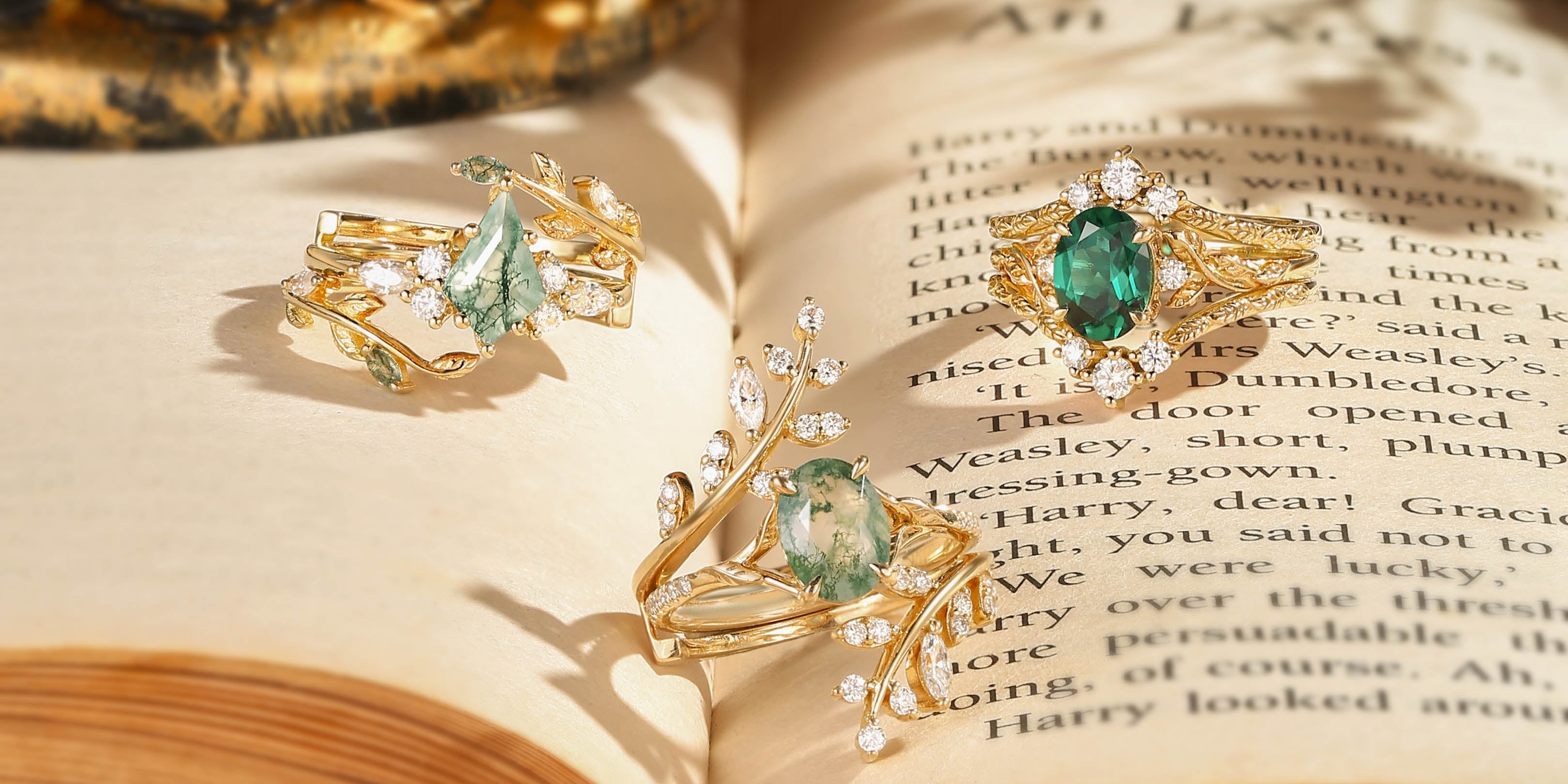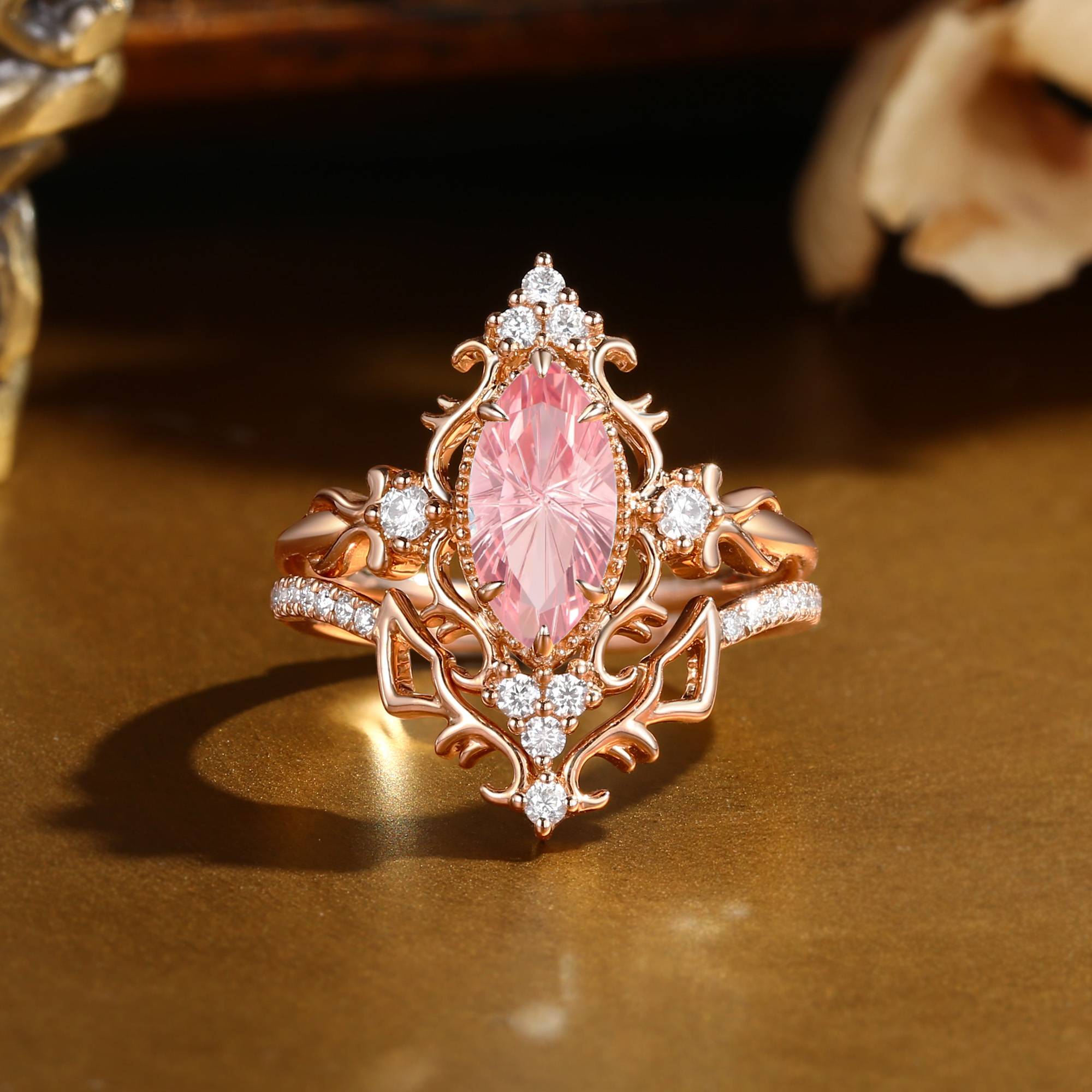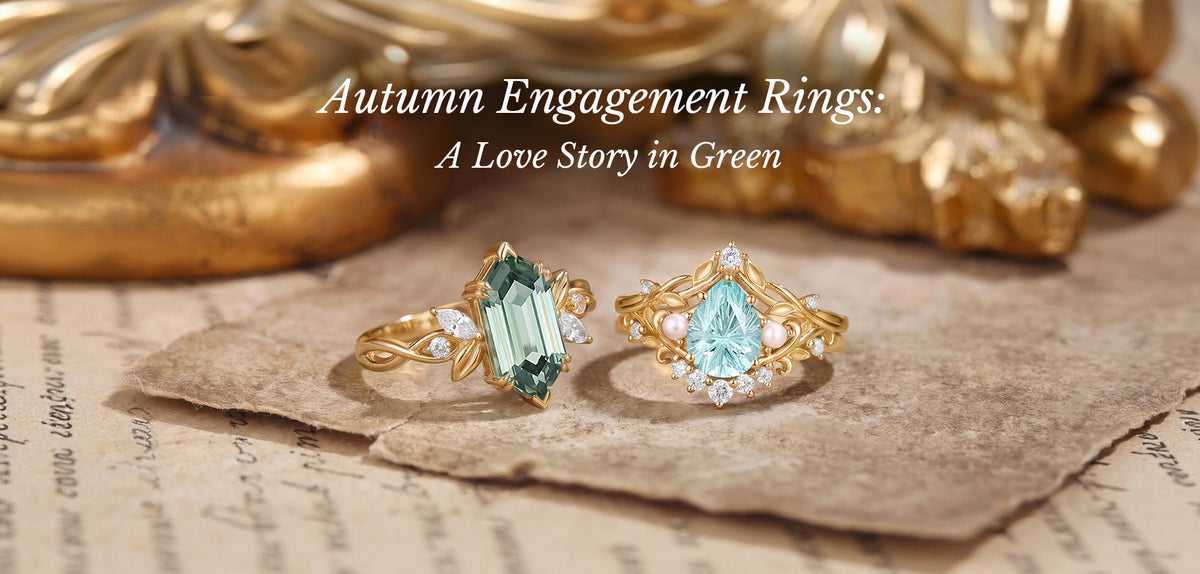
There is a particular kind of light in late October. It comes in low and amber, catches the edge of a gold band, and turns a green stone into something that looks lit from within. That is the moment most autumn proposals are built around — a walk that runs a little longer than planned, a coat pocket with something heavy in it, a question asked while the trees are doing their loudest, most beautiful work of the year.
If you are shopping for an autumn engagement ring, you have probably noticed that the usual suspects — clear diamonds, white gold, halo settings — feel a little out of step with the season. Green gemstones do not. They carry the color of the moment: moss after rain, fir needles, the deep cool green of a shaded pond. They also carry meaning. Green has long been associated with renewal, growth, and the quiet daily work of staying in love.
At BlingFlare, our green sapphire engagement rings and nature-inspired engagement rings are designed for exactly this kind of proposal — intimate, outdoor, and unmistakably personal. And if you are planning the whole set, our Celestine bridal set carries the same forest language from engagement ring to wedding band.
Table of Contents
- The Romance of an Autumn Proposal
- Why Green Gemstones Belong to Autumn
- Forest-Inspired Details in Engagement Rings
- Choosing Your Autumn Engagement Ring
- Discover BlingFlare's Green Gemstone Rings
The Romance of an Autumn Proposal
Autumn has become the quiet season of engagement. Summer proposals get the daylight and the beach photographs; December gets the holiday sparkle. October and November sit in between, and that is precisely the appeal. The crowds are gone from the trails. Restaurants are easier to book. The light is softer, the air is cooler, and everything outdoors looks like it was styled for a photograph.
There is also something about the season that makes people honest. Summer proposals can feel performative — a crowd, a sunset, an audience. An autumn proposal tends to be two people on a path, maybe with a dog, maybe with cold hands. The question arrives without much staging. That intimacy is worth designing around, and it is why so many of the couples we work with describe their proposal as “just us, somewhere quiet.”
The ring should match that register. A green stone in warm gold reads as understated in daylight and remarkable in candlelight — which is exactly the arc of a good proposal day. It does not shout across a room. It rewards a closer look, the way a good relationship does.
Consider the season's own palette. Autumn is usually described in rust, amber, ochre, and burgundy, but stand on an actual forest floor in October and you will find green everywhere: moss on north-facing bark, ferns that have not yet browned, the deep blue-green of a river under an overcast sky. Green is not a contrast to autumn. It is the constant underneath it — the color that stays while everything else turns. A green gemstone ring works the same way against a wardrobe of camel coats, wool, and leather: it grounds the whole picture instead of competing with it.
One customer, Emily R. from Portland, OR, put it this way: “We got engaged on a trail we'd hiked a dozen times. He had the ring in his jacket pocket for four miles. When he opened the box, the stone was this soft sea-green and it matched the moss on the trees behind him. I still can't look at it without seeing that trail.”
That is the standard we design against — a ring that does not merely mark an occasion but stores one. A photograph fades into a folder; a ring stays on a hand, in the weather, through every October that follows.


Why Green Gemstones Belong to Autumn
Color psychology is not a soft science here — it is a well-documented effect. Green sits in the middle of the visible spectrum, which is part of why the eye rests on it so easily. Studies of color preference consistently rank green among the most calming hues, associated with safety, restoration, and natural environments. In a season defined by transition, that association lands differently: green is what remains when everything else turns.
There is a practical argument too, and it matters more than any mood board. An engagement ring is worn every day for decades. It goes through dish soap, doorframes, gym lockers, and the inside of a winter glove. Whatever stone you choose has to survive that, and hardness is the single best predictor of whether it will.
The practical case for sapphire
Green sapphire is the most wearable choice in this category, and the reason is straightforward. Corundum — the mineral family that includes sapphire and ruby — rates 9 on the Mohs scale, placing it second only to diamond in hardness. The Gemological Institute of America notes that sapphire's durability makes it suitable for everyday wear in a way that softer stones are not. For a ring someone will wear for forty years, that matters more than any other specification.
Emerald, for all its beauty, sits at 7.5 to 8 and is famously included — the internal fractures that give it character also make it vulnerable to chipping. Tsavorite and green tourmaline are lovely and often less expensive, but they will show wear sooner. Peridot, at 6.5 to 7, is best kept to accent stones or protected settings. If you want the color of the season without the maintenance anxiety, green sapphire is the answer.
Green sapphire also has a quality that photographs badly and lives beautifully: pleochroism. Many stones shift between green, teal, and olive depending on the light, so the ring you put on at breakfast is not quite the ring you see by candlelight. It is the closest thing jewelry has to weather.
| Stone | Mohs Hardness | Best For | Color Range | Notes |
|---|---|---|---|---|
| Green sapphire | 9 | Daily wear, heirloom pieces | Mint to deep forest | Second only to diamond in hardness; excellent durability |
| Emerald | 7.5–8 | Statement and vintage styles | Vivid blue-green | Beautiful but brittle; needs a protective setting |
| Tsavorite garnet | 7–7.5 | Budget-friendly vivid green | Bright grass green | No treatment needed; smaller stones common |
| Green tourmaline | 7–7.5 | Large, dramatic center stones | Olive to teal | Great value per carat; softer for everyday wear |
| Peridot | 6.5–7 | Accent stones, casual rings | Yellow-green | Affordable; best in protected settings |
There is one more thing worth saying about color. Green stones behave differently against metal than white diamonds do. A diamond is a mirror; a green sapphire is a window. It absorbs some light and returns the rest slowly, which is why it looks softer in photographs and richer in person. If you have only seen green sapphires on a screen, the first thing you will notice in daylight is how much less “sparkly” and how much more “alive” they are.


Forest-Inspired Details in Engagement Rings
The difference between a green ring and a forest ring is in the details. A colored stone alone is a color choice. Add the right metalwork and it becomes a story — one that only reveals itself when someone is close enough to hold your hand.
Metal
Warm yellow gold is the natural pairing — it echoes late-afternoon light and makes green stones look richer rather than cooler. Rose gold pushes the palette toward dusk and flatters olive and sage tones especially well. White gold or platinum will make the green read sharper and more modern, which is a valid choice but a different mood: less woodland, more gallery.
Settings
Look for bezels with milgrain edging, which read as hand-finished rather than machine-perfect. Six-prong settings in a slightly raised profile let light into the stone, which matters most for deep greens that can look flat when boxed in. A low basket keeps the ring practical for hands that work.
Botanical motifs
Vine and leaf shoulders, tiny fern fronds tucked under the basket, a hidden leaf on the inside of the band. These are the details no one sees from across a table and everyone sees when they hold your hand. They are also what separates a mass-market ring from something that feels authored. Compare a stamped leaf pattern — repeated, identical, a little flat — with a carved one, where the depth varies because a person cut it. The difference is not decorative. It is the difference between a print and a drawing.
Side stones
Pearls bring a soft, vintage, almost Edwardian quality — they read as heirloom even when new. Small white diamonds or moissanite keep things brighter and more contemporary. A row of tiny green stones along the band creates a continuous thread of color that ties the whole piece together.
Finish
A lightly brushed or satin finish holds up better against daily wear and looks less “new.” High polish is beautiful in photographs and shows every scratch within a year. On a ring with carved botanical detail, a satin finish also deepens the shadows in the carving, which is what makes the leaves legible from a distance.
None of these choices is expensive on its own. What costs money is the combination done deliberately — a stone chosen for its hue, a setting chosen to protect it, and a motif chosen because it means something. That is the difference between a ring that is green and a ring that is autumnal.


Choosing Your Autumn Engagement Ring
Start with the stone, then the metal, then the setting — in that order. Most buyers do it backwards, fall in love with a setting, and end up compromising on the stone, which is the part that lasts.
Stone color. Mint and seafoam greens are the most versatile and photograph beautifully in natural light. Forest and deep blue-greens are more dramatic and look extraordinary against darker skin tones and in evening light. Olive and yellowish greens are the most unusual and the hardest to match to a wedding band later.
Stone shape. Pear and oval cuts elongate the hand and suit vintage-inspired designs. Round and cushion cuts are the most classic and easiest to pair with a straight wedding band. Emerald cuts (the shape, not the stone) look architectural and modern; marquise looks distinctly romantic. If you already know you want a vine or leaf band, a pear or marquise center will follow the curve of the metal more naturally than a square stone will.
Budget realism. Green sapphire typically costs less per carat than a comparable diamond — often substantially less — which means you can often afford a larger or finer stone at the same budget. That is one of the quiet advantages of going green, and it is the reason a one-and-a-half carat green sapphire is a realistic goal for couples who assumed they were limited to three-quarters of a carat.
| Style | Center Stone | Metal | Setting | Price Range |
|---|---|---|---|---|
| Vintage botanical | Pear-cut mint green sapphire, 1.2 ct | 14K yellow gold | Bezel with pearl sides | $1,400 – $2,200 |
| Classic solitaire | Oval green sapphire, 1.5 ct | 18K yellow gold | Six-prong, milgrain | $1,600 – $2,600 |
| Modern minimal | Round green sapphire, 1.0 ct | Platinum | Low-profile bezel | $1,800 – $2,800 |
| Heirloom-inspired | Cushion green sapphire, 1.8 ct | 14K rose gold | Halo with diamond accents | $2,200 – $3,400 |
One last piece of advice about timing. Made-to-order rings are not instant, and an autumn proposal has a hard deadline built into it. If you are aiming for October, order by early September. If the date is already close, choose a design that is in stock rather than custom, and plan the engraving for afterward — most jewelers, including us, will happily add it later.


Discover BlingFlare's Green Gemstone Rings
At BlingFlare, every green ring starts with the stone. We hand-select sapphires for color saturation and clarity before a single sketch is drawn, which is why our greens tend toward the moss and seafoam end of the spectrum rather than the flat bottle-green that cheaper supply chains settle for. Our pieces are made in small batches in 14K and 18K gold, with botanical details carved rather than stamped, and each ring is finished by hand.
That approach has practical consequences. A carved vine has depth, so it catches light and shadow the way a real stem does. A hand-finished band has a slightly irregular surface, so it wears into a patina instead of collecting scratches. And because we work in small batches, we can adjust a design — a narrower band, a lower basket, a different stone shape — without turning it into a six-month custom commission.
We also offer resizing and engraving on every order, because a ring you plan to wear for decades should fit the person, not the other way around. If you are choosing a matching band, ordering both at once is the simplest way to guarantee the profiles sit flush.
- Hand-selected stones: every sapphire is chosen for hue and clarity before setting.
- Carved, not stamped: botanical detail is cut into the metal, not pressed into it.
- Small-batch production: made to order in three to four weeks; hand-carved designs take five to six.
- Resizing and engraving: available at the time of order and after purchase.
Frequently Asked Questions
Are green sapphires good for engagement rings?
Yes — they are one of the best non-diamond options available. Green sapphire is corundum, rated 9 on the Mohs hardness scale, which means it resists scratching and chipping far better than emerald, opal, or pearl. It requires no special care beyond normal cleaning and is suitable for daily wear.
Can you put a green stone in a yellow gold setting?
Absolutely — and it is our most popular combination. Yellow gold warms the green and makes it read as richer and more natural. White metals make green look cooler and sharper; both work, but they create different moods.
Do green sapphires change color in different lighting?
Some do, particularly stones with a blue-green or teal modifier. This is called pleochroism and is considered a feature, not a flaw — the stone shifts between green and blue depending on the light. Ask for a video in both daylight and indoor light before buying.
What ring size should I order if I'm surprising her?
Order her actual size if you can find it from an existing ring. If not, order a half size up — it is far easier to size a ring down than up, and a slightly loose ring can be worn immediately on the day.
How long does a custom green sapphire ring take?
Our made-to-order pieces typically ship in three to four weeks. Custom designs with hand-carved details take five to six. If you are planning an autumn proposal, order by early September to leave room for sizing.
Can I engrave a ring after purchase?
Yes. We engrave at the time of order and also offer after-purchase engraving on any BlingFlare ring — just contact us for a shipping label. Inner-band engravings are limited to about 30 characters depending on the font.
If you know someone planning an autumn proposal, send them this guide — the right ring is easier to find when you know what you are looking for. Ready to start? Browse our green sapphire rings or explore the leaf ring collection, and let BlingFlare help you find the one that looks like it grew there.