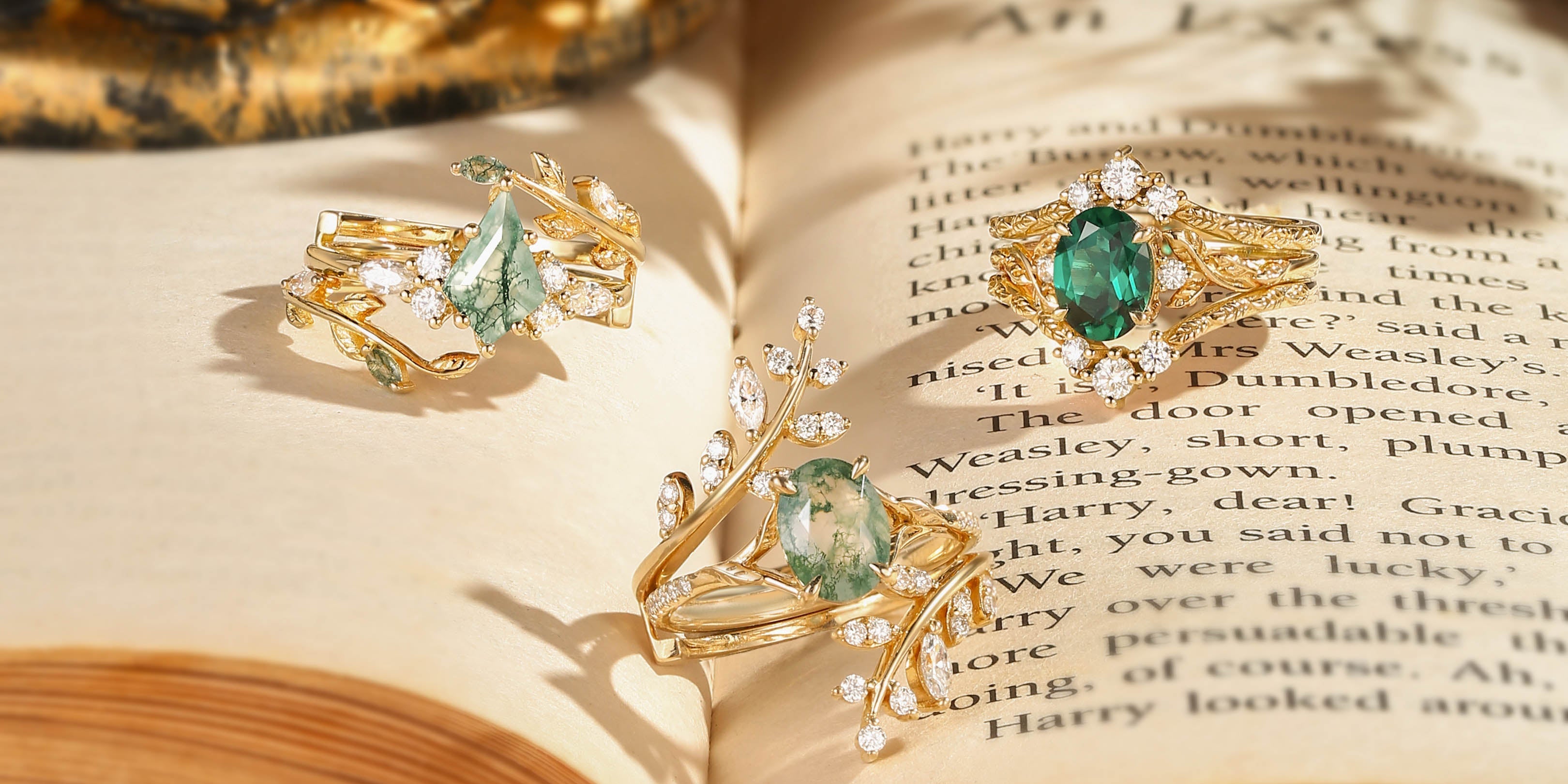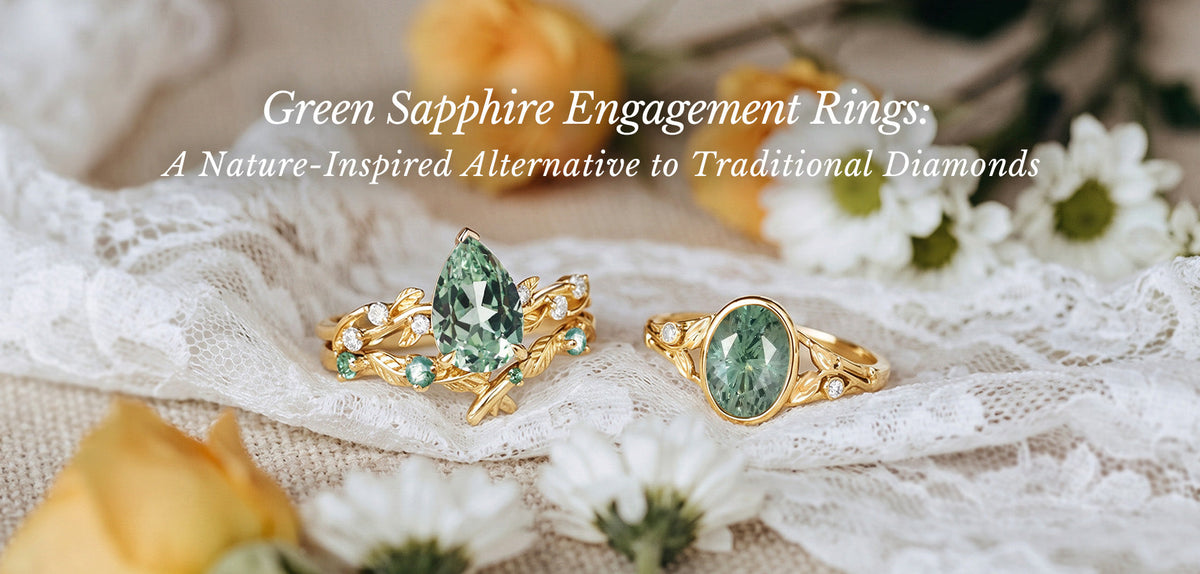
If you have been scrolling through endless rows of identical colorless diamonds and feeling like none of them say you, a green sapphire engagement ring might be exactly the breath of fresh air you have been looking for. Deep in the heart of every green sapphire ring lives a quiet kind of magic: the color of new leaves, mossy forest floors, and sunlit seas. It is a gemstone that feels alive — and for a growing number of modern couples, that is precisely the point. Whether you are drawn to a nature-inspired engagement ring with delicate vine details or you simply want a stone that no one else at the table is wearing, a green sapphire offers rarity, durability, and personality in a single dazzling package.
At BlingFlare, we have spent years studying the way light moves through colored gemstones, and green sapphires remain one of our favorite canvases. In this guide, we will walk through everything a thoughtful buyer wants to know — the science behind the color, the symbolism, how these stones compare to traditional diamonds, and exactly how to choose the perfect one for your hand and your story. Let's begin.
Table of Contents
- Beyond the Traditional Diamond Engagement Ring
- The Natural Beauty of Green Sapphires
- What Green Sapphire Engagement Rings Symbolize
- Green Sapphires vs. Traditional Diamonds
- Choosing the Perfect Green Sapphire Engagement Ring
- Discover BlingFlare's Nature-Inspired Engagement Rings
Beyond the Traditional Diamond Engagement Ring
For the better part of a century, the diamond solitaire has been the default answer to the question, "What should an engagement ring look like?" That monopoly was built partly on genuine admiration for the diamond's brilliance and partly on one of the most successful marketing campaigns in history. But today's couples are asking different questions. They want to know where their stone came from. They want something that reflects a shared aesthetic, not a shared script. And increasingly, they are falling in love with colored gemstones — sapphires, emeralds, moissanites, alexandrites, and morganites — that tell a more personal story.
There are three quiet forces pushing this shift. First, price transparency. A naturally mined one-carat diamond of fine quality can easily run into the thousands, and the price climbs steeply with size. Many couples would rather put that budget toward a home, a honeymoon, or simply a larger, more spectacular colored stone. Second, ethics and provenance. Even with the Kimberley Process in place, some buyers remain uneasy about the social and environmental footprint of large-scale diamond mining. Lab-grown options — which are chemically and optically identical to mined stones — have made "known origin" a mainstream expectation. Third, and perhaps most romantically, individuality. When everyone you know has a round brilliant diamond, a sapphire in a shade of green that reminds you of a favorite hiking trail becomes an act of self-expression.
This is why colored-stone engagement rings have moved from the edges of the market to its center. Celebrities, designers, and everyday couples alike have embraced gems that feel less like a status symbol and more like a signature. A green sapphire sits comfortably in that movement: it is rare enough to feel special, hard enough to wear every day, and unusual enough that people will stop and ask about it — which, let's be honest, is half the fun.
If you are exploring this path for the first time, our comparison below will help you weigh the trade-offs. And if the idea of a ring that borrows its beauty from the natural world appeals to you, keep reading — because the green sapphire might just be the beginning of a lifelong love affair.
The Natural Beauty of Green Sapphires
Green sapphire belongs to the corundum family — the very same mineral that gives us ruby (red corundum) and blue sapphire. What separates sapphire from ruby is simply the trace element doing the coloring. In blue sapphires, it is iron and titanium. In green sapphires, it is a fascinating mix of iron, titanium, and sometimes chromium, each one nudging the hue in a different direction. The result is a stone whose color can shift from a pale, cool mint to a velvety olive, from a deep forest green to a luminous blue-green that flashes teal in certain light.
That range is exactly what makes green sapphires so captivating. Unlike a diamond, which is prized for its absence of color, a green sapphire is celebrated for the character within its color. Some stones show pleochroism — meaning they display slightly different hues when viewed from different angles, so your ring can look olive in the morning and seafoam in candlelight. Collectors often describe the finest green sapphires as having a "glow from within," a gentle inner fire that feels warmer and more organic than the icy sparkle of a diamond.
On the practical side, green sapphire is exceptionally tough. It scores a 9 on the Mohs hardness scale — second only to diamond at 10 — which means it resists scratching far better than softer gems like emerald, opal, or tanzanite. For an engagement ring that will be worn daily through dishes, door handles, and decades of life, that durability is not a small thing. It is the difference between a ring you treasure and a ring you baby. Green sapphire lets you do both.
Green sapphires are also available in both natural and lab-grown forms. Natural stones carry the one-of-a-kind fingerprint of the earth, while lab-grown green sapphires offer the same optical and chemical properties at a more accessible price, with a lighter environmental footprint. Either way, you are getting a gem with genuine depth — a stone that rewards a close look.


What Green Sapphire Engagement Rings Symbolize
Every gemstone carries a language of its own, and green sapphire speaks in the vocabulary of growth. Green has long been the color of renewal and vitality — the first buds of spring, the steady unfolding of a fern, the quiet persistence of moss on stone. When you choose a green sapphire for your engagement ring, you are borrowing that symbolism for your relationship. It says: we are growing, we are alive, and we intend to keep becoming.
Across cultures, green is also associated with healing, balance, and harmony. It is the color of the heart chakra in many traditions, and it is frequently linked to calm, compassion, and emotional steadiness. For couples who value partnership over spectacle, who want a marriage built on trust and quiet strength, a green stone feels like an honest choice. It does not shout. It resonates.
Green sapphire is also one of the modern September birthstones, which gives it a personal layer for anyone born in that month. But its appeal reaches far beyond birthdays. Because green appears everywhere in nature — in leaves, in water, in stone — a green sapphire pairs naturally with the nature-inspired, leafy, vine, and botanical ring designs that have become so popular in recent years. A stone that looks like the forest, set in a band that looks like a branch: it is a design idea that feels less like a trend and more like a return to something timeless.
Many couples find that this symbolism deepens the longer they wear the ring. What begins as a beautiful green stone slowly becomes a private reminder of the promises made on the day it was given — a daily touchstone that says, quietly and without fanfare, that you are still choosing each other.
There is something quietly romantic about a gemstone that changes with the light. As your relationship moves through seasons — bright ones and dim ones, celebrations and ordinary Tuesdays — your green sapphire will shift and shimmer right alongside it, never quite the same twice. That is a fitting metaphor for love itself.
Green Sapphires vs. Traditional Diamonds
If you are weighing a green sapphire against the classic diamond, it helps to line them up side by side. Both are exceptional gemstones, but they win in different categories. The table below summarizes the essentials.
| Attribute | Green Sapphire | Traditional Diamond |
|---|---|---|
| Rarity | Fine green sapphires are genuinely scarce; each stone's hue is unique | Common in commercial grades; truly exceptional stones are rare and costly |
| Price (1 carat, fine quality) | Generally more affordable than comparable diamonds, leaving budget for a bigger stone or a more detailed setting | Often the highest cost per carat among colorless stones |
| Hardness (Mohs) | 9 — excellent for everyday wear | 10 — the hardest natural material |
| Color | Mint, olive, forest, teal, and blue-green; rich and distinctive | Typically colorless by design; color is viewed as a defect |
| Source | Available naturally and lab-grown, with a growing preference for known-origin lab stones | Available naturally and lab-grown; origin and ethics are frequent buyer concerns |
| Symbolism | Growth, renewal, harmony, nature, the September birthstone | Eternal love, purity, unbreakable commitment |
Rarity. Because green sapphires form under a specific combination of trace elements, stones with a truly beautiful green are harder to come by than commercial diamonds. This gives a green sapphire a sense of discovery. When you find "the one," you genuinely have found something few others will ever own.
Price. Dollar for dollar, a green sapphire typically lets you buy more stone for your money. Many couples redirect the savings into a larger center stone or a more intricate, handcrafted setting — which is how you end up with a ring that looks like a piece of art rather than a line item.
Durability. A diamond is unbeatable at a 10 on the Mohs scale, but a sapphire's 9 is more than enough for daily life. Only a diamond (or another sapphire) can realistically scratch a sapphire. For a ring you will wear for fifty years, this is a non-issue in practice.
Color and personality. This is where green sapphire runs away with it. A diamond is designed to be neutral; a green sapphire is designed to be noticed. It carries warmth and individuality that a colorless stone simply cannot.
Ethics and source. Both gemstones are now widely available in lab-grown form. Lab-grown stones are chemically and optically identical to their mined counterparts and offer a transparent, traceable origin — a factor that matters deeply to many modern couples.


Choosing the Perfect Green Sapphire Engagement Ring
Finding the right green sapphire ring is less about following rules and more about following your instincts — with a little technical guidance to make sure those instincts hold up over time. Here is how to approach each decision.
Start with your budget. Because green sapphires cost less per carat than comparable diamonds, you have unusual freedom here. Decide whether your priority is a larger center stone, a more elaborate setting, or a balance of both. A beautifully cut one-carat green sapphire in a detailed setting can look far more striking than a smaller, plainer diamond — and it will feel more personal.
Think about skin tone. Color is deeply affected by the skin it sits against. Cool-toned skin (pink or bluish undertones) tends to make mint, seafoam, and cool teal greens sing, especially when paired with white gold or platinum. Warm-toned skin (golden or olive undertones) flatters olive, forest, and deep greens, which glow against yellow or rose gold. Neutral tones are lucky — almost any green works. If you are unsure, try on a few stones in natural daylight and watch how your skin responds.
Choose your metal. Yellow gold warms a green stone and feels romantic and vintage. White gold and platinum cool it down, emphasizing the icy, modern end of the green spectrum. Rose gold adds a soft blush that complements olive and sage tones beautifully. There is no wrong answer — only the one that matches the vibe of the person wearing it.
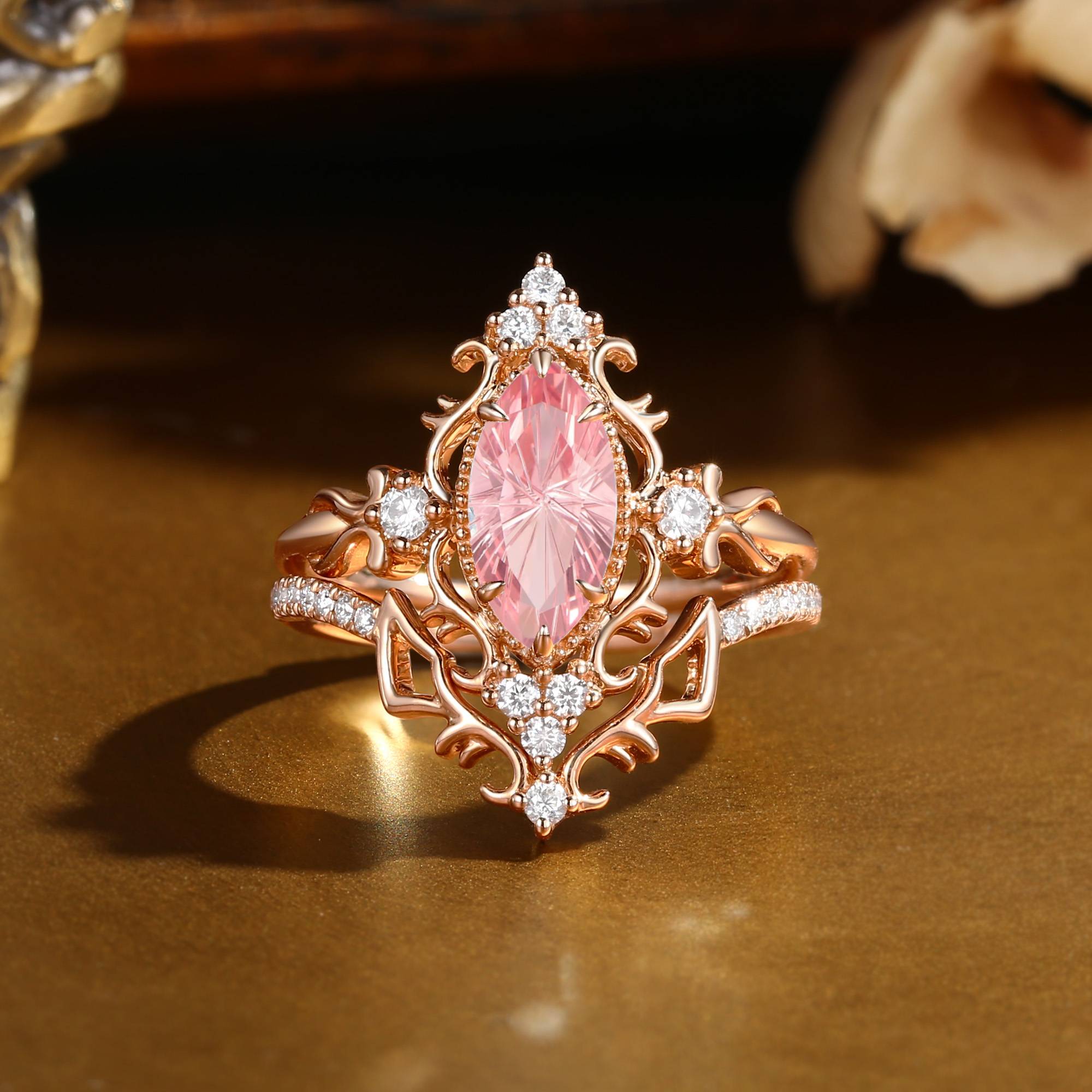
Select a cut. The cut shapes how light moves through the stone and how large it appears. Ovals and pears are flattering and elongate the finger. Rounds offer the most classic sparkle. Emeralds give a sleek, architectural elegance. Marquise cuts feel regal and vintage. And then there is the firework cut, a specialty cut that scatters light into a unique burst pattern for maximum individuality — a signature of nature-inspired designs. If you want a ring that looks like no other, a firework-cut green sapphire is a wonderful place to start.
Match your lifestyle and setting. Consider how you live. A high-profile setting is dramatic but can catch on clothing; a low, bezel-set, or partially protected setting is more practical for active hands. Prong settings show more of the stone and let in more light, while bezels add security. If you work with your hands, tell your jeweler — they can recommend a setting that protects the gem without hiding it.
Finally, look at the stone itself in different lighting. A great green sapphire will hold its color in daylight, indoors, and candlelight. If you love it in all three, you have found your ring.


Discover BlingFlare's Nature-Inspired Engagement Rings
At BlingFlare, green sapphires and botanical design are a natural pairing. Our collection is built around rings that borrow their shapes from the living world — twisted vines, filigree leaves, oak and fern motifs — set with hand-selected green sapphires that we choose for their depth of color and beauty. Every stone is hand-selected and verified by our team before it becomes part of a design, because a ring this personal deserves a stone chosen with care rather than picked at random.
We work primarily with lab-grown gemstones, which offer the same optical and chemical properties as their mined counterparts — with a known origin and a lighter footprint. For those who prefer a natural stone, we also offer genuine green and blue-green sapphire designs. Whichever you choose, you get the same commitment to craftsmanship: settings finished by hand, details that reward a close look, and a ring made to be worn every single day.
We also want buying to feel as joyful as the ring itself. Here is how we handle the practical side:
- Free resizing for one year: We offer one free ring resizing within one year of purchase, up to ±1 size.
- 30-day returns for quality issues: If something is wrong with your ring due to a manufacturing issue, you may return it within 30 days.
- Change-of-mind returns: For personal (non-quality) reasons, returns are accepted with a 30% deduction.
- Custom and engraved pieces: Custom-made and engraved rings are final sale and cannot be returned.
Have a design in mind that you have not seen yet? Our team loves a creative challenge. Reach out and we will help you dream up a ring that could only belong to you.


Frequently Asked Questions
Are green sapphire engagement rings durable enough for everyday wear?
Yes. Green sapphire measures 9 on the Mohs hardness scale, second only to diamond. It resists scratching extremely well and is tough enough for daily wear, making it one of the most practical colored gemstones for an engagement ring.
Is a natural green sapphire better than a lab-grown one?
Not necessarily. Lab-grown green sapphires have the same chemical composition and optical properties as natural stones, and they offer a known origin and a lighter environmental footprint. Natural stones are one of a kind and carry the earth's unique fingerprint. The best choice is whichever aligns with your values and budget.
How do I clean a green sapphire ring?
Warm water, a mild dish soap, and a soft toothbrush are all you need. Gently scrub around the setting, rinse, and pat dry with a soft cloth. Avoid harsh chemicals and ultrasonic cleaners if your ring has delicate filigree or a pearl accent.
What metal looks best with a green sapphire?
It depends on the look you want. Yellow gold warms the stone for a romantic feel, white gold and platinum cool it for a modern edge, and rose gold complements olive and sage tones with a soft blush. There is no wrong choice — only the one you love.
Can a green sapphire change color?
Some green sapphires show pleochroism, meaning they display slightly different hues from different angles or under different lighting. This is a natural, admired characteristic — not a defect — and it gives the stone a living, shifting quality.
Can a green sapphire ring be resized?
Yes. At BlingFlare, we offer one free resizing within one year of purchase, up to ±1 size. Custom-made and engraved rings are an exception and cannot be resized or returned, so it is worth confirming your size carefully before ordering.
Related Reading
- The Complete Guide to Green Sapphires
- Why Nature-Inspired Wedding Rings Are More Popular Than Ever
- How to Choose Gemstone Colors by Skin Tone: The Ultimate Guide
Ready to find the green sapphire that feels like yours? Browse our green sapphire engagement rings or explore our nature-inspired designs, and let BlingFlare help you say forever in a color that is unmistakably you.