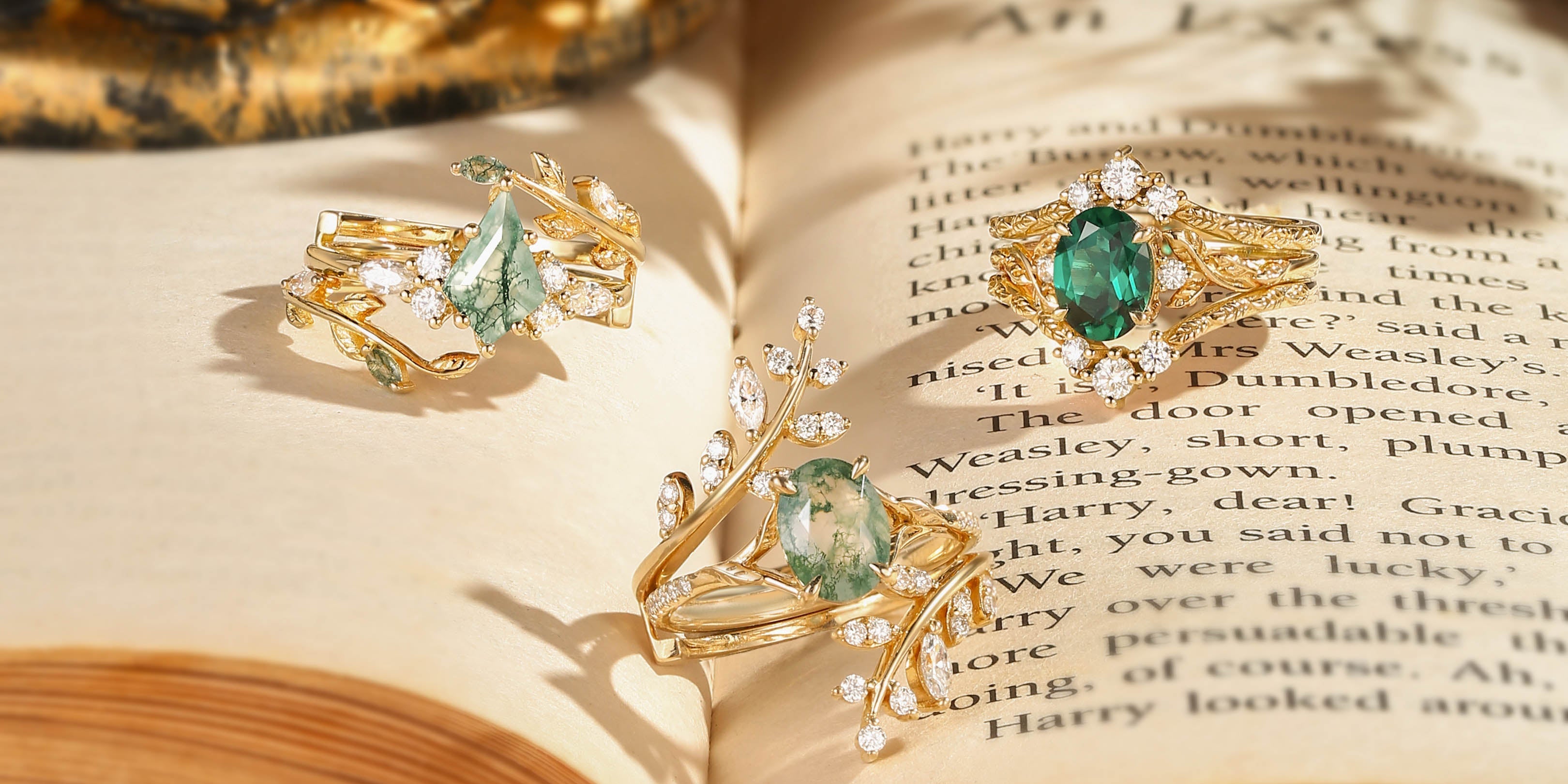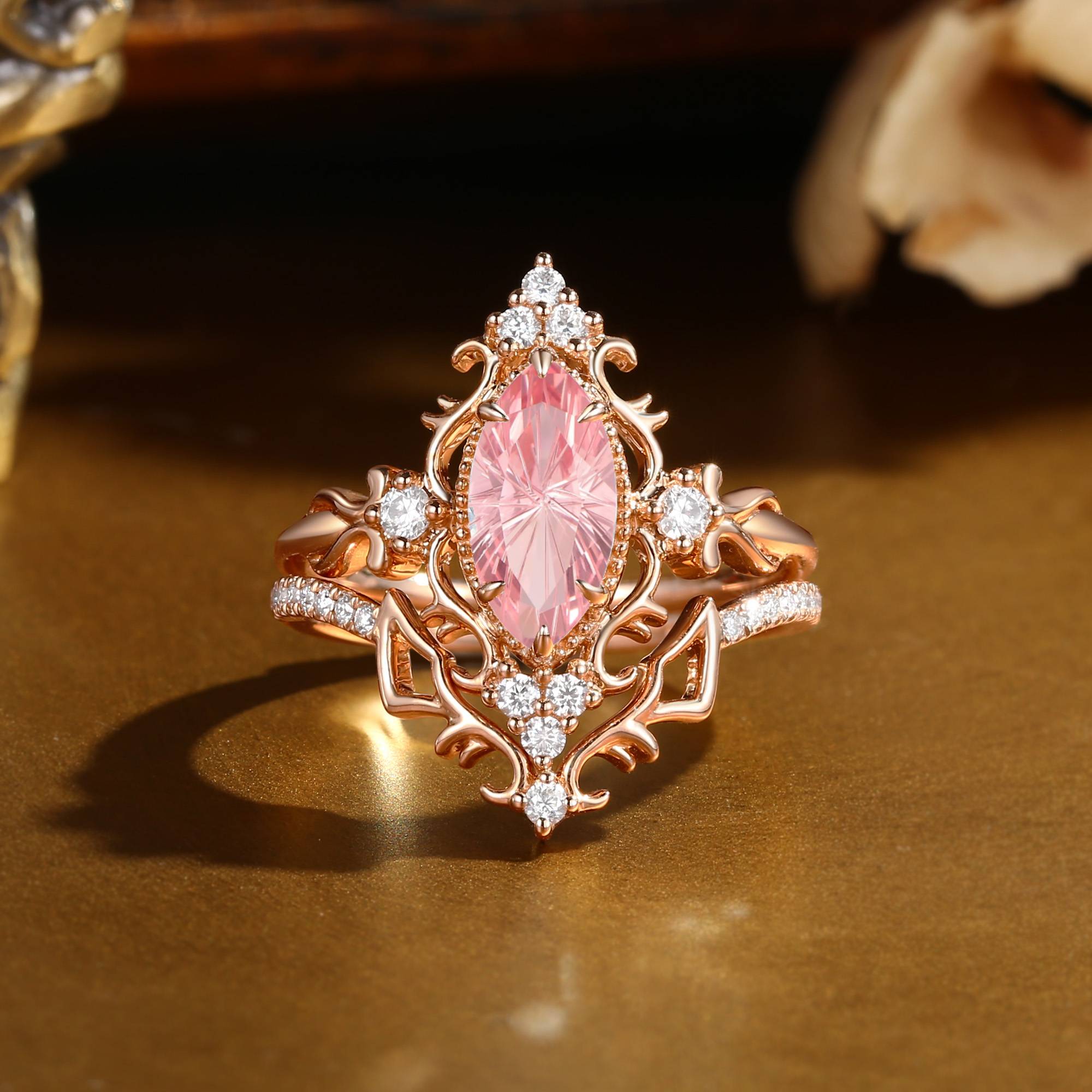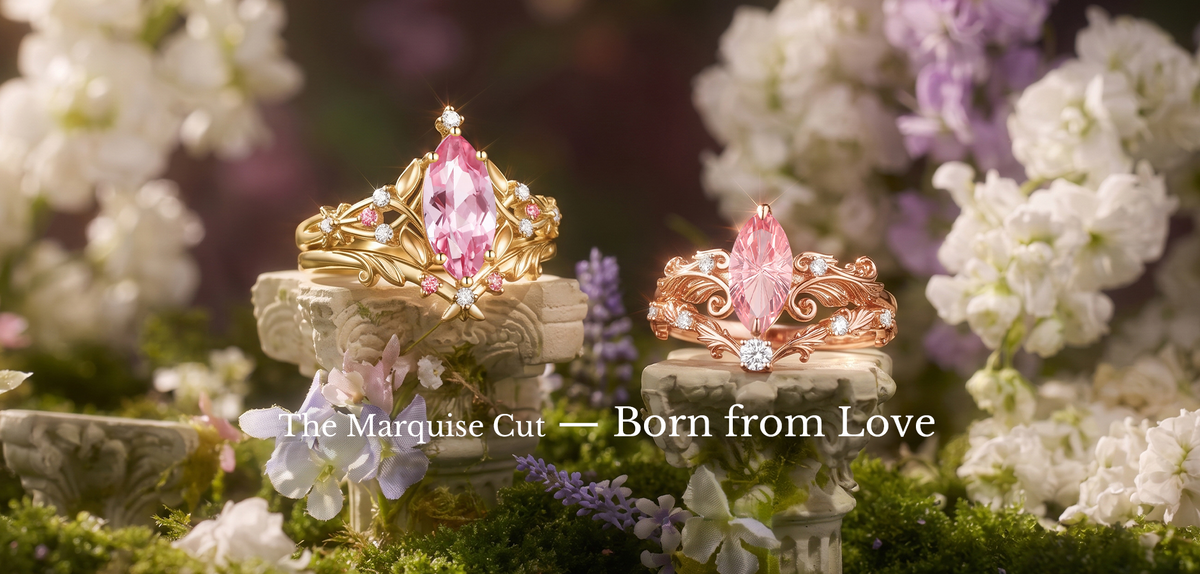
If you've been dreaming of an engagement ring that feels both timeless and unmistakably regal, the marquise cut might be your perfect match. At BlingFlare, we believe every gemstone tells a story — and few cuts narrate romance quite like the marquise. With its elongated silhouette, pointed ends, and aristocratic heritage, the marquise cut has captivated royalty and modern brides alike for centuries. In this guide, we'll explore the fascinating history behind this exquisite shape, why it continues to stand out in the world of fine jewelry, and how two of our latest creations — the Faith and Rhea collections — bring this legendary cut to life in breathtaking padparadscha sapphire.
Table of Contents
- The Romantic History of the Marquise Cut
- Why Marquise Cut Stands Out
- Marquise vs. Oval: Key Differences
- Padparadscha Sapphire: The Rare Beauty
- How to Choose Your Marquise Ring
- Styling Tips for Marquise Cut Rings
- FAQ
The Romantic History of the Marquise Cut
The marquise cut traces its origin to 18th-century France, where King Louis XV commissioned a diamond to be cut in the shape of the lips of his beloved mistress, Jeanne Antoinette Poisson — better known as the Marquise de Pompadour. The result was a gemstone shape so elegant and distinctive that it took on her title and became known as the "marquise cut."
This romantic origin gives the marquise an aura no other cut can match. It was literally born from love — a king's tribute to the woman who enchanted him. The elongated shape with its two delicate points carries a natural sense of grandeur and sophistication, which is why it has remained a favorite among European aristocracy and, later, celebrity brides around the world.
Today, BlingFlare continues this tradition of romantic elegance by pairing the marquise silhouette with rare gemstones like padparadscha sapphire — creating rings that feel both historically rich and refreshingly modern.
Why Marquise Cut Stands Out
There are practical reasons to love the marquise cut that go well beyond its storied past:
- Larger face-up appearance: A marquise cut stone appears 10–15% larger than a round brilliant of the same carat weight because of its elongated shape. You get more visual impact per carat.
- Flattering finger elongation: The tapered points create an optical illusion that makes fingers look longer and more slender — one of the most sought-after effects in ring design.
- Unmatched recognition: In a sea of round and princess cuts, the marquise instantly catches the eye. Its distinctive silhouette is conversation-worthy and impossible to overlook.
- Versatile proportions: With length-to-width ratios typically ranging from 1.75:1 to 2.25:1, you can choose a marquise that feels classic or dramatically elongated — whatever suits your style.
- Brilliance with character: The marquise features a modified brilliant faceting pattern that delivers fiery sparkle while maintaining the unique personality of its shape.
Our Faith — Floral Fairy Marquise Cut Padparadscha Sapphire Leafy Bridal Set captures this brilliance beautifully, wrapping the marquise centerstone in a whimsical leafy design that echoes the natural elegance of the cut itself.


Marquise vs. Oval: Key Differences
Both marquise and oval cuts are elongated shapes that maximize face-up size and flatter the hand. But there are key differences that make each one special:
| Feature | Marquise Cut | Oval Cut |
|---|---|---|
| Shape | Elongated with two pointed ends | Elongated with rounded ends |
| Typical L/W ratio | 1.75:1 – 2.25:1 | 1.35:1 – 1.55:1 |
| Face-up area vs. round | +10–15% larger | +5–10% larger |
| Bow-tie effect | Less common | More visible in some stones |
| Finger elongation | Maximum — pointed tips create dramatic length | Moderate — soft curves |
| Style character | Romantic, regal, bold | Classic, understated, versatile |
If you want maximum visual drama and a shape that commands attention, the marquise is your pick. If you prefer something softer and more understated, the oval is a beautiful choice. The good news? At BlingFlare, you'll find both — and our marquise options, like the Rhea collection, bring an unmatched level of artistry to the pointed silhouette.
Padparadscha Sapphire: The Rare Beauty
Not all sapphires are blue. The padparadscha sapphire — named after the Sinhalese word for "lotus flower" — is one of the rarest and most coveted gemstone colors in the world. It displays a mesmerizing blend of pink and orange hues, reminiscent of a tropical sunset or the delicate petals of a lotus blossom.
Traditionally found only in Sri Lanka, natural padparadscha sapphires of fine quality can rival fine rubies and emeralds in value. Today, lab-created padparadscha sapphires offer the same breathtaking color and physical properties at an accessible price — making this once-unreachable dream stone available to modern brides.
Pairing padparadscha sapphire with the marquise cut is a masterstroke. The elongated shape showcases the stone's delicate pink-orange gradient across a larger surface area, allowing the sunset color to truly sing. Both our Faith and Rhea designs feature marquise-cut padparadscha sapphires as their centerpiece — a choice that is as rare as it is romantic.


How to Choose Your Marquise Ring
Choosing a marquise cut ring involves a few considerations unique to this shape:
1. Length-to-Width Ratio
The ideal ratio depends on personal taste. A ratio of 1.75:1 to 2.0:1 offers a classic, balanced look. Ratios above 2.0:1 create a more dramatic, elongated appearance. Try different ratios to see what feels right on your hand.
2. Symmetry
Because the marquise has two pointed tips, symmetry is critical. The two halves should be mirror images. If the tips don't align or one side appears heavier, the stone will look off-center even when set perfectly.
3. Bow-Tie Effect
Some marquise stones show a dark "bow-tie" shadow across the center when viewed face-up. A slight bow-tie is normal, but a prominent one can dull the stone's brilliance. Choose a stone with minimal bow-tie for maximum sparkle.
4. Point Protection
The pointed tips of a marquise are the most vulnerable areas. Look for settings with V-prongs or bezels that wrap the tips in metal for protection. Both our Faith and Rhea designs include thoughtful tip protection as part of their design language.
5. Color and Clarity
The elongated table of a marquise cut makes color more visible — which is why padparadscha sapphire is such a stunning choice. Its pink-orange hue is displayed across a wide canvas, creating a captivating wash of color. For clarity, aim for eye-clean stones where inclusions aren't visible to the naked eye.
Styling Tips for Marquise Cut Rings
The marquise cut is inherently dramatic, and how you style it can amplify or balance its bold presence:
- E/W orientation: The traditional setting has the marquise pointing north-south (along the finger), which maximizes the finger-elongating effect. For a modern twist, some designers set the marquise east-west — a striking, unconventional look.
- Halo vs. solitaire: A diamond halo adds extra sparkle and can make the center stone appear even larger. A solitaire setting lets the marquise's pure silhouette speak for itself — ideal for minimalist aesthetics.
- Botanical settings: The marquise shape pairs beautifully with nature-inspired bands. Leaf motifs, vine details, and acanthus patterns echo the organic elegance of the cut. Our Faith set features a floral fairy design with leafy bands, while Rhea draws on vintage acanthus leaf patterns.
- Mixed metals: Rose gold enhances the warm pink-orange tones of padparadscha sapphire. Yellow gold gives a classic, vintage feel. White gold or platinum offers a cool, contemporary contrast.
- Stacking: A marquise engagement ring can be beautifully paired with a contoured wedding band that nests against its tapered points. Both Faith and Rhea come as two-piece bridal sets, so the matching band is already designed to fit perfectly.
- Keep it balanced: Because the marquise is a statement shape, keep other jewelry understated. Simple studs or a delicate pendant let your ring be the star of the show.
FAQ
Is a marquise cut engagement ring durable enough for everyday wear?
Yes, with the right setting. The pointed tips of a marquise are the most vulnerable areas, so choose a ring with protective V-prongs or bezel tips at each end. Sapphire (whether natural or lab-created) scores a 9 on the Mohs hardness scale, making it one of the most durable choices for daily wear — second only to diamond.
Does a marquise cut make my fingers look longer?
Absolutely. The elongated shape and pointed ends of a marquise cut create a powerful optical illusion that makes fingers appear longer and more slender. This is one of the most celebrated benefits of choosing a marquise over a round or cushion cut.
What is a padparadscha sapphire?
Padparadscha sapphire is an exceptionally rare variety of sapphire that displays a unique blend of pink and orange hues, reminiscent of a lotus flower or tropical sunset. The name comes from the Sinhalese word for lotus. Lab-created padparadscha sapphires offer the same chemical composition, color, and durability as their natural counterparts at a more accessible price point.
How is a marquise cut different from an oval cut?
While both are elongated shapes, the marquise has two pointed ends whereas the oval has rounded ends. The marquise typically has a higher length-to-width ratio (1.75:1–2.25:1 vs. 1.35:1–1.55:1), which creates more dramatic finger elongation. The marquise also appears 10–15% larger face-up than a round stone of the same carat weight.
What setting style works best with a marquise cut?
Settings with V-prongs or bezel tips at the pointed ends are essential for protection. Beyond that, marquise cuts work beautifully with nature-inspired designs (leaves, vines, florals), vintage styles, and solitaire settings. Both our Faith (floral fairy) and Rhea (vintage acanthus) designs are specifically crafted to complement the marquise silhouette.
Can I customize the metal color for a marquise sapphire ring?
Yes. Marquise cut sapphires look stunning in a variety of metals. Rose gold complements the warm pink-orange tones of padparadscha sapphire beautifully. Yellow gold adds vintage warmth. White gold or platinum creates a modern, elegant contrast. All BlingFlare rings can be customized — reach out to our team to discuss your preferences.
What carat size should I choose for a marquise cut?
Because the marquise cut's elongated shape makes it appear larger than a round stone of the same carat weight, you can often choose a slightly lower carat and still achieve impressive visual size. A 1.0-carat marquise typically measures about 10mm in length and looks comparable to a 1.25-carat round. Consider the ring's proportions and your finger size when choosing — our design specialists can help you find the perfect balance.