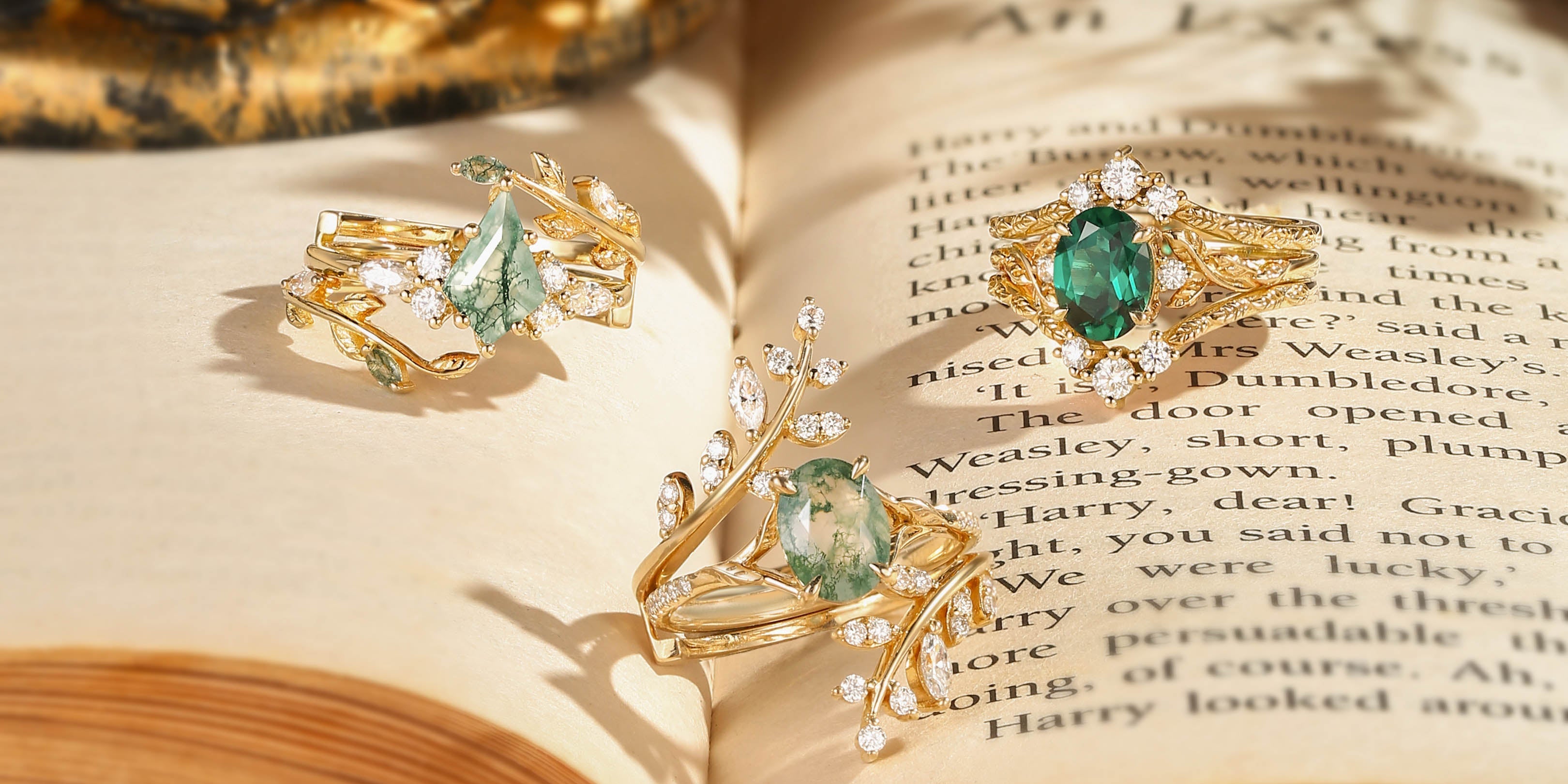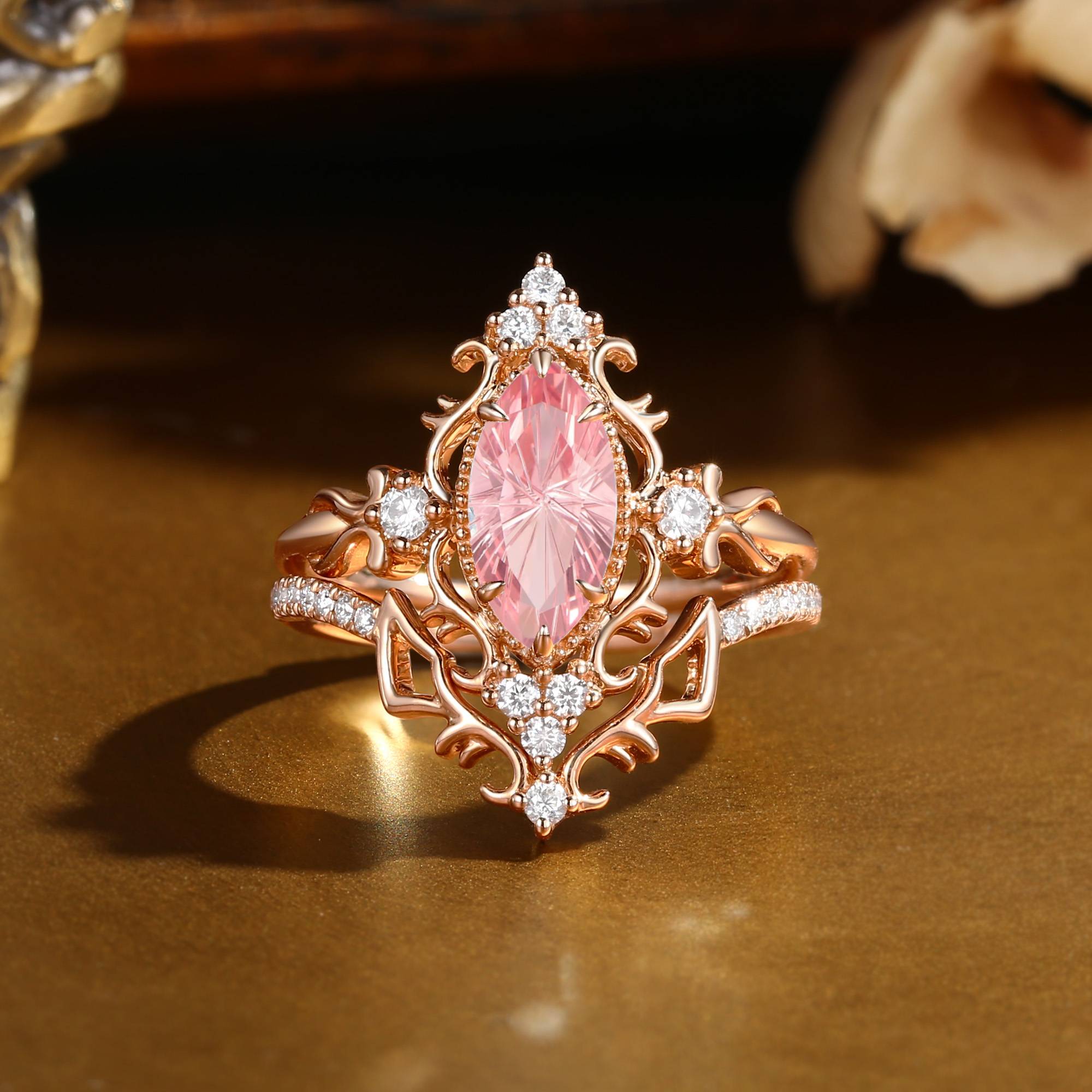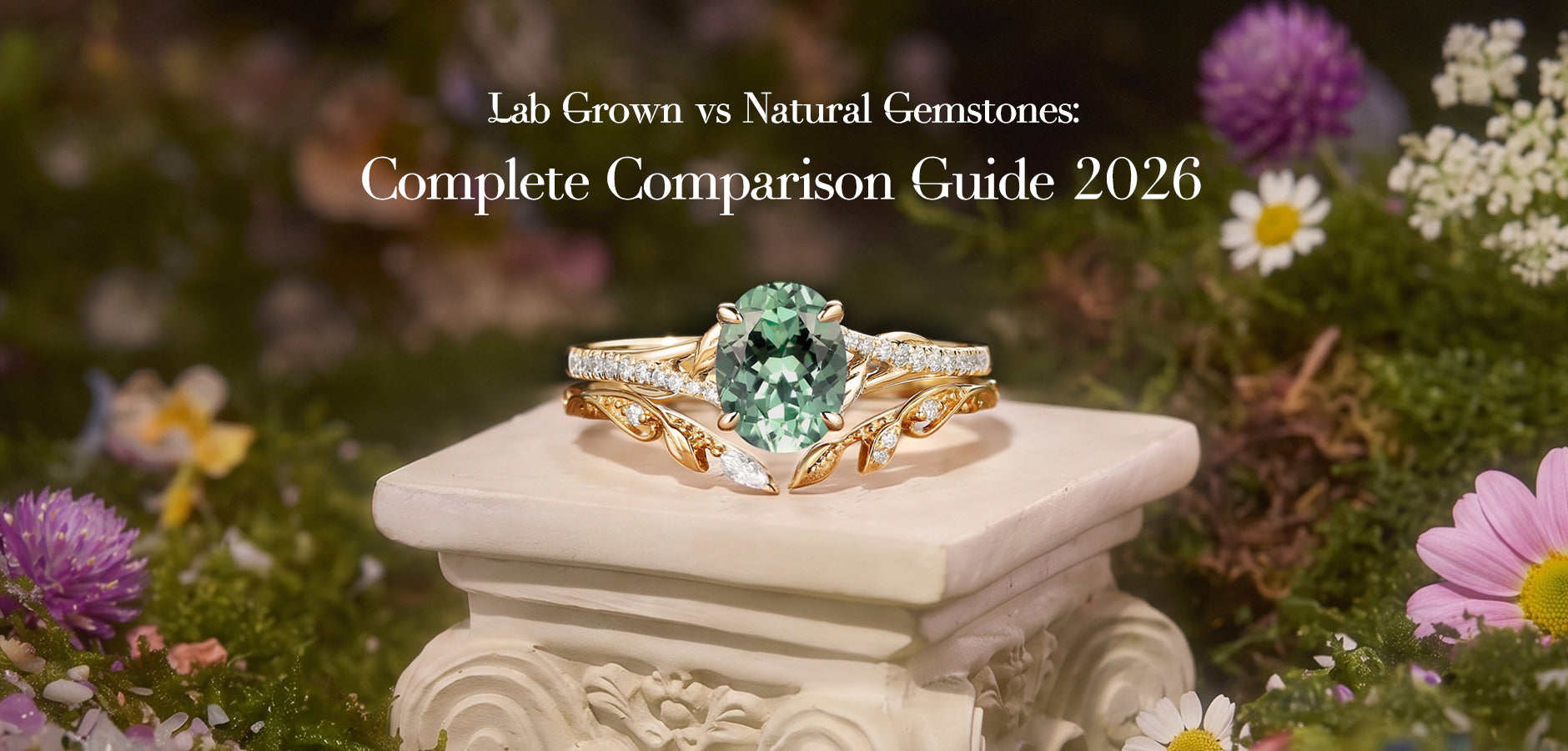
If you've been shopping for an engagement ring lately, you've almost certainly encountered the term "lab grown gemstones." They've gone from niche alternative to mainstream choice in just a few years — and for good reason. But with so much conflicting information online, most buyers still have the same three questions burning in their minds: Are lab created gemstones real? Is the quality trustworthy when the price is so much lower? And how do I actually choose between lab grown vs natural?
This guide answers all of them — honestly, without marketing spin. By the end, you'll know exactly what you're looking at, what you're paying for, and whether a lab grown gemstone engagement ring is the right choice for you. At BlingFlare, we specialize in nature-inspired lab grown gemstone jewelry, and we believe informed buyers make the happiest customers.
Table of Contents
- What Are Lab Grown Gemstones?
- The Fundamental Differences
- Side-by-Side Comparison
- Price Comparison
- Environmental Impact
- Ethical Considerations
- Value and Resale
- How to Choose
- FAQ
- Related Resources
What Are Lab Grown Gemstones?
Let's start with the biggest misconception right away: lab grown gemstones are not fake. They are not simulants, not glass, not cubic zirconia. A lab grown sapphire has the exact same chemical formula (Al₂O₃) as a mined sapphire. A lab grown diamond is still pure crystallized carbon. They are, in every measurable scientific sense, the real thing — just grown in a laboratory instead of deep inside the Earth.
The concept isn't new either. The first synthetic ruby was created in 1902 by French chemist Auguste Verneuil using what we now call the flame fusion method. Over the past century, gemstone synthesis technology has advanced dramatically. Today, the three main methods used are:
Flame Fusion (Verneuil Method): Powdered chemicals are melted in an extremely hot flame and allowed to crystallize as droplets fall through the flame. This is the most affordable method, commonly used for sapphires and rubies.
Czochralski (Pulling) Method: A small seed crystal is dipped into molten material and slowly pulled upward, growing a cylindrical crystal as it rises. This produces very pure, high-clarity stones.
Hydrothermal Method: This simulates the extreme heat and pressure found deep within the Earth. A solution of nutrients is sealed in a high-pressure vessel with a seed crystal, and over weeks or months, the crystal grows atom by atom. This method produces the highest quality lab grown emeralds and is increasingly used for diamonds as well.
Think of it this way: ice made in your freezer and ice formed in a glacier are both H₂O. The only difference is where and how they formed. Lab grown gemstones are the same story — real gemstones, different origin.
The Fundamental Differences: Lab Grown vs Natural Gemstones
Identical Physical and Chemical Properties
According to the Gemological Institute of America (GIA), the world's foremost gemological authority, lab grown gemstones possess "essentially the same physical properties" as their natural counterparts. This means:
• Same crystal structure — both form in the same crystalline lattice
• Same optical properties — identical refractive index, dispersion, and brilliance
• Same hardness — a lab grown diamond still ranks 10 on the Mohs scale; a lab grown sapphire still ranks 9
• Same specific gravity — they weigh the same for the same size
In short, if you placed a lab grown blue sapphire next to a natural blue sapphire of identical quality, no human eye — not even an experienced gemologist's — could tell them apart without specialized laboratory equipment.
The Only Real Difference: Origin
Natural gemstones formed deep within the Earth over millions to billions of years under extreme heat and pressure, then were brought to the surface through volcanic activity and tectonic processes. Lab grown gemstones are created in controlled laboratory environments that replicate these natural conditions, but in a matter of weeks to months.
That's it. Same material, same properties, different timeline and location. This fundamental truth is what makes the lab grown vs natural debate so interesting — because when the physical reality is identical, the choice becomes about values, budget, and perspective rather than quality.
Side-by-Side Comparison
| Feature | Natural Gemstones | Lab Grown Gemstones |
|---|---|---|
| Color | Varies with natural conditions; unique character | Highly controllable; consistent and even |
| Clarity | Often contains natural inclusions ("natural fingerprints") | Fewer inclusions; generally more纯净 |
| Brilliance | Excellent in high-quality stones, but rare | Consistently high quality |
| Availability | Limited by mining; specific sizes/colors rare | Reliable supply in consistent sizes |
| Price | 30-80% more expensive at equivalent quality | Significantly more affordable |
| Origin Story | Formed over millions of years in the Earth | Created in weeks to months in a laboratory |
| Environmental Impact | Significant mining footprint | Minimal; no mining required |
| Ethical Profile | Can involve conflict and labor issues | 100% conflict-free |
Price Comparison: Where Your Budget Goes Further
This is where lab grown gemstones truly shine. At equivalent quality, lab created gemstones typically cost 30-80% less than natural stones. Here's a real-world example:
• 1 carat natural blue sapphire (good quality): $3,000 – $5,000+
• 1 carat lab grown blue sapphire (equivalent quality): $500 – $1,500
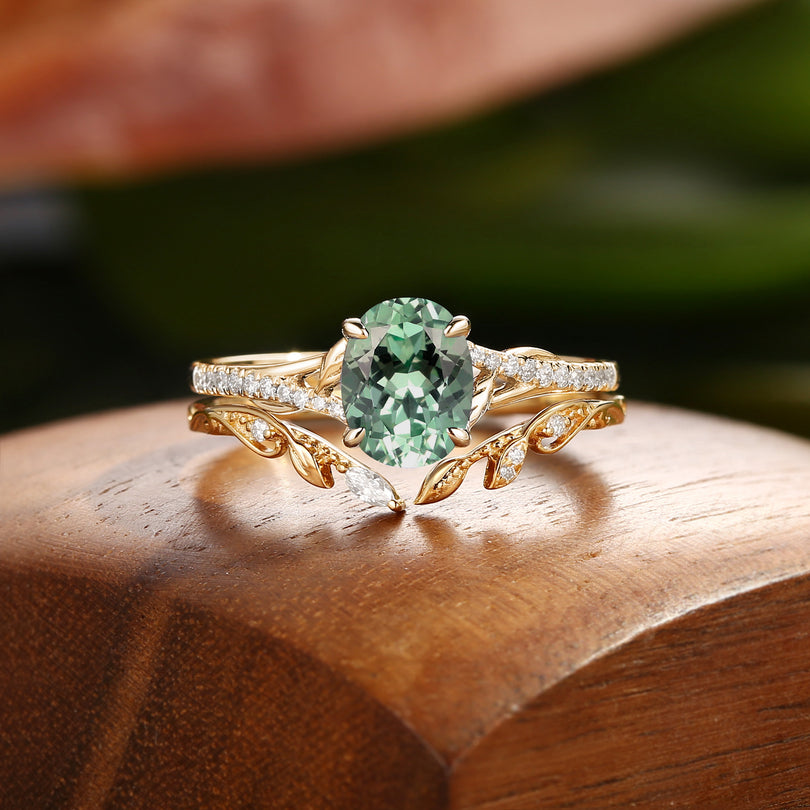
What does this mean for you as a buyer? It means your budget stretches further in almost every direction. You can choose a larger center stone, upgrade to a more intricate setting, or simply save significantly while still getting a breathtaking ring. At BlingFlare, our lab grown gemstone engagement rings range from around $1,089 to $4,288 — a range that gives you access to stunning, high-quality pieces without the natural gemstone premium.


Environmental Impact: The Case for Lab Grown
In 2026, environmental consciousness isn't a nice-to-have — it's a priority for many couples making one of life's most symbolic purchases. And here, lab grown gemstones have an overwhelming advantage.
Mining by the numbers:
• For every carat of mined diamond, approximately 250 tons of earth are moved
• Mining generates roughly 5 tons of waste per ton of ore processed
• Open-pit mining destroys habitats, contaminates groundwater, and contributes to soil erosion
• The carbon footprint of mined diamonds averages 125 pounds of CO₂ per carat
Lab grown alternatives:
• Zero mining required — no habitat destruction, no groundwater contamination
• Energy consumption is significant but decreasing as producers adopt renewable sources
• The carbon footprint of lab grown diamonds averages 6-15 pounds of CO₂ per carat (depending on the energy source used)
• No toxic chemicals leach into local ecosystems
At BlingFlare, we're committed to environmental responsibility. Our lab grown gemstone jewelry represents a choice that honors both your love and the planet you'll share together.
Ethical Considerations
The natural gemstone industry has a documented history of ethical challenges that can't be ignored. The term "blood diamond" entered mainstream vocabulary for a reason — gemstone mining in certain regions has funded armed conflict, exploited workers including children, and devastated local communities. While the Kimberley Process and similar certification schemes have reduced some abuses, the trade remains difficult to fully trace, and "conflict-free" labels don't always tell the whole story.
Lab grown gemstones eliminate these concerns entirely. There is no mining, no conflict financing, no labor exploitation in remote pits. Every lab grown gemstone has a fully transparent origin — the laboratory where it was created. When you choose a lab grown gemstone ring from BlingFlare, you know exactly where your stone came from and can wear it with complete peace of mind.
Value and Resale: An Honest Discussion
Here's where we need to be straight with you. If you're looking at a gemstone purchase as a financial investment, neither natural nor lab grown is likely to be a great one — with one exception.
Natural gemstones: Only the top 10% of natural gemstones — those with exceptional color, clarity, size, and provenance — genuinely hold or appreciate in value over time. The vast majority of natural gemstones sold in jewelry stores will not resell for more than you paid. In fact, most will resell for significantly less.
Lab grown gemstones: Currently, lab grown gemstones don't retain resale value the way top-quality natural stones might. They are, however, outstanding choices for what they're designed to be: beautiful, meaningful jewelry worn and cherished daily.
Our advice? Buy for love, not for investment. An engagement ring's true value is emotional — the symbol, the commitment, the daily joy of wearing something beautiful. On that measure, lab grown gemstones deliver magnificently while leaving more budget for your life together.
How to Choose: Lab Grown or Natural?
Choose Natural Gemstones If:
• Budget is flexible and you value geological rarity above all
• You want a one-of-a-kind stone with a "born in the Earth" story
• You're seeking a collector-grade gemstone (high carat, exceptional quality)
• Family tradition or personal sentiment strongly favors natural stones
Choose Lab Grown Gemstones If:
• You want maximum quality and size within a specific budget
• Environmental sustainability matters to you
• Ethical sourcing is a non-negotiable priority
• You prefer consistent, reliable quality with fewer inclusions
• You're buying for daily wear and emotional significance, not investment
• You want a larger carat weight without compromising on color or clarity
For the vast majority of modern buyers, lab grown gemstones check every box that matters — beauty, durability, ethics, value — while eliminating the compromises that come with mined stones.


Why BlingFlare Champions Lab Grown
At BlingFlare, we chose to specialize in lab grown gemstones not because of price alone, but because they align with our values. Every piece in our collection — from our nature-inspired leaf and vine designs to our vintage filigree settings — is crafted with ethically sourced lab grown gemstones that let us offer exceptional quality without compromising on ethics or environment.
We use only premium lab grown sapphires, diamonds, and other gemstones, each selected for outstanding color, clarity, and cut. Our designs are handcrafted to showcase these stones at their absolute best, creating engagement rings that are as meaningful in origin as they are beautiful in appearance.
Frequently Asked Questions
Will lab grown gemstones fade or change color over time?
No. Lab grown gemstones have the same physical properties as natural gemstones, including complete color stability. They will not fade, discolor, or change appearance over time. A lab grown sapphire worn daily for fifty years will look exactly as beautiful as the day it was created — just like a natural sapphire would.
Can a jeweler tell if my gemstone is lab grown?
Not with the naked eye or a standard jeweler's loupe. Lab grown gemstones look identical to natural gemstones in every visible way. Only specialized laboratory equipment — such as advanced spectroscopy instruments — can detect the subtle differences in growth patterns that distinguish lab created stones from natural ones. Even experienced gemologists cannot make this determination without proper lab testing.
Do lab grown gemstones come with certification?
Yes. Major gemological laboratories including GIA (Gemological Institute of America), IGI (International Gemological Institute), and AGS (American Gem Society) all provide grading reports for lab grown gemstones. These certificates detail the stone's characteristics using the same standards applied to natural stones. At BlingFlare, all lab grown diamonds of 1 carat and above ship with GIA or IGI certification.
Can lab grown gemstone rings be resized?
Absolutely. Lab grown gemstones have identical hardness and toughness to natural gemstones, so they respond to resizing, cleaning, repair, and maintenance in exactly the same way. Any professional jeweler can work with a lab grown gemstone ring just as they would with a natural one — no special handling required.
Are lab grown gemstones worth buying?
If you value beauty, durability, ethical sourcing, environmental responsibility, and smart spending — absolutely yes. Lab grown gemstones are not investment assets, but neither are most natural gemstones sold in jewelry. What they are is an outstanding choice for fine jewelry: real gemstones with real brilliance, worn with real meaning. For couples who want a stunning engagement ring that aligns with their values, lab grown is a choice worth making.
Making Your Decision
There is no universally "right" answer in the lab grown vs natural debate — only the right answer for you. Both have their place. But if you've read this far, chances are you're seeing what more and more couples are discovering: lab grown gemstones offer everything people love about fine jewelry — brilliance, beauty, durability, romance — without the ethical and environmental baggage that comes with mining.
Whichever path you choose, what matters most is that your ring represents your love and your values. We're here to help you find that perfect piece.
Questions? We'd love to help. Reach out to us at support@blingflare.com